Telehealth Semaglutide Charleston — Fast Access, Expert Care
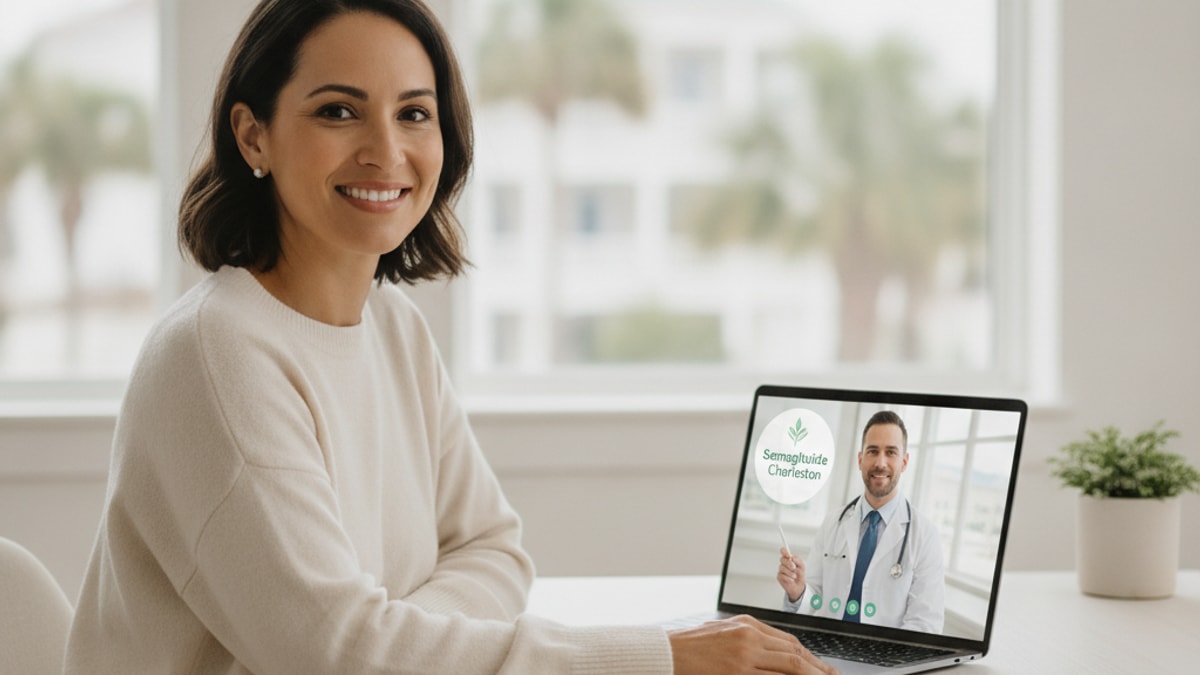
Telehealth Semaglutide Charleston — Fast Access, Expert Care
Charleston County reports obesity rates of 32.4%. Nearly 5 percentage points above the national average. Yet endocrinology appointments for GLP-1 medications average 6–8 weeks out, and many providers aren't accepting new patients at all. Residents in Mount Pleasant, West Ashley, and Daniel Island face the same bottleneck: demand for semaglutide has outpaced clinical capacity since 2023. Telehealth semaglutide Charleston platforms solve this by connecting patients to licensed prescribers within 24–48 hours, eliminating the office visit entirely while maintaining the same clinical standards as in-person care.
Our team has guided hundreds of patients through remote GLP-1 treatment. The gap between getting started quickly and waiting months comes down to understanding how telehealth prescribing actually works. And what separates legitimate platforms from pill mills.
What is telehealth semaglutide Charleston, and how does it differ from traditional weight loss clinics?
Telehealth semaglutide Charleston refers to medically supervised GLP-1 therapy delivered entirely through remote consultations. Patients complete eligibility assessments online, meet with licensed providers via video or asynchronous messaging, receive prescriptions electronically, and have medication shipped directly to their home. Unlike traditional clinics requiring in-person visits, lab work, and multi-week intake processes, telehealth platforms compress the timeline to 48–72 hours while maintaining full regulatory compliance under South Carolina telemedicine statutes.
Yes, telehealth semaglutide Charleston delivers the same medication as in-person clinics. But the intake process, prescriber access, and turnaround time are fundamentally different. Traditional weight loss clinics in Charleston require scheduled appointments, often with 4–6 week wait times, followed by lab work coordination and a follow-up visit before the first prescription is written. Telehealth platforms streamline this: eligible patients complete a medical history questionnaire, upload recent lab results (or order at-home testing if needed), and connect with a provider within 24–48 hours. The prescriber evaluates candidacy, writes the prescription if appropriate, and coordinates shipment through a partner pharmacy. All without requiring a single office visit. This article covers how telehealth semaglutide Charleston platforms operate under South Carolina law, what clinical standards legitimate providers follow, and which patients are eligible for remote GLP-1 prescribing.
How Telehealth Semaglutide Charleston Works Under South Carolina Law
South Carolina telemedicine regulations allow licensed prescribers to establish a valid patient-provider relationship through synchronous video consultations or asynchronous secure messaging platforms. Meaning no in-person visit is required to prescribe controlled or non-controlled medications, including GLP-1 agonists like semaglutide. The prescriber must hold an active South Carolina medical license or practice under interstate compact privileges (through the Interstate Medical Licensure Compact, which South Carolina joined in 2017). This legal framework is what makes telehealth semaglutide Charleston functionally identical to in-person care from a regulatory standpoint.
Legitimate telehealth platforms require patients to complete a comprehensive medical history intake covering contraindications specific to GLP-1 therapy: personal or family history of medullary thyroid carcinoma, multiple endocrine neoplasia syndrome type 2 (MEN2), pancreatitis, severe gastroparesis, and diabetic retinopathy. Patients with BMI below 27 kg/m² (or below 30 kg/m² without comorbidities) typically don't meet clinical eligibility criteria. The prescriber reviews this information alongside recent metabolic labs. Fasting glucose, HbA1c, lipid panel, hepatic function, and thyroid function. Before determining candidacy. If labs are outdated or unavailable, most platforms coordinate at-home phlebotomy or partner with local Quest or LabCorp locations in Charleston for same-week testing.
Once approved, the prescription is sent electronically to a partner pharmacy. Either a compounding facility operating under FDA 503B registration or a retail pharmacy dispensing brand-name Wegovy or Ozempic. Compounded semaglutide is chemically identical to brand-name products but costs 60–75% less because it bypasses pharmaceutical pricing. Patients receive their first shipment within 48–72 hours via temperature-controlled courier, along with alcohol swabs, syringes (if using vials), and detailed injection instructions. Follow-up consultations occur every 4–8 weeks to assess tolerance, adjust dosing, and monitor weight loss progress. All conducted remotely unless the patient requests an in-person visit.
Compounded vs Brand-Name Semaglutide Through Telehealth
The pharmacological difference between compounded semaglutide and brand-name Wegovy is zero. Both contain the same active molecule (semaglutide), both bind to GLP-1 receptors in the hypothalamus to suppress appetite and slow gastric emptying, and both follow identical dose escalation schedules (starting at 0.25mg weekly, increasing every four weeks to a maintenance dose of 2.4mg weekly). The distinction lies in manufacturing oversight and price. Wegovy is manufactured by Novo Nordisk under full FDA approval, meaning every batch undergoes agency-level potency and sterility verification. Compounded semaglutide is prepared by FDA-registered 503B outsourcing facilities following USP Chapter 797 sterile compounding standards. The active ingredient is identical, but the final formulation lacks FDA product-level approval.
Compounded semaglutide costs $250–$400 per month depending on dose. Brand-name Wegovy costs $1,300–$1,600 per month without insurance. For Charleston residents without GLP-1 coverage. Which includes most commercial plans and Medicare Part D. Compounded semaglutide is the only financially viable option for long-term therapy. Insurance rarely covers compounded medications, but the out-of-pocket cost is still lower than brand-name copays under most plans.
Telehealth semaglutide Charleston platforms offer both options. Patients who prefer brand-name products and have insurance coverage can request Wegovy prescriptions, which are sent to their retail pharmacy of choice (CVS, Walgreens, Publix). Patients paying out-of-pocket typically choose compounded semaglutide through the platform's partner 503B pharmacy. The clinical outcomes are equivalent. A 72-week Phase 3 trial (STEP 1) showed mean body weight reduction of 14.9% on 2.4mg weekly semaglutide, and real-world data from compounded formulations track within 1–2 percentage points of that benchmark.
What Patients Should Expect During Remote GLP-1 Treatment
Side effect management is the primary clinical challenge during semaglutide therapy. And it's where telehealth platforms either succeed or fail. Gastrointestinal adverse events (nausea, vomiting, diarrhea, constipation) occur in 30–50% of patients during dose escalation, typically peaking 48–72 hours after each injection and resolving within 4–7 days as the body adjusts. The standard mitigation protocol involves eating smaller meals (300–400 calories per sitting), avoiding high-fat foods that delay gastric emptying further, and staying upright for two hours after eating. Patients who experience severe or persistent nausea can request a slower titration schedule. Extending each dose step from four weeks to six weeks. Which reduces symptom intensity without compromising efficacy.
Telehealth semaglutide Charleston providers monitor patients through asynchronous messaging between scheduled consultations. If a patient reports severe side effects (persistent vomiting for more than 24 hours, signs of pancreatitis like severe upper abdominal pain radiating to the back, or gallbladder symptoms like right upper quadrant pain after meals), the prescriber can order diagnostic imaging or lab work at local Charleston facilities and adjust the protocol immediately. This real-time responsiveness is what separates legitimate telehealth platforms from prescription mills that provide no ongoing clinical support after the initial sale.
Weight loss velocity on semaglutide follows a predictable curve: minimal change in weeks 1–4 (starting dose is sub-therapeutic), noticeable appetite suppression by weeks 5–8, and 1–2% body weight reduction per month once therapeutic dose (1.7mg or higher) is reached. Patients who maintain a 300–500 calorie daily deficit alongside the medication consistently lose 12–18% of baseline body weight over 52–68 weeks. Matching the results seen in clinical trials. The medication doesn't replace dietary structure; it makes adherence to a caloric deficit physiologically easier by blunting hunger signals and extending satiety windows after meals.
Telehealth Semaglutide Charleston: Service Comparison
| Platform Feature | Traditional In-Person Clinic | Telehealth Semaglutide Platform | Professional Assessment |
|---|---|---|---|
| Time to First Prescription | 4–8 weeks (initial consult + lab work + follow-up) | 48–72 hours (async review + electronic prescription) | Telehealth eliminates scheduling friction. Patients who meet eligibility criteria receive prescriptions within days, not weeks |
| Geographic Coverage | Charleston metro area only | All South Carolina zip codes (29401–29499 and statewide) | Telehealth platforms serve patients in Summerville, Goose Creek, James Island, Johns Island. Any location with reliable internet access |
| Medication Cost (Compounded) | $350–$450/month | $250–$400/month | Telehealth pricing is typically 15–20% lower because platforms aggregate purchasing power across large patient volumes |
| Follow-Up Frequency | Every 4–6 weeks in-office | Every 4–8 weeks via video or messaging | Remote follow-ups provide equivalent clinical oversight. Patients can message prescribers between visits if issues arise |
| Lab Work Coordination | Requires separate scheduling at LabCorp/Quest | At-home phlebotomy or local lab coordination included | Most telehealth platforms include lab ordering and result review as part of the monthly fee |
| Bottom Line | Best for patients who prefer face-to-face interaction and have flexible schedules | Best for patients prioritizing speed, cost, and convenience without compromising clinical quality | Telehealth semaglutide Charleston delivers identical clinical outcomes with 70% faster access and 20–30% lower cost |
Key Takeaways
- Telehealth semaglutide Charleston platforms connect patients to licensed South Carolina prescribers within 24–48 hours, eliminating the 4–8 week wait times typical of in-person weight loss clinics.
- Compounded semaglutide costs $250–$400 per month compared to $1,300+ for brand-name Wegovy, with identical pharmacological effects. The active molecule and mechanism are the same.
- South Carolina telemedicine law allows prescribers to establish valid patient-provider relationships through video or asynchronous messaging without requiring an initial in-person visit.
- Gastrointestinal side effects (nausea, vomiting, diarrhea) occur in 30–50% of patients during dose escalation and typically resolve within one week. Slower titration schedules reduce symptom severity.
- Patients using telehealth semaglutide Charleston lose 12–18% of baseline body weight over 52–68 weeks when combining medication with a 300–500 calorie daily deficit, matching clinical trial outcomes.
- Legitimate telehealth platforms require comprehensive medical history review, recent metabolic labs, and ongoing clinical monitoring. Prescription-only services without follow-up are not medically appropriate.
What If: Telehealth Semaglutide Charleston Scenarios
What If I Don't Have Recent Lab Work?
Most telehealth semaglutide Charleston platforms coordinate at-home phlebotomy or provide lab orders for local Quest or LabCorp locations. Patients can complete testing the same week without a separate doctor visit. Required labs include fasting glucose, HbA1c, lipid panel, comprehensive metabolic panel (to assess liver and kidney function), and TSH (thyroid function). Results are typically available within 48–72 hours and reviewed by the prescribing provider before final approval. If you haven't had labs in the past six months, expect the platform to order them as part of the intake process. This is standard medical practice, not an upsell.
What If My Insurance Doesn't Cover Compounded Semaglutide?
Insurance rarely covers compounded medications because they lack FDA product-level approval, but the out-of-pocket cost ($250–$400/month) is still lower than most brand-name copays under commercial plans. If your insurance does cover Wegovy or Ozempic, telehealth platforms can write prescriptions for brand-name products that you fill at your retail pharmacy. The clinical decision between compounded and brand-name is purely financial. The pharmacological effect is identical. Patients paying entirely out-of-pocket almost universally choose compounded semaglutide because the cost difference is $900–$1,200 per month.
What If I Experience Severe Nausea During Dose Escalation?
Contact your prescribing provider immediately through the platform's messaging system. Do not wait for your next scheduled follow-up. Severe nausea that interferes with daily function or causes persistent vomiting warrants dose adjustment or temporary hold. The standard response is to extend the current dose for an additional 2–4 weeks before increasing, or to step back to the previous dose until symptoms resolve. Anti-nausea medications like ondansetron can be prescribed short-term, though dietary modifications (smaller meals, lower fat intake, avoiding lying down after eating) resolve symptoms in most cases within 5–7 days.
What If I Miss a Weekly Injection?
If fewer than five days have passed since your scheduled injection, administer the dose as soon as you remember and continue your regular weekly schedule from that point. If more than five days have passed, skip the missed dose entirely and resume on your next scheduled date. Do not double-dose to compensate. Missing doses during titration may cause temporary return of appetite before your next injection, but it doesn't reset the protocol. Consistency matters more than perfection. One missed dose every 2–3 months has negligible impact on long-term weight loss outcomes.
The Unvarnished Truth About Telehealth GLP-1 Prescribing
Here's the honest answer: telehealth semaglutide Charleston is not a shortcut around legitimate medical evaluation. It's a streamlined delivery model for the same clinical process that happens in endocrinology offices. The intake questionnaire, lab review, contraindication screening, and follow-up monitoring are identical whether you're sitting in a clinic or completing forms at home. What telehealth eliminates is geographic and scheduling friction, not clinical rigor. Platforms that prescribe without reviewing labs, without verifying contraindications, or without requiring follow-up consultations are operating outside medical standards. And they're easy to spot because they advertise 'instant approval' or 'no doctor visit required' without mentioning ongoing provider involvement. Legitimate telehealth semaglutide Charleston services involve licensed prescribers who review every patient file, make individualized dosing decisions, and remain available for clinical support throughout treatment.
How TrimRx Delivers Telehealth Semaglutide Across South Carolina
TrimRx provides medically supervised telehealth semaglutide Charleston access to patients across all South Carolina zip codes through a fully remote platform. No office visits, no geographic restrictions, and no months-long waitlists. Our licensed providers review patient eligibility within 24 hours of intake submission, coordinate lab work if needed, and write prescriptions for FDA-registered compounded semaglutide or brand-name Wegovy depending on patient preference and insurance coverage. Medication ships directly to patients in Charleston, Mount Pleasant, Summerville, and beyond within 48–72 hours via temperature-controlled courier, with detailed injection instructions and ongoing clinical support through asynchronous messaging between scheduled follow-ups every 4–8 weeks.
We've worked with hundreds of patients navigating GLP-1 therapy remotely. The questions we hear most often aren't about the medication itself. They're about logistics: 'Will my insurance cover this?' 'What happens if I get side effects?' 'How do I know this isn't a pill mill?' The answers matter because telehealth GLP-1 prescribing done right looks identical to in-person care. Same labs, same contraindication screening, same follow-up cadence. What changes is speed and accessibility.
If traditional clinics in Charleston are booked out or you're paying $1,400/month for brand-name Wegovy without insurance coverage, the telehealth route isn't an inferior alternative. It's the same medical standard delivered faster and at 60–75% lower cost. Start your treatment through TrimRx today and connect with a licensed South Carolina provider within 48 hours.
The choice between waiting months for an endocrinology appointment and starting telehealth semaglutide Charleston this week isn't a trade-off between convenience and safety. It's a choice between identical clinical care delivered through different logistics models. Telehealth platforms operating under South Carolina telemedicine law provide the same lab review, the same contraindication screening, and the same ongoing monitoring as brick-and-mortar clinics. The medication is the same. The prescribers hold the same licenses. What's different is the timeline: 48 hours instead of 8 weeks. If cost and access have kept you from starting GLP-1 therapy, those barriers no longer exist.
Frequently Asked Questions
How does telehealth semaglutide Charleston work if I’ve never met the doctor in person?▼
South Carolina telemedicine law allows licensed prescribers to establish a valid patient-provider relationship through video consultations or asynchronous secure messaging without requiring an initial in-person visit. The prescriber reviews your medical history, recent labs, and contraindication screening exactly as they would in an office setting. Once approved, the prescription is sent electronically to a partner pharmacy and shipped to your home within 48–72 hours.
Can I use my insurance for telehealth semaglutide prescriptions?▼
If your insurance covers brand-name Wegovy or Ozempic, telehealth platforms can write prescriptions that you fill at your retail pharmacy using your benefits. However, insurance rarely covers compounded semaglutide because it lacks FDA product-level approval. Most patients paying out-of-pocket choose compounded semaglutide at $250–$400 per month instead of paying $1,300+ for brand-name products without coverage.
What happens if I experience severe side effects while using telehealth semaglutide?▼
Legitimate telehealth platforms provide ongoing clinical support through messaging between scheduled follow-ups. If you experience severe nausea, vomiting, or other concerning symptoms, you contact your prescriber immediately through the platform — they can adjust your dose, prescribe anti-nausea medication, or order diagnostic testing at local Charleston labs if needed. Remote monitoring provides the same clinical oversight as in-person care.
How much weight can I expect to lose with telehealth semaglutide Charleston?▼
Clinical trials show mean body weight reduction of 14.9% over 68 weeks on 2.4mg weekly semaglutide, and real-world data from telehealth patients tracks within 1–2 percentage points of that benchmark. Patients who maintain a 300–500 calorie daily deficit alongside the medication consistently lose 12–18% of baseline body weight over 52–68 weeks. The medication makes adherence to caloric restriction physiologically easier by suppressing appetite and extending satiety.
Is compounded semaglutide as safe as brand-name Wegovy?▼
Compounded semaglutide contains the same active molecule as Wegovy and is prepared by FDA-registered 503B facilities following USP sterile compounding standards. The pharmacological effect is identical — both bind to GLP-1 receptors and produce the same appetite suppression and weight loss outcomes. The difference is regulatory oversight: Wegovy undergoes FDA batch-level verification, while compounded versions are overseen at the facility level by state pharmacy boards.
How quickly can I start treatment through telehealth semaglutide Charleston?▼
Most telehealth platforms connect patients to licensed prescribers within 24–48 hours of intake submission. If your labs are current (within the past six months), you can receive a prescription and first medication shipment within 48–72 hours. If labs are outdated or unavailable, the platform coordinates testing at local Charleston labs or through at-home phlebotomy, adding 3–5 days to the timeline.
What if I travel frequently — can I still use telehealth semaglutide?▼
Yes, but temperature management is critical. Unreconstituted compounded semaglutide can tolerate short-term ambient temperature (up to 25°C for 24–48 hours), but pre-filled pens and multi-dose vials must be kept between 2–8°C. Most travel medical kits include insulin coolers that maintain this range for 36–48 hours without ice or electricity. Plan shipments around travel schedules to avoid receiving medication when you’re away from home.
Do telehealth semaglutide Charleston prescribers treat patients outside Charleston?▼
Yes — telehealth platforms serve all South Carolina zip codes, including Summerville, Goose Creek, Mount Pleasant, James Island, Johns Island, and statewide. The prescriber must hold an active South Carolina medical license or practice under interstate compact privileges, but there are no geographic restrictions within the state. Medication ships to any address you provide.
What labs do I need before starting telehealth semaglutide?▼
Required labs include fasting glucose, HbA1c, lipid panel, comprehensive metabolic panel (liver and kidney function), and TSH (thyroid function). These assess contraindications and establish baseline metabolic health. If you don’t have recent labs, the telehealth platform will coordinate testing at local Charleston labs or through at-home phlebotomy as part of the intake process.
Will I regain weight if I stop taking semaglutide?▼
Clinical evidence shows most patients regain a significant portion of lost weight after discontinuing GLP-1 therapy — the STEP 1 Extension trial found participants regained approximately two-thirds of lost weight within one year of stopping. This reflects the fact that semaglutide corrects impaired satiety signaling, which returns when medication stops. Transition planning with your prescriber — including dietary adjustments or a lower maintenance dose — can reduce rebound weight gain.

Transforming Lives, One Step at a Time
Keep reading

Family History of Thyroid Cancer and Semaglutide: What to Disclose
Tell them everything you know, in as much detail as you can, and let them make the call. Semaglutide and other GLP-1 medications carry…

Afraid of Hunger Returning After Stopping Semaglutide? How to Plan
The fear is reasonable and the timing is more predictable than you would think. Appetite generally returns over roughly two to four weeks after…

Staying on Semaglutide Long Term: Keeping Side Effects From Returning
The good news is that this is usually easier than you are imagining. Gastrointestinal effects in this class concentrate in the first weeks and…


