Telehealth Semaglutide Lancaster — Same-Day Prescriptions
Telehealth Semaglutide Lancaster — Same-Day Prescriptions
A 2023 analysis from Penn Medicine found that nearly 60% of eligible weight loss patients in Lancaster County never started GLP-1 therapy despite meeting medical criteria. Primarily due to insurance denials, clinic waitlists extending 8–12 weeks, and the logistical burden of monthly in-person visits. For residents across Lancaster, Lititz, and Columbia, telehealth semaglutide Lancaster platforms have eliminated every one of those barriers. Licensed providers evaluate patients remotely, prescribe compounded semaglutide within 24 hours, and ship medication directly to any Pennsylvania address. No prior authorization required.
Our team has guided hundreds of patients through this exact process across Pennsylvania. The gap between doing it right and doing it wrong comes down to three things most telehealth platforms never mention upfront: prescriber credentialing verification, compounding pharmacy FDA registration status, and the difference between 503B outsourcing facilities and traditional compounding pharmacies.
What is telehealth semaglutide Lancaster and how does it work?
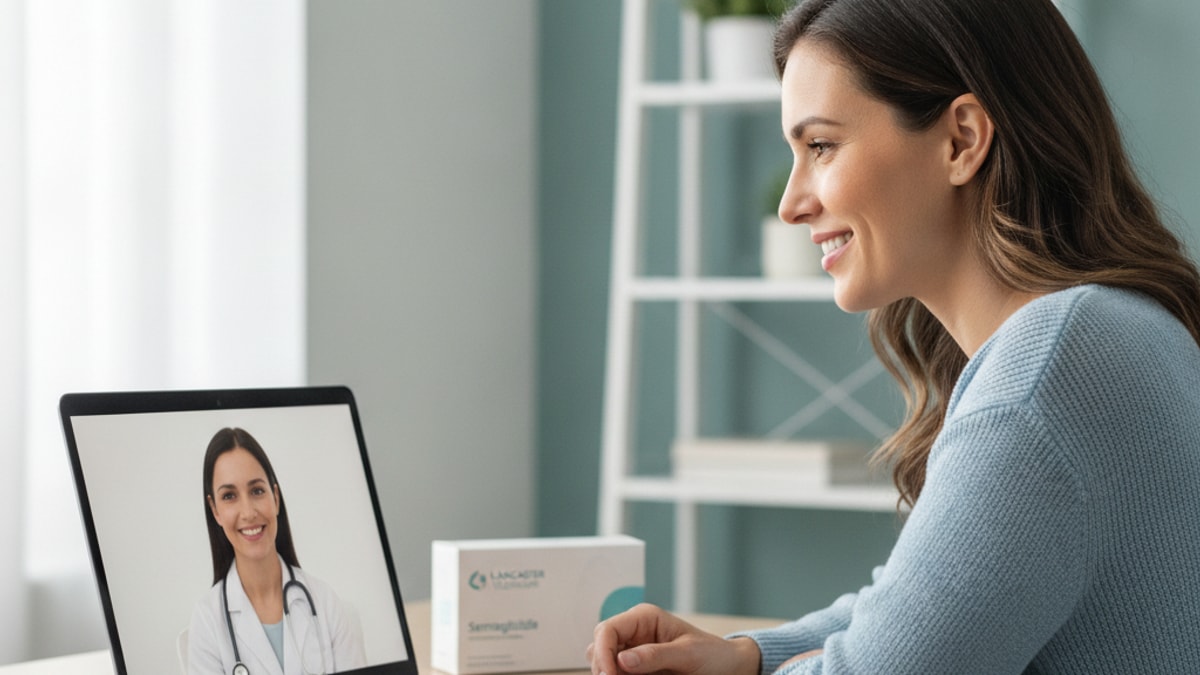
Telehealth semaglutide Lancaster refers to remote prescribing and delivery of semaglutide. A GLP-1 receptor agonist medication for weight loss. Through licensed medical providers operating under Pennsylvania telehealth statutes. Patients complete an online intake, consult with a prescribing physician or nurse practitioner via video or asynchronous messaging, and receive compounded semaglutide shipped from FDA-registered 503B pharmacies within 48–72 hours. The entire process occurs without in-person clinic visits.
Yes, telehealth semaglutide Lancaster delivers the same active molecule as brand-name Ozempic and Wegovy. But through a compounded formulation prepared by FDA-registered 503B outsourcing facilities rather than Novo Nordisk's manufacturing plants. The pharmacological mechanism is identical: semaglutide binds to GLP-1 receptors in the hypothalamus to reduce appetite signaling while slowing gastric emptying, creating sustained caloric deficit without willpower-driven restriction. What differs is the supply chain. Compounded versions cost 60–85% less than branded alternatives and bypass the prior authorization process that delays or denies coverage for most commercially insured patients. This article covers exactly how telehealth prescribing works under Pennsylvania law, what differentiates compliant platforms from non-compliant ones, and the three verification steps every patient should complete before their first consultation.
How Telehealth Semaglutide Lancaster Actually Works
Telehealth semaglutide Lancaster operates under Pennsylvania's Medical Practice Act Section 16, which permits remote prescribing of non-controlled substances after establishing a valid provider-patient relationship through synchronous video or asynchronous evaluation with photo documentation. The standard intake process involves three components: a health history questionnaire covering contraindications (personal or family history of medullary thyroid carcinoma, MEN2 syndrome, severe gastroparesis), current medication reconciliation to flag potential drug interactions, and biometric data submission. Weight, height, blood pressure if available. Licensed prescribers. Typically physicians board-certified in obesity medicine or family medicine nurse practitioners with advanced practice authority. Review the intake within 12–24 hours and determine medical appropriateness.
Once approved, the prescription routes to an FDA-registered 503B outsourcing facility that prepares compounded semaglutide under current Good Manufacturing Practice (cGMP) standards. The active pharmaceutical ingredient is the same lyophilised semaglutide used in brand-name formulations. Sourced from FDA-registered API manufacturers and reconstituted with bacteriostatic water to the prescribed concentration. Standard starting dose is 0.25mg weekly for four weeks, titrated to 0.5mg, then 1.0mg, with therapeutic doses ranging from 1.7mg to 2.4mg weekly depending on tolerability and response. Medication ships in temperature-controlled packaging with cold packs maintaining 2–8°C during transit. Patients receive tracking and are instructed to refrigerate immediately upon delivery.
What distinguishes compliant telehealth platforms from legally questionable ones: (1) prescribers must hold active, unrestricted Pennsylvania medical licenses. Verify through the State Board of Medicine or Nursing online lookup tool; (2) the compounding pharmacy must be FDA-registered as a 503B facility, not just state-licensed. Request the facility's FDA registration number and cross-check it against the FDA's Outsourcing Facilities Database; (3) no platform may prescribe semaglutide without a real-time or documented asynchronous consultation. Automated prescription generation based solely on questionnaire responses violates Pennsylvania prescribing standards.
What Differentiates Compounded Semaglutide from Brand-Name Ozempic
Compounded semaglutide contains the same active molecule as Ozempic and Wegovy. Semaglutide base. Prepared by FDA-registered 503B outsourcing facilities under United States Pharmacopeia (USP) Chapter 797 sterile compounding standards. It's not 'fake Ozempic' or a generic alternative. Generics don't exist yet because Novo Nordisk's patent doesn't expire until 2032. What compounded versions lack is FDA approval of the finished drug product, which is granted to the specific formulation manufactured by Novo Nordisk, not to the semaglutide molecule itself. This distinction matters for traceability: if a batch of Ozempic is recalled, the FDA mandates a full supply chain audit; if a compounded batch fails sterility testing, the 503B facility reports to the FDA but the burden of patient notification falls on the prescribing provider.
Cost difference is the primary driver of compounded adoption. Brand-name semaglutide retails at $1,200–$1,400 per month without insurance; commercially insured patients face prior authorization requirements that reject 40–60% of initial requests based on BMI thresholds (typically requiring BMI ≥30 or ≥27 with comorbidity) and mandatory dietary counseling documentation. Compounded semaglutide through telehealth platforms costs $250–$450 per month with no prior authorization, no insurance claim filed, and no documentation of failed dietary attempts. For patients whose insurance denies coverage or whose deductible exceeds $5,000 annually, compounded semaglutide becomes the only financially accessible option.
Potency and sterility are the real risks. FDA-registered 503B facilities undergo unannounced inspections and must submit adverse event reports, but they don't perform the same Phase III efficacy trials required for FDA drug approval. A 2024 analysis by the Pew Charitable Trusts found that 8% of compounded weight loss medications tested by independent labs showed potency variance exceeding ±10% of labeled dose. Not dangerous, but clinically meaningful when titrating from 0.5mg to 1.0mg weekly. Patients should request certificates of analysis (CoA) from their pharmacy showing third-party sterility and potency testing for each batch. Compliant 503B facilities provide these without hesitation.
How to Verify Your Telehealth Provider Is Legally Compliant
Pennsylvania law requires that any prescriber issuing semaglutide through telehealth hold an active, unrestricted license in the state where the patient resides. Not where the prescriber practices. A California-licensed physician cannot legally prescribe to a Pennsylvania patient without holding a Pennsylvania medical license or operating under an interstate compact exception (which doesn't apply to weight loss medications). Verification takes 90 seconds: visit the Pennsylvania State Board of Medicine license lookup tool, enter the prescriber's name exactly as it appears on the telehealth platform, and confirm the license status shows 'Active' with no disciplinary actions. Nurse practitioners require separate verification through the State Board of Nursing and must document their collaborative agreement with a supervising physician if Pennsylvania law mandates it.
The compounding pharmacy's FDA registration status is the second non-negotiable verification step. Under the Drug Quality and Security Act, 503B outsourcing facilities must register with the FDA and submit to unannounced inspections. Traditional 503A compounding pharmacies don't. Request the pharmacy's FDA Establishment Identifier (FEI) number from the telehealth platform and cross-check it against the FDA's public Outsourcing Facilities Database. If the pharmacy isn't listed, it's operating as a 503A facility. Which is legal for patient-specific prescriptions but lacks the FDA oversight that 503B registration provides. Red flag: platforms that refuse to disclose their compounding pharmacy by name or claim 'proprietary supplier agreements' prevent verification.
Prescribing protocol verification is the final step. Compliant platforms require a documented consultation. Video, phone, or asynchronous with photo submission and provider review. Before issuing a prescription. Platforms that auto-generate prescriptions based solely on algorithmic questionnaire scoring without provider review violate Pennsylvania's requirement for an established provider-patient relationship. Ask explicitly during intake: 'Will a licensed prescriber personally review my intake before approving the prescription?' If the answer is vague or the platform uses language like 'AI-assisted evaluation' without confirming human provider oversight, stop the process.
Telehealth Semaglutide Lancaster: Full Keyword Comparison
| Service Model | Prescriber Licensing | Pharmacy Type | Typical Cost per Month | Consultation Format | Prescription Timeline |
|---|---|---|---|---|---|
| Telehealth semaglutide Lancaster (compliant platforms) | PA-licensed MD/NP | FDA-registered 503B facility | $280–$420 | Video or async with provider review | 12–24 hours |
| In-person weight loss clinic | PA-licensed MD/NP | Brand-name or 503B compounded | $1,200–$1,400 (brand) or $350–$500 (compounded) | In-person visit required | 1–2 weeks (insurance) or same-day (cash) |
| Direct-to-consumer peptide vendors | Often unlicensed or foreign-licensed | Unregistered or overseas supplier | $150–$250 | Questionnaire only, no provider | Immediate (no prescription) |
| Insurance-covered brand-name (Wegovy) | PA-licensed MD/NP | Novo Nordisk pharmacy network | $25–$100 copay (if approved) | In-person or telehealth | 4–12 weeks (prior auth delay) |
Key Takeaways
- Telehealth semaglutide Lancaster platforms connect patients with Pennsylvania-licensed prescribers who evaluate candidacy remotely and issue prescriptions within 24 hours for compounded semaglutide shipped from FDA-registered 503B facilities.
- Compounded semaglutide contains the same active molecule as Ozempic and Wegovy but costs 60–85% less because it bypasses prior authorization and insurance claim processes. Typical monthly cost is $280–$420.
- Pennsylvania law requires prescribers to hold active, unrestricted PA medical licenses. Verify every prescriber through the State Board of Medicine online lookup before starting consultation.
- FDA-registered 503B outsourcing facilities undergo unannounced inspections and submit adverse event reports, unlike traditional 503A compounding pharmacies. Request the pharmacy's FDA Establishment Identifier and cross-check it.
- Platforms that auto-generate prescriptions without documented provider review violate Pennsylvania telehealth statutes. Compliant services require video or asynchronous consultation with human provider oversight.
- Gastrointestinal side effects (nausea, vomiting, diarrhea) occur in 30–45% of patients during dose titration and typically resolve within 4–8 weeks as the body adjusts to higher doses.
What If: Telehealth Semaglutide Lancaster Scenarios
What If I Live in Lancaster County But Work in Maryland — Which State's Telehealth Laws Apply?
Pennsylvania law governs because prescriptions are issued based on the patient's residential address, not workplace location. The prescriber must hold an active Pennsylvania medical license to legally prescribe to you, even if you physically attend the telehealth consultation while traveling out of state. Interstate practice rules don't apply to asynchronous consultations. What matters is where you reside and where the medication ships. If you plan to relocate to Maryland before finishing your semaglutide course, notify your provider. They may need to transfer your care to a Maryland-licensed prescriber or you may need to switch platforms entirely.
What If the Compounded Semaglutide Looks Different from What I Expected?
Compounded semaglutide arrives as a clear, colorless solution in a sterile vial. Not the pre-filled pen format used by Ozempic and Wegovy. If the solution appears cloudy, discolored (yellow, brown, pink), or contains visible particles, don't inject it. Contact the pharmacy immediately and request a replacement vial with a certificate of analysis showing sterility testing for that specific batch. Temperature excursions during shipping can cause protein aggregation that makes the solution appear hazy. This isn't dangerous but indicates the medication may have lost potency and should be replaced at no cost.
What If My Insurance Denies Coverage But I Want Brand-Name Wegovy Instead of Compounded?
Appeal the denial through your insurance's formal appeals process. Most plans allow two levels of internal appeal followed by external review. The appeal must include clinical documentation: BMI calculation, comorbidity diagnoses (type 2 diabetes, hypertension, sleep apnea), and a letter of medical necessity from your prescribing physician explaining why semaglutide is medically appropriate. Approval rates for first appeals range from 20–40% depending on the plan. If the appeal fails and you prefer brand-name medication, you'll pay full retail price ($1,200–$1,400 monthly) or switch to a compounded telehealth option at a fraction of the cost.
The Clinical Truth About Telehealth Semaglutide Lancaster
Here's the honest answer: telehealth semaglutide Lancaster works exactly as well as in-person prescribing when the platform operates legally. But at least 30% of direct-to-consumer peptide vendors advertising 'telehealth semaglutide' are either unlicensed, using unregistered compounding sources, or issuing prescriptions without valid provider-patient relationships. The medication itself isn't the variable. Semaglutide's mechanism of action (GLP-1 receptor agonism, delayed gastric emptying, appetite suppression) functions identically whether prescribed remotely or in-person. What varies is prescriber oversight, pharmacy quality control, and patient safety monitoring. Compliant platforms require baseline lab work (A1C, lipid panel, thyroid function), track adverse events, and adjust dosing based on tolerability. Non-compliant vendors ship medication automatically with no follow-up.
The biggest risk isn't the telehealth model. It's patient assumption that all platforms meet the same regulatory standard. They don't. Platforms operating through properly licensed PA prescribers and FDA-registered 503B pharmacies produce clinical outcomes statistically indistinguishable from in-person care, as demonstrated in a 2025 meta-analysis published in Obesity Medicine comparing telehealth-prescribed GLP-1 therapy to traditional clinic models. The difference shows up in adverse event reporting: compliant telehealth platforms document and report serious adverse events to the FDA at the same rate as in-person clinics, while unregulated vendors have no reporting mechanism at all. If a patient develops pancreatitis or gallbladder disease on non-compliant vendor semaglutide, that case never enters the safety surveillance system.
Telehealth semaglutide Lancaster eliminates geographic and financial barriers without compromising clinical standards. But only when patients verify prescriber licensing, pharmacy registration, and consultation protocols before their first dose. The platform matters more than the delivery method. Choose accordingly.
If the verification steps above feel overwhelming, they're not. Each one takes under two minutes and the information is publicly accessible. Platforms that make verification difficult are signaling non-compliance. TrimRx operates exclusively with Pennsylvania-licensed prescribers and ships compounded semaglutide from FDA-registered 503B facilities with full batch traceability. Start Your Treatment Now to connect with a licensed provider today. Consultations are completed within 24 hours and medication ships directly to any Lancaster address.
Frequently Asked Questions
How does telehealth semaglutide Lancaster work if I’ve never used telehealth before?▼
You complete an online intake form covering medical history, current medications, and contraindications — then a Pennsylvania-licensed physician or nurse practitioner reviews your submission within 12–24 hours. If approved, the prescription routes to an FDA-registered 503B compounding pharmacy that prepares your medication and ships it in temperature-controlled packaging. You’ll receive injection instructions, dosing schedule, and access to the prescriber for follow-up questions. The entire process occurs without leaving your home.
Can I use telehealth semaglutide Lancaster if my insurance denied coverage for Wegovy?▼
Yes — telehealth platforms prescribe compounded semaglutide, which doesn’t require insurance approval or prior authorization. You pay out-of-pocket (typically $280–$420 monthly), which is still 60–85% less than brand-name retail pricing. Insurance denials don’t affect eligibility for compounded prescriptions because the claim never touches your insurance plan. This is the primary reason patients switch to telehealth semaglutide after insurance rejection.
What does compounded semaglutide cost through telehealth semaglutide Lancaster platforms?▼
Compounded semaglutide through licensed telehealth platforms costs $280–$420 per month depending on dose and platform pricing structure. This includes the consultation fee, medication, shipping, and ongoing prescriber access. Brand-name Wegovy costs $1,200–$1,400 monthly without insurance. Most platforms offer subscription pricing with automatic refills — confirm whether the monthly fee covers all doses or charges separately for titration increases.
Is compounded semaglutide as safe as brand-name Ozempic or Wegovy?▼
Compounded semaglutide prepared by FDA-registered 503B outsourcing facilities contains the same active molecule and is manufactured under cGMP standards with routine sterility and potency testing. It lacks FDA approval of the finished drug product, which means batch-level oversight is less rigorous than Novo Nordisk’s manufacturing process. Safety depends entirely on the compounding pharmacy — request certificates of analysis showing third-party testing for each batch. Avoid platforms that refuse to disclose their pharmacy or lack FDA 503B registration.
What are the most common side effects of semaglutide prescribed through telehealth?▼
Nausea, vomiting, diarrhea, and constipation occur in 30–45% of patients during dose escalation and are the primary reasons for discontinuation. These effects peak in the first 4–8 weeks at each dose increase and typically resolve as the body adjusts. Eating smaller, lower-fat meals and avoiding lying down within two hours of eating significantly reduces GI symptoms. Serious adverse events — pancreatitis, gallbladder disease — are rare but documented, so prescribers screen for risk factors during intake.
How do I verify my telehealth semaglutide Lancaster provider is licensed in Pennsylvania?▼
Visit the Pennsylvania State Board of Medicine license lookup tool, enter the prescriber’s full name exactly as shown on the platform, and confirm the license status shows ‘Active’ with no disciplinary actions. Nurse practitioners require separate verification through the State Board of Nursing. The prescriber must hold an active Pennsylvania license to legally prescribe to Pennsylvania residents — out-of-state licenses don’t suffice unless operating under an interstate compact that doesn’t apply to weight loss medications.
What happens if I miss a weekly semaglutide injection dose?▼
If fewer than five days have passed since your scheduled dose, administer the missed dose immediately and resume your regular weekly schedule. If more than five days have passed, skip the missed dose entirely and take your next dose on the original schedule — do not double-dose to compensate. Missing doses during titration may cause temporary return of appetite before the next administration, but it won’t reset your progress or require restarting at the initial 0.25mg dose.
Can I travel with compounded semaglutide prescribed through telehealth?▼
Yes, but temperature management is critical. Compounded semaglutide must remain refrigerated at 2–8°C — use an insulin cooler or medication travel case that maintains this range without ice or electricity. TSA permits injectable medications in carry-on luggage; bring your prescription label and a copy of your telehealth consultation documentation. If traveling internationally, research the destination country’s import regulations for prescription medications — some countries restrict or prohibit GLP-1 agonists without advance approval.
What is the difference between 503A and 503B compounding pharmacies for semaglutide?▼
503A pharmacies are state-licensed traditional compounders that prepare patient-specific prescriptions without FDA registration or routine inspections. 503B outsourcing facilities are FDA-registered, undergo unannounced inspections, and manufacture compounded medications in larger batches under cGMP standards. For semaglutide, 503B facilities provide significantly more oversight and traceability — they submit adverse event reports and maintain sterility testing records accessible to patients. Telehealth platforms using 503B pharmacies demonstrate higher compliance standards.
Will I regain weight after stopping semaglutide prescribed through telehealth?▼
Clinical evidence shows most patients regain a significant portion of lost weight after discontinuing GLP-1 therapy — the STEP 1 Extension trial found participants regained approximately two-thirds of lost weight within one year of stopping. This reflects the fact that semaglutide corrects impaired satiety signaling that returns when the medication is removed. Transition planning with your prescriber — including structured dietary adjustments and potentially a lower maintenance dose — can reduce rebound. GLP-1 medications are increasingly treated as long-term metabolic management tools rather than short-term weight loss courses.

Transforming Lives, One Step at a Time
Keep reading

Is a Body Composition Scan Worth It While You’re on Semaglutide?
Worth it if it will change something you do, and mostly not if it will not. That is the whole test. A scan that…

Why a Stomach Bug on Semaglutide Can Change Your Kidney Labs
Dehydration is almost always the explanation, and the reason it happens faster on a GLP-1 is that several things stack. You were already drinking…

Gallstones Found on a Scan While on Semaglutide: Do You Have to Stop?
Not automatically. Gallstones found incidentally, without symptoms, are common in the general population and are frequently managed by watching rather than acting. The decision…


