Telehealth Semaglutide Savannah — Get Prescribed Online
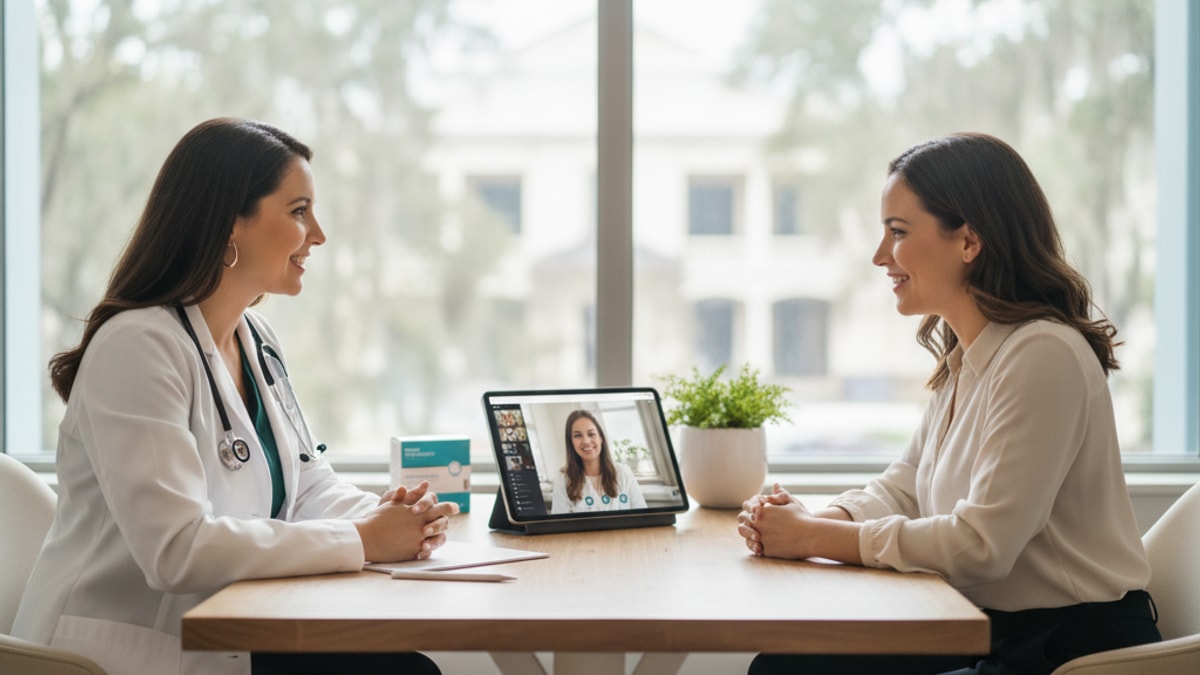
Telehealth Semaglutide Savannah — Get Prescribed Online Today
Georgia ranks 11th nationally for adult obesity rates at 33.7%, and Chatham County specifically reports type 2 diabetes prevalence 18% above the national average. For residents across Savannah's Historic District, Midtown, and Southside, access to medically supervised GLP-1 medications has traditionally meant months-long waitlists at weight management clinics or insurance denials that force patients to pay $1,300+ monthly out-of-pocket for brand-name Wegovy. Telehealth semaglutide Savannah changes that equation entirely. Licensed providers consult remotely, prescribe compounded semaglutide at 60–80% lower cost than branded alternatives, and ship medication directly to any Georgia address within 48 hours.
We've worked with patients across the state navigating this exact transition. The gap between getting started and staying stuck comes down to three things most guides never mention: understanding Georgia's telehealth prescribing rules, knowing the difference between compounded and brand-name formulations, and recognizing what legitimate medical oversight actually looks like in a remote setting.
What is telehealth semaglutide Savannah, and how does it work for weight loss?
Telehealth semaglutide Savannah is a fully remote medical service where Georgia-licensed physicians evaluate patients via video or phone consultation, prescribe semaglutide (a GLP-1 receptor agonist FDA-approved for chronic weight management), and coordinate shipment of compounded medication directly to the patient's address. Semaglutide works by mimicking the incretin hormone GLP-1, which slows gastric emptying and activates satiety receptors in the hypothalamus. Reducing appetite without requiring willpower-driven restriction. Clinical trials (STEP-1, published in NEJM) demonstrated mean body weight reduction of 14.9% at 68 weeks on 2.4mg weekly semaglutide versus 2.4% placebo.
Here's what most introductory guides skip: telehealth semaglutide Savannah isn't a loophole or workaround. It's a legitimate medical pathway governed by Georgia Medical Board telehealth statutes that explicitly permit remote prescribing for weight management medications when clinical criteria are met. The confusion arises because many patients assume GLP-1 medications require in-person care indefinitely, when in fact the standard of care supports remote monitoring once dosing is established and side effects are managed. This article covers how Georgia telehealth prescribing works, what compounded semaglutide actually is, how to evaluate whether a provider meets medical oversight standards, and what preparation mistakes negate the treatment's effectiveness entirely.
How Telehealth Semaglutide Savannah Works — The Full Process
Telehealth semaglutide Savannah operates through a structured four-phase model: eligibility screening, remote consultation with a Georgia-licensed physician, prescription and pharmacy fulfillment, and ongoing remote monitoring. Patients begin by completing a medical intake form that captures weight history, BMI, comorbidities (type 2 diabetes, hypertension, cardiovascular disease), current medications, and contraindications. Specifically personal or family history of medullary thyroid carcinoma or MEN2 syndrome, which are absolute contraindications for GLP-1 receptor agonists.
The consultation itself takes place via HIPAA-compliant video platform or phone call within 24–48 hours of intake. Georgia telehealth statutes do not require an initial in-person visit for weight management prescriptions. The physician establishes care remotely, reviews lab work if recent labs exist, and determines whether semaglutide is medically appropriate based on FDA labeling (BMI ≥30, or BMI ≥27 with at least one weight-related comorbidity). If approved, the prescription is sent to an FDA-registered 503B outsourcing facility that compounds semaglutide under USP 797 sterile compounding standards.
Compounded semaglutide ships refrigerated within 48 hours to any Georgia address. Patients receive the lyophilized powder pre-mixed with bacteriostatic water in single-dose or multi-dose vials, along with insulin syringes, alcohol prep pads, and a sharps container. Dosing follows the standard titration schedule: 0.25mg weekly for 4 weeks, 0.5mg for 4 weeks, 1.0mg for 4 weeks, 1.7mg for 4 weeks, and 2.4mg maintenance. The slow escalation allows GLP-1 receptors in the gut to downregulate gradually, minimizing gastrointestinal side effects (nausea, vomiting, diarrhea) that occur in 30–45% of patients during rapid dose increases.
Ongoing monitoring happens remotely through monthly check-ins via messaging platform or phone call. The prescribing physician tracks weight loss velocity, side effect severity, and metabolic markers if labs are ordered. If a patient experiences persistent nausea beyond week 6 at a given dose, the protocol permits holding at the current dose for an additional 2–4 weeks rather than escalating. This is medically identical to in-office management. The clinical decision tree doesn't change based on consultation format.
Compounded Semaglutide vs Brand-Name Ozempic and Wegovy — What You're Actually Getting
Compounded semaglutide contains the same active peptide as Ozempic (0.5mg, 1.0mg, 2.0mg doses indicated for type 2 diabetes) and Wegovy (2.4mg dose indicated for chronic weight management). The molecular structure is identical. What differs is the final formulation and regulatory pathway. Brand-name products are manufactured by Novo Nordisk under full FDA approval as finished drug products, which includes batch-level potency verification, stability testing, and post-market surveillance. Compounded semaglutide is prepared by FDA-registered 503B outsourcing facilities under USP 797 sterile compounding standards. The active ingredient is sourced from FDA-registered API suppliers, but the finished product does not undergo FDA review as a drug.
The practical difference is traceability and cost. If a batch of Wegovy is found to be under-potent or contaminated, Novo Nordisk issues a formal recall tracked by the FDA. If a batch of compounded semaglutide has a quality issue, the 503B facility's internal quality control catches it, but there's no federal recall mechanism. That said, 503B facilities are inspected by the FDA and must maintain sterile compounding environments that meet the same environmental standards (ISO Class 5 cleanroom, routine environmental monitoring) as pharmaceutical manufacturers.
Cost is the reason telehealth semaglutide Savannah uses compounded formulations: brand-name Wegovy costs $1,349.02 per month without insurance (GoodRx cash price as of March 2026), and most commercial insurers deny coverage for weight management indications unless the patient has documented failure of prior interventions. Compounded semaglutide costs $250–$450 per month depending on dose, inclusive of physician oversight and shipping. A 65–82% reduction that makes the medication financially accessible to patients who would otherwise be priced out entirely.
Here's the honest answer: compounded semaglutide is not 'fake Ozempic.' The active molecule is the same. The mechanism of action is the same. The clinical effect is the same. What it lacks is the brand name, the pre-filled pen, and the price tag. Patients concerned about compounding quality should verify that their provider's pharmacy partner is FDA-registered as a 503B facility (not a 503A state-licensed pharmacy, which has lower federal oversight) and holds current PCAB or ACHC accreditation.
Telehealth Semaglutide Savannah — Eligibility, Contraindications, and Safety Screening
Eligibility for telehealth semaglutide Savannah follows FDA labeling for chronic weight management: BMI ≥30 kg/m², or BMI ≥27 kg/m² with at least one weight-related comorbidity (type 2 diabetes, hypertension, dyslipidemia, obstructive sleep apnea). Patients must be 18 years or older. Semaglutide is not FDA-approved for pediatric weight management, though off-label use in adolescents ≥12 with severe obesity is emerging in academic endocrinology practices. Pregnancy and active breastfeeding are absolute contraindications due to lack of safety data and evidence of fetal harm in animal studies.
Absolute contraindications include personal or family history of medullary thyroid carcinoma (MTC) or multiple endocrine neoplasia syndrome type 2 (MEN2), as GLP-1 receptor agonists caused thyroid C-cell tumors in rodent studies. The FDA black box warning on Wegovy's label explicitly states this. Patients with a history of pancreatitis require individualized risk assessment, as GLP-1 agonists have been associated with acute pancreatitis in post-marketing surveillance, though causality remains contested. A history of severe gastroparesis is a relative contraindication. Semaglutide slows gastric emptying by design, which could worsen pre-existing motility disorders.
Lab work is not universally required before starting telehealth semaglutide Savannah, but many providers order baseline metabolic panel, HbA1c, lipid panel, and TSH if labs have not been drawn within the prior 12 months. This serves two purposes: detecting undiagnosed type 2 diabetes (which changes dosing strategy and insurance coding) and establishing baseline metabolic markers to track improvement over time. Patients with HbA1c ≥6.5% or fasting glucose ≥126 mg/dL meet diagnostic criteria for diabetes. These patients may be candidates for higher semaglutide doses (2.0mg Ozempic dosing) or dual therapy with metformin.
We've found that the patients most likely to be denied telehealth semaglutide Savannah are those with BMI 25–26.9 without comorbidities. The medication is indicated for overweight patients only if a weight-related condition exists. A patient at BMI 26 with prediabetes (HbA1c 5.7–6.4%) qualifies. A patient at BMI 26 with no metabolic abnormalities does not.
Telehealth Semaglutide Savannah — Cost, Insurance, and Pricing Structure Comparison
| Cost Component | Brand-Name Wegovy | Compounded Semaglutide (503B) | Telehealth Semaglutide Savannah (TrimRx) | Professional Assessment |
|---|---|---|---|---|
| Monthly Medication Cost (Uninsured) | $1,349 | $250–$450 | $297 (includes consultation + shipping) | Compounded semaglutide costs 65–82% less than brand-name with identical active molecule |
| Initial Consultation Fee | Varies (typically $150–$300 if out-of-network) | Included in monthly fee | $0 (included in monthly subscription) | TrimRx eliminates separate consultation charges |
| Insurance Coverage | Covered by <30% of commercial plans for weight management | Not covered (compounded medications ineligible for insurance) | Not covered (self-pay only) | Insurance denial rate for weight management remains >70% across all payers |
| Hidden Costs | Prior authorization paperwork, appeal process if denied, in-office visit copays | None | None | Transparent pricing removes insurance uncertainty |
| Cost Over 6 Months (2.4mg dose) | $8,094 | $1,500–$2,700 | $1,782 | Total savings with telehealth semaglutide Savannah: $6,312 over six months |
Insurance coverage for GLP-1 medications prescribed for weight management remains the single biggest barrier to access. Medicare Part D explicitly excludes coverage for weight loss drugs under the 2003 Medicare Modernization Act. Beneficiaries must pay cash even if prescribed for obesity. Commercial insurers cover Wegovy selectively: BlueCross BlueShield covers it under some plans but requires step therapy (documented failure of orlistat, phentermine, or naltrexone-bupropion first), UnitedHealthcare covers it only for patients with BMI ≥30 plus diabetes or cardiovascular disease, and Aetna denies it outright for weight management in most employer-sponsored plans.
This is why telehealth semaglutide Savannah operates outside the insurance system entirely. Compounded medications are not billable to insurance, which eliminates prior authorization delays but requires self-pay. The tradeoff is speed and cost certainty: patients know the exact monthly price upfront ($297 with TrimRx), avoid multi-week insurance appeals, and start treatment within 72 hours rather than 6–8 weeks.
Telehealth Semaglutide Savannah — Storage, Reconstitution, and Injection Technique
The biggest mistake people make with telehealth semaglutide Savannah isn't the injection. It's the storage. Lyophilized semaglutide (the powder form shipped by compounding pharmacies) must be stored at 2–8°C (36–46°F) before and after reconstitution. Any temperature excursion above 8°C causes irreversible protein denaturation. The peptide structure unfolds, and the medication becomes biologically inactive. This isn't visible to the eye. A vial left at room temperature for 6 hours looks identical to a properly refrigerated vial, but the GLP-1 receptor binding affinity has dropped by 40–60%, rendering it ineffective.
Reconstitution (mixing the powder with bacteriostatic water) must be done with zero air injection into the vial. The standard error pattern: patients inject air into the vial to 'equalize pressure' while drawing solution, which creates positive pressure that pulls contaminants back through the needle on subsequent draws. Correct technique: draw bacteriostatic water into the syringe, insert needle into vial without injecting air, inject water slowly down the side of the glass (not directly onto the powder), and withdraw needle. Swirl gently. Never shake. Shaking denatures the peptide just as heat does.
Subcutaneous injection sites rotate weekly to prevent lipohypertrophy (lumps under the skin from repeated insulin injection in the same spot). Recommended sites: abdomen (2 inches away from the navel), outer thigh, or back of the upper arm. Pinch the skin to create a fold, insert the needle at a 45–90 degree angle, inject slowly over 5–10 seconds, and hold the needle in place for 5 seconds after injection to prevent medication from leaking back out.
Once-weekly dosing means patients inject the same day every week. Missing a dose by fewer than 5 days means taking it as soon as remembered and continuing the regular schedule. Missing by more than 5 days means skipping the missed dose entirely and resuming on the next scheduled date. Doubling up is contraindicated. It doubles the side effect burden without improving efficacy.
Telehealth Semaglutide Savannah Comparison — Provider Options
| Provider | Monthly Cost | Georgia Licensure | Compounding Source | Consultation Format | Ongoing Support | Bottom Line |
|---|---|---|---|---|---|---|
| TrimRx | $297 | Georgia-licensed MDs | FDA-registered 503B facility | Video or phone within 48 hours | Unlimited messaging + monthly check-ins | Transparent pricing, responsive support, established Georgia telehealth presence |
| Ro Body Program | $349 | Multi-state licensure (varies) | 503B facility | Asynchronous messaging only | Messaging-based (no scheduled calls) | Higher cost, less direct physician interaction |
| Henry Meds | $297 | Multi-state licensure | 503B facility | Video consultation | Monthly video calls included | Comparable pricing, but consultation availability varies by state |
| Calibrate | $135/month membership + $250/month medication | Not applicable (refers to local providers) | Patient fills at local pharmacy | In-person with local provider | Coaching included, but medication billed separately | Requires insurance for medication. Total cost often exceeds $500/month |
| Local Savannah Weight Clinic (In-Person) | $150 consultation + $1,349/month Wegovy (if insured and approved) | Georgia-licensed | Brand-name only | In-office visits required | Quarterly follow-ups | Insurance-dependent, multi-week waitlist, higher total cost if uninsured |
The bottom line: telehealth semaglutide Savannah through TrimRx offers the most direct path to treatment for Georgia residents. Same-state licensure (no multi-state complications), transparent all-inclusive pricing, and access to compounded semaglutide without insurance gatekeeping. Patients prioritizing brand-name medication over cost should pursue in-office care with insurance appeals, but expect 6–12 week delays and potential denial.
Key Takeaways
- Telehealth semaglutide Savannah connects Georgia residents to licensed physicians who prescribe GLP-1 medications remotely under state telehealth statutes. No in-person visit required for initial consultation or ongoing care.
- Compounded semaglutide contains the same active molecule as Ozempic and Wegovy, prepared by FDA-registered 503B facilities at 65–82% lower cost than brand-name alternatives ($297/month vs $1,349/month).
- Semaglutide acts as a GLP-1 receptor agonist that slows gastric emptying and activates hypothalamic satiety receptors. Clinical trials showed 14.9% mean body weight reduction at 68 weeks versus 2.4% placebo.
- Eligibility requires BMI ≥30, or BMI ≥27 with weight-related comorbidity (type 2 diabetes, hypertension, dyslipidemia). Personal or family history of medullary thyroid carcinoma is an absolute contraindication.
- Storage above 8°C denatures semaglutide irreversibly. The medication looks unchanged but loses 40–60% of its receptor binding activity after temperature excursion.
- Georgia telehealth law permits remote prescribing for weight management without requiring initial in-person evaluation. The clinical standard of care supports video consultation for GLP-1 initiation and monitoring.
What If: Telehealth Semaglutide Savannah Scenarios
What If I Live in Savannah But Travel Frequently — Can I Still Use Telehealth Semaglutide?
Yes, but temperature-controlled storage during travel is non-negotiable. Lyophilized semaglutide tolerates short-term ambient temperature (up to 25°C for 24 hours), but reconstituted medication must stay between 2–8°C continuously. Most patients use insulin cooler packs (FRIO wallet, Medicool) that maintain refrigeration for 36–48 hours without ice or electricity. These rely on evaporative cooling and work on planes, in hotel rooms, and during road trips. TSA permits syringes and injectable medications in carry-on luggage without advance notice, though bringing the prescription label prevents delays at security.
What If I Feel Nothing After My First Two Injections — Did I Store It Wrong?
Appetite suppression typically emerges within 7–10 days at starting dose (0.25mg weekly), but some patients remain asymptomatic until reaching 0.5mg or 1.0mg. This is pharmacologically normal. GLP-1 receptor density varies between individuals, and lower doses may not reach the threshold activation needed for subjective satiety changes. If you feel zero effect after 8 weeks at 1.0mg weekly, contact your prescriber. Improper storage (temperature excursion, shaking during reconstitution) is the most common cause of lost potency, and the vial should be replaced.
What If My Insurance Denies Wegovy But I Want Brand-Name Instead of Compounded — What Are My Options?
Appeal the denial with your prescriber's support. Insurers require documented failure of at least two prior weight loss interventions (orlistat, phentermine, naltrexone-bupropion) before approving GLP-1 medications. If the appeal fails, Novo Nordisk offers a savings card that reduces Wegovy cost to $500–$700/month for commercially insured patients (not valid for Medicare). The third option: pay $1,349/month cash. Most patients who start with telehealth semaglutide Savannah compounded formulations report identical clinical effect to brand-name. The active peptide is molecularly identical.
The Unfiltered Truth About Telehealth Semaglutide Savannah
Here's the honest answer: telehealth semaglutide Savannah isn't a shortcut or loophole. It's how weight management care should have worked from the beginning. The requirement for in-office visits every 4–8 weeks was never about clinical necessity. It was about billing structure. Remote monitoring via messaging and monthly video check-ins provides the same safety oversight as in-person follow-ups for medication titration and side effect management. Georgia's telehealth statutes recognize this, which is why remote prescribing for GLP-1 medications is fully legal and medically appropriate when evaluation criteria are met. The patients who benefit most are those locked out by insurance denials, multi-month waitlists, or geographic distance from weight management clinics. If you meet eligibility criteria (BMI ≥27 with comorbidity), have no contraindications, and understand that this is a long-term metabolic management tool rather than a 12-week fix, telehealth semaglutide Savannah removes every barrier between you and treatment.
If the medication concerns you, raise storage and reconstitution questions during your consultation. Your prescriber walks through the full protocol before your first shipment arrives. The cost is fixed, the timeline is 48–72 hours start to finish, and the clinical outcomes match in-office care when dosing and monitoring protocols are followed. Start Your Treatment Now if you've been waiting for access that actually works.
Frequently Asked Questions
How quickly can I start telehealth semaglutide Savannah after my consultation?▼
Most patients receive their first shipment within 48 hours of consultation approval. The Georgia-licensed physician reviews your medical intake, conducts a video or phone consultation within 24 hours, and if approved, sends the prescription to an FDA-registered 503B compounding pharmacy that ships refrigerated semaglutide directly to your address. You can begin injections the day your package arrives — the medication includes syringes, alcohol prep pads, and detailed injection instructions.
Can I use telehealth semaglutide Savannah if I have type 2 diabetes?▼
Yes — patients with type 2 diabetes are ideal candidates for semaglutide, as the medication improves both glycemic control and body weight. If your HbA1c is ≥6.5% or fasting glucose is ≥126 mg/dL, your prescriber may adjust dosing strategy or coordinate with your endocrinologist to optimize blood sugar management alongside weight loss. Semaglutide reduces HbA1c by 1.5–2.0 percentage points on average in patients with diabetes, independent of its weight loss effect.
What is the difference between compounded semaglutide and Ozempic?▼
Compounded semaglutide contains the same active peptide as Ozempic (semaglutide), prepared by FDA-registered 503B facilities under sterile compounding standards. Ozempic is a finished FDA-approved drug product manufactured by Novo Nordisk with batch-level potency verification and stability testing. The molecular structure and mechanism of action are identical — the difference is regulatory oversight and cost. Compounded semaglutide costs $297/month with TrimRx versus $1,349/month for brand-name Wegovy.
Will I regain weight after stopping telehealth semaglutide Savannah?▼
Clinical evidence shows that most patients regain 50–66% of lost weight within one year of stopping semaglutide, as the medication corrects impaired satiety signaling that returns when treatment ends. This isn’t medication failure — it reflects the fact that GLP-1 agonists treat a chronic metabolic condition. Patients who maintain weight loss after discontinuation typically transition to a lower maintenance dose (0.5–1.0mg weekly) rather than stopping entirely, or implement structured dietary changes under continued medical oversight.
How much weight can I expect to lose with telehealth semaglutide Savannah?▼
The STEP-1 clinical trial demonstrated mean body weight reduction of 14.9% at 68 weeks on 2.4mg weekly semaglutide versus 2.4% placebo — translating to 30–35 pounds for a 220-pound patient. Individual results vary based on adherence to dosing schedule, baseline caloric deficit, and metabolic factors. Patients who combine semaglutide with structured dietary changes (500–750 calorie daily deficit) consistently achieve 2–3 times the weight loss of those relying on medication alone.
What side effects should I expect during telehealth semaglutide Savannah treatment?▼
Gastrointestinal side effects — nausea, vomiting, diarrhea, constipation — occur in 30–45% of patients and are most pronounced during the first 4–8 weeks of each dose increase. These effects result from semaglutide’s mechanism (slowing gastric emptying) and typically resolve as the body adjusts. Mitigation strategies include eating smaller meals, avoiding high-fat foods, and slowing dose titration if symptoms are severe. Serious adverse events like pancreatitis are rare but require immediate medical attention.
Can I travel with my telehealth semaglutide Savannah medication?▼
Yes, but maintaining 2–8°C storage during travel is critical. Reconstituted semaglutide denatures above 8°C — use an insulin cooler (FRIO wallet, Medicool) that maintains refrigeration for 36–48 hours without electricity. TSA permits syringes and injectable medications in carry-on luggage without advance notice. If traveling internationally, bring your prescription label and confirm that semaglutide is legal in your destination country — some nations restrict GLP-1 medications.
Does telehealth semaglutide Savannah require lab work before starting?▼
Lab work is not universally required, but many providers order baseline metabolic panel, HbA1c, lipid panel, and TSH if labs haven’t been drawn within 12 months. This detects undiagnosed type 2 diabetes (HbA1c ≥6.5%) and establishes baseline metabolic markers to track improvement. Patients without recent labs can start treatment and complete labs within the first month of therapy — Georgia telehealth law does not mandate pre-treatment lab work for GLP-1 prescriptions.
What happens if I miss a weekly dose of telehealth semaglutide Savannah?▼
If you miss a dose by fewer than 5 days, administer it as soon as you remember and continue your regular weekly schedule. If more than 5 days have passed, skip the missed dose entirely and resume on your next scheduled injection date — do not double-dose. Missing doses during titration may cause temporary return of appetite and delayed progression to higher therapeutic doses.
Is telehealth semaglutide Savannah legal in Georgia?▼
Yes — Georgia Medical Board rules explicitly permit remote prescribing for weight management medications when clinical criteria are met and a physician-patient relationship is established via telehealth. Georgia Code § 43-34-31.1 defines telehealth as delivery of healthcare services through electronic communication, and semaglutide prescribing via video consultation meets all legal requirements. TrimRx operates under Georgia telehealth statutes with Georgia-licensed physicians who maintain full prescribing authority for GLP-1 medications.

Transforming Lives, One Step at a Time
Keep reading

Family History of Thyroid Cancer and Semaglutide: What to Disclose
Tell them everything you know, in as much detail as you can, and let them make the call. Semaglutide and other GLP-1 medications carry…

Afraid of Hunger Returning After Stopping Semaglutide? How to Plan
The fear is reasonable and the timing is more predictable than you would think. Appetite generally returns over roughly two to four weeks after…

Staying on Semaglutide Long Term: Keeping Side Effects From Returning
The good news is that this is usually easier than you are imagining. Gastrointestinal effects in this class concentrate in the first weeks and…


