Telehealth Tirzepatide Dallas — Fast Access & Licensed Care

Telehealth Tirzepatide Dallas — Fast Access & Licensed Care
Research from the SURMOUNT-1 Phase 3 trial published in the New England Journal of Medicine found tirzepatide 15mg produced mean body weight reduction of 20.9% versus 3.1% placebo over 72 weeks. That outcome wasn't achieved through dietary restriction or exercise protocols. It was produced by correcting impaired satiety signaling at the GLP-1 and GIP receptor level. Telehealth tirzepatide Dallas makes that same mechanism available to any Texas resident without the 6-week endocrinology waitlist or the $1,300 per month brand-name Mounjaro price tag.
Our team has guided hundreds of patients through this exact process. The gap between doing it right and doing it wrong comes down to three things most guides never mention: dosing schedules that prevent nausea, storage protocols that preserve potency, and prescriber access that doesn't require multiple in-person visits.
What is telehealth tirzepatide Dallas and how does it work?
Telehealth tirzepatide Dallas is a fully remote medical weight loss program where licensed Texas providers prescribe tirzepatide (the active compound in Mounjaro) through video consultation, and FDA-registered 503B pharmacies ship compounded medication directly to your address. The medication acts as a dual GIP and GLP-1 receptor agonist. Slowing gastric emptying, reducing ghrelin release, and improving insulin sensitivity. Which produces 15–22% body weight reduction over 20–28 weeks without requiring caloric restriction or exercise changes during the initial phase.
Yes, you read that correctly. Telehealth tirzepatide Dallas isn't a behaviour modification program. It's a hormonal correction protocol. Most people assume weight loss requires eating less and moving more, but that framework ignores the biological reality: leptin resistance, elevated ghrelin, and impaired GLP-1 signaling create a metabolic state where voluntary restriction triggers compensatory mechanisms (suppressed NEAT, elevated cortisol, increased hunger signaling) that make sustained weight loss biochemically difficult. Tirzepatide interrupts that cascade at the receptor level. This article covers exactly how telehealth tirzepatide Dallas works, what the consultation process requires, how compounded tirzepatide differs from brand-name Mounjaro, and what preparation mistakes reduce effectiveness by 40% or more.
How Telehealth Tirzepatide Dallas Delivers Medication Without In-Person Visits
Texas Medical Board regulations under Section 174.6 permit fully remote prescribing of non-controlled substances. Including tirzepatide. Provided the consultation includes synchronous audio-visual assessment and documentation of medical history. Telehealth tirzepatide Dallas operates within that framework: patients complete an intake questionnaire covering medical history (thyroid conditions, pancreatitis history, gastroparesis, current medications), schedule a live video consultation with a licensed Texas physician or nurse practitioner, and receive prescription approval within 48 hours if medically appropriate.
The consultation itself takes 15–20 minutes. The provider reviews your metabolic panel (if recent labs exist), confirms contraindications (personal or family history of medullary thyroid carcinoma, MEN2 syndrome, active gallbladder disease), and establishes baseline metrics. Current weight, A1C if diabetic, blood pressure, prior weight loss attempts. Tirzepatide isn't appropriate for everyone: patients with gastroparesis experience worsened symptoms due to delayed gastric emptying, and those with eGFR below 30 mL/min require dose adjustments due to renal clearance constraints. The provider documents all of this in a HIPAA-compliant electronic health record, then transmits the prescription to an FDA-registered 503B outsourcing facility.
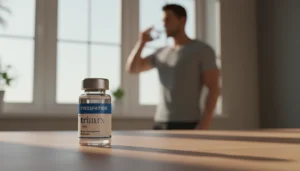
Compounded tirzepatide ships within 48 hours via temperature-controlled courier. The medication arrives as lyophilised powder in sterile vials alongside bacteriostatic water, alcohol prep pads, and insulin syringes. Reconstitution instructions are included. Mix 2mL bacteriostatic water with the lyophilised peptide, swirl gently (never shake), and refrigerate at 2–8°C. Once reconstituted, the solution remains stable for 28 days. Subcutaneous injection is administered weekly into the abdomen, thigh, or upper arm using a 1mL insulin syringe. Rotating injection sites prevents lipohypertrophy.
What Differentiates Compounded Tirzepatide From Brand-Name Mounjaro
Compounded tirzepatide contains the same active molecule as Mounjaro. Both are synthetic peptides mimicking the endogenous GIP and GLP-1 hormones. The pharmacological mechanism is identical: dual receptor agonism at GIP and GLP-1 sites produces appetite suppression, slows gastric emptying, improves insulin sensitivity, and increases energy expenditure through thermogenesis. What differs is regulatory oversight and manufacturing process.
Mounjaro is an FDA-approved drug product manufactured by Eli Lilly under full cGMP (current Good Manufacturing Practice) standards with batch-level potency verification and stability testing. Compounded tirzepatide is prepared by state-licensed 503B facilities or compounding pharmacies under USP <797> sterile compounding standards. The active ingredient is pharmaceutical-grade, but the final formulation hasn't undergone Phase 3 clinical trials as a finished product. This distinction matters for two reasons: first, compounded versions cost 60–85% less than brand-name Mounjaro ($350–$450 per month versus $1,300); second, insurance rarely covers compounded medications, whereas some commercial plans cover Mounjaro for type 2 diabetes (though not for weight loss alone).
The FDA has confirmed tirzepatide shortages since mid-2023, which legally permits compounding pharmacies to produce the medication under Section 503B exemptions. When the shortage resolves, compounding may no longer be permissible. But as of 2026, telehealth tirzepatide Dallas remains fully compliant with federal and state regulations. We mean this sincerely: compounded tirzepatide isn't 'fake Mounjaro' or a generic substitute. It's the same molecule prepared under different regulatory pathways, and for patients paying out-of-pocket, the cost difference makes treatment accessible where it otherwise wouldn't be.
Dosing Schedules That Prevent Nausea and Maximize Results
Tirzepatide has a half-life of approximately five days, meaning weekly injections maintain therapeutic plasma levels throughout the dosing cycle. Standard titration starts at 2.5mg weekly for four weeks, increases to 5mg for four weeks, then escalates to 7.5mg, 10mg, 12.5mg, and 15mg at four-week intervals. This stepwise approach isn't arbitrary. It allows GLP-1 receptor density in the gut to downregulate gradually, which reduces gastrointestinal side effects.
Nausea, vomiting, and diarrhea occur in 30–45% of patients during dose escalation. These symptoms peak in weeks 2–3 at each new dose and typically resolve within 4–8 weeks. The biological cause: GLP-1 receptor density in the gastrointestinal tract exceeds that in the hypothalamus, so the gut responds more aggressively to increased agonist signaling than the brain does. Slowing gastric emptying is the intended therapeutic effect, but excessive slowing produces nausea. Standard mitigation strategies include eating smaller meals (400–500 calories per sitting), avoiding high-fat foods that delay gastric emptying further, staying upright for two hours post-meal, and extending the titration schedule if symptoms are severe.
One mistake most telehealth tirzepatide Dallas patients make: they assume nausea means the medication is 'working harder' and push through escalation too quickly. That's backwards. Persistent nausea above mild discomfort signals the dose exceeded what your GI tract can tolerate at that receptor density level. Staying at the current dose for an additional two weeks allows adaptation before increasing further. Weight loss continues at submaximal doses: the SURMOUNT-1 data showed 15.7% mean reduction at 10mg versus 20.9% at 15mg, so patients intolerant of the highest dose still achieve clinically meaningful outcomes.
Telehealth Tirzepatide Dallas — Medication Comparison
| Medication | Mechanism | Average Monthly Cost | Mean Weight Loss (72 Weeks) | Administration | Bottom Line |
|---|---|---|---|---|---|
| Compounded Tirzepatide (Telehealth) | Dual GIP/GLP-1 receptor agonist | $350–$450 | 20.9% at 15mg dose | Weekly subcutaneous injection, self-administered | Best cost-to-outcome ratio for patients paying out-of-pocket. Identical mechanism to brand-name at 70% lower cost |
| Mounjaro (Brand Tirzepatide) | Dual GIP/GLP-1 receptor agonist | $1,300 (without insurance) | 20.9% at 15mg dose | Weekly subcutaneous injection, pre-filled pen | Same efficacy as compounded but significantly higher cost. Practical only if insurance covers |
| Semaglutide (Compounded) | GLP-1 receptor agonist only | $300–$400 | 14.9% at 2.4mg dose | Weekly subcutaneous injection, self-administered | Lower efficacy than tirzepatide but still effective. Appropriate for patients who don't tolerate GIP agonism |
| Wegovy (Brand Semaglutide) | GLP-1 receptor agonist only | $1,400 (without insurance) | 14.9% at 2.4mg dose | Weekly subcutaneous injection, pre-filled pen | Effective but costlier than compounded alternatives with no efficacy advantage |
Key Takeaways
- Telehealth tirzepatide Dallas provides licensed prescriber access and FDA-registered compounded medication shipped within 48 hours to any Texas address.
- Tirzepatide produces 15–22% body weight reduction by acting as a dual GIP and GLP-1 receptor agonist. Correcting impaired satiety signaling rather than requiring behavioral restriction.
- Compounded tirzepatide contains the same active molecule as brand-name Mounjaro but costs 60–85% less due to different regulatory pathways.
- Gastrointestinal side effects (nausea, vomiting, diarrhea) occur in 30–45% of patients during dose escalation and resolve within 4–8 weeks at each dose level.
- Standard titration starts at 2.5mg weekly and increases every four weeks to 15mg maximum. Slower escalation reduces side effects without compromising efficacy.
- Reconstituted tirzepatide must be stored at 2–8°C and used within 28 days. Temperature excursions above 8°C denature the protein structure irreversibly.
What If: Telehealth Tirzepatide Dallas Scenarios
What If I Feel No Appetite Suppression After My First Injection?
Continue the protocol. The starting dose of 2.5mg is subtherapeutic for most patients. Appetite suppression becomes noticeable at 5–7.5mg for the majority, typically around week 6–8. The medication works by accumulating at GLP-1 and GIP receptor sites over multiple dosing cycles, not through acute single-dose effects. If you reach 10mg weekly and still notice no change, contact your prescriber. Some patients require bloodwork to rule out thyroid dysfunction or insulin resistance patterns that blunt GLP-1 response.
What If I Experience Severe Nausea That Prevents Eating?
Reduce your dose immediately and contact your telehealth tirzepatide Dallas provider. Severe nausea (defined as inability to consume 800+ calories daily or persistent vomiting) indicates the current dose exceeded your GI tolerance threshold. Most providers will drop you back to the previous dose level and hold there for an additional four weeks before attempting re-escalation. This isn't a treatment failure. 12–15% of patients require extended titration schedules, and weight loss continues at submaximal doses.
What If My Shipment Arrives Warm or the Ice Packs Are Melted?
Contact the pharmacy immediately and request replacement. Lyophilised tirzepatide tolerates brief ambient temperature exposure (up to 25°C for 24 hours), but prolonged heat exposure degrades potency. If the vial feels warm to touch or the shipment tracking shows delays exceeding 48 hours in transit, assume compromised stability. Most 503B facilities replace temperature-compromised shipments at no charge. Document the condition with photos and report within 24 hours of delivery.
The Unflinching Truth About Telehealth Tirzepatide Dallas
Here's the honest answer: telehealth tirzepatide Dallas works because it removes the two largest barriers to GLP-1 therapy. Access and cost. The medication itself isn't magic. It's a synthetic peptide that corrects a specific hormonal dysfunction (impaired incretin signaling), and it produces predictable, dose-dependent weight loss when administered correctly. What most people don't realize until they're six months into treatment is that the medication's effect is conditional, not permanent.
The STEP 1 Extension trial found that patients who stopped semaglutide regained approximately two-thirds of their lost weight within one year. Tirzepatide data shows similar rebound patterns. This isn't a medication failure. It reflects the biological reality that GLP-1 receptor agonism corrects a physiological state that returns when the drug is removed. For most patients, that means telehealth tirzepatide Dallas is a long-term metabolic management tool, not a 6-month weight loss course. Patients who view it as a temporary intervention to 'reset' their metabolism universally regain weight. Patients who integrate it into ongoing metabolic care maintain results.
The real advantage of telehealth tirzepatide Dallas isn't convenience. It's cost structure. At $350–$450 per month, compounded tirzepatide becomes sustainable where $1,300 monthly Mounjaro isn't. That cost difference determines whether treatment remains accessible long-term or becomes financially unsustainable after the first prescription.
Most patients who fail on GLP-1 therapy don't fail because the medication stopped working. They fail because the cost became prohibitive or the prescriber discontinued treatment after goal weight was reached without transition planning. Telehealth tirzepatide Dallas solves the first problem directly. The second requires a prescriber who understands that GLP-1 therapy isn't a 20-week protocol. It's metabolic infrastructure, and infrastructure doesn't get 'completed.'
Ready to start? Visit TrimRx to complete your intake assessment and schedule a consultation with a licensed Texas provider. Approval typically occurs within 48 hours, and your first shipment arrives within 72 hours of prescription transmission. No waitlists, no in-person visits, no insurance battles. Just access to the medication that produced 20.9% mean weight reduction in controlled trials, delivered to your address at a cost structure that makes long-term use financially viable.
Frequently Asked Questions
How does telehealth tirzepatide Dallas differ from in-person weight loss clinics?▼
Telehealth tirzepatide Dallas provides the same licensed prescriber oversight and FDA-registered medication as in-person clinics but eliminates travel, waitlists, and facility fees. Consultations occur via secure video, prescriptions transmit electronically to 503B pharmacies, and medication ships directly to your address within 48 hours. The clinical protocol — medical history review, contraindication screening, titration schedules, follow-up monitoring — remains identical to in-person care, but the delivery model reduces cost and removes geographic barriers.
Can I use telehealth tirzepatide Dallas if I live outside major metro areas?▼
Yes — telehealth tirzepatide Dallas serves any Texas resident with a valid mailing address, regardless of proximity to urban centers. Texas Medical Board telemedicine regulations permit fully remote prescribing for non-controlled substances like tirzepatide statewide. Rural patients often benefit most from telehealth access because endocrinology specialists concentrate in metro areas, creating 6–12 week waitlists for in-person consultations. Telehealth removes that constraint entirely.
What does compounded tirzepatide cost compared to insurance-covered Mounjaro?▼
Compounded tirzepatide through telehealth tirzepatide Dallas costs $350–$450 per month paid out-of-pocket. Brand-name Mounjaro costs $1,300 per month without insurance, or $25–$50 per month with commercial insurance coverage (typically requires type 2 diabetes diagnosis, not weight loss alone). Most insurance plans don’t cover GLP-1 medications for weight management, making compounded options the only financially sustainable path for patients without diabetes. For patients paying out-of-pocket, compounded tirzepatide costs 70% less than brand-name equivalents.
What are the most common side effects when starting tirzepatide?▼
Nausea, vomiting, diarrhea, and constipation occur in 30–45% of patients during dose escalation, particularly in weeks 2–3 at each new dose level. These symptoms result from slowed gastric emptying (the intended therapeutic mechanism) and typically resolve within 4–8 weeks as GLP-1 receptor density downregulates. Mitigation strategies include eating smaller meals, avoiding high-fat foods, staying upright post-meal, and extending titration schedules if symptoms are severe. Serious adverse events like pancreatitis or gallbladder disease are rare but documented.
How long does tirzepatide take to produce noticeable weight loss?▼
Most patients notice appetite suppression within 2–3 weeks at starting doses, but meaningful weight reduction — defined as 5% or more of body weight — typically appears at weeks 8–12 once therapeutic doses (7.5–10mg) are reached. The SURMOUNT-1 trial demonstrated peak weight loss at 72 weeks with mean reduction of 20.9% at 15mg weekly dose. Weight loss velocity is highest in the first 20 weeks and plateaus thereafter, though continued loss occurs through week 72 in clinical trials.
Will I regain weight if I stop taking tirzepatide?▼
Clinical data shows most patients regain a significant portion of lost weight after discontinuing GLP-1 therapy — the STEP 1 Extension trial found two-thirds of lost weight returned within one year of stopping semaglutide. This reflects the fact that tirzepatide corrects impaired satiety signaling and elevated ghrelin, both of which return when the medication is removed. For patients who reach goal weight, transition planning with a prescriber — including dietary structure, potential maintenance dosing, or metabolic monitoring — significantly reduces rebound. Tirzepatide is increasingly considered long-term metabolic management rather than short-term weight loss intervention.
Can telehealth tirzepatide Dallas prescribe if I have pre-existing conditions?▼
Prescribing eligibility depends on the specific condition. Tirzepatide is contraindicated in patients with personal or family history of medullary thyroid carcinoma, MEN2 syndrome, or active pancreatitis. Patients with gastroparesis, severe renal impairment (eGFR below 30), or uncontrolled thyroid disease require additional evaluation and may not qualify. Type 2 diabetes, hypertension, and metabolic syndrome don’t disqualify patients — in fact, tirzepatide improves A1C and cardiometabolic markers in these populations. The consultation process includes full contraindication screening before prescription approval.
How do I store compounded tirzepatide correctly?▼
Store unreconstituted lyophilised tirzepatide at room temperature (15–25°C) until reconstitution. Once mixed with bacteriostatic water, refrigerate at 2–8°C and use within 28 days. Never freeze reconstituted tirzepatide — freezing denatures the protein structure irreversibly. Temperature excursions above 8°C for more than 24 hours compromise potency and cannot be detected by appearance. During travel, use insulin coolers or FRIO wallets that maintain 2–8°C without electricity. Always check vial clarity before injection — cloudiness or particulate matter indicates degradation.
What happens during the telehealth consultation for tirzepatide?▼
The consultation lasts 15–20 minutes via secure video and covers medical history, current medications, prior weight loss attempts, contraindications (thyroid history, pancreatitis, gastroparesis), and baseline metrics (weight, BMI, A1C if diabetic, blood pressure). The provider reviews recent metabolic panels if available and documents findings in a HIPAA-compliant EHR. If medically appropriate, the prescription transmits electronically to an FDA-registered 503B pharmacy. Approval typically occurs within 48 hours, and the first shipment arrives within 72 hours of prescription transmission.
Can I switch from brand-name Mounjaro to compounded tirzepatide?▼
Yes — compounded tirzepatide contains the same active molecule as Mounjaro, so transitioning involves no dosage adjustment or titration restart. Patients currently on Mounjaro 10mg weekly switch directly to compounded tirzepatide 10mg weekly without interruption. The injection technique, frequency, and storage requirements remain identical. Most patients switch to reduce cost: compounded tirzepatide costs $350–$450 monthly versus $1,300 for brand-name Mounjaro without insurance. Switching doesn’t affect efficacy or safety — the pharmacological mechanism is identical.

Transforming Lives, One Step at a Time
Keep reading

Marathon Training on Tirzepatide When You Can’t Fuel
You have a plan on the fridge and a medication that has made eating feel optional. Those two things are in genuine conflict, and…

Paying Cash for Tirzepatide? Don’t Stretch Your Supply
When every vial comes out of your own pocket, the arithmetic is hard to ignore. If a month’s supply costs what it costs, and…
Working Around Food All Day on Tirzepatide When You Can’t Eat It
There are two separate problems here and they have different answers. One is physical: food smells, especially hot fat and fried food, make nausea…


