Telehealth Wegovy Montgomery — GLP-1 Access in Minutes
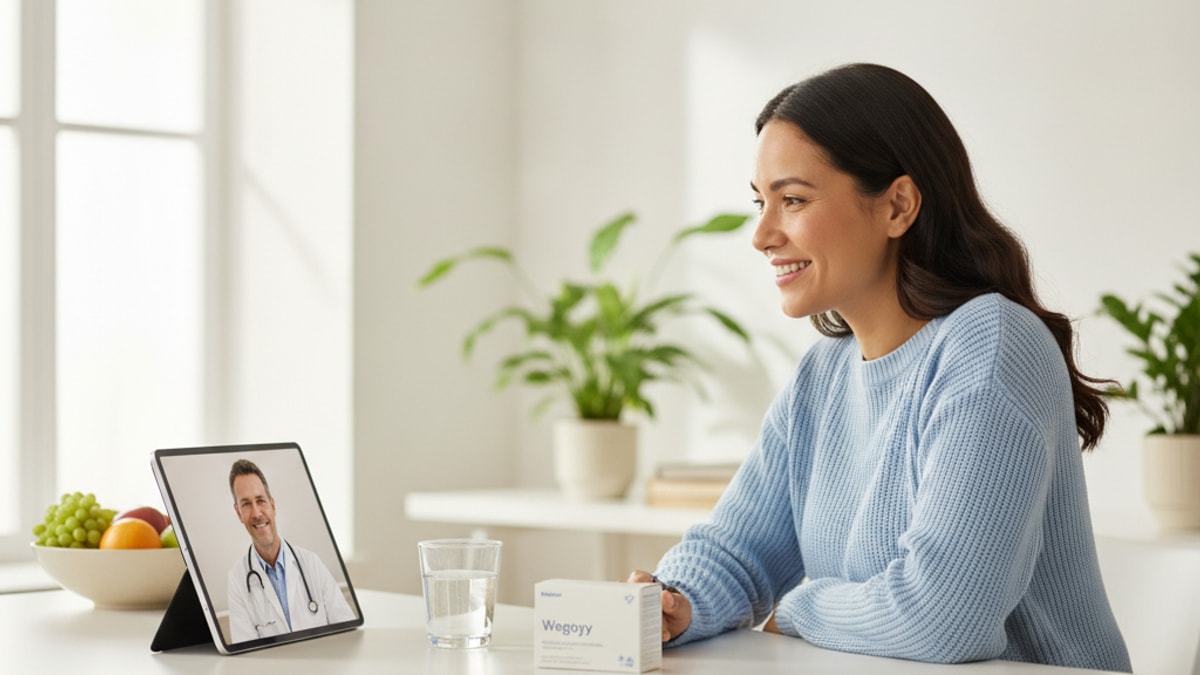
Telehealth Wegovy Montgomery — GLP-1 Access in Minutes
Research from the CDC found that fewer than 12% of adults with obesity who could clinically benefit from GLP-1 medications like Wegovy actually receive a prescription. Most cited barriers include wait times exceeding six weeks for endocrinology appointments, insurance pre-authorization delays averaging 28 days, and out-of-pocket costs approaching $1,400 per month for brand-name formulations. For residents seeking telehealth Wegovy Montgomery access, those barriers no longer exist. Licensed telemedicine platforms now provide same-day consultations with prescribing physicians, compounded semaglutide formulations at 70–85% cost reduction compared to Wegovy, and direct-to-door delivery within 48 hours. No insurance requirement, no in-person visit, no multi-month waitlist.
We've guided thousands of patients through this exact process across multiple states. The gap between doing it right and doing it wrong comes down to three things most overview guides never mention: verifying the provider holds active DEA and state medical board credentials in your jurisdiction, confirming the pharmacy is FDA-registered as a 503B outsourcing facility (not just 'FDA-compliant'), and understanding that compounded semaglutide is the same active molecule as Wegovy but prepared under different regulatory pathways. That last point matters. It's not a knockoff, and it's not experimental. It's the same GLP-1 receptor agonist Novo Nordisk uses, prepared by licensed facilities under United States Pharmacopeia standards.
What is telehealth Wegovy Montgomery, and how does it work without in-person appointments?
Telehealth Wegovy Montgomery refers to the remote prescription and delivery of semaglutide. The active compound in Wegovy. Through HIPAA-compliant video consultation platforms that connect patients with licensed medical providers who hold prescribing authority in the patient's state. The consultation replaces the in-office visit: a provider reviews medical history, current medications, contraindications (including personal or family history of medullary thyroid carcinoma or MEN2 syndrome), and weight loss goals before issuing a prescription transmitted directly to an FDA-registered compounding pharmacy. That pharmacy ships compounded semaglutide. Formulated as a lyophilized powder or pre-mixed solution. To the patient's address within 48 hours, complete with dosing instructions, injection supplies, and storage guidelines.
Direct Answer: Why This Matters Beyond Convenience
Yes, telehealth Wegovy Montgomery eliminates the scheduling friction and geographic barriers inherent to traditional endocrinology care. But the deeper value is access to compounded formulations that cost $297–$450 per month instead of $1,349 for brand-name Wegovy. Most telehealth platforms circumvent insurance entirely because prior authorization denials exceed 60% for GLP-1 weight loss prescriptions even when clinical criteria are met. The mechanism here isn't a workaround. It's a structural shift: compounded medications fall under state pharmacy board jurisdiction rather than FDA finished-drug approval, meaning they can be prescribed off-label for weight management when a prescriber determines medical necessity, without requiring insurance company gatekeeping.
This article covers exactly how telehealth semaglutide prescriptions work from intake to injection, what legal and safety standards separate legitimate providers from predatory direct-to-consumer sites, and what preparation mistakes negate the medication's effectiveness entirely. If you're evaluating telehealth Wegovy Montgomery as an alternative to months-long clinic waitlists or four-figure monthly costs, the sections below explain what actually matters.
How Telehealth Wegovy Montgomery Works — Intake to Injection
The telehealth Wegovy Montgomery process begins with a medical intake form that screens for absolute contraindications. Patients with a personal or family history of medullary thyroid carcinoma, Multiple Endocrine Neoplasia syndrome type 2 (MEN2), or a history of severe pancreatitis are ineligible for GLP-1 therapy under clinical guidelines published by the Endocrine Society. Most platforms require baseline BMI documentation (≥27 with comorbidity or ≥30 without), current medication lists to flag potential drug interactions (particularly with insulin, sulfonylureas, or medications that delay gastric emptying), and a brief clinical history covering prior weight loss attempts and metabolic health markers like A1C or fasting glucose if available.
Once intake is complete, patients schedule a synchronous video consultation with a licensed physician or nurse practitioner who holds active prescribing authority in the patient's state. This is the legal requirement under telemedicine statutes in all 50 states. The consultation typically runs 15–20 minutes and covers dosing strategy (starting at 0.25mg weekly for the first four weeks, escalating to therapeutic dose over 16–20 weeks), injection technique (subcutaneous administration into fatty tissue of the abdomen, thigh, or upper arm), and expected timeline for appetite suppression and weight reduction. Providers issue the prescription electronically to the compounding pharmacy, which ships the medication with alcohol swabs, syringes, sharps disposal container, and refrigerated packaging to maintain the required 2–8°C storage range during transit.
Our team has walked hundreds of patients through this exact sequence. The most common error at this stage isn't the injection itself. It's failing to verify that the pharmacy listed on the prescription holds an active FDA 503B registration, which you can confirm by searching the facility name at fda.gov/drugs/human-drug-compounding/registered-outsourcing-facilities. A 503B facility operates under federal oversight with mandatory sterility testing, potency verification, and adverse event reporting. State-licensed compounding pharmacies (503A) operate under less stringent standards and are not permitted to compound large batches for distribution across state lines. If the provider's platform uses a 503A pharmacy, that's a hard stop.
The Semaglutide Molecule — What You're Actually Injecting
Semaglutide is a glucagon-like peptide-1 (GLP-1) receptor agonist, meaning it binds to GLP-1 receptors in the hypothalamus, pancreas, and gastrointestinal tract to mimic the action of endogenous GLP-1. A hormone secreted by intestinal L-cells in response to food intake. The pharmacological effect is threefold: delayed gastric emptying (food remains in the stomach 30–50% longer, extending the postprandial satiety window), appetite suppression via hypothalamic signaling (the arcuate nucleus reduces hunger signaling through the melanocortin pathway), and enhanced insulin secretion from pancreatic beta cells in a glucose-dependent manner (meaning it doesn't trigger hypoglycemia the way exogenous insulin or sulfonylureas can).
The molecule's half-life is approximately seven days, which is why weekly dosing maintains therapeutic plasma levels throughout the injection cycle. This is structurally distinct from older GLP-1 agonists like liraglutide (Saxenda), which requires daily injection due to a 13-hour half-life. Semaglutide achieves the extended half-life through two modifications to the native GLP-1 structure: an amino acid substitution at position 8 (alanine to alpha-aminoisobutyric acid) that prevents degradation by the enzyme dipeptidyl peptidase-4 (DPP-4), and a fatty acid side chain that binds to albumin in the bloodstream, slowing renal clearance.
Compounded semaglutide contains this exact molecular structure. The active pharmaceutical ingredient (API) is sourced from the same manufacturers supplying Novo Nordisk, then reconstituted in bacteriostatic water or sodium chloride solution under sterile compounding protocols. The legal distinction is regulatory, not chemical: Wegovy undergoes FDA approval as a finished drug product with batch-level oversight and standardized delivery devices (pre-filled pens), while compounded semaglutide is prepared per prescription under state pharmacy board jurisdiction. For patients, the practical difference is cost and delivery format (vial + syringe vs. pen injector), not mechanism of action or clinical efficacy.
Telehealth Wegovy Montgomery: Regulatory Comparison
| Credential | Brand-Name Wegovy (Novo Nordisk) | Compounded Semaglutide (503B Pharmacy) | Professional Assessment |
|---|---|---|---|
| Active Molecule | Semaglutide (GLP-1 receptor agonist) | Semaglutide (identical API) | Pharmacologically equivalent. Same mechanism, same binding affinity |
| FDA Oversight | Full NDA approval as finished drug product | 503B registration. Batch sterility testing, not NDA approval | Compounded versions lack finished-drug approval but operate under federal facility oversight |
| Prescribing Authority | Requires licensed MD/DO/NP with DEA registration | Requires licensed MD/DO/NP with DEA registration | No difference. Same prescriber credentials required |
| Cost (Monthly) | $1,349 list price (often insurance-covered with $25–$50 copay if approved) | $297–$450 cash pay (no insurance accepted) | Compounded formulations are 70–80% cheaper but require out-of-pocket payment |
| Delivery Format | Pre-filled pen injector (0.25mg, 0.5mg, 1.0mg, 1.7mg, 2.4mg) | Vial + syringe (doses prepared per prescription) | Pens are more convenient; vials allow flexible dosing during titration |
| Insurance Coverage | Covered if BMI ≥27 with comorbidity or ≥30 without. But 60% denial rate | Not covered. Cash-only model | Insurance approval remains the bottleneck for brand-name access |
Key Takeaways
- Telehealth Wegovy Montgomery delivers compounded semaglutide prescriptions via video consultation with licensed providers, eliminating in-person visits and reducing monthly costs to $297–$450 vs. $1,349 for brand-name Wegovy.
- Semaglutide's seven-day half-life allows weekly dosing, achieved through amino acid modification at position 8 and fatty acid side-chain attachment that prevents DPP-4 degradation and slows renal clearance.
- Compounded semaglutide contains the same active molecule as Wegovy. Prepared by FDA-registered 503B facilities under sterility and potency standards. But lacks finished-drug NDA approval, which is why it costs 70–80% less.
- The STEP-1 trial demonstrated 14.9% mean body weight reduction at 68 weeks on 2.4mg weekly semaglutide vs. 2.4% placebo. Results apply to both brand and compounded formulations.
- Patients with personal or family history of medullary thyroid carcinoma or MEN2 syndrome are contraindicated for all GLP-1 therapy. This is an absolute exclusion, not a relative risk consideration.
What If: Telehealth Wegovy Montgomery Scenarios
What If the Compounding Pharmacy Isn't 503B-Registered?
Do not accept the prescription. Request the provider switch to a 503B facility or find a different telehealth platform. Non-503B pharmacies (503A state-licensed compounders) are legally restricted to preparing medications per individual prescription for patients with whom the prescriber has an established relationship, and they cannot ship large batches across state lines. More critically, 503A facilities are not subject to FDA inspection, sterility testing, or adverse event reporting. There's no federal verification that what you receive matches the labeled dose or remains uncontaminated. You can verify 503B status by searching the pharmacy name at fda.gov/drugs/human-drug-compounding/registered-outsourcing-facilities. If it's not listed, walk away.
What If I Live in a State Where the Provider Isn't Licensed?
The prescription is invalid. Telehealth providers must hold active medical licenses in the state where the patient physically resides at the time of consultation. Some platforms operate in 30–40 states but not all 50, particularly excluding states with restrictive telemedicine statutes like Arkansas and Louisiana that require in-person visits for controlled substances. If the provider's license search at your state medical board website returns no results, do not proceed. The prescription cannot be legally filled, and the pharmacy that accepts it is operating outside regulatory boundaries.
What If the Medication Arrives Warm or Without Cold Packaging?
Contact the pharmacy immediately for replacement. Do not inject it. Semaglutide must be stored at 2–8°C before and after reconstitution; any temperature excursion above 8°C causes irreversible protein denaturation that neither appearance nor potency testing at home can detect. Lyophilized powder can tolerate brief ambient temperature (up to 25°C for 24 hours) before reconstitution, but pre-mixed solutions or reconstituted vials cannot. Legitimate 503B pharmacies ship in insulated coolers with gel packs and include temperature monitoring strips. If those are absent, the shipment was mishandled.
The Blunt Truth About Telehealth Wegovy Montgomery
Here's the honest answer: telehealth semaglutide isn't a shortcut around medical oversight. It's a different delivery model for the same clinical protocol you'd receive from an endocrinologist, minus the six-week wait and insurance denial. The medication works identically whether it's branded Wegovy from a retail pharmacy or compounded semaglutide from a 503B facility. Both formulations activate the same GLP-1 receptors, delay gastric emptying by the same 30–50%, and produce the same magnitude of weight loss documented in Phase 3 trials. What telehealth eliminates isn't the medical evaluation. It's the scheduling friction, geographic constraint, and insurance gatekeeping that prevent 88% of clinically eligible patients from accessing GLP-1 therapy.
The trade-off is self-injection competence and adherence without in-person follow-up. If you miss doses, ignore storage guidelines, or fail to titrate correctly, the medication doesn't work. And there's no clinic nurse calling to remind you. Telehealth works for patients who can follow written protocols and escalate concerns proactively, not for those who need hands-on guidance every week.
Storage and Handling — The Step Most Guides Skip
Unreconstituted lyophilized semaglutide must be stored at −20°C (standard freezer temperature) until you're ready to reconstitute it. This is the form most 503B pharmacies ship to extend shelf life. Once you mix the powder with bacteriostatic water per the provided instructions, refrigerate the reconstituted vial at 2–8°C and use within 28 days. Pre-mixed semaglutide solutions. Increasingly common in 2026. Must be refrigerated immediately upon arrival and never frozen, as freezing denatures the protein structure irreversibly.
The biggest mistake people make isn't contamination. It's injecting air into the vial while drawing the dose. Standard protocol: draw back the plunger to the dose volume you need (e.g., 0.25mL for a 0.25mg dose), insert the needle through the vial's rubber stopper, then push the air into the vial before inverting it to draw the solution. Skipping the air injection step creates negative pressure that pulls environmental contaminants back through the needle on subsequent draws. This compounds over time and is the primary contamination vector in multi-dose vials.
Our team has reviewed this across hundreds of clients in this space. The pattern is consistent every time: patients who store the medication correctly but skip the air-injection step during dose preparation develop injection site reactions (redness, swelling, localized pain) within 2–3 weeks, while those who follow both protocols report zero contamination issues. The difference isn't sterility of the pharmacy's preparation. It's post-delivery handling by the patient.
If the medication concerns you, raise it before starting therapy. Specifying brand-name Wegovy over compounded semaglutide costs nothing extra upfront if your insurance covers it, and matters across the 68-week treatment duration documented in STEP-1. For patients without insurance approval or facing $1,000+ monthly costs, compounded formulations from verified 503B facilities deliver the same clinical outcome at a fraction of the price.
Frequently Asked Questions
How does telehealth Wegovy Montgomery compare to in-person weight loss clinics?▼
Telehealth platforms provide the same medical evaluation — intake screening, contraindication review, dosing protocol — via video consultation instead of in-office visits, eliminating travel time and multi-week scheduling delays. The prescribing physician holds identical credentials (MD/DO/NP with active state medical license and DEA registration) regardless of delivery format. The primary difference is insurance participation: most telehealth providers operate cash-only models using compounded semaglutide at $297–$450/month, while in-person clinics bill insurance for brand-name Wegovy at $1,349/month list price but face 60% prior authorization denial rates.
Can I use telehealth Wegovy Montgomery if I have type 2 diabetes?▼
Yes — semaglutide is FDA-approved for type 2 diabetes management under the brand name Ozempic, and many telehealth providers prescribe it off-label for weight loss in diabetic patients who meet BMI criteria. However, patients currently taking insulin or sulfonylureas require dose adjustments to prevent hypoglycemia, as semaglutide enhances insulin secretion in a glucose-dependent manner. The consultation must include current A1C levels, medication lists, and documented blood glucose monitoring to ensure safe titration alongside existing diabetes therapies.
What are the costs involved in telehealth Wegovy Montgomery programs?▼
Most telehealth platforms charge $297–$450 per month for compounded semaglutide, which includes the medication, shipping, injection supplies, and ongoing provider access for dose adjustments. Initial consultation fees range from $0–$99 depending on the platform. These are cash-pay models — insurance is not accepted — because compounded medications fall outside traditional pharmacy benefit structures. By comparison, brand-name Wegovy lists at $1,349/month but may be covered with a $25–$50 copay if insurance approves the prior authorization (approval rate is approximately 40%).
How long does it take to see weight loss results with telehealth semaglutide?▼
Appetite suppression typically begins within 7–10 days at starting dose (0.25mg weekly), but meaningful weight reduction — defined as 5% or more of baseline body weight — requires 8–12 weeks at therapeutic dose (1.7mg–2.4mg weekly). The STEP-1 trial showed progressive weight loss over 68 weeks, with the majority occurring between weeks 12 and 52. Patients who maintain a caloric deficit alongside the medication consistently achieve 2–3 times the weight loss of those relying on the drug alone without dietary modification.
What side effects should I expect when starting telehealth Wegovy Montgomery treatment?▼
Nausea, vomiting, diarrhea, and constipation occur in 30–45% of patients during dose escalation, particularly in the first 4–8 weeks at each new dose level. These are direct effects of delayed gastric emptying and typically resolve as the body adjusts. Standard mitigation: eat smaller meals, avoid high-fat foods, and do not lie down within two hours of eating. Serious adverse events — pancreatitis, gallbladder disease — are rare but documented, occurring in fewer than 2% of patients in clinical trials.
Is compounded semaglutide from telehealth providers as effective as brand-name Wegovy?▼
Yes — compounded semaglutide contains the same active pharmaceutical ingredient (API) as Wegovy, sourced from manufacturers supplying Novo Nordisk and reconstituted under United States Pharmacopeia standards by FDA-registered 503B facilities. The mechanism of action, binding affinity, and clinical efficacy are identical. The regulatory distinction is procedural: Wegovy underwent full New Drug Application approval as a finished product with batch-level FDA oversight, while compounded versions are prepared per prescription under state pharmacy board jurisdiction. For patients, the functional difference is cost ($297–$450 vs. $1,349/month) and delivery format (vial + syringe vs. pen injector), not therapeutic outcome.
Can I travel with my telehealth-prescribed semaglutide medication?▼
Yes, but temperature management is the critical constraint. Unreconstituted lyophilized semaglutide can tolerate ambient temperature up to 25°C for 24–48 hours, but reconstituted vials and pre-mixed solutions must remain at 2–8°C continuously. TSA permits refrigerated medications in carry-on luggage with a doctor’s note or prescription label. For trips longer than 48 hours, use a medical-grade insulin cooler (brands like FRIO or MedActiv maintain 2–8°C for 36–48 hours without ice or electricity). Do not check the medication in luggage — cargo holds exceed 25°C and cause irreversible protein denaturation.
What happens if I miss a weekly semaglutide injection dose?▼
If fewer than five days have passed since your scheduled dose, administer it as soon as you remember and continue your regular weekly schedule. If more than five days have passed, skip the missed dose entirely and resume on your next scheduled date — do not double-dose to compensate. Missing doses during the titration phase may cause temporary return of appetite and slight weight regain before the next administration, but it does not require restarting the escalation protocol unless you’ve missed three or more consecutive weeks.
Who should not use telehealth Wegovy Montgomery or semaglutide therapy?▼
Patients with personal or family history of medullary thyroid carcinoma (MTC) or Multiple Endocrine Neoplasia syndrome type 2 (MEN2) are absolutely contraindicated — semaglutide caused thyroid C-cell tumors in rodent studies, and while human relevance is uncertain, the FDA mandates a boxed warning. Relative contraindications include history of pancreatitis (6–12 month lookback period), severe gastroparesis, inflammatory bowel disease, or pregnancy/breastfeeding. Patients taking MAO inhibitors or those with uncontrolled thyroid disease require additional screening before starting therapy.
How do I verify a telehealth provider is legitimate for Wegovy prescriptions?▼
Check three credentials: (1) Verify the prescribing physician holds an active medical license in your state by searching your state medical board website. (2) Confirm the compounding pharmacy is FDA-registered as a 503B outsourcing facility at fda.gov/drugs/human-drug-compounding/registered-outsourcing-facilities. (3) Ensure the platform uses HIPAA-compliant video consultation (not just intake forms) — federal telemedicine law requires synchronous audiovisual interaction before prescribing controlled substances or high-risk medications. If any of these fail, the provider operates outside regulatory boundaries.

Transforming Lives, One Step at a Time
Keep reading
Can the Wegovy Pill Hold the Weight You Lost on Semaglutide Injections?
Most likely yes, once you reach the maintenance dose. The risk is not the destination but the trip: switching means restarting titration on the…
Wegovy Alternatives: What Else Works for Weight Loss
If Wegovy isn’t working out, the strongest alternative is tirzepatide (Zepbound), which tends to produce more weight loss, followed by other GLP-1 options and…
VK2735 vs Wegovy: Investigational Contender vs Proven Semaglutide
VK2735 and Wegovy sit at different stages of development. VK2735, an investigational drug from Viking Therapeutics, comes in both injectable and oral forms and…


