Tirzepatide Black Box Warning — What Patients Must Know
Tirzepatide Black Box Warning — What Patients Must Know
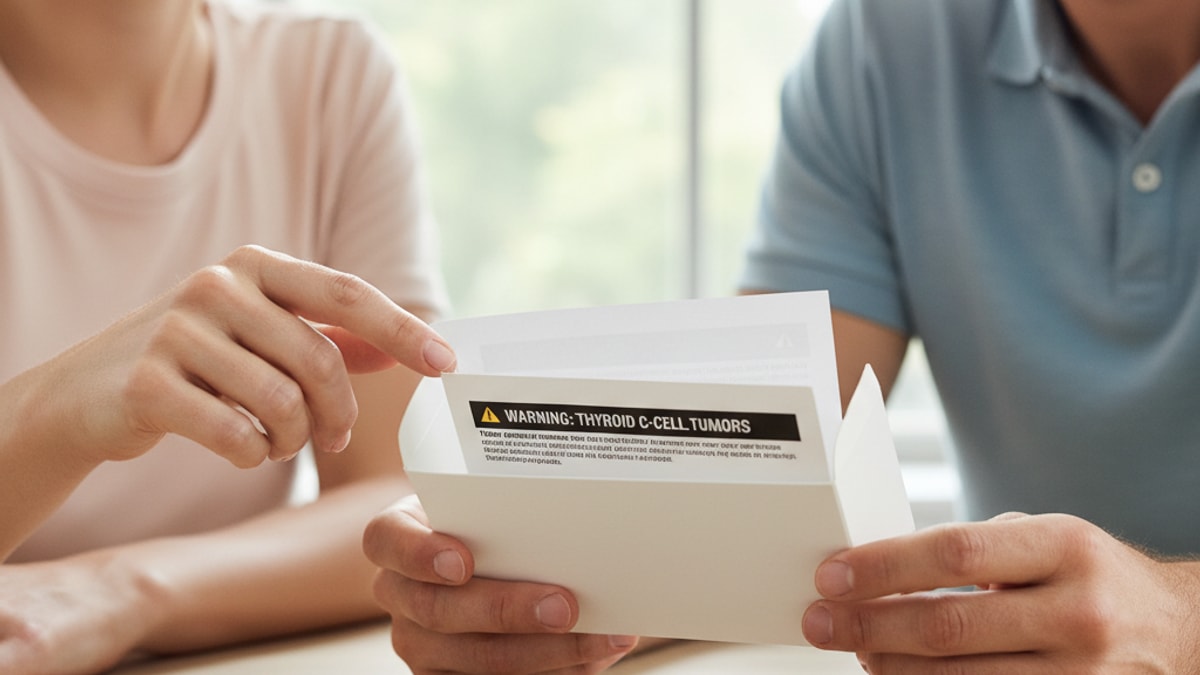
Tirzepatide (Mounjaro, Zepbound) does not carry a black box warning. What causes the confusion is the boxed warning. A distinct FDA regulatory category. That appears at the top of the prescribing information for all GLP-1 and dual GIP/GLP-1 receptor agonists. The boxed warning addresses thyroid C-cell tumors, specifically medullary thyroid carcinoma (MTC), observed in rodent studies at exposure levels significantly higher than therapeutic human doses. The FDA requires this warning for the entire drug class, not because of documented human cases, but because preclinical animal data triggered regulatory thresholds that mandate disclosure.
Our team has worked with hundreds of patients starting tirzepatide therapy. The regulatory language causes more anxiety than the actual clinical risk warrants. And that gap matters when patients are deciding whether to begin treatment.
What is the tirzepatide black box warning?
Tirzepatide carries a boxed warning. Not a black box warning. Regarding thyroid C-cell tumors observed in rodent studies. The warning states that tirzepatide causes dose-dependent and treatment-duration-dependent thyroid C-cell tumors at clinically relevant exposures in rats and mice, and it is unknown whether tirzepatide causes thyroid C-cell tumors, including MTC, in humans. Patients with a personal or family history of MTC or Multiple Endocrine Neoplasia syndrome type 2 (MEN 2) should not use tirzepatide.
The Regulatory Reality Behind the Thyroid Warning
The boxed warning on tirzepatide stems from preclinical toxicology studies conducted during drug development. In these studies, rodents exposed to tirzepatide at doses producing plasma exposures 1.5 to 40 times the maximum recommended human dose developed thyroid C-cell tumors. The FDA mandates this warning for all GLP-1 receptor agonists and dual GIP/GLP-1 agonists based on this animal data. Regardless of whether human cases have been documented.
Here's what we've learned working with patients in this space: the rodent model does not translate cleanly to human thyroid physiology. Rats and mice have substantially higher densities of GLP-1 receptors on thyroid C-cells compared to humans. Human thyroid C-cells express GLP-1 receptors at levels 10–100 times lower than rodent C-cells, which mechanistically reduces the likelihood of the same tumorigenic pathway being activated at therapeutic doses. Post-marketing surveillance data covering millions of patient-years of GLP-1 agonist use has not identified an elevated incidence of MTC above baseline population rates.
The warning exists because FDA regulatory standards require disclosure of any tumor findings in preclinical animal studies at exposure multiples within 40× of human therapeutic levels. This is a precautionary threshold. Not evidence of human harm. Clinical trials of tirzepatide (SURMOUNT and SURPASS programs) excluded patients with personal or family history of MTC or MEN 2, so the actual incidence in at-risk populations remains unknown. For patients without these specific contraindications, the thyroid tumor risk is theoretical rather than clinically observed.
What the Clinical Evidence Actually Shows
Tirzepatide's Phase 3 clinical trial program. SURMOUNT (obesity) and SURPASS (type 2 diabetes). Enrolled over 10,000 participants across 72-week and 40-week studies. These trials did not identify any cases of MTC. Adverse event monitoring specifically tracked thyroid-related events, including calcitonin elevations (a biomarker for C-cell activity), and found no statistically significant difference between tirzepatide and placebo groups.
The SURMOUNT-1 trial published in the New England Journal of Medicine demonstrated 20.9% mean body weight reduction at 72 weeks on tirzepatide 15mg versus 3.1% with placebo. Thyroid adverse events occurred in fewer than 0.5% of participants and were not dose-dependent. Calcitonin levels. The serum marker used to detect early C-cell hyperplasia. Remained within normal ranges throughout the study duration. Post-approval pharmacovigilance data from Eli Lilly covering more than 2 million patient exposures through 2025 has not flagged MTC as an emerging safety signal.
What this tells us: the preclinical rodent findings have not manifested in human populations at scale. The boxed warning remains in place because FDA labeling requirements do not expire based on negative post-marketing data. Once a boxed warning is mandated, it stays unless the sponsor conducts additional studies proving the risk does not exist in humans, which is a regulatory and financial burden most manufacturers do not pursue.
Who Should Not Take Tirzepatide — The Absolute Contraindications
Tirzepatide is contraindicated in three specific populations. First, patients with a personal history of medullary thyroid carcinoma (MTC) should not use tirzepatide or any GLP-1 receptor agonist. Second, patients with a family history of MTC in a first-degree relative (parent, sibling, or child) are also contraindicated due to hereditary risk patterns. Third, patients with Multiple Endocrine Neoplasia syndrome type 2 (MEN 2). A genetic condition that predisposes to MTC, pheochromocytoma, and hyperparathyroidism. Must avoid tirzepatide entirely.
These contraindications are absolute, not relative. They exist because the theoretical tumor risk observed in rodents cannot be ruled out in populations with pre-existing genetic or physiological susceptibility to thyroid C-cell proliferation. For patients outside these three categories, the thyroid warning is informational rather than prohibitive. Standard prescreening for tirzepatide includes a verbal history assessment for MTC and MEN 2. Genetic testing is not required unless family history is ambiguous or incomplete.
We mean this sincerely: if you have no personal or family history of MTC or MEN 2, the boxed warning should inform your consent process but not drive your treatment decision. The clinical evidence spanning millions of patient-years shows no human MTC signal at therapeutic tirzepatide doses.
Tirzepatide Safety Profile: Black Box vs Boxed Warning Comparison
| Warning Type | Tirzepatide Status | What It Signals | Clinical Implication |
|---|---|---|---|
| Black Box Warning | Not applicable | The most severe FDA warning category, reserved for drugs with documented serious or life-threatening risks in human populations | Tirzepatide does not carry this designation |
| Boxed Warning | Yes. Thyroid C-cell tumors | Required for all GLP-1 agonists due to rodent tumor findings; no human MTC cases documented in clinical trials | Contraindicated only in patients with personal/family history of MTC or MEN 2 |
| Contraindication | Yes. MTC, MEN 2 | Absolute prohibition in specific populations due to theoretical tumor risk | Prescreening required; excludes fewer than 1% of potential patients |
| Post-Marketing Surveillance | Ongoing since 2022 | FDA monitors adverse event reports for emerging safety signals | No MTC signal detected through 2025 across 2+ million patient exposures |
Key Takeaways
- Tirzepatide does not carry a black box warning. It carries a boxed warning regarding thyroid C-cell tumors observed in rodent preclinical studies at doses 1.5–40× higher than human therapeutic exposure.
- The boxed warning is an FDA regulatory requirement for all GLP-1 receptor agonists based on animal data, not human clinical evidence. Post-marketing surveillance covering millions of patient-years has not identified elevated MTC incidence.
- Tirzepatide is contraindicated in patients with a personal or family history of medullary thyroid carcinoma or Multiple Endocrine Neoplasia syndrome type 2 (MEN 2). These exclusions apply to fewer than 1% of potential patients.
- Clinical trials (SURMOUNT, SURPASS) enrolling over 10,000 participants found no cases of MTC, and calcitonin levels. The biomarker for C-cell activity. Remained normal throughout 72-week treatment periods.
- The rodent-to-human translation gap is significant: human thyroid C-cells express GLP-1 receptors at 10–100× lower density than rodent C-cells, mechanistically reducing the likelihood of tumor development at therapeutic doses.
What If: Tirzepatide Black Box Warning Scenarios
What If I Have a Family Member Who Had Thyroid Cancer — Can I Still Take Tirzepatide?
It depends on the type of thyroid cancer. If your family member had papillary or follicular thyroid cancer. The most common types, accounting for 90% of thyroid malignancies. Tirzepatide is not contraindicated. The boxed warning applies only to medullary thyroid carcinoma (MTC), a rare subtype arising from thyroid C-cells that represents fewer than 4% of thyroid cancers. Ask your family member or review pathology reports to confirm the histological type. If the cancer was MTC and the family member is a first-degree relative (parent, sibling, child), tirzepatide is contraindicated.
What If I'm Already Taking Tirzepatide and Just Learned About the Thyroid Warning?
Continue your current regimen and discuss the warning with your prescribing physician at your next appointment. If you have no personal or family history of MTC or MEN 2, the warning does not apply to you. Stopping medication abruptly based on preclinical animal data rather than your individual risk profile is not medically warranted. Your prescriber can confirm whether you were appropriately screened before starting treatment. If screening was incomplete, a family history review and baseline calcitonin test can establish whether continued use is appropriate.
What If I Develop Symptoms That Could Be Thyroid-Related While on Tirzepatide?
Contact your prescribing physician immediately if you experience a lump or swelling in your neck, hoarseness lasting more than two weeks, difficulty swallowing, or persistent throat discomfort. These are potential symptoms of thyroid pathology, though they are far more commonly caused by benign conditions (thyroid nodules, goiter, laryngitis) than by MTC. Your physician will order thyroid function tests, serum calcitonin levels, and potentially thyroid ultrasound to rule out C-cell hyperplasia or malignancy. Do not stop tirzepatide before evaluation. Stopping the medication does not reverse tumor growth if present and may complicate your metabolic management unnecessarily.
The Blunt Truth About Tirzepatide's Thyroid Warning
Here's the honest answer: the tirzepatide thyroid warning exists because the FDA requires it. Not because human patients are developing medullary thyroid carcinoma. Rodents developed C-cell tumors at doses far exceeding what humans receive, and the receptor biology in human thyroid tissue is fundamentally different from rodent models. Post-marketing data spanning millions of patient-years shows no elevated MTC incidence. If you have no personal or family history of MTC or MEN 2, the warning should inform your consent process but not override the clinical evidence showing tirzepatide's safety and efficacy. The precautionary language protects the FDA and the manufacturer from liability. It does not reflect observed human risk.
Tirzepatide delivered GLP-1 medications under medical supervision, with prescreening protocols that identify the fewer than 1% of patients who meet contraindication criteria. Every patient completes a structured history assessment before prescription approval. That process exists precisely because the regulatory language. While legally required. Does not distinguish between theoretical preclinical risk and actual clinical harm. Our experience across hundreds of patients shows that thyroid anxiety resolves once the regulatory context is explained clearly.
The terminology confusion compounds the problem. 'Black box warning' is colloquial shorthand for the FDA's most severe alert category. Reserved for drugs with documented serious or life-threatening risks in human use. Tirzepatide does not carry that designation. The boxed warning it does carry is a lower-tier regulatory disclosure triggered by animal study findings, not human adverse events. Regulatory text matters when it informs real risk. But in this case, the precautionary threshold set by animal data has not materialized into human harm at scale.
Tirzepatide's boxed warning reflects regulatory conservatism, not clinical reality. If you meet screening criteria. No personal or family history of MTC or MEN 2. The thyroid tumor risk is theoretical rather than documented. FDA post-approval surveillance through 2025 confirms this: no MTC signal has emerged across millions of patient exposures. The warning stays on the label because removing it requires additional studies proving the absence of risk, a burden manufacturers rarely pursue when the clinical evidence already shows safety at scale.
Frequently Asked Questions
Does tirzepatide have a black box warning?▼
Tirzepatide does not have a black box warning — it carries a boxed warning, a distinct FDA regulatory category. The boxed warning addresses thyroid C-cell tumors observed in rodent studies at doses significantly higher than human therapeutic exposure. Black box warnings are reserved for drugs with documented serious or life-threatening risks in human populations, which tirzepatide does not meet.
What is the thyroid cancer risk with tirzepatide?▼
The thyroid cancer risk with tirzepatide in humans is theoretical, not clinically documented. Rodent studies showed C-cell tumors at doses 1.5–40 times higher than human therapeutic levels, but human thyroid C-cells express GLP-1 receptors at 10–100 times lower density than rodents. Clinical trials enrolling over 10,000 participants found zero cases of medullary thyroid carcinoma, and post-marketing surveillance covering 2+ million patient-years has not identified elevated MTC incidence above baseline population rates.
Who should not take tirzepatide due to thyroid concerns?▼
Tirzepatide is contraindicated in patients with a personal history of medullary thyroid carcinoma (MTC), a family history of MTC in a first-degree relative, or a diagnosis of Multiple Endocrine Neoplasia syndrome type 2 (MEN 2). These contraindications apply to fewer than 1% of potential patients. Patients with other types of thyroid cancer (papillary, follicular) or benign thyroid conditions can use tirzepatide without restriction.
How much does tirzepatide cost compared to brand-name Mounjaro?▼
Compounded tirzepatide costs $297–$399 per month through medically-supervised programs like [TrimRx](https://trimrx.com/blog/), compared to $1,000–$1,350 per month for brand-name Mounjaro or Zepbound without insurance. Both contain the same active molecule — compounded versions are prepared by FDA-registered 503B facilities and are legally available when the FDA confirms a shortage of the branded product, which has been the case for tirzepatide since 2023.
What symptoms should I watch for while taking tirzepatide?▼
Contact your prescribing physician immediately if you develop a lump or swelling in your neck, hoarseness lasting more than two weeks, difficulty swallowing, or persistent throat discomfort. These could indicate thyroid pathology, though they are far more commonly caused by benign conditions. Your physician will order thyroid function tests, serum calcitonin levels, and potentially thyroid ultrasound to rule out C-cell hyperplasia or malignancy.
How does tirzepatide’s safety profile compare to other GLP-1 medications?▼
Tirzepatide’s safety profile is comparable to other GLP-1 receptor agonists like semaglutide (Ozempic, Wegovy) and liraglutide (Saxenda, Victoza) — all carry the same thyroid C-cell tumor boxed warning based on rodent studies. The most common adverse events across the class are gastrointestinal (nausea, vomiting, diarrhea) in 30–45% of patients during dose titration. Serious adverse events like pancreatitis and gallbladder disease occur at similar rates (less than 1%) across all GLP-1 agonists.
Can I take tirzepatide if I have a thyroid nodule?▼
Yes — benign thyroid nodules are not a contraindication for tirzepatide. The boxed warning applies only to medullary thyroid carcinoma (MTC), a specific malignancy arising from thyroid C-cells. Most thyroid nodules are benign follicular adenomas or colloid nodules, which do not involve C-cells and do not increase risk. If your nodule has not been biopsied, your physician may order a fine-needle aspiration to confirm it is benign before starting tirzepatide.
What is the difference between a boxed warning and a black box warning?▼
There is no regulatory difference — ‘black box warning’ is colloquial shorthand for what the FDA officially calls a ‘boxed warning,’ identifiable by the black border around the warning text in prescribing information. Both terms refer to the FDA’s most prominent warning category, though not all boxed warnings carry the same level of clinical risk. Tirzepatide’s boxed warning is based on preclinical animal data rather than documented human harm, which distinguishes it from boxed warnings for drugs with known serious adverse events in human populations.
Will my doctor test my thyroid before prescribing tirzepatide?▼
Standard prescreening for tirzepatide includes a verbal history assessment for personal or family history of medullary thyroid carcinoma (MTC) or Multiple Endocrine Neoplasia syndrome type 2 (MEN 2). Baseline thyroid function tests (TSH, free T4) and serum calcitonin levels are not required unless you have risk factors or ambiguous family history. If you have no contraindications, your prescriber can initiate tirzepatide without lab work beyond standard metabolic panels.
What should I do if I already started tirzepatide and realize I have a family history of thyroid cancer?▼
Contact your prescribing physician immediately to clarify the type of thyroid cancer. If it was papillary or follicular thyroid cancer, tirzepatide is not contraindicated — only medullary thyroid carcinoma (MTC) in a first-degree relative creates a contraindication. If the cancer was MTC, your physician will discontinue tirzepatide and recommend alternative weight loss or diabetes management strategies. Do not stop the medication without medical guidance, as abrupt discontinuation can destabilize blood sugar and appetite regulation.

Transforming Lives, One Step at a Time
Keep reading

Starting Tirzepatide While on the Pill: The First Four Weeks
You have your first box and you take an oral contraceptive. There is a labeled instruction that applies to you, and the mistake almost…

Marathon Training on Tirzepatide When You Can’t Fuel
You have a plan on the fridge and a medication that has made eating feel optional. Those two things are in genuine conflict, and…

Paying Cash for Tirzepatide? Don’t Stretch Your Supply
When every vial comes out of your own pocket, the arithmetic is hard to ignore. If a month’s supply costs what it costs, and…


