Tirzepatide Cost on GoodRx: Is It Worth It?
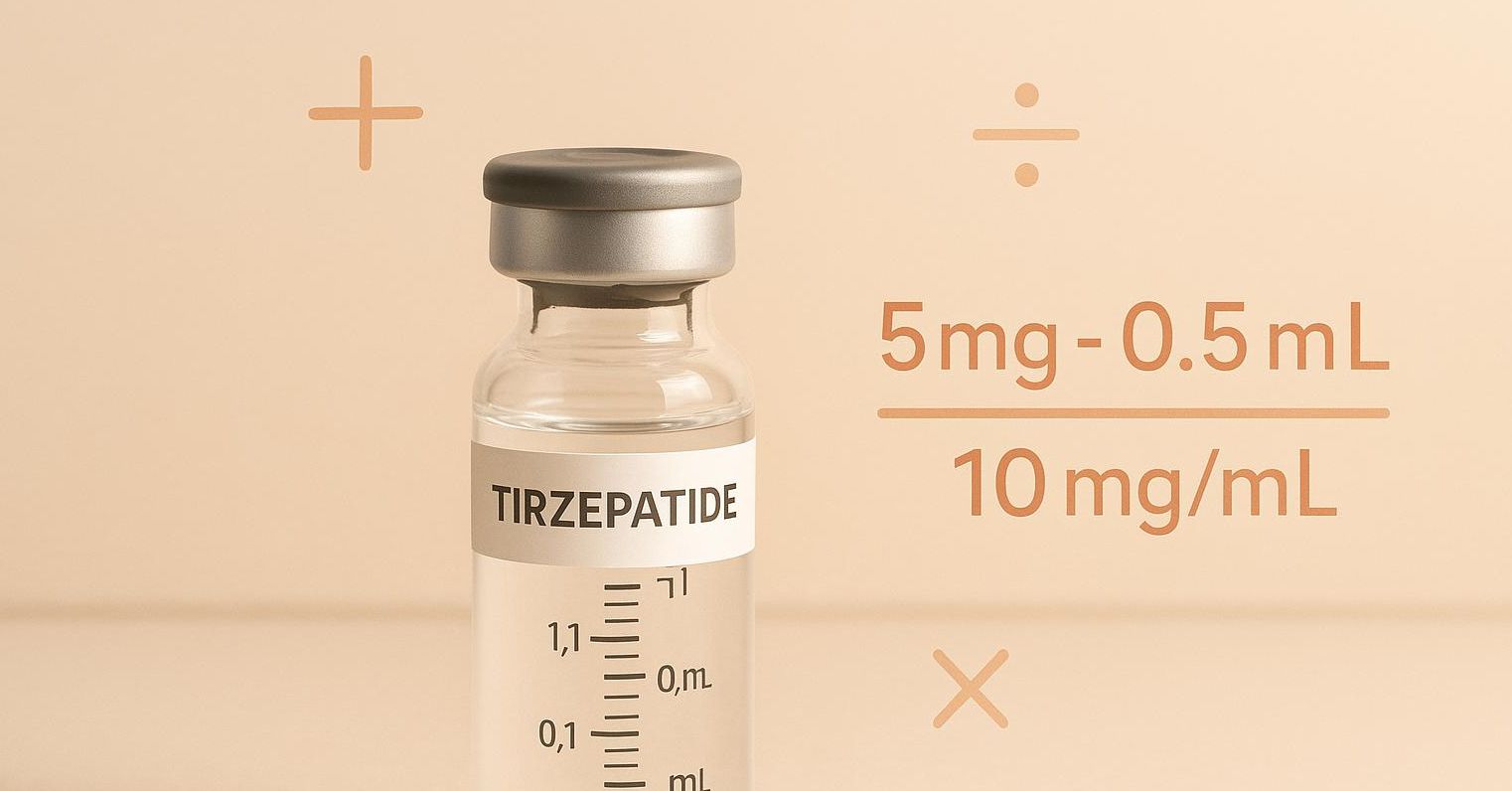
A GoodRx coupon for tirzepatide (brand name Mounjaro or Zepbound) typically brings the price down to somewhere between $800 and $1,100 per month, depending on the dose and pharmacy. That’s a discount from the list price of roughly $1,050 to $1,200 for Mounjaro, but it’s not the dramatic savings many people expect when they hear “coupon.” For a medication that most patients need to take indefinitely, those monthly costs add up fast. GoodRx can help at the margins, but it’s worth understanding exactly what you’re getting and where better options might exist.
What GoodRx Actually Does
GoodRx is a prescription discount platform, not insurance. It aggregates coupons and negotiated prices from pharmacies and presents you with the lowest available cash price at pharmacies near you. You show the GoodRx coupon at the pharmacy counter, and you pay the discounted price instead of the full retail price.
For many generic medications, GoodRx works extremely well. It can turn a $60 generic into a $12 one. The savings are real and sometimes dramatic. But tirzepatide is a brand-name biologic with no generic equivalent, and that changes the math significantly.
Here’s the thing about brand-name biologics: the floor price is high. GoodRx can negotiate discounts, but it’s negotiating down from a price that’s already over $1,000. A 15% to 20% discount on a $1,100 medication still leaves you paying $880 to $935. That’s real savings in absolute dollars, but for most people it doesn’t move the needle enough to make the medication affordable if it wasn’t already.
Current GoodRx Pricing for Tirzepatide
Prices fluctuate based on dose, pharmacy, and location, but here’s a general snapshot of what GoodRx tirzepatide pricing looks like across common doses.
| Dose | Approximate GoodRx Price (Monthly) |
|---|---|
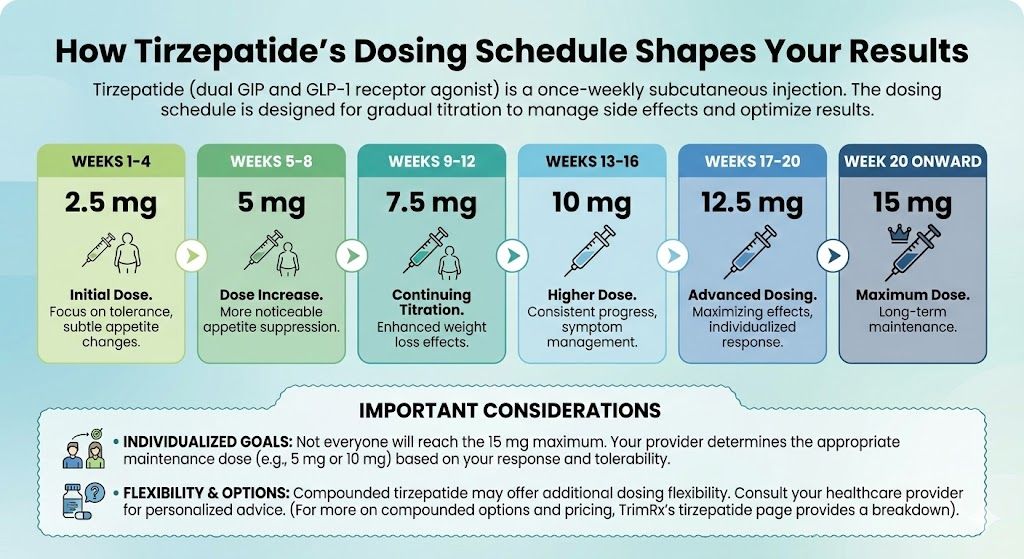
| 2.5 mg | $800 – $950 |
| 5 mg | $850 – $1,000 |
| 7.5 mg | $850 – $1,050 |
| 10 mg | $900 – $1,050 |
| 12.5 mg | $900 – $1,100 |
| 15 mg | $950 – $1,100 |
A few things stand out. First, the price difference between the lowest and highest doses is relatively small. Whether you’re on 2.5 mg or 15 mg, you’re paying roughly the same amount each month. Second, these prices represent the cash-pay cost after the GoodRx discount. If you have commercial insurance that covers tirzepatide, your out-of-pocket cost could be significantly lower through your plan, and GoodRx would be irrelevant. GoodRx is primarily useful for people paying entirely out of pocket.
Where GoodRx Falls Short for Tirzepatide
The limitations of GoodRx become clear when you look at the full picture of tirzepatide treatment.
It doesn’t stack with insurance. GoodRx coupons and insurance copay cards are separate programs. You use one or the other, not both. If you have insurance that covers Mounjaro or Zepbound, your plan’s copay is almost certainly lower than the GoodRx price. GoodRx only makes sense if your insurance doesn’t cover the medication at all or if you don’t have insurance.
Prices vary unpredictably. The price you see on the GoodRx website today might not be the price at the counter tomorrow. Pharmacy pricing changes frequently, and the GoodRx price is an estimate, not a guarantee. Some people have reported showing up at the pharmacy and finding the actual price is $50 to $100 higher than what GoodRx quoted online.
It doesn’t address the fundamental cost problem. Even at the best GoodRx price, you’re looking at roughly $10,000 to $13,000 per year for tirzepatide. For a medication that research suggests most people need to continue long-term to maintain results, that’s a serious financial commitment. GoodRx trims the edges but doesn’t solve the core affordability issue.
No ongoing relationship or clinical support. GoodRx is a coupon. It doesn’t come with a provider, dosing guidance, follow-up consultations, or any of the clinical support that should accompany a medication like tirzepatide. You still need a separate provider to write the prescription and manage your treatment.
Manufacturer Savings Programs
Before relying on GoodRx, it’s worth checking whether you qualify for manufacturer savings programs, which can sometimes offer significantly better pricing.
Mounjaro Savings Card: Eli Lilly offers a savings card for commercially insured patients that can reduce copays to as low as $25 per month. The catch is that you need commercial insurance that covers Mounjaro, and the card has an annual maximum benefit. Patients without insurance or on government plans (Medicare, Medicaid, Tricare) don’t qualify.
Zepbound Savings Card: Similar to the Mounjaro card, Eli Lilly offers savings for Zepbound for commercially insured patients. The specifics change periodically, so checking the current terms directly through Lilly’s website is the best move.
If you have commercial insurance that covers tirzepatide, these manufacturer cards will almost always beat GoodRx pricing. The savings cards are designed to reduce your copay to a nominal amount, while GoodRx is discounting the full cash price.
Compounded Tirzepatide: The Alternative Worth Considering
For people paying out of pocket, the most significant savings on tirzepatide often come from compounded versions rather than discount coupons on the brand-name product.
Compounded tirzepatide is prepared by licensed compounding pharmacies and contains the same active ingredient as Mounjaro and Zepbound. It’s available at a fraction of the brand-name cost, typically starting around $179 to $499 per month depending on the dose and provider.
That’s a fundamentally different price point than what GoodRx can offer on brand-name tirzepatide. At the lower end, compounded tirzepatide can cost less than one-fifth of the GoodRx price for brand-name Mounjaro.
There are some differences to be aware of. Compounded medications come in multi-dose vials that you draw with a syringe, rather than the single-dose auto-injector pens that Mounjaro and Zepbound use. Some people prefer the convenience of auto-injectors. Others prefer vials because they offer more precise dosing flexibility, allowing providers to prescribe intermediate doses like 3.75 mg or 6.25 mg that aren’t available in the brand-name pens.
Compounded tirzepatide is available through telehealth services like TrimRx, which include provider consultations, dosing management, and home delivery as part of the service. That means you’re not just getting the medication at a lower price. You’re getting clinical oversight built into the cost, something GoodRx doesn’t provide.
Comparing Your Options Side by Side
Here’s how the main pricing paths stack up for someone without insurance coverage for tirzepatide:
| Option | Approximate Monthly Cost | Includes Provider? | Dosing Flexibility |
|---|---|---|---|
| Brand-name (retail) | $1,050 – $1,200 | No | Fixed pen doses |
| Brand-name (GoodRx) | $800 – $1,100 | No | Fixed pen doses |
| Brand-name (manufacturer card, with insurance) | $25 – $150 | No | Fixed pen doses |
| Compounded tirzepatide (TrimRx) | $179 – $499 | Yes | Flexible vial dosing |
For the uninsured or underinsured patient, the difference between GoodRx pricing and compounded pricing is substantial enough to determine whether treatment is feasible at all. Paying $900 a month is out of reach for many households. Paying $179 to $499 puts treatment in a different category entirely.
When GoodRx Makes Sense
GoodRx isn’t useless for tirzepatide. There are specific situations where it’s the right tool.
Short-term bridge. If you’re waiting for insurance approval or switching plans, a GoodRx coupon can help you fill one or two prescriptions at a discounted cash price while your coverage sorts out. It’s not a long-term solution, but it can prevent a gap in treatment.
Price comparison tool. Even if you don’t use the GoodRx coupon, the platform is useful for comparing cash prices across pharmacies. Pricing varies significantly between pharmacies, even within the same city, and GoodRx gives you visibility into those differences.
When you specifically want brand-name medication. Some patients prefer the brand-name product for reasons of personal comfort, trust, or convenience. If you’ve decided that brand-name Mounjaro or Zepbound is what you want, GoodRx will get you the best available cash price for that specific product.
Making the Smart Financial Decision
The bottom line is that GoodRx provides a modest discount on tirzepatide, but it doesn’t transform an expensive medication into an affordable one. If you have insurance that covers Mounjaro or Zepbound, use your insurance plus the manufacturer savings card. If you’re paying cash, compounded tirzepatide through a provider like TrimRx offers dramatically lower pricing with clinical support included.
Your weight loss journey shouldn’t be limited by what a coupon can shave off a $1,000 medication. Exploring your options and understanding the full range of pricing paths available to you is the first step toward finding a treatment plan that’s both effective and sustainable for your budget.
This information is for educational purposes and is not medical advice. Consult with a healthcare provider before starting any medication. Individual results may vary.

Transforming Lives, One Step at a Time
Keep reading

Tirzepatide vs Semaglutide Side Effects: How They Compare
Choosing between tirzepatide and semaglutide often comes down to two questions: which one works better, and which one is easier to tolerate. The first…
How to Store Compounded Semaglutide or Tirzepatide at Home
Your medication arrives in an insulated box with cold packs. Now what? Storage is one of those topics that sounds straightforward until you have…

Pen vs Vial for Compounded Semaglutide and Tirzepatide
When you start researching compounded GLP-1 medications, one of the first practical questions that comes up is format. Compounded semaglutide and tirzepatide are available…


