Tirzepatide Long-Term Use: What the Current Research Shows

Tirzepatide appears safe and effective for long-term use based on current research, though the longest completed trials span about two years. The SURMOUNT program and ongoing extension studies show sustained weight loss, continued metabolic improvements, and a side effect profile that generally improves over time rather than worsening. For people considering years of treatment, that’s encouraging news, even as researchers continue gathering longer-term data.
The honest reality is that tirzepatide is a newer medication than semaglutide. It received FDA approval for type 2 diabetes (as Mounjaro) in 2022 and for weight management (as Zepbound) in 2023. That means we don’t yet have the five or ten-year safety datasets that exist for older GLP-1 medications. But what we do have is substantial, and it points in a positive direction.
The Clinical Trial Evidence So Far
The SURMOUNT series of trials forms the backbone of what we know about tirzepatide for weight management. SURMOUNT-1 ran for 72 weeks and showed that participants on the highest dose (15 mg) lost an average of 22.5% of their body weight. That’s a remarkable number, but what matters for long-term use is what happened next.
SURMOUNT-4 specifically addressed the maintenance question. Participants who had already lost weight on tirzepatide were randomized to either continue the medication or switch to placebo. The results, published in JAMA in 2024 by Aronne et al., were clear. Those who continued tirzepatide maintained their weight loss and even lost a bit more. Those who switched to placebo regained a significant portion of what they’d lost.
This trial design is important because it directly answers the question people are really asking: “Do I need to keep taking this?” For most people, the answer is yes, if you want to keep the results.
The tirzepatide results timeline during active treatment shows progressive weight loss that typically continues through the first year. Long-term use shifts the goal from continued loss to sustained maintenance, which the data supports.
How Tirzepatide Differs From Other GLP-1s Long-Term
Tirzepatide is a dual-action medication. It activates both GLP-1 and GIP receptors, which is what sets it apart from semaglutide and other pure GLP-1 receptor agonists. This dual mechanism is part of why tirzepatide tends to produce greater weight loss in head-to-head comparisons.
For long-term use, the dual mechanism raises an interesting question: does activating two receptor pathways create different long-term effects than activating one? The short answer is that we’re still learning. The GIP pathway’s role in weight management is less well understood than GLP-1’s, and researchers are actively studying how chronic GIP receptor activation affects metabolism, fat storage, and appetite regulation over extended periods.
What the clinical data shows so far is that tirzepatide’s side effect profile over 72 weeks looks similar to what you’d expect from a GLP-1 medication. Gastrointestinal symptoms (nausea, diarrhea, constipation) are the most common adverse events, and they’re most pronounced during dose escalation. By the time patients reach a stable maintenance dose, most report that these symptoms have either resolved or become very manageable.
There’s no signal in the existing data suggesting that tirzepatide becomes less safe over time. If anything, tolerability tends to improve as the body adjusts to the medication.
What We Know About Safety Beyond Two Years
This is where transparency matters. The longest controlled trial data for tirzepatide in weight management covers roughly 88 weeks. For type 2 diabetes, we have slightly longer data from the SURPASS program. But we don’t have the kind of multi-year, large-scale cardiovascular outcomes data that exists for semaglutide through the SELECT trial.
That’s changing. Eli Lilly is running ongoing studies, including cardiovascular outcomes trials, that will provide years of additional safety data. The SUMMIT trial, which looked at tirzepatide in heart failure with preserved ejection fraction, showed positive cardiac outcomes over its study period, which adds to the safety picture.
For now, providers making long-term prescribing decisions are working with the available trial data plus the broader safety record of GLP-1 medications as a class. Semaglutide’s long-term safety record, which extends beyond six years in the diabetes population, provides some reassurance since tirzepatide shares the GLP-1 mechanism. The added GIP component is the variable that lacks the same depth of long-term data.
What does this mean practically? It means that the decision to use tirzepatide long-term should involve regular monitoring and ongoing conversations with your provider. It doesn’t mean the medication is risky. It means the evidence base is still growing, which is normal for any medication that’s been on the market for a few years.
The Weight Regain Problem
The strongest argument for long-term tirzepatide use is the weight regain data. Every discontinuation study tells the same story: stop the medication, and the weight comes back. This isn’t unique to tirzepatide. It’s a feature of obesity as a chronic disease.
Your body has a complex set of hormonal feedback loops that regulate weight. Leptin, ghrelin, GLP-1, GIP, insulin, and other signals all work together to defend a set point. When you lose significant weight, these signals shift to promote regain. More hunger, less satiety, reduced energy expenditure. Tirzepatide counteracts these shifts. Remove it, and the shifts reassert themselves.
The tirzepatide weight loss results are impressive during active treatment. But those results only persist if treatment continues. That’s not a limitation of the medication. That’s the nature of managing a chronic condition.
Consider this scenario. A patient loses 50 pounds over ten months on tirzepatide, bringing her BMI from 36 to 28. Her blood pressure normalizes, her A1C drops, her joint pain improves. She stops the medication because she feels great and thinks she can maintain with lifestyle alone. Over the next year, she regains 35 of those 50 pounds. Her blood pressure creeps back up. Her A1C rises. She restarts the medication and has to go through dose escalation all over again.
This pattern is extremely common, and it’s avoidable with a long-term treatment plan.
What Long-Term Treatment Looks Like in Practice
Staying on tirzepatide for years doesn’t mean your experience stays static. The medication evolves with you.
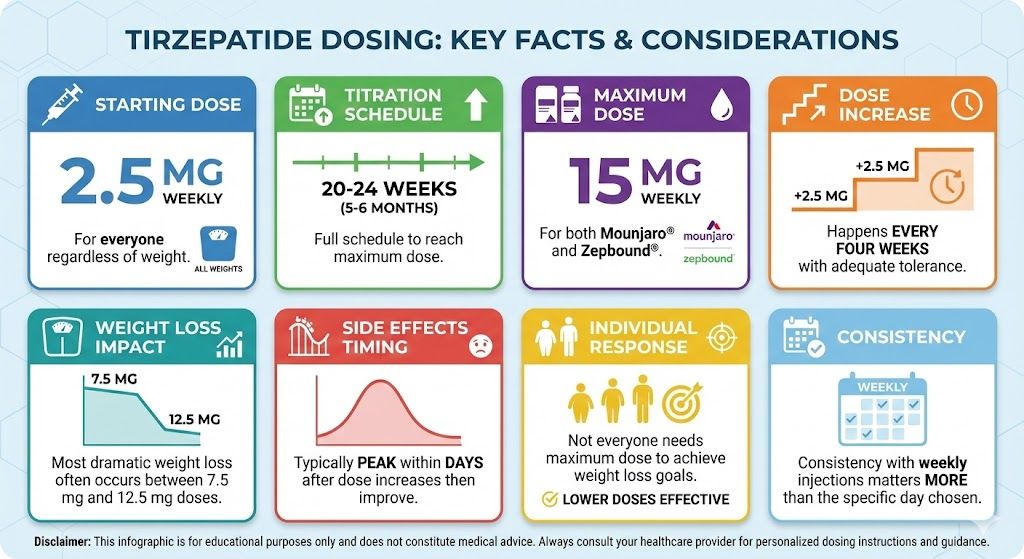
During the first phase, you’re escalating doses and experiencing the most pronounced side effects. This lasts roughly three to six months depending on how quickly your provider increases your dose.
The second phase is active weight loss on a stable dose. You’ve found the level that works, side effects have settled, and the weight is coming off consistently. This can last six to eighteen months.
The third phase is maintenance. Your weight has stabilized, and the focus shifts to finding the lowest effective dose that keeps your results intact. Some people stay on their peak dose. Others step down. The Mounjaro maintenance dose article covers this dosing strategy in detail, and the same principles apply whether you’re on brand Mounjaro or compounded tirzepatide.
Over years, you’ll likely need periodic adjustments. Life changes, from menopause and aging to shifts in activity level or stress, can affect how your body responds to the medication. Annual or biannual reviews with your provider keep your treatment aligned with where you are, not where you were when you started.
Addressing Common Concerns About Indefinite Use
“Will my body become dependent on it?” Tirzepatide doesn’t create physical dependency in the way that opioids or benzodiazepines do. You won’t experience withdrawal symptoms if you stop. What happens is that the condition it’s treating, which is the hormonal dysregulation that drives obesity, reasserts itself. That’s not dependency. That’s a chronic disease behaving like a chronic disease.
“Will it stop working over time?” Some people do experience a plateau where weight loss stalls, but this typically happens during the active loss phase, not during maintenance. The appetite-suppressing effects of tirzepatide appear to remain consistent over the duration of treatment in clinical trials. There’s no evidence of the medication “wearing off” the way some people fear.
“What about side effects accumulating?” The current data doesn’t show cumulative toxicity with prolonged tirzepatide use. Side effects that are present tend to remain stable or improve, not worsen. Standard monitoring (periodic blood work, kidney function, pancreatic markers) is part of responsible long-term prescribing and helps catch any issues early.
Planning for the Long Haul
If you’re thinking about tirzepatide as a long-term treatment, the best thing you can do is frame it that way from the start. That means choosing a provider and a treatment plan you can sustain, both medically and financially.
Brand-name Zepbound or Mounjaro through insurance is one path, but coverage can change. Out-of-pocket options through telehealth services like TrimRx offer more stability for people who don’t want their treatment disrupted by insurance decisions. Knowing your monthly cost and having a plan you can commit to for years makes the entire process smoother.
If you’re ready to start or if you’re already on tirzepatide and want to talk about your long-term plan, take the intake quiz to connect with a provider who can help you build a sustainable strategy.
This information is for educational purposes and is not medical advice. Consult with a healthcare provider before starting any medication. Individual results may vary.

Transforming Lives, One Step at a Time
Keep reading

Intermittent Fasting on Tirzepatide: Does It Help or Hurt?
Tirzepatide is already one of the most effective weight loss medications available, producing average losses of 15 to 20 percent of body weight in…

How Long to Lose 30 Pounds on Semaglutide or Tirzepatide
Losing 30 pounds on semaglutide or tirzepatide typically takes four to eight months for most patients, depending on starting weight, dose reached, and consistency….

Tirzepatide Results at 6 Months: Are You on Track
If you’re six months into tirzepatide treatment, you’re likely somewhere between encouraged and impatient. The good news: six months is where the data gets…


