Tirzepatide Side Effects: What to Expect and How to Manage

If you’re considering or starting tirzepatide, you’ve probably heard about side effects. Maybe your doctor mentioned nausea in passing, or you’ve seen online posts describing weeks of digestive misery. The uncertainty about what you’ll actually experience can be more stressful than helpful.
Here’s what the clinical data shows: tirzepatide causes side effects in most people, particularly gastrointestinal issues like nausea, diarrhea, and constipation. Roughly 40% to 45% of people experience nausea at some point during treatment, with rates varying by dose level. However, these effects are usually temporary, peaking within days of dose increases and improving significantly over the following 2 to 3 weeks as your body adapts.
This guide covers every aspect of tirzepatide side effects worth knowing. You’ll learn what to expect, when effects typically occur, how they compare to semaglutide, proven strategies for managing discomfort, and when symptoms warrant medical attention.
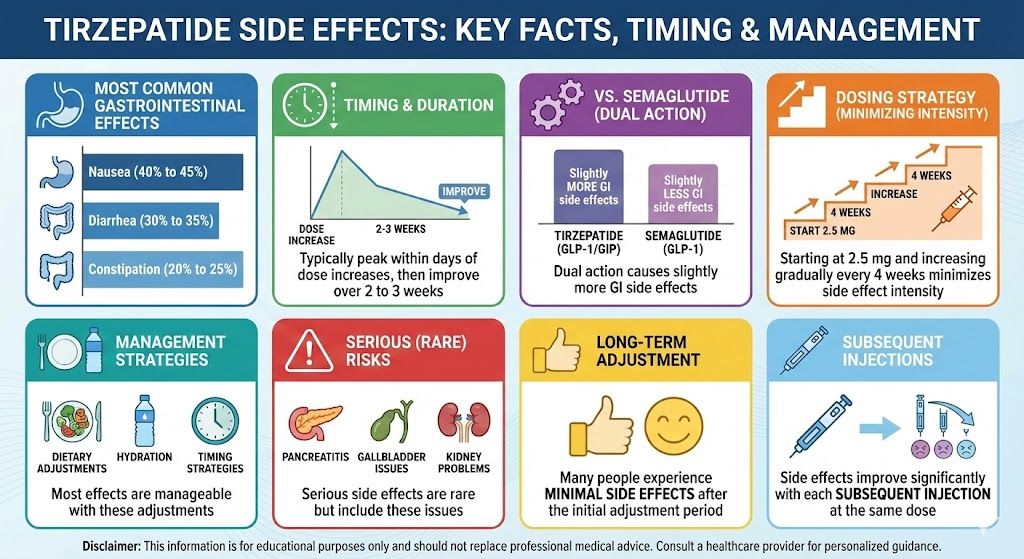
Key Takeaways: Tirzepatide Side Effects
- Most common side effects are gastrointestinal: nausea (40% to 45%), diarrhea (30% to 35%), constipation (20% to 25%)
- Side effects typically peak within days of dose increases, then improve over 2 to 3 weeks
- Tirzepatide causes slightly more GI side effects than semaglutide due to dual GLP-1/GIP action
- Starting at 2.5 mg and increasing gradually every 4 weeks minimizes side effect intensity
- Most effects are manageable with dietary adjustments, hydration, and timing strategies
- Serious side effects are rare but include pancreatitis, gallbladder issues, kidney problems
- Many people experience minimal side effects after the initial adjustment period
- Side effects improve significantly with each subsequent injection at the same dose
Most Common Side Effects and Their Frequency
Understanding what you’re likely to encounter helps set realistic expectations and recognize that your experience is normal.
Nausea
Nausea ranks as the most frequent side effect across all tirzepatide clinical trials. In the SURMOUNT-1 trial studying tirzepatide for weight loss, nausea rates varied by dose. About 25% to 30% of people at 5 mg reported nausea, 35% to 40% at 10 mg, and 40% to 45% at 15 mg experienced it.
The nausea follows a predictable weekly pattern. It’s typically worst within the first day or two after your injection, gradually improving over the next several days. By day four or five after your injection, most people feel considerably better. Then the cycle repeats with your next weekly dose.
For many people, the nausea is mild to moderate. You feel queasy, particularly in the morning or after eating, but you can still go about your day. For others, especially during the first week at a new dose, the nausea can be intense enough to limit activities or require rest.
The encouraging news is that nausea improves substantially after you’ve been at a specific dose for 2 to 3 weeks. Your digestive system adapts. The nausea that felt overwhelming after your first 7.5 mg injection often becomes much more manageable by your third or fourth injection at that same level.
Diarrhea
Diarrhea affects about 30% to 35% of people taking tirzepatide. This is somewhat higher than the 30% rate seen with semaglutide, likely because tirzepatide activates both GIP and GLP-1 receptors, creating stronger effects on gut function.
Like nausea, diarrhea tends to be worse during the first few weeks at each new dose level. You might experience multiple loose bowel movements daily during the adjustment period, then see improvement as your body adapts.
The severity ranges widely. Some people have mildly looser stools than usual. Others experience urgent, watery diarrhea that disrupts daily activities. Most people fall somewhere in between, with occasional episodes that are inconvenient but manageable.
The diarrhea usually isn’t continuous throughout treatment. It flares during dose increases and adjustment periods, then settles down. Many people at stable maintenance doses experience normal bowel function.
Constipation
Interestingly, constipation is nearly as common as diarrhea, affecting about 20% to 25% of people. Some people even alternate between both, which can be particularly frustrating.
The constipation makes sense given tirzepatide’s mechanism. Like all GLP-1 medications, tirzepatide slows gastric emptying. Your stomach holds food longer before releasing it into your intestines. This delayed transit, combined with eating significantly less food overall, naturally leads to less frequent bowel movements.
Reduced food intake also often means less fiber consumption. When you’re nauseated and eating smaller amounts, you might naturally choose simpler foods over high-fiber vegetables and whole grains, contributing to constipation.
Vomiting
Vomiting is less common than nausea but still affects roughly 10% to 15% of people, particularly at higher doses. It usually only happens when nausea is severe, often triggered by eating too much despite feeling full.
Most people who experience vomiting find it’s occasional rather than persistent. You might vomit once or twice during the first few days at a new dose, then not again as you adjust. Persistent vomiting requiring medical intervention is rare.
Abdominal Pain and Discomfort
Between 20% and 30% of people report abdominal discomfort, ranging from mild bloating and fullness to cramping or sharp pains. The discomfort often relates to delayed gastric emptying. Food sits in your stomach longer than you’re accustomed to, creating uncomfortable fullness or pressure.
Sometimes the pain comes from eating portions that are too large for what your slowed digestive system can handle comfortably. What felt like a normal meal before tirzepatide might now cause hours of uncomfortable fullness.
Decreased Appetite
This is the intended therapeutic effect rather than an unwanted side effect, but the appetite suppression can feel extreme, particularly at higher doses. Many people report that they simply don’t think about food anymore. The constant mental preoccupation with eating that characterized their pre-treatment life disappears.
Some people describe needing to set reminders to eat because they genuinely forget. Foods they previously craved intensely lose their appeal. While this is exactly what the medication is supposed to do, it can feel strange when you’re not naturally motivated to consume adequate nutrition.
Fatigue
About 10% to 15% of people experience increased fatigue, particularly during the first few weeks at new doses and during rapid weight loss phases. This likely relates to your body adjusting to significantly reduced calorie intake.
When you suddenly drop from 2,500 daily calories to 1,200 or 1,000, your energy levels can dip until your metabolism adapts. The fatigue usually improves within a few weeks as your body adjusts to operating on fewer calories.
Injection Site Reactions
Between 5% and 10% of people experience injection site reactions like redness, itching, swelling, or small lumps under the skin. These are usually mild and resolve within a few days. Rotating injection sites helps prevent them.
Other Common Effects
Headaches occur in roughly 10% of people, typically during adjustment periods. Dizziness or lightheadedness affects about 8% to 10%, often related to reduced food intake, dehydration, or blood pressure changes from weight loss. Heartburn or acid reflux worsens in some people due to delayed gastric emptying.
For comprehensive information about expected weight loss results throughout treatment, see our complete guide to tirzepatide results month by month.
Timeline: When Side Effects Occur During Treatment
Understanding the timeline helps you prepare mentally and recognize normal patterns versus concerning developments.
First Month: Starting at 2.5 mg
Your first four weeks at the 2.5 mg starting dose introduce tirzepatide’s effects gradually. Mild to moderate nausea within 24 to 48 hours of your first injection is common. Appetite reduction often begins immediately or within a few days. Digestive changes including altered bowel movement frequency or consistency typically start within the first week. Energy levels might dip slightly as your body encounters the medication.
Most people handle the starting dose reasonably well. The 2.5 mg dose is intentionally low to ease you into treatment while minimizing severe side effects.
Weeks 5 Through 8: First Increase to 5 mg
When you double to 5 mg weekly, expect a temporary return of side effects. Nausea usually comes back for several days after your first 5 mg injection, though you might handle it better with experience from month one. Digestive upset resurfaces. Appetite suppression strengthens noticeably. Energy might dip again briefly.
This pattern of renewed side effects with each dose increase repeats throughout treatment. The first week or two at each new level brings the strongest side effects, then gradual improvement.
Weeks 9 Through 12: Increasing to 7.5 mg
The jump to 7.5 mg often marks when tirzepatide’s effects become quite powerful. This dose increase frequently causes more noticeable side effects than earlier jumps. Nausea can be intense during the first few days after your initial 7.5 mg injection. Appetite suppression at this level often feels almost too extreme.
However, by week 10 or 11 at this dose, most people adjust reasonably well. The side effects that felt overwhelming after the first 7.5 mg dose typically become much more manageable by the third or fourth injection.
Weeks 13 Through 16: Moving to 10 mg
After at least four weeks at 7.5 mg, you’ll increase to 10 mg. Many people find this dose produces excellent results, and some choose to stay here rather than continuing higher. The first week at 10 mg often brings renewed side effects, following the familiar pattern. However, after several months of treatment, your body adapts more efficiently to increases.
Weeks 17 Through 20: Escalating to 12.5 mg
The 12.5 mg dose represents the second-highest level. Side effects may resurface when first increasing, though the intensity varies individually. Some people breeze through this increase with minimal issues. Others find it challenging and choose to spend extra time at this level before considering the final jump to 15 mg.
Week 21+: Reaching Maximum 15 mg
The final increase to 15 mg can bring another wave of side effects. This is the dose studied in clinical trials showing 22.5% average weight loss, so it’s associated with maximum effectiveness but also potentially the most side effects.
Not everyone needs to reach 15 mg. Some people achieve their weight loss goals at lower doses or find the side effects at 15 mg outweigh the additional benefits.
For complete dosing information including the full titration schedule, see our comprehensive tirzepatide dosing guide.
Tirzepatide vs Semaglutide Side Effects: Key Differences
Since many people compare these medications, understanding their side effect differences helps with decision-making.
Overall Side Effect Frequency
Tirzepatide causes gastrointestinal side effects somewhat more frequently than semaglutide. Nausea occurs in about 40% to 45% of people on tirzepatide at maximum doses versus 30% to 44% with semaglutide. Diarrhea affects 30% to 35% with tirzepatide compared to about 30% with semaglutide. Constipation rates are similar between both medications.
The difference isn’t dramatic, but it’s consistent across trials. The dual GLP-1 and GIP receptor activation with tirzepatide creates somewhat stronger gastrointestinal effects than semaglutide’s single GLP-1 action.
Side Effect Intensity
Beyond frequency, some people report that tirzepatide’s side effects feel more intense than what they experienced with semaglutide. The nausea might be stronger. The digestive disruption might be more noticeable. However, this varies tremendously by individual.
Interestingly, some people who couldn’t tolerate semaglutide due to side effects actually do better on tirzepatide, and vice versa. Individual body chemistry determines tolerance more than any clear pattern about which medication is gentler.
Duration and Resolution
Both medications show similar patterns of side effect resolution. Effects peak within days of dose increases and improve over 2 to 3 weeks. Both require similar gradual dose escalation schedules to minimize side effects. The timeline for side effect improvement is comparable.
Which Causes More Side Effects?
If forced to generalize, tirzepatide edges out semaglutide for total side effect burden, but the difference is modest. The significantly better weight loss results with tirzepatide (22.5% versus 14.9% average) might be worth the slightly higher side effect risk for many people.
For detailed comparison including effectiveness and costs, see our complete Mounjaro vs Ozempic guide.
Managing Nausea: Proven Strategies
Since nausea bothers more people than any other side effect, having a comprehensive management toolkit makes a huge difference.
Dietary Adjustments
Eat smaller, more frequent meals. Instead of three large meals, aim for five or six smaller eating occasions throughout the day. A small breakfast, mid-morning snack, light lunch, afternoon snack, modest dinner, and possibly evening snack works better than traditional meal patterns. Each eating occasion should involve portions that leave you satisfied but not overly full.
Focus on bland, easy-to-digest foods when nausea is active. Crackers, toast, white rice, bananas, applesauce, plain chicken breast, baked potatoes, and clear broths tend to sit well. Save rich, fatty, spicy, or heavily seasoned foods for days when you’re feeling better.
Avoid very fatty or greasy foods, especially during the first few days after injections. These slow digestion even further and often worsen nausea.
Hydration Strategies
Stay consistently hydrated throughout each day. Dehydration significantly worsens nausea. Sip water, herbal tea, clear broths, or diluted electrolyte drinks throughout the day. Aim for at least 64 ounces of fluid daily, more if you’re experiencing vomiting or diarrhea.
Room temperature or slightly warm fluids often sit better than very cold ones when you’re nauseated. Small, frequent sips work better than trying to drink large amounts at once.
Natural Remedies
Ginger has legitimate anti-nausea properties backed by research. Try ginger tea made from fresh ginger root, ginger candies or chews, ginger supplements, or even real ginger ale (not just ginger-flavored soda). Many people keep ginger candies readily available to suck on when nausea strikes.
Peppermint can also help settle your stomach. Peppermint tea or peppermint candies provide relief for some people.
Behavioral Strategies
Avoid lying down for at least 1 to 2 hours after eating. The delayed gastric emptying means food sits in your stomach longer, and lying flat can trigger acid reflux and worsen nausea. Stay upright or at least propped up with pillows.
Get fresh air when possible. Sometimes stepping outside or opening a window when nausea hits provides relief.
Avoid strong odors that trigger nausea. Cooking smells, perfumes, or other strong scents can worsen queasiness.
Timing Your Injection
Many people find that taking their injection in the evening after dinner helps. The peak nausea period happens overnight while you’re sleeping or during the next morning when you can take it easier. By afternoon, the worst has usually passed.
Experiment with different injection times to find what works best for your schedule and symptom pattern. Some people prefer morning injections despite the side effects following. There’s no universally correct time.
Medications
If nausea remains severe despite all dietary and behavioral strategies, discuss anti-nausea medications with your provider. Ondansetron (Zofran), metoclopramide, or promethazine can provide significant relief. Some people use these medications only during the first few days at each new dose level to get through the worst adjustment period.
Your provider might also recommend vitamin B6 supplements, which have mild anti-nausea properties.
When to Eat Despite Nausea
Don’t force yourself to eat normal portions when nauseated. Eating what you can comfortably handle and stopping when you feel satisfied (even if that’s after just a few bites) works better than forcing down more food. However, try to consume some protein daily to preserve muscle mass during weight loss.
Managing Digestive Issues: Practical Solutions
The other major side effect category involves bowel function changes. Strategies differ depending on whether you’re dealing with diarrhea, constipation, or both.
For Diarrhea
Hydration becomes critical when experiencing diarrhea. Drink water, clear broths, diluted sports drinks, or oral rehydration solutions to replace fluid and electrolyte losses. Dehydration from diarrhea can become serious quickly.
Stick to bland, low-fiber foods during active diarrhea episodes. The BRAT diet (bananas, rice, applesauce, toast) provides gentle options. Add plain chicken or fish for protein once you’re tolerating foods better.
Avoid caffeine, alcohol, fatty foods, spicy foods, and high-fiber foods during diarrhea episodes, as these can worsen symptoms.
Consider a probiotic supplement. Some evidence suggests probiotics help regulate gut function during GLP-1/GIP medication use. Look for multi-strain probiotics with at least 10 billion CFU.
Over-the-counter anti-diarrheal medications like loperamide (Imodium) can provide temporary relief when diarrhea is disruptive. However, check with your provider before using regularly.
For Constipation
Increase water intake substantially. Many people don’t realize mild dehydration contributes significantly to constipation. Aim for 80 to 100 ounces daily when constipated.
Add fiber gradually through vegetables, fruits, whole grains, chia seeds, or psyllium husk supplements. However, increase fiber slowly because adding too much too quickly can cause bloating and gas.
Stay physically active. Even moderate walking for 20 to 30 minutes daily helps stimulate bowel function. Movement is often more effective than people realize for managing constipation.
Consider a stool softener like docusate sodium (Colace). These help keep stools soft without causing cramping or urgency.
For more stubborn constipation, osmotic laxatives like polyethylene glycol (Miralax) are generally safe for regular use. They draw water into your colon to soften stools.
Avoid relying on stimulant laxatives (senna, bisacodyl) for regular use, as these can create dependency. Reserve them for occasional use when other strategies haven’t worked.
For Alternating Issues
If you experience both diarrhea and constipation at different times, focus on maintaining consistency in hydration, fiber intake, and eating patterns. Keep both stool softeners and anti-diarrheal medication available to use as needed.
This alternating pattern often improves as your body fully adapts to your current dose. If it persists or becomes disruptive, discuss with your provider whether staying at your current dose longer might help.
Serious Side Effects: When to Seek Medical Attention
While most side effects are uncomfortable but not dangerous, certain symptoms require prompt medical evaluation.
Pancreatitis
Pancreatitis is inflammation of the pancreas. Though rare, it can be serious. Warning signs include severe abdominal pain in the upper abdomen, often radiating to your back. The pain is persistent, intense, and doesn’t improve with position changes or over-the-counter pain relievers. Nausea and vomiting accompanying severe pain. Fever and rapid pulse in more severe cases.
If you develop severe, persistent abdominal pain, stop taking tirzepatide immediately and seek medical attention. Don’t wait to see if it resolves on its own.
People at higher risk for pancreatitis include those with a history of pancreatitis, gallstones, high triglycerides, or heavy alcohol use. If you have these risk factors, your provider will monitor you more closely.
Gallbladder Problems
Rapid weight loss increases gallstone risk, which can lead to gallbladder inflammation (cholecystitis). Symptoms include pain in your upper right abdomen, often occurring after eating fatty meals. Pain that radiates to your right shoulder blade. Nausea and vomiting. Fever. Yellowing of skin or eyes (jaundice) in severe cases.
If you develop these symptoms, contact your provider promptly. Gallbladder issues sometimes require surgery, particularly if a gallstone blocks the bile duct.
Kidney Problems
Kidney issues with tirzepatide usually relate to severe dehydration from persistent vomiting or diarrhea rather than direct kidney toxicity. Warning signs include decreased urination or very dark urine. Swelling in legs, ankles, or feet. Significant fatigue and weakness. Confusion or difficulty concentrating. Persistent nausea even without taking food.
If you notice these symptoms, especially after periods of vomiting or diarrhea, seek medical attention. Severe dehydration can cause acute kidney injury that requires treatment.
Severe Allergic Reactions
Though rare, allergic reactions can occur with any medication. Seek immediate medical help if you experience difficulty breathing or swallowing. Severe rash or hives covering large body areas. Swelling of face, lips, tongue, or throat. Rapid heartbeat and dizziness. Fainting or loss of consciousness.
Hypoglycemia
Though tirzepatide works in glucose-dependent ways that reduce hypoglycemia risk, low blood sugar can occur, particularly if you’re taking other diabetes medications or insulin. Symptoms include shakiness, sweating, confusion, rapid heartbeat, extreme hunger, and dizziness.
If you have diabetes and take tirzepatide with other glucose-lowering medications, your provider will likely reduce doses of those medications to prevent hypoglycemia.
Vision Changes
Some people with diabetes have reported worsening diabetic retinopathy when starting incretin medications, possibly related to rapid blood sugar improvement. Contact your eye doctor if you notice sudden vision changes, blurriness that doesn’t resolve, or dark spots in your vision.
Thyroid Concerns
Tirzepatide carries a boxed warning about thyroid C-cell tumors based on animal studies. This hasn’t been confirmed in humans, but don’t use tirzepatide if you have personal or family history of medullary thyroid cancer or Multiple Endocrine Neoplasia syndrome type 2.
If you develop a lump in your neck, persistent hoarseness, trouble swallowing, or shortness of breath, get evaluated promptly.
Side Effects at Different Dose Levels
Side effect frequency and intensity change as you progress through the dosing schedule.
At 2.5 mg weekly, most people experience mild effects. Nausea is common but usually manageable. Digestive changes are noticeable but typically not disruptive. This starting dose minimizes severe side effects while introducing the medication.
At 5 mg weekly, side effects increase in both frequency and intensity. Nausea becomes more pronounced, especially during the first week at this dose. Appetite suppression strengthens substantially. You’ll likely notice the medication is working more powerfully.
At 7.5 mg weekly, this dose often represents a threshold where tirzepatide’s effects become very powerful. The jump from 5 mg to 7.5 mg is a 50% increase, often producing noticeable side effect increases. However, after 2 to 3 weeks at this dose, most people feel well-adjusted.
At 10 mg weekly, many people find their sweet spot at this dose, getting excellent weight loss with manageable side effects. Some choose to stay at 10 mg long-term rather than continuing to higher doses.
At 12.5 mg weekly, this penultimate dose continues the powerful effects. Side effects when first increasing can be significant for some people, while others handle it smoothly.
At 15 mg weekly, the maximum dose produces the highest side effect rates but also the best average weight loss results (22.5%). Not everyone needs this dose. Some people achieve their goals at 10 mg or 12.5 mg and see no reason to push higher.
Long-Term Side Effects and Considerations
Most discussion focuses on initial side effects, but long-term considerations matter for ongoing treatment.
After several months at a stable dose, most people find side effects minimal or absent. Your digestive system has fully adapted to the medication. However, some people continue experiencing mild intermittent nausea, particularly if they eat too much at once or consume especially rich foods.
One concern with any rapid weight loss approach, including tirzepatide, is potential muscle loss alongside fat loss. When losing weight quickly while eating significantly less, some muscle loss typically accompanies fat loss. Prioritizing protein intake (aim for 0.7 to 1 gram per pound of goal body weight) and incorporating resistance training helps preserve muscle mass.
Hair thinning sometimes occurs several months into treatment. This usually relates to rapid weight loss and reduced nutrient intake rather than direct medication effects. It typically resolves once weight stabilizes and nutrition improves.
Bone health deserves attention during rapid weight loss. Ensure adequate calcium and vitamin D intake. Weight-bearing exercise supports bone density during treatment.
Some people worry about whether tirzepatide loses effectiveness over time. Current evidence suggests tolerance doesn’t develop. People maintaining treatment continue experiencing appetite suppression and weight loss maintenance as long as they continue the medication.
Minimizing Side Effects: Prevention Strategies
While you can’t completely avoid side effects, certain approaches minimize their severity.
Follow the titration schedule meticulously. Never skip steps in the gradual dose escalation, even if you’re tolerating lower doses easily. The 4-week intervals between increases exist specifically to minimize side effects. Starting at 2.5 mg and increasing only every four weeks minimum protects you from overwhelming side effects.
Begin dietary adjustments immediately. Don’t wait until nausea forces changes. Start eating smaller, more frequent meals from your very first injection. Choose gentler foods during the first few days after each injection. This proactive approach prevents the worst side effects.
Stay consistently hydrated from day one. Adequate fluid intake from the beginning helps with nausea, constipation, overall medication tolerance, and energy levels. Make hydration a priority throughout treatment.
Time injections thoughtfully based on your schedule and how your body responds. Many people find evening injections allow sleeping through peak side effects. Others prefer morning injections. Experiment to find what works for you.
Rotate injection sites consistently. Use abdomen one week, thighs the next, upper arms after that, then back to abdomen. This prevents injection site reactions.
Stay physically active even when tired or slightly nauseated. Gentle movement helps with digestive function, energy, and overall wellbeing. Even 15 to 20 minute walks make a difference.
Communicate openly with your provider about side effects. If something feels wrong or unbearable, speak up. Your provider can suggest staying longer at your current dose, temporarily reducing, or implementing additional management strategies.
For comparison of tirzepatide to semaglutide including side effect profiles, see our complete Zepbound vs Wegovy guide.
When Side Effects Mean You Should Stop
Most side effects are manageable, but certain situations warrant reconsidering treatment.
Severe, persistent vomiting that prevents adequate fluid intake creates a medical emergency. If you can’t keep fluids down for 24 hours, seek immediate medical attention. Continuing treatment in this situation isn’t safe.
Intolerable side effects significantly impairing quality of life might make treatment unsustainable. If nausea is so severe you can’t work or function normally, or if side effects cause significant anxiety or depression affecting your mental health, the benefits may not justify the costs.
Development of serious complications like confirmed pancreatitis requires immediately stopping tirzepatide. You shouldn’t restart after experiencing pancreatitis on this medication.
Severe allergic reactions mean permanent discontinuation and emergency treatment.
Some people simply don’t tolerate incretin medications well despite trying multiple management strategies. This doesn’t reflect personal failure. Individual variation in medication tolerance is completely normal. If tirzepatide doesn’t work for you, other approaches exist.
Compounded semaglutide at $199 monthly might be better tolerated by some people who struggle with tirzepatide, though it can cause similar side effects. Traditional weight loss methods combining diet, exercise, and behavioral support work effectively for many people.
Frequently Asked Questions
What are the most common side effects of tirzepatide?
The most common side effects are gastrointestinal. Nausea affects 40% to 45% of people at higher doses, diarrhea occurs in 30% to 35%, constipation affects 20% to 25%, vomiting happens in 10% to 15%, and abdominal discomfort occurs in 20% to 30%. Decreased appetite, fatigue, and headaches are also common. Most effects are worst during the first few weeks at each new dose level and improve significantly after 2 to 3 weeks at stable doses.
How long do tirzepatide side effects last?
Most side effects are temporary, lasting 1 to 3 weeks at each new dose level. They typically peak within the first few days after dose increases, then gradually improve as your body adapts. After 2 to 3 weeks at a stable dose, many people experience minimal or no side effects. However, some people continue having mild intermittent nausea or digestive issues even after months at the same dose.
Are tirzepatide side effects worse than semaglutide?
Tirzepatide causes gastrointestinal side effects somewhat more frequently than semaglutide, likely due to its dual GLP-1/GIP action versus semaglutide’s single GLP-1 action. Nausea, diarrhea, and digestive discomfort occur roughly 5% to 10% more often with tirzepatide. However, many people tolerate both medications well, and individual response varies significantly. Some people who struggled with semaglutide actually do better on tirzepatide, and vice versa.
Does tirzepatide nausea go away?
Yes, nausea typically improves substantially within 2 to 3 weeks at each dose level as your body adjusts. It’s usually worst during the first few days after dose increases, particularly within 24 to 48 hours of injection. Each subsequent injection at the same dose generally produces less nausea. Some people continue experiencing mild nausea intermittently, but severe persistent nausea usually resolves with time at stable doses.
How can I reduce tirzepatide side effects?
Eat smaller, more frequent meals rather than large portions. Choose bland, easy-to-digest foods especially during the first few days after injections. Stay very well hydrated throughout each day. Avoid fatty, greasy, or spicy foods when nauseated. Don’t lie down immediately after eating. Try ginger for nausea relief. Consider timing injections for evenings so peak side effects occur during sleep. Follow the gradual dose escalation schedule without rushing increases.
What are serious side effects of tirzepatide?
Serious but rare side effects include pancreatitis (severe abdominal pain radiating to back), gallbladder problems (upper right abdominal pain, especially after eating), kidney issues (usually from severe dehydration), severe allergic reactions (difficulty breathing, severe rash, facial swelling), and vision changes (particularly in people with diabetes). These require immediate medical attention. Tirzepatide also carries a warning about thyroid tumors based on animal studies, though this hasn’t been confirmed in humans.
Can you take anti-nausea medication with tirzepatide?
Yes, anti-nausea medications can be used alongside tirzepatide. Ondansetron (Zofran), metoclopramide, and promethazine are commonly prescribed options. Discuss with your healthcare provider which would be most appropriate for your situation. Many people use anti-nausea medications only during the first few days at new dose levels to make the adjustment period more comfortable.
Why does tirzepatide cause more side effects than semaglutide?
Tirzepatide activates both GLP-1 and GIP receptors, while semaglutide only activates GLP-1 receptors. The dual action creates stronger effects on the digestive system, leading to somewhat higher rates of gastrointestinal side effects. Both receptors affect gut function, and activating both simultaneously produces more intense effects than activating one alone. However, the difference is modest and many people tolerate both medications similarly.
Do side effects get worse at higher tirzepatide doses?
Side effects often temporarily worsen when you increase to each new dose level. The jump from one dose to the next brings a return of side effects similar to when you first started. Additionally, the highest doses (12.5 mg and 15 mg) tend to cause side effects more frequently than lower doses. However, after 2 to 3 weeks at the new dose, side effects typically settle back to manageable levels or resolve.
What should I do if tirzepatide side effects are unbearable?
Contact your healthcare provider immediately if side effects severely impact your quality of life. Options include staying at your current dose longer before increasing, temporarily reducing to your previous dose level, implementing more aggressive side effect management strategies, trying anti-nausea medications, or in some cases discontinuing treatment. Never suffer through unbearable side effects without discussing alternatives. Some people respond better to semaglutide or need a modified titration schedule.
Managing Your Tirzepatide Journey Successfully
Side effects are a reality for most people taking tirzepatide, but they’re usually manageable with appropriate preparation and strategies. The vast majority of effects are temporary, improving significantly within weeks as your body adapts to each dose level. The people posting dramatic horror stories online represent a small fraction of total users. Most people experience manageable side effects that don’t prevent them from achieving significant weight loss results.
Success with tirzepatide involves realistic expectations about what you’ll likely experience, proactive implementation of dietary and lifestyle strategies from day one, open communication with your healthcare provider about what’s working and what isn’t, and patience with the gradual dose escalation process.
Most people who persist through the initial adjustment periods achieve substantial weight loss that makes the temporary discomfort worthwhile. Understanding that side effects are usually temporary and manageable helps you push through challenging early weeks to reach the benefits waiting on the other side.
Whether you’re using brand-name Mounjaro or Zepbound, or more affordable compounded tirzepatide at $349 monthly through TrimRx, the side effect profile remains the same because it’s inherent to how the medication works. Get started with comprehensive medical oversight and support throughout your journey, including guidance on effectively managing side effects at every stage of treatment.

Transforming Lives, One Step at a Time
Keep reading

Vegan and GLP-1: Meeting Your Protein Needs Without Animal Products
Going vegan while on a GLP-1 medication is entirely doable, but it requires more nutritional intentionality than either approach demands on its own. Semaglutide…

GLP-1 and Bodybuilding: How to Preserve Muscle Mass While Losing Fat
Bodybuilders and serious lifters approach weight loss differently than most people. Where a general patient might be satisfied losing 20 pounds regardless of composition,…
GLP-1 and Intermittent Fasting: Does the Double Approach Work?
Intermittent fasting has spent the better part of a decade as one of the more popular dietary strategies for weight loss, and for good…


