Tirzepatide Weight Loss Results: What the Research Shows

Tirzepatide delivers some of the most substantial weight loss of any currently available medication.
Clinical trial data from the SURMOUNT-1 study shows that participants lost an average of 35 to 52 pounds over 72 weeks, depending on dose. On the highest dose (15 mg), average weight loss reached 22.5% of body weight, with over half of participants losing 20% or more.
These results have made tirzepatide (sold as Mounjaro for diabetes and Zepbound for weight loss) one of the most sought-after weight loss treatments available. Here’s what the research shows about what you can realistically expect.
The SURMOUNT-1 Trial Results
The landmark SURMOUNT-1 trial enrolled 2,539 adults with obesity or overweight and tracked their progress on tirzepatide for 72 weeks. Results varied by dose but were impressive across the board:
| Dose | Average Weight Loss | Pounds Lost | Achieved 20%+ |
|---|---|---|---|
| 5 mg | 16.0% | 35 lbs (16 kg) | 32% |
| 10 mg | 21.4% | 49 lbs (22 kg) | 55% |
| 15 mg | 22.5% | 52 lbs (24 kg) | 63% |
| Placebo | 2.4% | 5 lbs (2 kg) | 1.3% |
The mean baseline weight was 231 pounds, so these percentages translate to meaningful, life-changing weight reductions for most participants.
How Many People Achieve Different Milestones
Beyond averages, the distribution of results matters. Here’s what percentage of participants reached key weight loss thresholds at 72 weeks:
At least 5% weight loss:
- 5 mg: 89%
- 10 mg: 96%
- 15 mg: 96%
At least 10% weight loss:
- 5 mg: 73%
- 10 mg: 86%
- 15 mg: 89%
At least 20% weight loss:
- 5 mg: 32%
- 10 mg: 55%
- 15 mg: 63%
These numbers show that the vast majority of people on tirzepatide achieve clinically meaningful weight loss, with most reaching the 10% threshold that’s associated with significant health improvements.
What Results Look Like at Different Starting Weights
Here’s what average tirzepatide results (using the 15 mg dose) translate to at different starting points:
| Starting Weight | 22.5% Loss | Final Weight |
|---|---|---|
| 180 lbs | 41 lbs | 139 lbs |
| 200 lbs | 45 lbs | 155 lbs |
| 220 lbs | 50 lbs | 170 lbs |
| 250 lbs | 56 lbs | 194 lbs |
| 280 lbs | 63 lbs | 217 lbs |
For someone starting at 250 pounds, losing 56 pounds typically means dropping 4 to 6 clothing sizes and experiencing dramatic improvements in mobility, energy, and overall health.
The Weight Loss Timeline
Tirzepatide weight loss follows a predictable pattern. A post hoc analysis of the SURMOUNT-1 data provides insight into the timeline:
Weeks 1 to 12: Most people lose 4% to 7% of body weight during dose escalation. By week 12, 82% of participants had achieved at least 5% weight loss.
Weeks 12 to 24: Weight loss accelerates as therapeutic doses are reached. Most people have lost 10% to 15% by the six-month mark.
Weeks 24 to 72: Continued steady progress toward maximum results. Weight loss continues but gradually slows as the body approaches a new equilibrium.
Early Response Predicts Long-Term Success
The SURMOUNT-1 post hoc analysis divided participants into “early responders” (5%+ loss by week 12) and “late responders” (less than 5% by week 12):
Early responders (82% of participants):
- Average week 72 weight loss: 22.5%
Late responders (18% of participants):
- Average week 72 weight loss: 11.0%
The key finding: even late responders achieved meaningful results. Continuing treatment beyond 12 weeks allowed most people to reach clinically significant weight loss regardless of early response.
How Tirzepatide Compares to Semaglutide
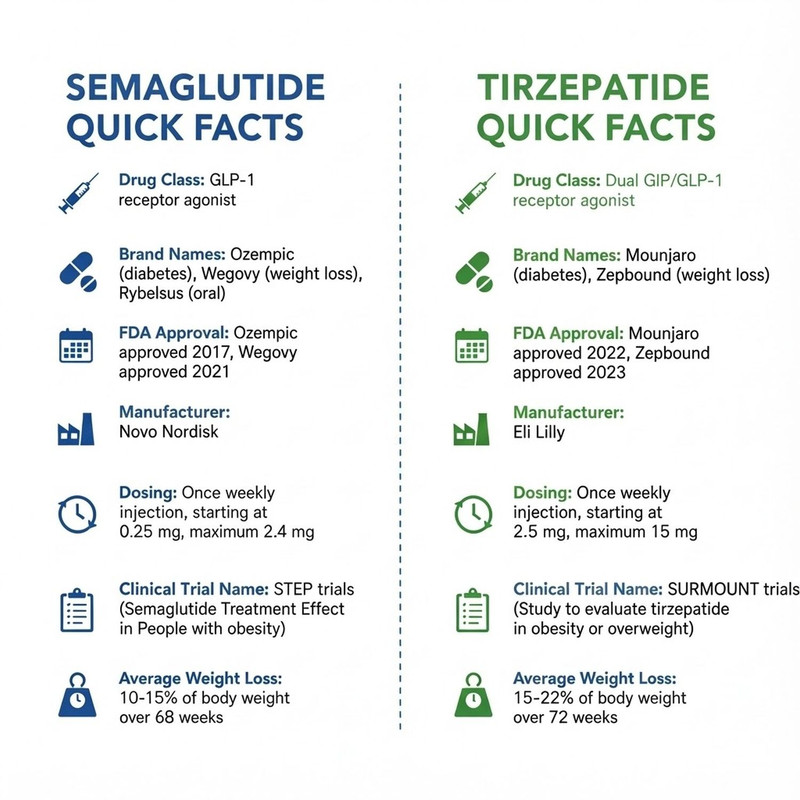
The SURMOUNT-5 trial directly compared tirzepatide to semaglutide (Wegovy) over 72 weeks:
| Medication | Weight Loss | Waist Reduction |
|---|---|---|
| Tirzepatide | 20.2% | 7.2 inches |
| Semaglutide | 13.7% | 5.1 inches |
Tirzepatide produced 47% greater weight loss than semaglutide in this head-to-head comparison. Both medications are effective, but tirzepatide consistently outperforms semaglutide in clinical trials.
Why Tirzepatide Works So Well
Tirzepatide is a dual receptor agonist, meaning it activates both GIP (glucose-dependent insulinotropic polypeptide) and GLP-1 (glucagon-like peptide-1) receptors. This dual mechanism appears to produce greater weight loss than GLP-1 activation alone.
The medication works by:
- Reducing appetite and food intake
- Slowing gastric emptying so you feel full longer
- Affecting brain regions involved in hunger and satiety
- Improving metabolic function
Research suggests the GIP component adds benefits beyond what GLP-1 alone provides, explaining tirzepatide’s superior efficacy.
Results in People With Type 2 Diabetes
The SURMOUNT-2 trial specifically studied tirzepatide in people with obesity and type 2 diabetes. Results were still impressive, though somewhat lower than in people without diabetes:
| Dose | Weight Loss in T2D |
|---|---|
| 10 mg | 12.8% |
| 15 mg | 14.7% |
| Placebo | 3.2% |
Even with diabetes, most participants achieved clinically meaningful weight loss, along with significant improvements in blood sugar control.
Long-Term Maintenance Results
The SURMOUNT-4 trial examined what happens when people continue or stop tirzepatide after initial weight loss. Participants who lost an average of 20.9% during a 36-week lead-in period were then randomized to continue tirzepatide or switch to placebo for 52 additional weeks.
Continued tirzepatide:
- Lost an additional 5.5%
- Total weight loss at 88 weeks: 25.3%
- 89.5% maintained at least 80% of their weight loss
Switched to placebo:
- Regained weight
- Total weight loss at 88 weeks: 9.9%
- Only 16.6% maintained at least 80% of their weight loss
This trial demonstrates that tirzepatide works best as ongoing treatment and that stopping medication typically leads to significant weight regain.
Side Effects to Expect
Gastrointestinal side effects are common, especially during dose escalation. The SURMOUNT trials reported:
Most common side effects:
- Nausea: 24% to 33%
- Diarrhea: 19% to 23%
- Constipation: 12% to 17%
- Vomiting: 8% to 12%
Most side effects were mild to moderate and occurred primarily during the dose escalation period. Sulfur burps are another common complaint that can be managed with dietary adjustments.
Discontinuation rates due to adverse events ranged from 4% to 7% across dose groups, meaning most people tolerate the medication well enough to continue treatment.
Who Gets the Best Results
Several factors influence individual outcomes:
Dose achieved: Higher doses produce greater weight loss. People who tolerate and maintain the 15 mg dose see the best results.
Diabetes status: People without type 2 diabetes typically lose more weight than those with diabetes.
Treatment duration: Weight loss continues for approximately 72 weeks before plateauing. Stopping early means missing potential results.
Lifestyle factors: All trials included dietary guidance and exercise recommendations. Following similar guidelines maximizes outcomes.
Early response: Those who lose 5%+ by week 12 tend to achieve greater total weight loss, though late responders also achieve meaningful results.
Getting Started With Tirzepatide
If you’re considering tirzepatide for weight loss, TrimRx offers telehealth consultations to help you understand your options. Compounded tirzepatide provides the same active ingredient at more accessible prices than brand-name medications.
You can take the intake quiz to see if you qualify.
The Bottom Line
Tirzepatide produces the most substantial weight loss of any available medication, with clinical trial participants losing an average of 35 to 52 pounds (16% to 22.5%) over 72 weeks. The vast majority of people achieve at least 5% weight loss, and over half of those on the highest dose lose 20% or more.
These results come from well-designed clinical trials with thousands of participants, providing confidence that tirzepatide delivers consistent, meaningful weight loss for most people who use it as directed.
This information is for educational purposes and is not medical advice. Consult with a healthcare provider before starting any medication. Individual results may vary.

Transforming Lives, One Step at a Time
Keep reading

How Fast Does Tirzepatide Work: Early Signs and Signals
Tirzepatide starts working within the first day or two of your initial injection, but the effects most people are looking for, genuine appetite suppression…

Does Tirzepatide Cause Hair Loss: What to Expect
Hair shedding is one of the more surprising side effects people notice on tirzepatide. Yes, it can happen, and yes, it’s more common than…

Compounded Tirzepatide Florida: Your Guide
Florida’s population includes a disproportionately high number of adults living with obesity, type 2 diabetes, and cardiovascular risk factors, which makes tirzepatide one of…


