How Many Units Is 15 mg of Tirzepatide?
Introduction
Reaching the 15 mg dose of tirzepatide often feels like a significant milestone in a weight loss journey. This is the maximum maintenance dose for this specific medication, and it represents months of gradual titration and physiological adjustment. However, as many individuals transition from branded pens to compounded versions, a common point of confusion arises: the math of the syringe. Unlike pre-filled pens that handle the measurements for you, using a vial and syringe requires understanding how to convert milligrams into units. At TrimRx, we believe that clarity in your treatment plan is the foundation of safety and success.
This post will explain the relationship between milligrams and units, the vital role of medication concentration, and how to ensure you are administering the correct amount. By the end of this guide, you will understand how to interpret your vial’s label and why the answer to “how many units” can vary between different pharmacies. Understanding your dosage is the first step toward a more confident and sustainable metabolic health journey. For additional examples, review this tirzepatide dosage chart with unit conversions.
Quick Answer: The number of units for a 15 mg dose of tirzepatide depends entirely on the concentration of the medication (mg/mL). If your concentration is 20 mg/mL, 15 mg equals 75 units on a standard U-100 syringe. If your concentration is 10 mg/0.5 mL, 15 mg equals 75 units. Always verify the concentration on your specific vial before drawing your dose.
Understanding Tirzepatide and Its Delivery
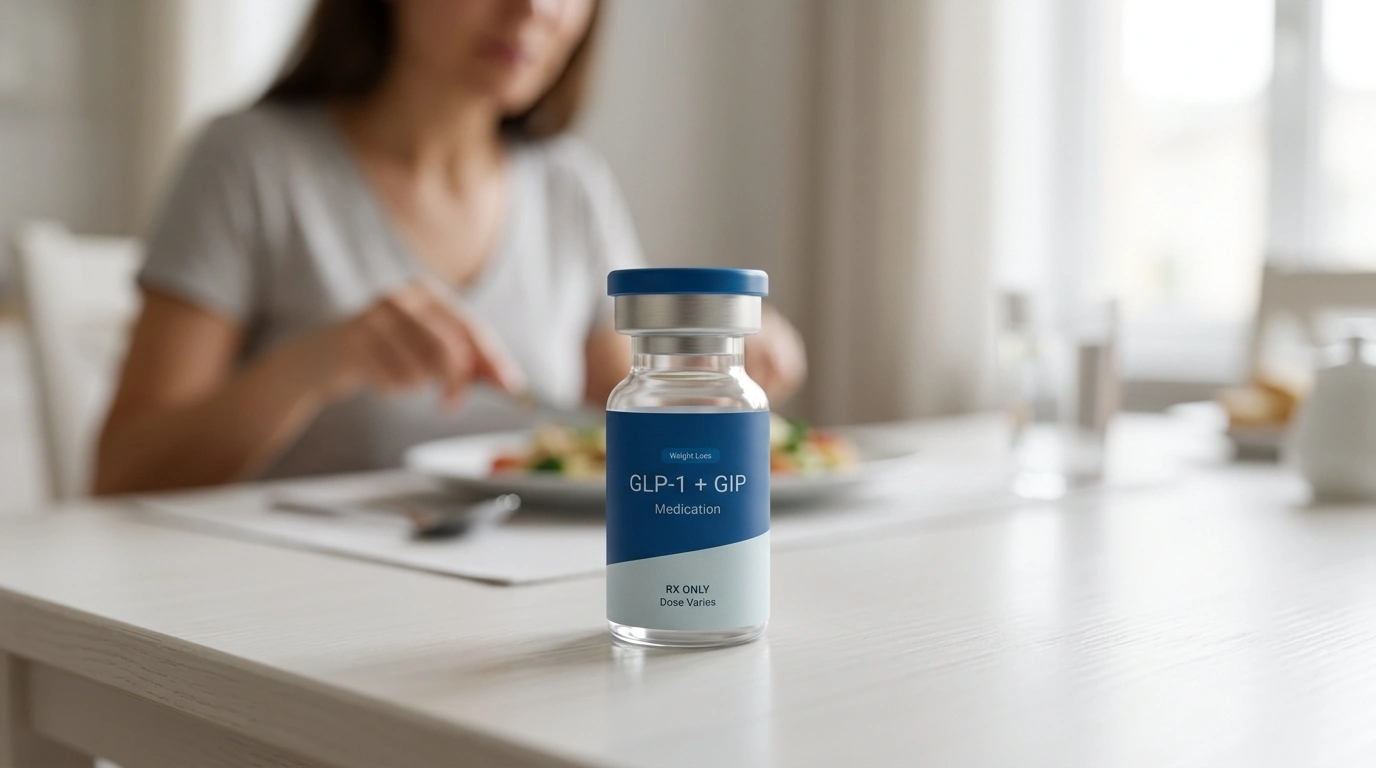
Tirzepatide is a dual-acting medication that mimics two naturally occurring hormones in the body: GLP-1 and GIP. GLP-1, or glucagon-like peptide-1, helps regulate blood sugar and slows down the emptying of the stomach. GIP, or glucose-dependent insulinotropic polypeptide, also assists with blood sugar regulation and is thought to play a role in how the body breaks down fat. By activating both of these receptors, tirzepatide provides a multi-pronged approach to metabolic health and weight management.
When you use tirzepatide, the medication is delivered via a subcutaneous injection—an injection just under the skin. For many, this starts with branded medications like Mounjaro® or Zepbound®, which use a single-dose autoinjector pen. These pens are pre-set to deliver the correct amount of milligrams, so the user never has to think about “units” or “volume.”
However, many people choose to access their treatment through a telehealth platform like ours. We connect patients with licensed providers who may prescribe compounded tirzepatide. Compounded tirzepatide is prepared and shipped by FDA-registered, inspected compounding pharmacies. These medications usually come in a multi-dose vial, and you must use a traditional syringe to measure your dose. This is where the conversion from milligrams (mg) to units becomes essential. If you are considering a personalized prescription program, you can complete a free eligibility assessment.
Milligrams vs. Units: The Difference Explained
Milligrams (mg) measure the weight or mass of the actual medication. When a doctor says you are on a 15 mg dose, they are referring to the amount of the active tirzepatide molecule you are receiving. This is the “strength” of the dose. In clinical trials and standard medical protocols, tirzepatide is always discussed in terms of milligrams.
Units measure the volume of the liquid in the syringe. A “unit” is a specific measurement used on insulin syringes. Most standard syringes used for GLP-1 and GIP medications are U-100 syringes, which means there are 100 units in 1 milliliter (mL) of liquid. Units tell you how much liquid to draw out of the vial, but they do not inherently tell you how much medication is in that liquid.
Concentration is the bridge between milligrams and units. Concentration refers to how much medication is dissolved in a specific amount of liquid. It is usually written on the vial as “X mg / Y mL.” Without knowing the concentration, it is impossible to accurately determine how many units you need to reach a 15 mg dose. This distinction is also explained in this guide to tirzepatide doses in units.
Why Concentration Varies
Compounding pharmacies may use different concentrations based on their specific formulations. One pharmacy might create a highly concentrated version where a small volume of liquid contains a large amount of medication. Another might use a more diluted version. This is why you cannot simply assume that your “units” will stay the same if you switch pharmacies or if your pharmacy changes its formulation.
Key Takeaway: Milligrams represent the dose of the drug, while units represent the volume of the liquid. The concentration on your vial’s label is the only way to accurately calculate how many units equal 15 mg.
How to Calculate Units for a 15 mg Dose
To find out how many units you need for a 15 mg dose, you need to look at the concentration on your vial. Most vials will list concentration in one of two ways: milligrams per milliliter (mg/mL) or milligrams per a fraction of a milliliter (e.g., 10 mg / 0.5 mL).
The standard formula for calculating units is: (Desired Dose in mg ÷ Concentration in mg) × Volume in mL = Total Volume to Inject.
Since we are using U-100 syringes where 1 mL equals 100 units, we can simplify the math. For another explanation of vial calculations, review this guide to tirzepatide vial doses and administration.
Scenario 1: Concentration of 20 mg/mL
If your vial says 20 mg/mL, this means every 1 mL (100 units) contains 20 mg of tirzepatide.
- Divide your dose (15 mg) by the concentration (20 mg).
- 15 ÷ 20 = 0.75.
- 0.75 mL is equal to 75 units.
- Your dose is 75 units.
Scenario 2: Concentration of 10 mg / 0.5 mL
This concentration is mathematically the same as 20 mg/mL, but it is written differently.
- If 10 mg is in 0.5 mL, then 20 mg is in 1.0 mL.
- Following the same math as above: 15 ÷ 20 = 0.75.
- Your dose is 75 units.
Scenario 3: Concentration of 30 mg/mL
Some pharmacies use a higher concentration to reduce the volume of the injection.
- Divide your dose (15 mg) by the concentration (30 mg).
- 15 ÷ 30 = 0.5.
- 0.5 mL is equal to 50 units.
- Your dose is 50 units.
| Concentration on Label | Milligrams Desired | Total Units on Syringe |
|---|---|---|
| 10 mg / 0.5 mL | 15 mg | 75 units |
| 20 mg / 1.0 mL | 15 mg | 75 units |
| 30 mg / 1.0 mL | 15 mg | 50 units |
| 15 mg / 0.5 mL | 15 mg | 50 units |
Note: Always double-check your math with your healthcare provider or pharmacist. A small error in measuring units can lead to taking too much or too little medication.
The Significance of the 15 mg Dose
The 15 mg dose is the highest approved dose for tirzepatide. In clinical studies, this dose showed the most significant results for weight management and blood sugar control. However, it is not a dose that patients start with. It is reached through a process called titration, where the dose is slowly increased every four weeks to allow the body to adjust. You can also review this guide to tirzepatide titration and dose progression.
Titration usually follows this schedule:
- Month 1: 2.5 mg
- Month 2: 5 mg
- Month 3: 7.5 mg
- Month 4: 10 mg
- Month 5: 12.5 mg
- Month 6: 15 mg
Not everyone needs to reach 15 mg. Some individuals find that they meet their health goals at 5 mg or 10 mg. However, for those who experience a weight loss plateau or require more intensive metabolic support, moving up to 15 mg can be the right step.
At this higher dose, the biological impact is maximized. Because you are receiving the highest amount of the GIP and GLP-1 receptor agonists, the “food noise” or constant intrusive thoughts about eating are often at their lowest. Gastric emptying is at its slowest, meaning you feel full for much longer after meals.
Managing Side Effects at 15 mg
As the dosage increases, the likelihood of side effects can also increase. While many people tolerate the 15 mg dose well, others may experience gastrointestinal symptoms as their body adjusts to the peak concentration of the medication. For related information, see this tirzepatide dose and side-effect guide.
Common side effects at high doses include:
- Nausea
- Diarrhea or constipation
- Heartburn or acid reflux
- Fatigue
- Abdominal bloating
To manage these symptoms, focus on hydration and nutrition. Drinking plenty of water is essential, as dehydration can worsen nausea and fatigue. Eating smaller, more frequent meals rather than three large ones can help your digestive system handle the slower gastric emptying.
At TrimRx, we understand that managing side effects is a critical part of staying consistent with your program. For some, adding a supplement like GLP-1 Daily Support can help provide the nutrients the body needs during this transition. If side effects become severe or persistent, it is vital to contact your healthcare provider. They may suggest staying at a lower dose for an extra month or adjusting your injection schedule.
How to Properly Administer 75 Units (or Your Specific Dose)
When you are drawing 75 units—which is a relatively large volume for a subcutaneous injection—precision is key. Using a vial and syringe requires a steady hand and a clear understanding of the syringe’s markings.
Step 1: Prepare your workspace
Clean a flat surface and gather your vial, an alcohol swab, and a fresh U-100 syringe. Always wash your hands before handling the medication.
Step 2: Clean the vial
Remove the plastic cap from the vial if it is new. Wipe the rubber stopper with an alcohol swab to ensure no bacteria enter the vial when you insert the needle.
Step 3: Draw air into the syringe
Pull the plunger back to the 75-unit mark (or your specific dose). This fills the syringe with air. Injecting air into the vial helps equalize the pressure, making it easier to draw the liquid out.
Step 4: Draw the medication
Insert the needle into the rubber stopper and push the air into the vial. Turn the vial upside down with the needle still inside. Slowly pull the plunger back until the liquid reaches the 75-unit line.
Step 5: Check for air bubbles
Tap the side of the syringe to move any air bubbles to the top. Push the plunger slightly to expel the bubbles, then ensure the plunger is still aligned exactly with the 75-unit mark.
Step 6: Inject
Clean the injection site (usually the abdomen, thigh, or back of the arm) with alcohol. Pinch the skin slightly and insert the needle at a 90-degree angle. Push the plunger all the way down, wait a few seconds, and then remove the needle.
Bottom line: Administering a 15 mg dose requires careful attention to the “units” markings on your syringe. Taking your time during the drawing process ensures you get the exact amount of medication prescribed.
Myth vs. Fact: Dosing Confusion
There are many misconceptions about how units and milligrams work, especially in online forums and communities.
Myth: 15 mg is always 15 units on the syringe. Fact: This is rarely true. Most tirzepatide formulations are not concentrated enough for 15 mg to fit into 15 units. You would likely need a concentration of 100 mg/mL for this to be true, which is not standard.
Myth: If I switch pharmacies, I should keep using the same number of units. Fact: This is dangerous. If the new pharmacy uses a different concentration, your previous unit count could result in a massive overdose or an ineffective underdose. Always read the label on the new vial.
Myth: More units means a stronger dose. Fact: Not necessarily. 50 units of a 30 mg/mL concentration is 15 mg. 75 units of a 20 mg/mL concentration is also 15 mg. The number of units is just the volume of liquid, not the strength of the drug itself.
Why Personalized Programs Matter
At the 15 mg level, your treatment is highly specialized. Because this is the maximum dose, there is no further “moving up” if the medication’s effectiveness wanes. This is why a personalized approach is so important.
Our program focuses on more than just the medication. We look at your health profile, your history, and your goals to ensure that 15 mg is the right destination for you. When you use our platform, you aren’t just getting a prescription; you are getting access to a dedicated team. If you want to discuss whether a personalized program may be appropriate, you can take the free assessment quiz.
Our telehealth-first model means you can discuss your dose, side effects, or concerns from the comfort of your home. There are no waiting rooms or stressful in-person visits. This ease of access is especially helpful when you are on a high dose and may need more frequent support or adjustments to your nutrition and lifestyle plan.
The Role of Compounded Tirzepatide
As mentioned earlier, we provide access to compounded tirzepatide through our partner pharmacies. It is important to understand what this means for your 15 mg dose.
Compounded medications are not FDA-approved. While the active ingredient, tirzepatide, is the same one found in branded medications, the specific formulation created by the compounding pharmacy is unique to that pharmacy. These pharmacies are FDA-registered and inspected, ensuring they meet strict quality and safety standards.
The primary benefit of compounded tirzepatide is accessibility. During times of branded medication shortages, compounding pharmacies can help bridge the gap, ensuring that patients do not have to interrupt their titration schedule. Interrupting a 15 mg dose can be difficult, as restarting at such a high dose after a break can lead to severe side effects. Compounded options provide a consistent supply to keep your progress on track.
Safety Precautions for High-Dose Tirzepatide
When you are taking 15 mg of tirzepatide, your body is under a significant metabolic influence. While this is what leads to results, it also requires a higher level of self-monitoring.
Watch for signs of hypoglycemia. Although tirzepatide is not known for causing low blood sugar on its own, it can happen—especially if you are also taking other medications like insulin or sulfonylureas. Signs include shakiness, sweating, dizziness, and confusion.
Be aware of more serious risks. While rare, GLP-1 and GIP medications have been associated with pancreatitis (inflammation of the pancreas) and gallbladder issues. If you experience severe abdominal pain that radiates to your back, or persistent vomiting, contact a healthcare provider immediately.
Stay in constant communication. Never change your dose or “double up” if you missed a week without consulting a professional. At TrimRx, we facilitate this communication by providing 24/7 access to specialists who can guide you through these decisions.
Optimizing Your Results at 15 mg
To get the most out of the 15 mg dose, it is helpful to view the medication as a tool that works best when supported by a healthy lifestyle.
- Prioritize Protein: As you lose weight, you want to ensure you are losing fat, not muscle. Aim for a high-protein diet to support muscle maintenance.
- Strength Training: Incorporating resistance exercise is one of the best ways to boost your metabolic rate while on tirzepatide.
- Monitor Your Intake: Because tirzepatide significantly reduces hunger, it can be easy to under-eat. Ensure you are getting enough calories and micronutrients to stay energized.
- Use Targeted Support: If you find it hard to get all your nutrients in, our Weight Loss Boost supplement can provide an extra edge to your daily routine.
Key Takeaway: The 15 mg dose is most effective when paired with high-protein nutrition and regular physical activity. The medication manages the appetite, while your lifestyle choices manage the long-term health of your metabolism.
Summary: Calculating Your 15 mg Dose
Understanding how many units equal 15 mg of tirzepatide is a critical skill for anyone using compounded medication. It removes the guesswork and ensures that you are following your provider’s instructions exactly.
Remember the three-step process:
- Check the vial label for the concentration (mg/mL).
- Use the formula (Dose / Concentration) to find the mL.
- Multiply by 100 to find the units on a U-100 syringe.
If your concentration is 20 mg/mL, you will draw 75 units. If your concentration is 30 mg/mL, you will draw 50 units. If you are ever in doubt, stop and ask for clarification.
Conclusion
Navigating the transition to a 15 mg dose of tirzepatide marks a significant stage in your health journey. Whether you are breaking through a plateau or reaching your final maintenance level, understanding the mechanics of your dose ensures you stay safe and effective. Our platform is designed to be your partner through this process, offering a blend of clinical expertise and the convenience of modern technology.
At TrimRx, our mission is to help you embrace a healthier lifestyle through a transparent, science-backed, and empathetic approach. We believe that personalized weight loss programs, supported by high-quality medications and professional guidance, are the most sustainable path to long-term wellness. If you are ready to take the next step or need a program that adapts to your unique needs, we are here to guide the way.
Take the first step toward a more personalized weight loss experience by completing our free health assessment quiz. This helps us understand your history and goals so we can connect you with the right treatment options for your journey.
FAQ
Is 15 mg the highest dose of tirzepatide available?
Yes, 15 mg is currently the maximum maintenance dose for tirzepatide used for weight management and blood sugar control. Clinical studies generally do not evaluate doses higher than 15 mg, as this level was found to provide the optimal balance of efficacy and tolerability for most patients. You can review this overview of the highest tirzepatide dose and unit conversions for additional context.
What should I do if I accidentally take more than 75 units?
If you believe you have taken more than your prescribed dose, contact your healthcare provider immediately or seek medical attention. Symptoms of an overdose can include severe nausea, vomiting, and dangerously low blood sugar. It is always better to be cautious and get a professional evaluation.
Can I stay on the 15 mg dose indefinitely?
Many patients remain on the 15 mg dose as a long-term maintenance dose once they have reached their weight goals. Your healthcare provider will monitor your progress and health markers to determine if staying at 15 mg is appropriate for you or if a lower “maintenance” dose would be better once your goal is achieved.
Why does my friend take 50 units for 15 mg, but I take 75 units?
This difference is almost certainly due to the concentration of the medication in your respective vials. Your friend likely has a more concentrated formula (30 mg/mL), while yours is likely 20 mg/mL. Always follow the specific instructions on your own vial and never share medications or syringes.
Disclaimer: This content is for informational purposes only and does not constitute medical advice. It is not intended to diagnose, treat, cure, or prevent any disease or condition. Individual results may vary. Always consult a qualified healthcare professional before starting any weight loss program or medication.

Transforming Lives, One Step at a Time
Keep reading

Why Did Tirzepatide Stop Working After Three Months of Fast Loss?
Five things explain almost all of it, and the first is the least satisfying: the fast stretch was never going to last. Weight loss…
Feeling Worse and Losing Slower on a Higher Dose of Tirzepatide?
It happens, it is more common than the dose-response charts suggest, and there are four explanations worth separating before you conclude the increase was…

Why Increase Tirzepatide If a Lower Dose Is Already Working?
Because escalation schedules are built around average results rather than yours, and your provider does not yet know whether you are someone who will…


