How Much GLP-1 Cost: A Guide to Access and Affordability

Introduction
Standing at the pharmacy counter and hearing a total that rivals a monthly mortgage payment is a common and deeply frustrating experience for many Americans. You have finally found a medical path that offers real hope for weight management, only to be met with a financial barrier that feels insurmountable. At TrimRx, we believe that understanding the various factors behind the cost of GLP-1 medications—including insurance policies, manufacturer programs, and the differences between branded and compounded options—is the first step toward finding a sustainable solution. This article explores the current landscape of GLP-1 medication expenses, how different access points change your financial commitment, and why a personalized program might be the most cost-effective way to achieve long-term success. Understanding how much GLP-1 cost requires looking beyond the sticker price to the value of a comprehensive, medically supervised journey.
Quick Answer: The cost of GLP-1 medications varies significantly based on insurance coverage, the specific medication prescribed, and whether you choose a branded or compounded option. Without insurance, branded medications are often quite expensive, but manufacturer savings programs and telehealth platforms can provide more affordable pathways to treatment. If you are exploring your options, you can complete a free eligibility assessment.
The Science and Value of GLP-1 Medications
To understand why these medications represent a significant investment, it is helpful to understand what they are and how they function within the body. GLP-1, or glucagon-like peptide-1, is a hormone naturally produced in the gut. It plays a critical role in metabolic health by signaling the brain to feel full and telling the stomach to slow down digestion.
GLP-1 receptor agonists are a class of medications that mimic this natural hormone. When you take these medications, they stay in your system longer than the hormones your body produces naturally. This sustained action helps regulate appetite, reduce cravings, and improve how your body processes blood sugar. Because these medications address the underlying biological signals that make weight loss difficult for many people, they are often seen as a necessary medical intervention rather than a lifestyle choice.
The development of these medications involved years of clinical research and complex manufacturing processes. This level of scientific rigor is part of why the initial costs for branded versions remain high. However, the value is often measured in the potential reduction of long-term health complications associated with weight, such as cardiovascular issues or metabolic concerns.
Branded Medications and the List Price Reality
When most people research how much GLP-1 cost, they first encounter the “list price” of branded medications. These are the products manufactured by large pharmaceutical companies and sold under specific brand names. For a broader comparison of manufacturing, quality, and access considerations, see this guide to brand versus compounded GLP-1 medications.
Commonly Prescribed Brands
Several branded GLP-1 medications have gained prominence in the United States. It is important to distinguish between those approved for type 2 diabetes and those specifically approved for weight management.
- Ozempic® and Mounjaro®: These medications are FDA-approved for the treatment of type 2 diabetes. While they are often prescribed “off-label” for weight loss because they contain the same active ingredients as weight-loss-specific brands, insurance coverage for off-label use is frequently denied.
- Wegovy® and Zepbound®: These medications are FDA-approved specifically for chronic weight management. They contain semaglutide (the active ingredient in Ozempic®) and tirzepatide (the active ingredient in Mounjaro®), respectively, but are often available in different dosages suited for weight loss.
Why List Prices are High
The list price is the official price set by the manufacturer before any insurance discounts, rebates, or savings cards are applied. For individuals without insurance coverage, this is often the price quoted at the pharmacy. These high costs are driven by several factors:
- Research and Development: Bringing a new drug to market requires billions of dollars in clinical trials and testing.
- Manufacturing Complexity: GLP-1 medications are “biologics,” meaning they are made using living cells rather than simple chemicals. This process is much more expensive and difficult than making a standard pill.
- Delivery Systems: Most GLP-1 medications use sophisticated injector pens designed for ease of use at home, which adds to the total production cost.
The Role of Compounded Medications in Managing Cost
As branded medications faced supply shortages and high price barriers, compounded medications emerged as a vital alternative for many. Compounded semaglutide and compounded tirzepatide offer a different financial structure for patients. You can also review this explanation of how compounding pharmacies work.
What is Compounding? Compounding is the process of creating a customized medication by a licensed pharmacist to meet the specific needs of a patient. While compounded medications are not FDA-approved, they can be prepared by pharmacies that are FDA-registered and inspected. This often happens when a branded drug is on the FDA’s official drug shortage list, allowing these pharmacies to produce versions of the medication to ensure patient access.
Why Compounded Versions May Be More Accessible For many individuals, the cost of compounded GLP-1 medications is significantly lower than the list price of branded injectors. This is because:
- No Brand Markup: Compounded versions do not carry the high marketing and R&D overhead of major pharmaceutical brands.
- Simplified Delivery: Instead of expensive proprietary injector pens, compounded medications are often provided in vials and administered with standard insulin syringes.
- Direct-to-Patient Models: Many telehealth platforms, including our own, partner directly with these pharmacies to streamline the supply chain.
Key Takeaway: Compounded medications from FDA-registered pharmacies offer a way to access the same active ingredients found in branded drugs—like semaglutide and tirzepatide—often at a more consistent and affordable price point for those paying out of pocket.
Navigating Insurance and Prior Authorizations
Insurance is the single biggest variable in determining how much GLP-1 cost for an individual. However, securing coverage for weight loss medication is notoriously complex.
Commercial Insurance Barriers
Many commercial insurance plans explicitly exclude “weight loss” medications from their coverage. Even if a plan does include them, they often require a “prior authorization” (PA). This is a process where your healthcare provider must prove to the insurance company that the medication is medically necessary for you.
To qualify for coverage under a PA, patients often must meet specific criteria, such as:
- A Body Mass Index (BMI) over a certain threshold (typically 30, or 27 with a weight-related health condition).
- Documented proof that you have tried other weight loss methods, such as diet and exercise, for at least six months without success.
- The presence of co-morbidities like high blood pressure or high cholesterol.
The “Gap” in Coverage
For those who do not meet these strict criteria, or whose employers have opted out of weight-loss coverage, the cost falls entirely on the patient. This is where many people begin looking for manufacturer savings cards. Brands like Eli Lilly and Novo Nordisk offer these cards, which can significantly reduce the price at the pharmacy counter for those with commercial insurance that doesn’t cover the drug. However, these programs often have expiration dates or monthly limits, making them a temporary rather than a permanent solution.
Note: Medicare and Medicaid coverage for weight loss medications is currently very limited and varies by state. It is essential to consult with your insurance provider to understand your specific benefits.
Factors That Influence Your Monthly Investment
When calculating the total cost of a GLP-1 program, it is important to look beyond just the price of the vial or the pen. Several factors can shift your monthly expenses.
1. Dosage and Titration
Most GLP-1 medications follow a titration schedule. This means you start at a very low dose to allow your body to adjust and slowly increase the dose over several months. In some traditional pharmacy models, the price may increase as the dosage increases. At TrimRx, we believe in transparency, which is why our program maintains a consistent cost regardless of your dosage. This allows patients to focus on their health rather than worrying about a price hike as they progress.
2. Provider Fees and Consultations
Getting a prescription requires a consultation with a licensed healthcare provider. In a traditional medical setting, this involves co-pays, lab fees, and potential travel costs. Telehealth platforms often bundle these costs into a single monthly fee, which can offer better overall value and convenience.
3. Lab Work and Monitoring
Regular blood work is often necessary to monitor your metabolic health, kidney function, and blood sugar levels while on these medications. Depending on your insurance, these labs can add unexpected costs to your journey.
4. Ancillary Support and Supplies
The cost of needles, alcohol pads, and sharps disposal containers are small but recurring expenses. Additionally, many patients find that they need nutritional support or supplements to manage side effects like nausea or to ensure they are getting proper nutrients while eating less.
The Telehealth-First Advantage
Telehealth has fundamentally changed the answer to how much GLP-1 cost by removing the “hidden” expenses of traditional healthcare. By moving the process online, platforms can offer a more integrated experience that often results in lower total costs for the patient. To understand the broader process, explore this overview of online GLP-1 prescriptions.
No In-Person Visits Required Traditional weight loss programs often require monthly in-office visits. This means taking time off work, paying for gas or transit, and potentially paying a specialist co-pay. A telehealth-first approach eliminates these barriers. You can consult with a provider from the comfort of your home, saving both time and money.
Personalized Programs We provide a platform that connects you with providers who specialize in metabolic health. This ensures that you aren’t just getting a prescription, but a program tailored to your health profile. This personalization can actually save money in the long run by helping you avoid medications that might not be right for you or by identifying the most efficient path to your goals.
Transparency in Pricing One of the most significant frustrations with the traditional pharmacy model is the lack of price certainty. You might pay one price this month and a different price next month based on insurance changes or pharmacy markups. We prioritize a clear, all-inclusive model where the consultation, medication, and shipping are all part of a predictable plan.
Why Quality and Sourcing Matter More Than the Lowest Price
While it is tempting to search for the absolute lowest cost for GLP-1 medications, safety must remain the top priority. The popularity of these drugs has led to an increase in unregulated sources and counterfeit products.
Myth: Any website selling “semaglutide” is safe as long as the price is low. Fact: You should only obtain GLP-1 medications through a licensed healthcare provider and a reputable, FDA-registered pharmacy. Unregulated “research chemicals” or “gray market” sites may sell products that are contaminated, incorrectly dosed, or not the actual medication at all.
Investing in a program that uses high-quality, verified sources ensures that you are actually getting the medical benefit you are paying for. A lower price is no bargain if the medication is ineffective or, worse, dangerous. Our platform ensures that all medications are shipped from licensed, inspected compounding pharmacies that adhere to strict quality standards.
Maximizing Your Investment Through Lifestyle Support
To get the best return on your investment in GLP-1 medications, it is crucial to support your body throughout the process. These medications are powerful tools, but they work best when combined with healthy lifestyle choices.
Managing Side Effects Common side effects like nausea or digestive discomfort can lead some patients to stop their medication prematurely, essentially wasting their financial investment. Utilizing targeted support, such as our GLP-1 Daily Support supplement, can help manage these symptoms and keep you on track.
Preserving Lean Muscle When you lose weight rapidly on a GLP-1 medication, there is a risk of losing muscle mass along with fat. To protect your metabolic rate, it is essential to focus on high-quality protein intake and resistance training. Supplements like Weight Loss Boost can also provide the extra nutrient support your body needs when you are consuming fewer calories.
Bottom line: The “cost” of the medication is also a commitment to your health. By supporting the medication with the right nutrients and lifestyle habits, you increase the likelihood of sustainable, long-term weight loss, reducing the need for lifelong medical intervention.
Starting Your Journey: A Step-by-Step Approach
If you are concerned about the cost and complexity of starting a GLP-1 program, following a clear process can help you feel more in control.
Step 1: Take an Assessment Quiz Begin by providing your health history, current weight, and goals. This helps determine if you are a candidate for a GLP-1 program. At TrimRx, our free assessment quiz is designed to be the first step in creating your personalized plan.
Step 2: Consult with a Licensed Provider A healthcare professional will review your assessment and may order lab work to ensure the medication is safe for you. This is the time to discuss any concerns about side effects or long-term management.
Step 3: Choose Your Program Once approved, you can select the program that fits your needs. This usually includes the medication, supplies, and ongoing support.
Step 4: Receive Your Medication In a telehealth model, your medication is shipped directly to your door in discreet, temperature-controlled packaging. This removes the need for pharmacy lines and allows you to start your treatment privately.
Step 5: Ongoing Monitoring and Support Weight loss is not a “set it and forget it” process. Having 24/7 access to specialists and regular check-ins ensures that your dosage is correct and that you are making progress toward your goals.
The Long-Term Financial Perspective
When considering how much GLP-1 cost, it is helpful to look at the “cost of inaction.” Chronic weight-related conditions often lead to significant medical expenses over a lifetime, including the cost of treating type 2 diabetes, heart disease, and joint issues. For many, the monthly investment in a GLP-1 program is an investment in a future with fewer medical bills, fewer prescriptions, and a higher quality of life.
At TrimRx, our mission is to help you navigate this path with empathy and transparency. We understand that the financial aspect is a major part of your decision-making process. By providing a personalized, telehealth-first platform, we aim to make science-backed weight loss more accessible and predictable. Our goal is to help you embrace a healthier lifestyle through a program that values both your health and your peace of mind.
Summary Table: GLP-1 Access Comparison
| Feature | Branded (Insurance Covered) | Branded (Self-Pay/Cash) | Compounded (via Telehealth) |
|---|---|---|---|
| Typical Cost Basis | Small co-pay | High list price | Predictable monthly fee |
| Availability | Subject to pharmacy stock | Subject to pharmacy stock | High (prepared on demand) |
| Insurance Needed? | Yes (and requires PA) | No | No |
| Provider Visits | In-person co-pays | In-person co-pays | Included in platform fee |
| Support Services | Usually none | Usually none | 24/7 access to specialists |
Conclusion
Understanding how much GLP-1 cost is about more than just finding a number; it is about finding a sustainable way to access life-changing medicine. While the branded list prices can be daunting, the rise of manufacturer savings programs and the availability of compounded options from FDA-registered pharmacies have created more pathways than ever before. By choosing a personalized, telehealth-based program, you can avoid hidden fees, benefit from consistent pricing, and receive the comprehensive support necessary for long-term success. Your health journey is personal, and your financial plan for that journey should be clear and manageable. If you are ready to see which path is right for you, taking our free assessment quiz is the perfect next step toward a healthier, more confident version of yourself.
FAQ
Does insurance usually cover the cost of GLP-1 medications?
Insurance coverage varies significantly by plan, but many commercial insurers exclude weight loss medications from their standard benefits. Even when covered, you may need a prior authorization (PA) from your doctor to prove medical necessity based on your BMI and health history.
Why is the cost of compounded GLP-1 medications often lower?
Compounded medications are often more affordable because they do not have the high branding, marketing, and research overhead costs of major pharmaceutical companies. Additionally, they are often dispensed in vials with standard syringes rather than expensive, proprietary injector pens.
Will the cost of my GLP-1 medication increase if my dose goes up?
In a traditional pharmacy setting, higher doses can sometimes result in higher prices. However, some telehealth platforms, including our own, offer a consistent monthly program price regardless of dosage changes to help patients plan their budgets effectively.
Are there hidden costs in a GLP-1 weight loss program?
In a traditional healthcare model, hidden costs can include specialist co-pays, lab fees, pharmacy markups, and the cost of supplies like needles. Choosing an all-inclusive telehealth program can help eliminate these surprises by bundling the medication, supplies, and provider consultations into one transparent fee. If you are considering a personalized program, you can see whether you may qualify.
Disclaimer: This content is for informational purposes only and does not constitute medical advice. It is not intended to diagnose, treat, cure, or prevent any disease or condition. Individual results may vary. Always consult a qualified healthcare professional before starting any weight loss program or medication.

Transforming Lives, One Step at a Time
Keep reading
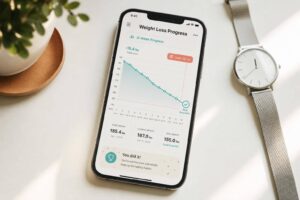
Weight Loss Progress Tracker
Track your weight loss over time, see progress clearly, and stay motivated with simple charts, summaries, and goal-based insights.
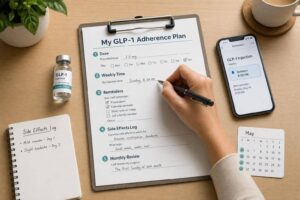
How to Create a Personalized Adherence Plan
Build a one-page GLP-1 adherence plan: record dose, pick a weekly time, set reminders, log side effects, and review monthly.

Weight Loss Medication Dosage Calculator
Estimate weight loss medication doses by weight and drug type, with starting guidance, dose progression info, and a clear medical disclaimer.


