How Long Is the Needle on the Mounjaro Pen?

Table of Contents
- Introduction
- Exact Dimensions of the Mounjaro® Needle
- How the Auto-Injector Mechanism Works
- Why Needle Length Matters: Reaching the Subcutaneous Layer
- Overcoming Needle Anxiety and Fear
- Comparing Delivery Methods: Auto-Injectors vs. Syringes
- Best Practices for a Comfortable Injection Experience
- Managing Common Injection Site Concerns
- Is the 4mm Needle Right for Everyone?
- How TrimRx Supports Your Journey
- Conclusion
- FAQ
Introduction
Standing in your kitchen with a new prescription in hand can feel like a major milestone. You have done the research, spoken with a provider, and are ready to take the next step in your health journey. However, for many, that progress hits a sudden wall of “needle anxiety.” If you are feeling a bit nervous about the injection process, you are certainly not alone. One of the most common questions people ask before their first dose is exactly how long the needle is on the Mounjaro® pen.
At TrimRx, we believe that clarity is the best remedy for the “what-ifs” that come with new medical treatments. This post will detail the specific dimensions of the needle, explain how the auto-injector mechanism works, and provide tips for a comfortable experience. Understanding the engineering behind these devices can help you move forward with confidence. If you are still considering whether a prescription program may be right for you, you can take the free assessment quiz.
Exact Dimensions of the Mounjaro® Needle
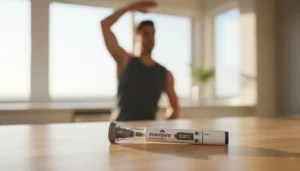
When you look at a Mounjaro® pen, you might notice that you cannot actually see the needle. This is by design. The needle is tucked away inside the base of the device and only emerges when the injection is triggered. This “hidden needle” design is specifically intended to help those who have a fear of needles.
The needle on a Mounjaro® pen is 4 millimeters (mm) long. To put that into perspective, 4mm is roughly the thickness of two nickels stacked together. It is about 5/32 of an inch. This length is incredibly short because the medication is designed to be delivered into the subcutaneous fat layer, which sits just beneath the surface of the skin.
Understanding the Needle Gauge
Length is only one part of the equation; thickness also matters for comfort. The thickness of a needle is measured in “gauge.” The higher the gauge number, the thinner the needle is. The needle inside this pen is typically a 32-gauge needle.
To visualize a 32-gauge needle, think of a human hair. While it is not quite that thin, it is significantly finer than the needles used for drawing blood or giving a flu shot. Because it is so thin and short, many people report that they barely feel the injection at all, often describing it as a quick pinch or a mild pressure.
Quick Answer: The needle on the Mounjaro® pen is 4 millimeters long and is a very fine 32-gauge. It is designed to be short and thin to ensure the medication reaches the fat layer just under the skin with minimal discomfort.
For additional perspective on needle dimensions, review this guide to needle sizes for GLP-1 medications.
How the Auto-Injector Mechanism Works
The Mounjaro® pen is an “auto-injector.” This means you do not have to manually push the needle into your skin. The device does the work for you. Understanding the mechanics of the pen can help demystify the “click” that many users find startling at first.
The Hidden Design
The needle is housed inside a clear base. When you press the pen against your skin and push the activation button, a spring mechanism is released. This spring pushes the needle out of the housing, into the skin, and then retracts it once the medication has been delivered. This all happens in about 10 seconds.
The Purpose of the Clear Base
The clear base allows you to see the medication before you inject it. It should be clear and colorless. After the injection is complete, a gray plunger will fill the clear base. This is your visual confirmation that the dose has been fully administered. Because the needle retracts back into the device, you never have to handle an exposed needle after the injection is finished.
If you want a broader overview of the process, see this step-by-step guide to injecting GLP-1 medications.
Why Needle Length Matters: Reaching the Subcutaneous Layer
You might wonder why the needle is only 4mm long. Why not longer or shorter? The answer lies in the anatomy of your skin and how GLP-1 (glucagon-like peptide-1) medications are absorbed. GLP-1 is a hormone that helps regulate blood sugar and appetite.
Subcutaneous vs. Intramuscular
There are different ways to deliver medication via injection. Intramuscular (IM) injections go deep into the muscle, while subcutaneous (SubQ) injections go into the fatty tissue between the skin and the muscle.
Mounjaro® and similar medications like Wegovy® or Zepbound® are subcutaneous injections. The fat layer has fewer nerve endings than the skin surface or the muscle, which is why these injections are generally much less painful. A 4mm needle is the “gold standard” for subcutaneous delivery. It is long enough to pass through the dermis (the top layers of skin) but short enough that it stays in the fat and avoids the muscle layer below.
For more information about injection locations, read this complete guide to GLP-1 injection sites.
Absorption Rates
The subcutaneous layer has a steady blood flow that allows the medication to be absorbed slowly and consistently over several days. If the needle were too short, the medication might stay in the skin layers, which could cause irritation. If it were too long, it might reach the muscle, which would cause the medication to be absorbed too quickly and might increase the risk of soreness.
Key Takeaway: The 4mm needle length is specifically engineered to deposit medication into the subcutaneous fat layer, ensuring optimal absorption and maximum comfort for the user.
Overcoming Needle Anxiety and Fear
Even knowing the needle is only 4mm long, it is normal to feel a bit of “needle-phobia.” This is a physiological response that many people experience. Here are a few fact-based strategies to help manage that anxiety:
- The “Ice Trick”: Some individuals find that icing the injection site for 30 to 60 seconds before cleaning it with alcohol can numb the surface of the skin. This can make the already-tiny needle virtually imperceptible.
- Room Temperature Medication: Injecting cold liquid can sometimes cause a slight stinging sensation. Taking the pen out of the refrigerator about 30 minutes before your injection allows the medication to reach room temperature, which often leads to a smoother experience.
- Focus on Breathing: Taking a slow, deep breath in and exhaling right as you press the button can help relax your muscles. Tense muscles can make any sensation feel more intense.
- Avoid Looking: Since the needle is hidden, you don’t actually have to see it at all. You can look away and simply listen for the “clicks” that signal the start and end of the dose.
Myth: A longer needle means the medication will work better. Fact: Effective delivery of GLP-1 medications depends on reaching the subcutaneous fat, not on the depth of the needle. A 4mm needle is scientifically proven to be sufficient for most adults.
Comparing Delivery Methods: Auto-Injectors vs. Syringes
While branded medications like Mounjaro® use a fixed-needle auto-injector, other paths to weight management might involve different tools. For instance, if a provider determines that a patient is a candidate for compounded tirzepatide, the delivery method often shifts to a traditional syringe and vial.
Traditional Syringe Dimensions
If you are using a syringe for compounded tirzepatide (which we can facilitate through our platform at TrimRx), the needle is still very small. Most insulin-style syringes used for these treatments have needles that are:
- Length: 6mm to 8mm (slightly longer than the 4mm pen needle, but still very short).
- Gauge: 30G to 31G (slightly thicker than the 32G pen needle, but still much thinner than a standard medical needle).
For a closer comparison, explore this guide to compounded tirzepatide needle sizes.
Why the Difference?
The reason syringes are slightly longer is that you must manually control the depth. A 6mm or 8mm needle ensures that even if you do not press firmly against the skin, the medication still reaches the subcutaneous layer. Despite being a few millimeters longer, these syringes are still designed for comfort and are used daily by millions of people managing various health conditions.
Best Practices for a Comfortable Injection Experience
Regardless of the needle length, your technique plays a role in how the injection feels. Following a consistent routine can reduce the risk of bruising or discomfort. You can also review these GLP-1 injection techniques and site-selection tips.
Step 1: Choose and Clean the Site. The best areas for subcutaneous injections are the abdomen (at least two inches away from the belly button), the front of the thighs, or the back of the upper arms. Use an alcohol swab to clean the area and let it air dry completely.
Step 2: Check the Device. Ensure the pen is not expired and the liquid inside is clear. If the liquid is cloudy or contains particles, do not use it.
Step 3: Secure the Placement. Unlock the pen and place the clear base flat against your skin. You do not need to “pinch” your skin for a 4mm needle, though some people prefer to do so. Ensure you are holding the pen at a 90-degree angle to the site.
Step 4: Listen for the Clicks. Press and hold the button. You will hear a loud click when the injection starts. Continue holding the pen against your skin. You will hear a second click when the injection is finished. This usually takes about 5 to 10 seconds.
Step 5: Dispose Safely. Even though the needle retracts, the pen should be placed in a sharps container or a heavy-duty plastic household container (like a laundry detergent bottle) to ensure safety for sanitation workers.
Bottom line: A successful injection relies on choosing the right site, letting the alcohol dry, and waiting for the second click to ensure the full dose is delivered.
Managing Common Injection Site Concerns
Even with a 4mm needle, you might notice small changes at the site of the injection. Most of these are temporary and are not a cause for alarm.
Mild Redness or Swelling
It is common to see a small red dot or a tiny amount of swelling immediately after the injection. This is often just the body’s natural reaction to the skin being punctured. It usually fades within a few hours.
Occasional Bruising
If the needle happens to nick a tiny capillary (a small blood vessel) under the skin, you might see a small bruise. This is more likely if you happen to hit the same spot multiple times. To avoid this, “rotate” your injection sites. If you injected on the left side of your stomach last week, try the right side or a thigh this week.
The “Drop” of Liquid
Sometimes, you might see a tiny drop of clear liquid on your skin after you pull the pen away. This is normal and does not mean you missed your dose. The pen is designed to deliver a specific volume, and a single drop remaining on the skin surface is factored into the design.
For more detail on reducing site irritation and choosing locations, read about where to inject GLP-1 medications.
Is the 4mm Needle Right for Everyone?
For the vast majority of adults, the 4mm needle is the ideal length. Research in the field of diabetes care has shown that 4mm needles are effective for people of all Body Mass Index (BMI) levels.
BMI and Needle Length
Some people worry that if they have a higher amount of body fat, a 4mm needle won’t be long enough. However, the subcutaneous fat layer is located right beneath the skin, regardless of overall body weight. In fact, using a shorter needle is often safer because it reduces the chance of accidentally injecting into a muscle, which can be more painful and change how the medication is absorbed.
Skin Sensitivity
If you have extremely sensitive skin, you might be more aware of the 4mm needle than others. If you experience persistent itching or a rash at the injection site, this could be a localized reaction. In such cases, it is important to speak with your healthcare provider to discuss whether the reaction is to the needle itself or a component of the medication.
How TrimRx Supports Your Journey
Navigating the world of GLP-1 medications can feel overwhelming, especially when you are balancing clinical details with personal health goals. We believe that medical weight loss should be accessible, transparent, and personalized.
Our platform connects you with licensed healthcare providers who can evaluate your medical history and determine if a GLP-1 program is right for you. Whether you are prescribed a branded medication or a compounded version prepared by an FDA-registered, inspected compounding pharmacy, we are here to support you at every step. From the initial free assessment quiz to ongoing specialist support, our mission is to ensure you have the tools and knowledge needed for sustainable success.
Key Takeaway: Knowledge is the best tool for overcoming anxiety. Understanding that the Mounjaro® needle is only 4mm and designed for comfort can help you focus on your long-term health goals rather than the moment of injection.
Conclusion
The fear of the unknown is often much greater than the reality of the experience. The needle on a Mounjaro® pen is remarkably small—just 4mm long and about the thickness of a hair. Its design as a hidden, auto-injecting needle means that the process is quick, often painless, and requires very little manual effort.
By following best practices—like rotating your injection sites and allowing the medication to reach room temperature—you can ensure that your weekly dose becomes a simple, stress-free part of your routine. Remember that this tiny needle is simply a tool to help you reach a much larger goal: a healthier, more vibrant version of yourself.
If you are ready to see if a personalized weight loss program is the right fit for your lifestyle, the first step is simple.
- Take our free assessment quiz to explore your options.
- Speak with a licensed provider about your health history.
- Access a dedicated team of specialists for 24/7 support.
- Receive your medication and supplies directly to your door.
FAQ
Does the Mounjaro needle stay in your skin?
No, the needle does not stay in your skin. The Mounjaro® pen is an auto-injector that automatically deploys the needle to deliver the dose and then retracts it back into the pen housing once the injection is complete. You will hear a second click and see a gray plunger in the clear base to confirm the process is finished.
Can I change the needle on my Mounjaro pen?
No, you cannot change the needle on a Mounjaro® pen. The pen is a single-use, pre-filled device with a built-in needle that is specifically designed for one dose. Once the pen has been used, the needle retracts and the device should be disposed of in a sharps container.
What happens if I don’t hear the second click?
If you do not hear the second click, it may mean the injection is not yet complete. You should continue to hold the pen firmly against your skin for at least 10 seconds. If the gray plunger is visible in the clear base, the dose has been delivered; if you are unsure or the device appears to have malfunctioned, you should contact your healthcare provider or the manufacturer.
Is the needle on the Mounjaro pen the same as a Wegovy needle?
The needles are very similar in size and function. Both Mounjaro® and Wegovy® pens typically use 4mm needles with a very fine gauge (32G) designed for subcutaneous injection. Both devices are auto-injectors where the needle is hidden from view throughout the process to assist those with needle anxiety.
If you would like personalized guidance about whether a prescription program is appropriate for you, you can complete a free eligibility assessment.
Disclaimer: This content is for informational purposes only and does not constitute medical advice. It is not intended to diagnose, treat, cure, or prevent any disease or condition. Individual results may vary. Always consult a qualified healthcare professional before starting any weight loss program or medication.

Transforming Lives, One Step at a Time
Keep reading

Mounjaro Alternatives: What Else to Consider
If Mounjaro isn’t the right fit, the closest alternatives are other GLP-1 medications, chiefly semaglutide (Ozempic for diabetes, Wegovy for weight), along with a…
Mounjaro vs Zepbound: Same Drug, Two Brands
Like their semaglutide counterparts, Mounjaro and Zepbound are the same medication (tirzepatide) sold under two names for two purposes: Mounjaro is approved for type…
Retatrutide vs Mounjaro: Triple Agonist vs Dual Agonist
The core difference between retatrutide and Mounjaro comes down to how many hormone targets each hits: retatrutide activates three receptors, while Mounjaro (tirzepatide) activates…


