Wegovy Transformation: What Real Results Look Like

A typical Wegovy transformation involves losing around 15% of your starting body weight over 68 weeks.
Clinical trial data from the STEP 1 study shows that participants lost an average of 35 pounds from a starting weight of 232 pounds, with 86% achieving at least 5% weight loss and over one-third losing more than 20% of their body weight.
These numbers represent what’s achievable with consistent treatment. But transformation means different things to different people, and understanding the realistic timeline helps set appropriate expectations.
What Clinical Data Shows About Wegovy Transformations
The STEP 1 trial remains the gold standard for understanding Wegovy results. Here’s how weight loss progressed over time:
| Timeframe | Average Weight Loss |
|---|---|
| Month 1 | 2-3% |
| Month 3 | 6% |
| Month 6 | 10-12% |
| Month 12 | 14-15% |
| Month 16 (68 weeks) | 15% |
Beyond averages, the distribution of results matters. At 68 weeks:
- 86% lost at least 5% of body weight
- 69% lost at least 10%
- 50% lost at least 15%
- 32% lost at least 20%
These percentages show that while most people experience meaningful transformation, results vary considerably between individuals.
What 15% Weight Loss Actually Looks Like
Percentages can feel abstract. Here’s what average Wegovy results translate to at different starting weights:
| Starting Weight | 15% Loss | Final Weight |
|---|---|---|
| 180 lbs | 27 lbs | 153 lbs |
| 200 lbs | 30 lbs | 170 lbs |
| 220 lbs | 33 lbs | 187 lbs |
| 250 lbs | 38 lbs | 212 lbs |
| 280 lbs | 42 lbs | 238 lbs |
For someone starting at 250 pounds, losing 38 pounds typically means dropping several clothing sizes, visible changes in face and body shape, and often significant improvements in how daily activities feel.
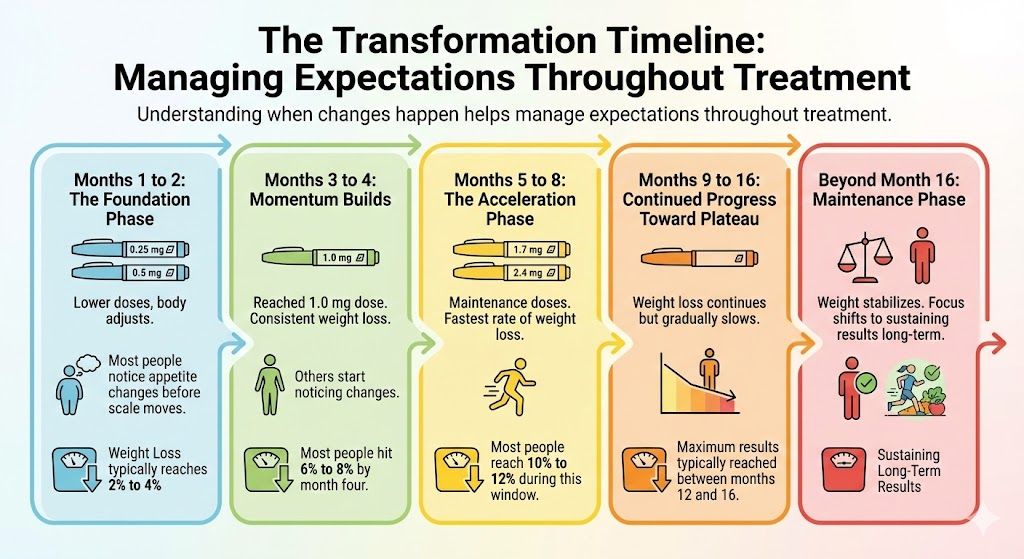
The Transformation Timeline
Understanding when changes happen helps manage expectations throughout treatment.
Months 1 to 2: The foundation phase. You’re on lower doses (0.25 mg, then 0.5 mg) while your body adjusts. Most people notice appetite changes before the scale moves much. Weight loss typically reaches 2% to 4%.
Months 3 to 4: Momentum builds. You’ve reached the 1.0 mg dose, and weight loss becomes more consistent. Most people hit 6% to 8% by month four. This is often when others start noticing changes.
Months 5 to 8: The acceleration phase. You’re on maintenance doses (1.7 mg or 2.4 mg), and weight loss is at its fastest rate. Most people reach 10% to 12% during this window.
Months 9 to 16: Continued progress toward plateau. Weight loss continues but gradually slows. Most people reach their maximum results between months 12 and 16.
Beyond month 16: Maintenance phase. Weight typically stabilizes, and the focus shifts to sustaining results long-term.
Beyond the Scale: Other Transformation Markers
Weight loss is the most measurable change, but Wegovy transformations often include improvements that don’t show up on the scale:
Waist circumference typically decreases significantly. The STEP 1 trial showed an average reduction of 5.3 inches in the semaglutide group, indicating substantial visceral fat loss.
Blood pressure often improves. Many participants saw clinically meaningful reductions in systolic blood pressure.
Blood sugar levels frequently normalize. Even in people without diabetes, metabolic markers often improve.
Physical function gets better. Participants reported improved ability to perform daily activities and exercise.
Quality of life measures showed significant improvements in how people felt about their weight and overall wellbeing.
Factors That Influence Your Transformation
Not everyone achieves the average 15% weight loss. Several factors affect individual outcomes:
Starting BMI plays a role. People with higher starting weights often lose more total pounds but may see similar or slightly lower percentage changes.
Diabetes status matters. People without type 2 diabetes typically lose more than those with diabetes. The JAMA real-world study found 11.8% vs 7.2% weight loss at six months.
Dose tolerated affects results. People who tolerate and remain on the 2.4 mg maintenance dose generally see better outcomes than those who stay on lower doses.
Lifestyle factors remain important. The clinical trials included dietary guidance (500 calorie deficit) and exercise recommendations (150 minutes weekly). Real-world results depend partly on lifestyle choices.
Treatment duration is critical. Weight loss continues for about 12 to 16 months before plateauing. Stopping early means missing potential results.
Real-World Results vs Clinical Trials
Clinical trials occur under controlled conditions with regular check-ins and structured support. Real-world results sometimes differ.
A study published in JAMA Network Open tracked patients in regular clinical practice and found results closely matched trial outcomes: 5.9% weight loss at three months and 10.9% at six months.
The SELECT trial, which followed over 17,000 participants for up to four years, showed 10.2% average weight loss in a less structured setting designed to study cardiovascular outcomes rather than maximize weight loss.
These studies suggest that real-world transformations, while sometimes slightly less dramatic than clinical trial results, remain clinically meaningful for most people.
Managing Side Effects During Transformation
Gastrointestinal side effects are common, especially during dose escalation. The most frequently reported include nausea, diarrhea, vomiting, and constipation.
Nausea typically peaks when doses increase and subsides within a week or two. Eating smaller meals, avoiding fatty foods, and staying upright after eating all help.
Sulfur burps bother some users. Eating slowly and avoiding carbonated beverages can reduce this side effect.
Constipation responds to adequate hydration, fiber intake, and physical activity.
Most side effects improve as your body adjusts to each dose level. Severe or persistent symptoms warrant discussion with your healthcare provider.
Maintaining Your Transformation
The STEP 4 trial specifically examined what happens when people stop Wegovy after achieving results. Participants who switched to placebo after 20 weeks of treatment regained about two-thirds of their lost weight within a year.
This finding underscores that semaglutide works best as ongoing treatment rather than a short-term intervention. The biological factors that contributed to weight gain don’t disappear. Long-term maintenance typically requires continued medication alongside sustainable lifestyle habits.
Comparing Wegovy to Other Options
How does a Wegovy transformation compare to alternatives?
Diet and exercise alone typically produces 3% to 5% weight loss that’s difficult to maintain long-term.
Older weight loss medications generally produce 5% to 10% weight loss.
Tirzepatide (Mounjaro/Zepbound) produces somewhat greater weight loss, averaging 20% to 22% in clinical trials.
Bariatric surgery produces 25% to 35% weight loss but involves surgical risks and permanent anatomical changes.
For most people seeking meaningful, sustainable weight loss without surgery, Wegovy represents one of the most effective options currently available.
Getting Started With Semaglutide
If you’re considering Wegovy or compounded semaglutide for weight loss, TrimRx offers telehealth consultations to help you understand your options. Compounded semaglutide provides the same active ingredient at more accessible prices.
You can take the intake quiz to see if you qualify.
The Bottom Line
A Wegovy transformation typically means losing around 15% of your starting body weight over 12 to 16 months, with most people losing at least 10%. Beyond the scale, transformations often include reduced waist circumference, improved metabolic markers, better physical function, and enhanced quality of life.
Results vary between individuals, and the best outcomes come from combining medication with sustainable lifestyle changes. The transformation takes time, but for most people who stay the course, the changes are both meaningful and lasting.
This information is for educational purposes and is not medical advice. Consult with a healthcare provider before starting any medication. Individual results may vary.

Transforming Lives, One Step at a Time
Keep reading

Wegovy Results at 6 Months: What the Data Shows
Six months into Wegovy is when the medication starts showing its full potential. By this point most patients have reached or are approaching the…

Wegovy Results at 3 Months: A Realistic Progress Check
Three months into Wegovy, you’re at a turning point. The early adjustment phase is behind you, the dose escalation is well underway, and your…

How to Get Wegovy Online: Step-by-Step
The process of getting Wegovy used to mean scheduling an in-person appointment with a physician, waiting weeks for availability, and then navigating pharmacy stock…


