Wegovy vs Ozempic: Which Semaglutide Is Right for You?
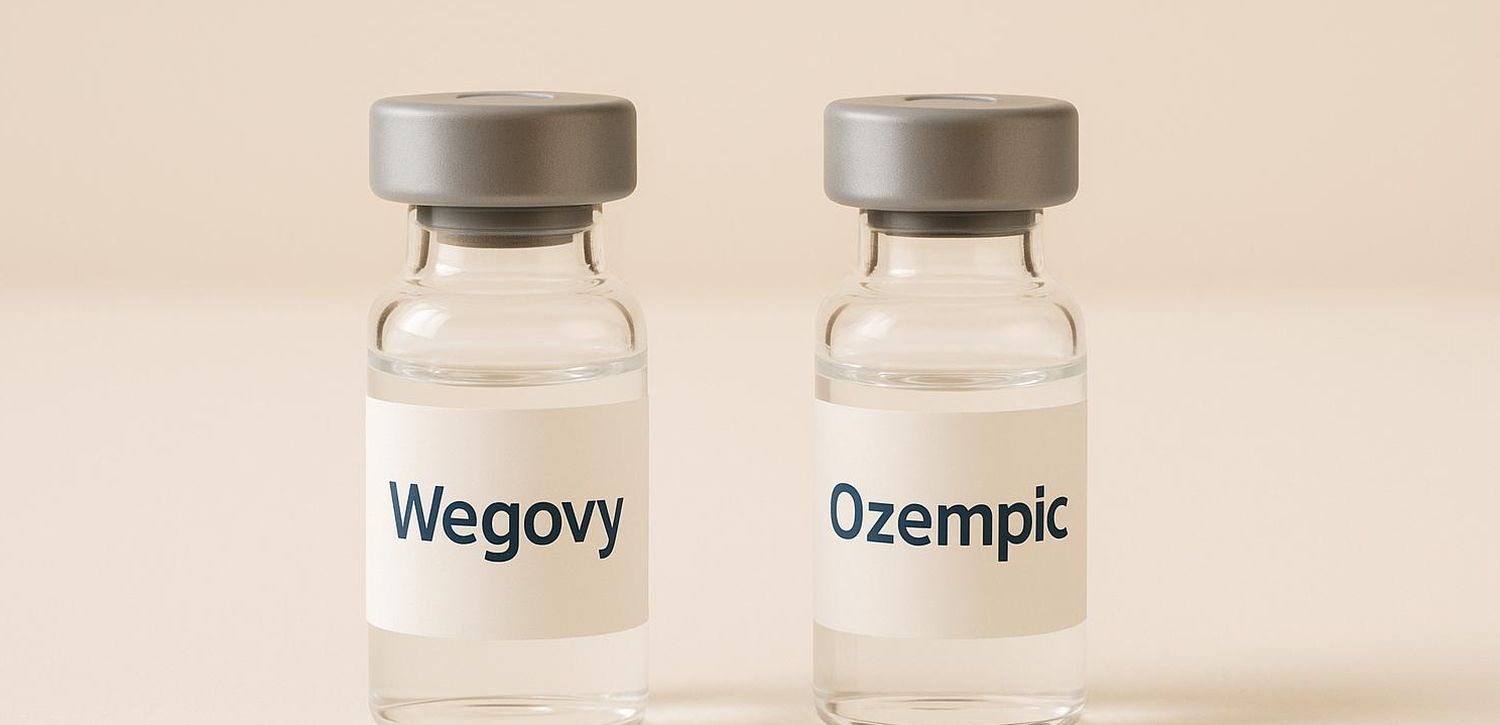
If you’re researching weight loss medications, you’ve probably noticed that Wegovy and Ozempic keep coming up in the same conversations. Maybe your doctor mentioned one but your insurance only covers the other. Or perhaps you’ve heard conflicting information about which one works better for weight loss.
Here’s the thing that confuses most people: Wegovy and Ozempic are literally the same medication. Both contain semaglutide as their active ingredient. The difference isn’t what’s in the pen, it’s how the FDA approved each one, what doses they come in, and how insurance companies treat them.
This guide breaks down everything you need to know about Wegovy versus Ozempic so you can figure out which option makes sense for your situation.
Key Takeaways: Wegovy vs Ozempic
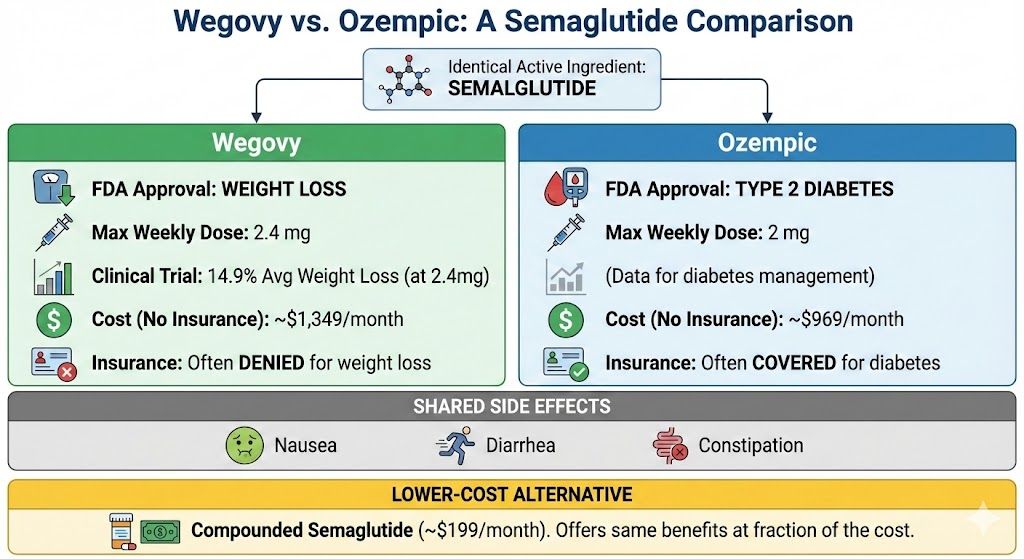
- Both medications contain identical active ingredient: semaglutide
- Wegovy is FDA-approved for weight loss, Ozempic is approved for type 2 diabetes
- Wegovy’s maximum dose is 2.4 mg weekly, Ozempic tops out at 2 mg weekly
- Clinical trials showing 14.9% average weight loss used Wegovy’s 2.4 mg dose
- Wegovy costs $1,349/month, Ozempic costs $969/month (both without insurance)
- Insurance often covers Ozempic for diabetes but denies Wegovy for weight loss
- Compounded semaglutide at $199/month offers same benefits at fraction of the cost
- Both cause similar side effects: nausea, diarrhea, constipation
The Basics: What Are Wegovy and Ozempic?
Wegovy and Ozempic are both brand names for injectable semaglutide made by the same pharmaceutical company, Novo Nordisk. Semaglutide belongs to a class of drugs called GLP-1 receptor agonists that affect how your body regulates appetite and blood sugar.
Think of it like this: Novo Nordisk developed semaglutide, got it approved for diabetes under the name Ozempic, then later reformulated it at a higher dose and got separate FDA approval for weight loss under the name Wegovy. It’s the same drug performing double duty under two different brand names with two different FDA indications.
Why would they do this? Mostly regulatory and marketing reasons. Getting FDA approval for a new indication requires separate clinical trials and applications. By creating distinct brands, Novo Nordisk could market one specifically to diabetes patients and another to people seeking weight loss.
For you as a patient, this creates both opportunities and challenges. Some insurance plans cover one but not the other. Some pharmacies have one in stock but not the other. Understanding the real differences helps you navigate these obstacles and find the most practical path to accessing the medication.
Key Differences Between Wegovy and Ozempic
While they share the same active ingredient, several practical differences matter when choosing between them.
FDA Approval and Intended Use
Ozempic received FDA approval in 2017 for treating type 2 diabetes. Doctors prescribe it to help patients lower blood sugar and reduce cardiovascular risk. The weight loss effect, while significant, is considered a beneficial side effect rather than the primary purpose.
Wegovy got FDA approval in 2021 specifically for chronic weight management in adults with obesity (BMI ≥30) or overweight (BMI ≥27) with at least one weight-related health condition. This was based on extensive clinical trials focusing exclusively on weight loss outcomes.
This distinction matters because doctors can legally prescribe Ozempic “off-label” for weight loss, but doing so means your insurance might not cover it. Wegovy has the official weight loss indication, but many insurance plans still refuse to cover weight loss medications regardless of FDA approval.
Dosing Differences
Both medications follow a gradual dose escalation schedule to minimize side effects, but they reach different maximum doses.
Ozempic dosing:
- Starts at 0.25 mg weekly for 4 weeks
- Increases to 0.5 mg weekly for at least 4 weeks
- Can increase to 1 mg weekly
- Maximum dose: 2 mg weekly
Wegovy dosing:
- Starts at 0.25 mg weekly for 4 weeks
- Increases to 0.5 mg weekly for 4 weeks
- Increases to 1 mg weekly for 4 weeks
- Increases to 1.7 mg weekly for 4 weeks
- Maximum dose: 2.4 mg weekly
That extra 0.4 mg at Wegovy’s maximum dose sounds small, but it represents a 20% increase over Ozempic’s top dose. The clinical trials showing an average 14.9% weight loss over 68 weeks used Wegovy’s 2.4 mg dose, so theoretically Wegovy might produce slightly better results.
In practice, though, many people reach their weight loss goals on Ozempic’s 1-2 mg doses. The difference in real-world outcomes probably isn’t as dramatic as the numbers suggest.
Pen Design and Packaging
This might seem trivial, but the pen designs differ slightly. Ozempic pens contain multiple doses and last about a month depending on your dose. Wegovy pens are single-dose pens, meaning you use a new pen for each weekly injection.
Some people prefer Ozempic’s multi-dose pen because it’s one less thing to dispose of. Others like Wegovy’s single-dose setup because there’s no risk of accidentally taking the wrong dose or forgetting how much is left in the pen.
Both use small, thin needles and relatively simple injection mechanisms. Most people get comfortable with either system within a few weeks.
Cost Comparison
Here’s where things get frustrating. Both medications are expensive at retail prices.
Ozempic: $969 per month without insurance
Wegovy: $1,349 per month without insurance
That $380 monthly difference adds up to over $4,500 annually, making Ozempic the more affordable option if you’re paying out of pocket for brand-name medications. However, both prices are prohibitively expensive for long-term use without insurance coverage or alternative options.
Insurance Coverage Realities
Insurance coverage creates the biggest practical difference between these medications. Here’s what typically happens:
If you have type 2 diabetes and your doctor prescribes Ozempic, many insurance plans cover it with copays ranging from $25-$300 monthly. Some plans require prior authorization or step therapy (trying other medications first), but coverage is generally available.
If you don’t have diabetes and your doctor prescribes Ozempic off-label for weight loss, most insurance plans deny coverage. They consider it outside the approved indication even though doctors legally can prescribe it this way.
If your doctor prescribes Wegovy for weight loss, coverage remains spotty even though it has FDA approval for this use. Many insurance plans explicitly exclude weight loss medications, period. Others cover it but require extensive documentation, multiple failed weight loss attempts, or meeting very specific criteria.
Medicare and Medicaid generally don’t cover weight loss medications at all due to federal regulations, though some state Medicaid programs have started making exceptions.
This insurance maze means the “better” medication often becomes whichever one your insurance actually covers. A medication you can afford beats a theoretically superior one that costs $1,000+ monthly out of pocket.
Weight Loss Results: Wegovy vs Ozempic
Let’s talk about what really matters—how much weight you’ll actually lose on each medication.
Clinical Trial Data
The landmark STEP-1 trial studied Wegovy (semaglutide 2.4 mg) in 1,961 adults over 68 weeks. Participants lost an average of 14.9% of their body weight. Breaking that down further:
- 86.4% lost at least 5% of body weight
- 69.1% lost at least 10% of body weight
- 50.5% lost at least 15% of body weight
- 32% lost 20% or more of body weight
For a 200-pound person, 14.9% weight loss equals about 30 pounds, bringing them to 170 pounds.
Ozempic trials focused on diabetes management rather than weight loss as a primary outcome, but the weight loss data from these studies showed significant results. At the 1 mg dose, average weight loss ranged from 9-14 pounds over 6-12 months. At 2 mg doses, results approached those seen with Wegovy, though slightly lower on average.
Real-world observations suggest people using Ozempic at 2 mg typically lose 10-14% of their body weight over similar timeframes, compared to Wegovy’s 14.9% average. That’s a real difference, but both represent substantial, clinically meaningful weight loss.
Timeline for Results
Both medications follow similar timelines because they work through identical mechanisms. You’ll notice reduced appetite within the first 1-2 weeks. Visible weight loss typically starts appearing around week 4-8. The most dramatic weight loss usually happens between months 3-8 as doses escalate. Maximum weight loss typically occurs around month 14-17, after which most people transition to maintenance.
For detailed month-by-month expectations, read our complete guide to semaglutide weight loss results.
Individual Variation
Clinical trial averages don’t predict your exact results. Some people lose significantly more than average, others less. Factors affecting your outcomes include starting weight, adherence to the dosing schedule, dietary choices, exercise habits, sleep quality, stress levels, and metabolic factors like thyroid function or insulin resistance.
Both Wegovy and Ozempic produce better results when combined with reduced calorie intake and increased physical activity, though they work even without major lifestyle changes.
Side Effects: Are They Different?
Since Wegovy and Ozempic contain the same active ingredient working through identical mechanisms, they cause the same side effects at similar rates.
Common Side Effects (Both Medications)
Nausea affects 20-44% of people, especially during the first few weeks at each new dose. It typically peaks within a few days of your injection and improves before your next dose.
Diarrhea occurs in roughly 30% of users. Usually mild and temporary, though occasionally persistent.
Constipation affects about 24% of people. The medication slows gastric emptying and reduced food intake contributes to this issue.
Vomiting happens in approximately 9% of users, typically only if you eat too much too quickly.
Abdominal pain or discomfort is reported by about 20% of people, usually mild and temporary.
Fatigue hits some people in the early weeks as their body adjusts to eating significantly less.
Reduced appetite is the intended effect, but sometimes it feels too extreme. Some people have to consciously remind themselves to eat adequate nutrition.
Managing Side Effects
The strategies for managing side effects work equally well for both medications:
Eat smaller, more frequent meals rather than three large ones. Your stomach empties slowly on semaglutide, making large portions uncomfortable.
Avoid fatty, greasy, or spicy foods initially. These often trigger or worsen nausea.
Stay well hydrated. Aim for at least 64 ounces of water daily.
Take your injection on a convenient day when you can rest if needed.
Don’t force yourself to finish meals. Stop when you feel satisfied.
Give side effects time to improve. Most decrease substantially after the first 2-3 weeks at each dose level.
Serious Side Effects (Rare)
Both medications carry small risks of serious complications including pancreatitis, gallbladder problems, kidney issues (usually from dehydration due to vomiting/diarrhea), and thyroid tumors (seen in animal studies but not confirmed in humans).
Neither medication should be used if you have a personal or family history of medullary thyroid cancer or Multiple Endocrine Neoplasia syndrome type 2.
Which One Should You Choose?
The “best” choice depends on your specific situation rather than one medication being objectively superior.
Choose Ozempic If:
You have type 2 diabetes and need blood sugar management along with weight loss. Ozempic treats both effectively, and your insurance likely covers it.
Your insurance covers Ozempic but not Wegovy. A covered medication beats a theoretically superior uncovered one every time.
You’re comfortable with the 2 mg maximum dose. Many people reach their goals without needing Wegovy’s higher dose.
Cost matters and you’re paying out of pocket for brand-name. Ozempic costs $380 less monthly than Wegovy.
Choose Wegovy If:
You want the FDA-approved weight loss formulation with the dose used in clinical trials showing 14.9% average weight loss.
Your insurance specifically covers Wegovy for weight loss, or you meet their criteria for coverage.
You want to maximize potential weight loss with the highest available dose of semaglutide.
You don’t have diabetes and prefer using a medication approved specifically for weight management.
Consider Compounded Semaglutide If:
Neither brand-name option fits your budget. At $969-$1,349 monthly, long-term use is financially unrealistic for most people.
Your insurance denies both medications or requires copays you can’t afford.
You want the same active ingredient at a price that makes sense for ongoing treatment.
TrimRx provides compounded semaglutide at $199 per month, all-inclusive. That covers consultations with licensed medical providers, the medication itself, all injection supplies, shipping, and ongoing support. No hidden fees or additional charges.
Compounded semaglutide contains the same active ingredient as both Wegovy and Ozempic, prepared by FDA-registered compounding pharmacies. It works identically to brand-name versions at roughly 15-20% of the cost.
For detailed information about safety and legitimacy, read our guide on how to buy semaglutide online safely and legally.
How to Get Wegovy or Ozempic
The process for accessing either medication follows similar paths, though insurance requirements differ.
Traditional Healthcare Route
Schedule an appointment with your primary care doctor or an endocrinologist. They’ll evaluate whether you’re a candidate based on your BMI, health conditions, and medical history. If they decide to prescribe, you’ll need to navigate insurance authorization (which can take days to weeks), then fill the prescription at a pharmacy.
This works well if you have good insurance and a doctor comfortable prescribing weight loss medications. However, many physicians remain hesitant to prescribe these medications, and insurance battles can be frustrating and time-consuming.
Telehealth Route
Platforms specializing in weight management offer a streamlined alternative. Through TrimRx, the process looks like this:
Complete an online medical intake covering your health history, current medications, and weight loss goals. Takes about 10-15 minutes.
Consult with a licensed provider via telehealth. You’ll typically get a response within 24-48 hours. The provider evaluates whether semaglutide is appropriate for you.
Receive medication at home if approved. Compounded semaglutide ships directly with all necessary supplies and clear instructions.
Begin treatment with ongoing support. Monthly follow-ups monitor your progress, manage any side effects, and adjust dosing.
The entire process happens from home with no in-person visits required. Learn more about accessing weight loss prescriptions through telehealth.
Comparing Semaglutide to Other Weight Loss Medications
Understanding how Wegovy and Ozempic stack up against other options provides useful context.
Semaglutide vs Tirzepatide
Tirzepatide (sold as Mounjaro for diabetes and Zepbound for weight loss) represents the newest generation of weight loss medications. It acts on both GLP-1 and GIP receptors, compared to semaglutide’s single GLP-1 action.
Clinical trials show tirzepatide produces higher average weight loss—22.5% at the 15 mg dose compared to semaglutide’s 14.9%. However, tirzepatide also costs more and causes similar side effects.
Brand-name tirzepatide (Mounjaro/Zepbound) costs $1,069 monthly. Compounded tirzepatide through TrimRx costs $349 monthly, still more expensive than compounded semaglutide but significantly less than brand options.
For an in-depth comparison, read our complete semaglutide vs tirzepatide guide.
Semaglutide vs Traditional Weight Loss Drugs
Older weight loss medications like phentermine, orlistat, or naltrexone-bupropion produce much more modest results—typically 5-10% weight loss compared to semaglutide’s 12-15%. They also work through different mechanisms and carry different side effect profiles.
GLP-1 medications like semaglutide represent a significant advancement in medical weight management, producing results that rival bariatric surgery outcomes without requiring invasive procedures.
See our comprehensive comparison of weight loss medications for detailed analysis of all options.
Frequently Asked Questions
Is Wegovy or Ozempic better for weight loss?
Wegovy shows slightly higher average weight loss in clinical trials due to its 2.4 mg maximum dose compared to Ozempic’s 2 mg maximum. The difference is real but not dramatic—both produce substantial weight loss. For many people, the “better” option comes down to insurance coverage and cost rather than effectiveness differences.
Can I switch from Ozempic to Wegovy or vice versa?
Yes, switching between them is straightforward since they’re the same medication. Your provider can convert your current dose directly. For example, if you’re stable on Ozempic 1 mg, you’d simply switch to Wegovy 1 mg. Insurance coverage often drives these switches—some people start on one and switch when insurance circumstances change.
Will insurance cover Wegovy if it covers Ozempic?
Not necessarily. Insurance companies treat them as separate medications with different coverage rules. Many plans cover Ozempic for diabetes but exclude Wegovy for weight loss, even though it’s the same drug. You’ll need to check your specific plan’s formulary and coverage policies.
How long do I need to stay on Wegovy or Ozempic?
Most clinical trials studied 68 weeks of treatment, but many people continue indefinitely. When people stop semaglutide, they typically regain most of the lost weight within 6-12 months. Think of it like blood pressure medication—it works while you’re taking it, but the underlying condition requires ongoing management. Your provider can help you decide on appropriate treatment duration.
Do Wegovy and Ozempic have the same side effects?
Yes, they cause identical side effects since they contain the same active ingredient. Nausea, diarrhea, constipation, and reduced appetite are the most common. Side effects typically improve after the first few weeks at each new dose. Neither medication is “easier” on side effects than the other.
Can I take Ozempic if I don’t have diabetes?
Doctors can legally prescribe Ozempic off-label for weight loss even if you don’t have diabetes. However, your insurance likely won’t cover it for this use. Many people in this situation either pay out of pocket for brand-name Ozempic ($969/month) or choose more affordable compounded semaglutide options.
Is compounded semaglutide the same as Wegovy and Ozempic?
Compounded semaglutide contains the same active ingredient as both brand-name medications. FDA-registered compounding pharmacies prepare it following strict safety standards. The main differences are price and that compounded versions don’t come in branded pens. Effectiveness is equivalent when sourced from reputable compounding pharmacies.
What’s the starting dose for Wegovy vs Ozempic?
Both start at 0.25 mg weekly for the first four weeks. The initial titration phase is identical—both medications begin at the same low dose to help your body adjust and minimize side effects. The differences emerge at higher doses, where Wegovy continues up to 2.4 mg while Ozempic stops at 2 mg.
Can I use Wegovy or Ozempic if I’m pregnant?
No, neither medication should be used during pregnancy. Stop semaglutide at least two months before attempting to conceive. The medications haven’t been adequately studied in pregnant women, and weight loss during pregnancy isn’t recommended. Tell your provider immediately if you become pregnant while taking either medication.
How do I decide between Wegovy, Ozempic, and compounded semaglutide?
Start by checking your insurance coverage—what do they actually cover and at what cost? Then consider your budget for out-of-pocket expenses. If insurance covers one with an affordable copay, that’s probably your answer. If both are denied or unaffordable, compounded semaglutide at $199/month makes long-term treatment realistic. The medications all work similarly, so practical access matters more than theoretical superiority.
Making Your Decision
Wegovy and Ozempic are the same medication marketed under different names with different FDA indications. Wegovy has a slightly higher maximum dose and FDA approval specifically for weight loss. Ozempic has a lower maximum dose but often better insurance coverage for diabetes patients.
Both produce significant, clinically meaningful weight loss when used consistently. The choice between them usually comes down to insurance coverage, cost, and what your doctor is comfortable prescribing.
For many people, compounded semaglutide offers the most practical path forward. At $199 per month through TrimRx, it provides the same active ingredient, same mechanism of action, and same expected results at a fraction of the cost of brand-name options.
Get started with a simple online consultation and begin your weight loss journey with proven medication and comprehensive support. Whether you choose Wegovy, Ozempic, or compounded semaglutide, you’re taking an important step toward achieving your health goals.

Transforming Lives, One Step at a Time
Keep reading

How Online GLP-1 Prescriptions Work: From Consult to Delivery
The idea of getting a prescription for a GLP-1 medication without setting foot in a doctor’s office still surprises some people. It shouldn’t. Telehealth…

How to Verify a Compounding Pharmacy Is Safe and Legitimate
The growth of the compounded GLP-1 market has brought something genuinely useful to patients who couldn’t otherwise afford semaglutide or tirzepatide. It has also…

What Is a Compounding Pharmacy and How Does It Work?
If you’ve been researching GLP-1 medications like semaglutide or tirzepatide, you’ve probably come across the term “compounding pharmacy” more than once. It gets used…


