The Pink Salt Trick for Weight Loss: Does It Actually Work?
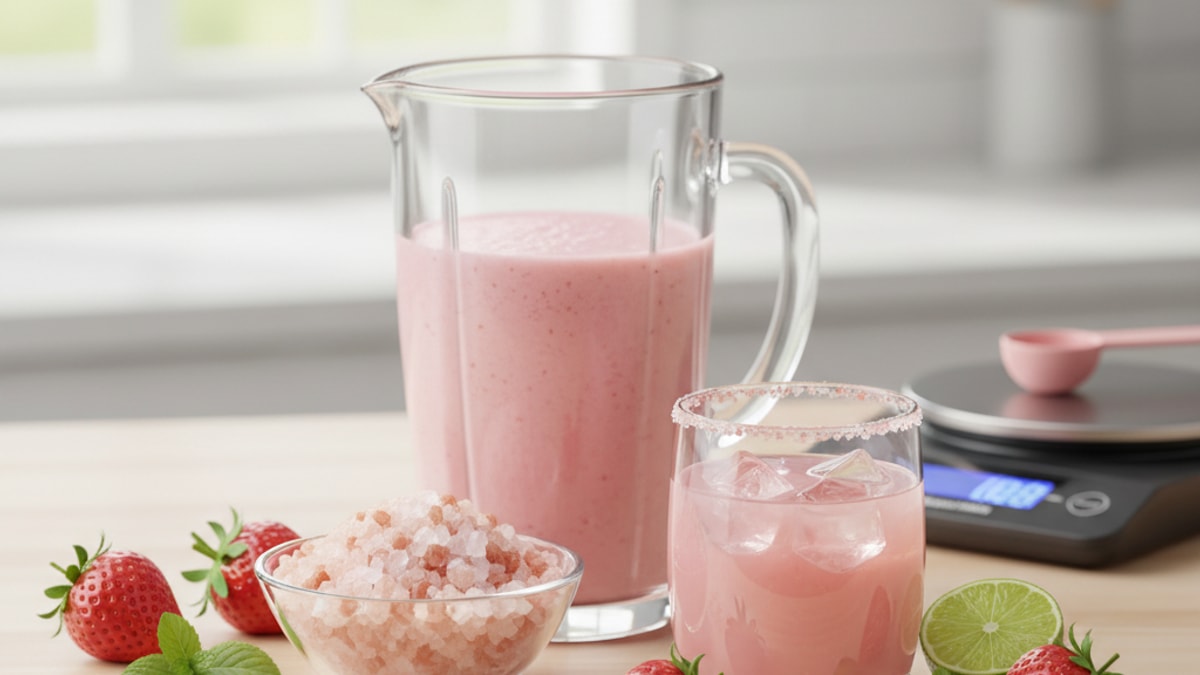
The Pink Salt Trick Recipe for Weight Loss: Does It Actually Work?
It’s everywhere, isn't it? Scroll through your social media feed, and you're bound to see it: the so-called "pink salt trick." Presented as a revolutionary, almost magical recipe for weight loss, it promises to melt away pounds with just a simple morning cocktail of water and Himalayan pink salt. The claims are bold, the testimonials are glowing, and the recipe is deceptively simple. It's the kind of quick fix that feels too good to be true.
And let's be honest, that's usually a pretty good indicator. Here at TrimrX, our entire focus is on the rigorous science of metabolic health and sustainable weight management. We work with cutting-edge, FDA-registered medications like Semaglutide and Tirzepatide because they are backed by extensive clinical research. So when a viral trend like the pink salt trick starts making waves, our team feels a professional obligation to step in and parse the science from the social media static. We're here to give you an unflinching look at what this trend is, what it claims to do, and what's actually happening inside your body.
So, What Exactly Is This Viral 'Trick'?
The recipe itself is remarkably straightforward, which is a huge part of its appeal. You don't need expensive equipment or hard-to-find ingredients. Most versions call for mixing a small amount—typically a quarter to a half teaspoon—of Himalayan pink salt into a large glass of warm water. Some variations suggest adding a squeeze of lemon juice or a splash of apple cider vinegar for an extra "boost."
The instructions are just as simple: drink this concoction first thing in the morning on an empty stomach. That’s it. Proponents claim this daily ritual will kickstart your metabolism, flush out toxins, balance your body's pH, replenish essential minerals, and, of course, lead to significant weight loss. It's presented as an ancient secret, a natural remedy that modern medicine has overlooked. A compelling story, to be sure.
But a compelling story isn't the same as a biological reality. The claims are sprawling, touching on nearly every popular wellness buzzword. To understand if there's any merit here, we have to dismantle these claims one by one and hold them up to the light of established science.
A Scientific Takedown of the Claims
When we encounter a trend like this, our first step is to break it down into its core assertions. Does it boost metabolism? Does it detoxify? Does it cause real weight loss? Our experience shows that viral hacks often conflate a tiny kernel of scientific truth with a mountain of misinformation. Let's dig in.
Claim 1: It Supercharges Your Metabolism
This is perhaps the most alluring promise. The idea that a simple drink can turn your body into a more efficient fat-burning machine is powerful. Unfortunately, it's also biologically unfounded. Salt, whether it's pink, white, or black, is primarily sodium chloride. It contains no calories and has no direct thermogenic properties—meaning, it doesn't generate heat or force your body to burn more energy. Your metabolic rate is a complex equation governed by factors like muscle mass, age, genetics, and hormonal function. A pinch of salt in water simply doesn't move the needle in any meaningful way.
What can influence metabolism? Building lean muscle mass through resistance training is a proven method. So is eating enough protein, which has a higher thermic effect of food (TEF) than fats or carbs. These are foundational principles, not quick tricks. The pink salt concoction, from a metabolic standpoint, is a non-starter.
Claim 2: It 'Detoxifies' Your Body and Flushes Toxins
Here's a critical, non-negotiable element of health literacy we can't stress enough: your body already has a sophisticated, relentless detoxification system. Your liver and kidneys are the MVPs here. They work 24/7 to filter your blood, neutralize harmful substances, and excrete waste products. They don't need help from a glass of salt water.
The term "detox" has been co-opted by the wellness industry to sell products, but medically, it's a specific process for removing dangerous levels of drugs, alcohol, or poison. The pink salt trick is often a gentler name for a "salt water flush," a practice that essentially uses a high concentration of salt water to induce a powerful laxative effect. You're not "flushing toxins"; you're forcing your bowels to evacuate. This can lead to dehydration, a dangerous electrolyte imbalance, and significant discomfort. It’s a brute-force method that completely misunderstands and disrespects your body's own elegant systems.
Claim 3: It Causes Rapid Weight Loss
This is the claim that gets the most attention, and it’s the most misleading. Yes, stepping on the scale after doing a salt water flush will likely show a lower number. But you haven't lost fat. You've lost water.
The high concentration of sodium from the salt trick has a diuretic and laxative effect. It pulls water into your intestines and forces your kidneys to work overtime to excrete the excess sodium, taking more water with it. The result? A temporary drop in water weight. This is the same reason crash diets or intense workouts in a sweat suit seem to work overnight. The scale moves, but your body composition—the ratio of fat to muscle—hasn't changed at all. As soon as you rehydrate and eat normally, that weight comes right back. It's not progress; it's a physiological illusion. Real fat loss is a much slower, more deliberate metabolic process.
Claim 4: It Balances Electrolytes with '84 Trace Minerals'
Himalayan pink salt's marketing heavily relies on its supposed content of 84 trace minerals. While it's true that it contains trace amounts of minerals like potassium, magnesium, and calcium that regular table salt doesn't, the quantities are minuscule. You would have to consume a dangerously high, truly catastrophic amount of salt to get any meaningful dose of these minerals. A balanced diet rich in fruits, vegetables, and whole foods is an infinitely better and safer way to get the minerals your body needs.
Ironically, the practice can do the exact opposite of balancing electrolytes. Ingesting a large dose of sodium all at once can overwhelm your system, forcing your body to scramble to maintain its crucial sodium-potassium balance. This can put a strain on your kidneys and cardiovascular system. For most people, the greatest risk isn't a mineral deficiency; it's excessive sodium intake, which is a formidable public health issue.
The Real Dangers Hiding in a Simple Recipe
A little salt in your water might seem harmless. But we've seen how easily a seemingly benign trend can become problematic, especially when scaled up by people desperate for results.
The most immediate risk is the massive sodium load. The American Heart Association recommends no more than 2,300 milligrams of sodium per day, with an ideal limit of 1,500 mg for most adults. One teaspoon of salt contains about 2,300 mg of sodium. The pink salt trick encourages you to start your day by consuming a significant portion—or even the entirety—of your daily limit in one go. Chronically high sodium intake is directly linked to high blood pressure, heart disease, and stroke.
Furthermore, the induced diarrhea can lead to severe dehydration and an acute imbalance of electrolytes, which can cause dizziness, muscle cramps, and in severe cases, cardiac issues. It's a physiologically perilous game to play for a temporary drop on the scale.
Perhaps the most insidious danger is the psychological one. It reinforces the damaging belief in a quick fix. It distracts from the sustainable, evidence-based habits that actually lead to long-term health and weight management. Every day spent chasing a viral hack is a day not spent building a foundation of healthy nutrition and movement.
Health Fads vs. Medically-Proven Solutions
It's becoming increasingly challenging for people to distinguish between a wellness trend and a legitimate medical protocol. To make it clearer, our team put together a simple comparison. It starkly illustrates the difference between a social media fad and a clinical approach to weight management.
| Feature | The Pink Salt Trick | Medically-Proven Approach (e.g., GLP-1s) |
|---|---|---|
| Mechanism | Induces water loss through a laxative/diuretic effect. | Works on a hormonal level to regulate appetite, slow gastric emptying, and improve insulin sensitivity. |
| Scientific Backing | Anecdotal testimonials and pseudoscience. No clinical trials support its efficacy for fat loss. | Backed by extensive, large-scale, peer-reviewed clinical trials demonstrating significant efficacy and safety. |
| Type of Weight Loss | Temporary loss of water weight and bowel contents. No actual fat loss. | Promotes loss of adipose tissue (body fat) while helping to preserve lean muscle mass. |
| Sustainability | Not sustainable. Can't be done long-term without significant health risks. Weight is regained upon stopping. | Designed for long-term management. Creates sustainable changes in eating behavior and metabolic health. |
| Safety & Side Effects | Risks include dehydration, high blood pressure, kidney strain, and dangerous electrolyte imbalances. | Managed by healthcare professionals. Potential side effects are well-documented and monitored. |
| Professional Guidance | DIY approach based on social media trends with no medical oversight. | Requires a prescription and is administered under the guidance of a medical team who can tailor the treatment. |
Why We Fall for the 'Trick'
If the science is so clear, why is the pink salt trick so popular? The answer lies more in psychology than physiology. In a world of demanding schedules and high expectations, the promise of a simple, low-effort solution is incredibly seductive. We're wired to seek the path of least resistance.
Viral trends create a powerful sense of social proof. When you see countless videos of seemingly happy, successful people crediting their transformation to one simple thing, it's natural to think, "Maybe this could work for me, too." The wellness industry has perfected the art of crafting compelling narratives that tap into our deepest desires for health, vitality, and control over our bodies.
Our team has found that this desire for a magic bullet often stems from frustration. Many of our patients come to us after years of trying and failing with conventional diet and exercise advice. They feel like their bodies are working against them. In that context, a radical "trick" that promises to sidestep all the hard work feels like a lifeline. It’s an understandable impulse, but one that ultimately leads to a cycle of hope and disappointment.
A Better Way: The Science of Sustainable Weight Management
Breaking that cycle requires a fundamental shift in approach—from seeking tricks to embracing science. This is the very foundation of what we do at TrimrX. We move beyond the noise and focus on the biological mechanisms that actually regulate body weight.
This is where treatments like GLP-1 (glucagon-like peptide-1) receptor agonists come in. Medications like Semaglutide and Tirzepatide aren't tricks; they are sophisticated biotechnological tools that work with your body's own hormonal systems. They target the same pathways that regulate hunger, satiety, and blood sugar. By amplifying the signals that tell your brain you're full, they naturally reduce your appetite and caloric intake without the constant, draining battle of willpower.
It’s a significant, sometimes dramatic shift. Patients often tell us it's the first time they've felt free from constant food noise. But the medication is just one part of a comprehensive, medically-supervised program. True, lasting success comes from using that powerful tool to build a new foundation of sustainable habits. While the medication addresses the underlying biology, you have the space to focus on nutrition, movement, and mindset—the pillars of long-term health. If you're tired of the cycle of fads and want to see if a medical approach is right for you, you can Take Quiz on our site to learn more.
This integrated approach is what separates a medical solution from a wellness fad. It's not about a single secret ingredient. It's about a multi-faceted strategy that addresses the complex reality of weight management. It's a partnership between you and a medical team dedicated to your success. When you're ready to move past the myths, you can Start Your Treatment and begin a journey grounded in real science.
The allure of a quick fix like the pink salt trick is strong, but its foundation is weak. It offers a temporary illusion at the potential cost of your health. Real, sustainable change doesn't come from a recipe you find online. It comes from understanding your own body, addressing the root biological factors at play, and committing to an evidence-based plan. It may not be as simple as a pinch of salt, but the results are real, lasting, and built on a foundation of genuine health.
Frequently Asked Questions
Does the pink salt trick recipe really help with weight loss?
▼
No, it does not promote fat loss. The ‘weight loss’ experienced is almost exclusively from water and bowel content due to the concoction’s laxative and diuretic effects. This is temporary and can be dangerous.
Is Himalayan pink salt healthier than regular table salt?
▼
While pink salt contains trace minerals not found in table salt, the amounts are too minuscule to offer any significant health benefits. Both are primarily sodium chloride, and excessive intake of either carries the same health risks, like high blood pressure.
Can drinking salt water flush out toxins from my body?
▼
The idea of ‘flushing toxins’ with salt water is a misconception. Your liver and kidneys are your body’s natural, highly effective detoxification system. A salt water flush simply forces bowel evacuation and does not ‘detox’ you.
What are the main dangers of the pink salt trick?
▼
The primary dangers include consuming an excessive amount of sodium, which can lead to high blood pressure, as well as dehydration and electrolyte imbalances caused by induced diarrhea. It’s not a safe or sustainable practice.
What’s the difference between losing water weight and losing fat?
▼
Water weight is the fluctuation of fluid levels in your body, which can change rapidly. Fat loss is the reduction of stored body fat (adipose tissue), a much slower metabolic process that occurs when you consistently consume fewer calories than you burn.
Will adding lemon to the pink salt water make it more effective?
▼
Adding lemon juice might add a small amount of Vitamin C and flavor, but it does not fundamentally change the nature of the drink. It won’t create any new weight loss benefits or negate the risks associated with high sodium intake.
Are there any people who should absolutely avoid this trend?
▼
Yes. Individuals with high blood pressure, kidney disease, heart conditions, or any digestive issues should absolutely avoid this trend. We’d recommend that everyone avoid it, but it’s particularly dangerous for these groups.
How do medically-supervised programs like TrimrX differ from diet fads?
▼
Our programs use FDA-registered medications like GLP-1s that are backed by extensive clinical research to address the biological roots of weight gain. This is combined with professional medical guidance to ensure safety and create a sustainable, long-term strategy, unlike unsupported and risky DIY fads.
Why do I feel less bloated after drinking salt water?
▼
You may feel temporarily less bloated because the salt water has cleared out your digestive tract. However, this is a harsh, short-term effect, and a high-sodium diet can actually lead to more water retention and bloating over time.
What is a better morning ritual for weight management?
▼
A much healthier and more effective morning ritual would be to drink a large glass of plain water for hydration, eat a protein-rich breakfast to promote satiety, and incorporate some form of light movement, like a walk.
Can the pink salt trick help with a keto diet?
▼
While people on a ketogenic diet may need to replenish electrolytes like sodium, a ‘salt water flush’ is not the recommended method. It’s far safer to add salt to food throughout the day or use a balanced electrolyte supplement under medical guidance.
Does the temperature of the water matter in the pink salt recipe?
▼
No, the water temperature has no impact on the physiological effects of the salt. Whether warm or cold, the high concentration of sodium is what causes the laxative and diuretic response in the body.

Transforming Lives, One Step at a Time
Keep reading
Is Bupropion an SSRI or a Different Antidepressant?
A lot of people ask the same question at some point: is bupropion an SSRI? It usually comes up after hearing about medications like…

Do You Need a Prescription for GLP-1s? The 2026 Answer
Wondering ‘do you need a prescription for glp 1’ in 2026? Yes. We explain why a doctor’s oversight is critical for safe, effective results.

How to Get GLP-1 Covered By Insurance: Our 2026 Playbook
Struggling with how to get glp-1 covered by insurance? Our 2026 guide breaks down prior authorizations, appeals, and documentation.


