Which Milk Is Actually Best for Weight Loss? We Investigated.
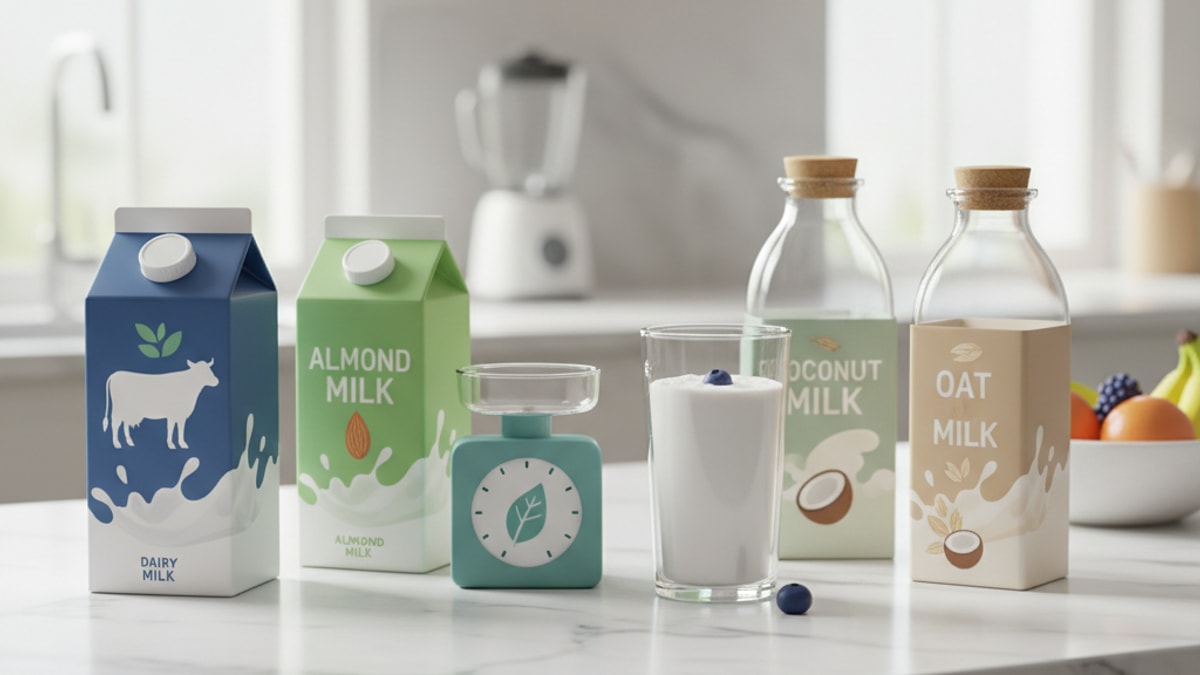
Walking down the dairy aisle—or what used to be just the dairy aisle—can feel like navigating a sprawling, confusing landscape. It’s no longer a simple choice between whole and skim. Now you're faced with a wall of options: almond, soy, oat, coconut, pea, hemp, and even more niche contenders. It’s overwhelming. And when you’re on a dedicated weight loss journey, a choice that seems small, like which milk to pour over your cereal, suddenly carries significant weight.
Here at TrimrX, we work with individuals every day who are making profound, positive changes to their health, often with the help of advanced GLP-1 treatments. Our experience shows that long-term success isn't just about the medication; it’s about the constellation of small, informed choices you make daily. Food is fuel, but it's also information for your body. The right milk can be a valuable tool, providing protein to preserve muscle mass and calcium for bone health. The wrong one? It can be a source of empty calories and hidden sugars, quietly sabotaging your efforts. So let's cut through the noise. Our team has analyzed the data, and we're here to give you the unvarnished truth about what milk is the best for weight loss.
Why Does Milk Choice Even Matter?
It’s just a splash in your coffee, right? How much difference can it really make? A surprising amount, actually. When you're managing your caloric intake and focusing on metabolic health, every single component of your diet matters. Milk isn't just white liquid; it's a source of macronutrients (protein, carbs, fat) and micronutrients (calcium, vitamin D) that play a critical role in how your body functions, especially during a period of weight loss.
Let’s be honest, this is crucial. The primary goal of any effective weight loss program is to shed fat, not precious, metabolically active muscle. Protein is the non-negotiable element for muscle preservation. A milk that provides a solid dose of protein contributes to your daily goal, helping you feel fuller for longer and supporting your body composition. This is something we can't stress enough with our patients. A treatment like Semaglutide is incredibly effective at regulating appetite, but it’s the patient's dietary choices that ensure the weight being lost is primarily fat.
Satiety is another huge piece of the puzzle. Feeling hungry and deprived is what makes most diets fail. The nutritional profile of your milk—specifically its protein and fat content—can have a dramatic impact on how full you feel after a meal or snack. A low-calorie milk might seem like a win, but if it has zero protein and leaves you reaching for a snack an hour later, it’s a net loss. It’s about strategic nutrition, not just calorie-cutting. The right choice supports your energy levels, protects your muscle mass, and keeps hunger pangs at bay, making your entire weight loss journey smoother and more sustainable.
The Dairy Case: Unpacking Cow's Milk Options
For decades, cow's milk was the undisputed champion. It's a nutritional powerhouse, but the different fat levels create distinct profiles. Let's break them down.
Skim Milk (Fat-Free)
This is often the default recommendation for weight loss, and for good reason: it offers the highest protein-to-calorie ratio in the dairy family. At around 80-90 calories per cup, you get a solid 8 grams of high-quality, complete protein. That's a fantastic trade. It provides all the calcium and vitamin D of its fattier cousins without the extra calories from fat. For someone in a strict calorie deficit, skim milk is an incredibly efficient way to get key nutrients.
But there’s a trade-off. The absence of fat does reduce its satiety factor. Some people find it less filling and a bit watery, which can be unsatisfying. Our team often recommends it for use in protein shakes or smoothies, where other ingredients can provide texture and healthy fats, but we also tell our patients to be mindful of how it impacts their hunger levels. If a glass of skim milk doesn't hold you over, it might not be the best tool for you personally.
1% and 2% Milk (Low-Fat and Reduced-Fat)
These are the quintessential middle-ground options. They represent a compromise, offering a bit of the creaminess and satiating fat from whole milk but with a more managed calorie count. A cup of 1% milk typically has around 100 calories and 2.5 grams of fat, while 2% has about 120 calories and 5 grams of fat. Both still deliver that same 8 grams of protein.
Our experience shows that for many people, this is the sweet spot. The small amount of fat can make a real difference in how satisfying the milk is, helping to curb cravings more effectively than skim. It’s a practical, balanced choice that fits well into most eating plans without requiring the caloric budget of whole milk. It’s versatile, works well on its own or in recipes, and provides a great nutritional package. Simple, right?
Whole Milk
Whole milk has been unfairly villainized for years. The truth is more nuanced. With about 150 calories and 8 grams of fat per cup, it's certainly the most calorie-dense option. However, that fat content makes it incredibly satiating. A glass of whole milk can feel like a substantial snack, potentially preventing you from eating more calories later. Some studies even suggest that the full-fat dairy profile may have unique metabolic benefits, though the research is still evolving.
So, who is whole milk for? It can be a great option for individuals who are very active and have a higher calorie budget. It can also be useful for those who struggle with constant hunger, as the fat can provide lasting fullness. We generally don't recommend it as a first choice for patients focused purely on calorie reduction, but we also don't forbid it. Context is everything. If a small amount in your coffee keeps you satisfied until lunch, it could be a perfectly valid part of your plan.
The Plant-Based Aisle: A Sprawling and Complicated World
The explosion of plant-based milks has given us incredible choice, but it's also created a minefield of nutritional disparities. Some are fantastic tools for weight loss; others are dessert in disguise. We’ve seen countless people make the switch assuming it's inherently healthier, only to be tripped up by low protein and high sugar. You have to read the labels.
We mean this sincerely: always, always choose the unsweetened version. The 'Original' flavors of many brands are packed with added sugar, which is a direct antagonist to your weight loss goals.
Unsweetened Almond Milk
This is the undisputed king of low-calorie liquids. At just 30-40 calories per cup, it's incredibly easy to fit into any calorie budget. It’s light, has a mild flavor, and is perfect for smoothies, cereal, or just as a low-impact base for other things. It's a fantastic tool for hydration and for adding volume to meals without adding significant calories.
Here’s the massive caveat, though: it has virtually no protein. Most brands contain just 1 gram of protein per serving. This is a critical detail that many people miss. If you swap out dairy milk for almond milk, you're removing a significant source of protein from your diet that you must replace elsewhere. For our patients on GLP-1 programs, maintaining high protein intake is paramount for preserving muscle, and relying on almond milk can make hitting those targets much more challenging. It's a great choice for calorie control, but a poor one for protein.
Unsweetened Soy Milk
If you're looking for a plant-based option that can go toe-to-toe with dairy milk nutritionally, soy milk is it. A typical cup of unsweetened soy milk has around 80 calories and a robust 7-8 grams of complete protein. It’s one of the few plant-based sources that contains all the essential amino acids, making it a high-quality protein source. It’s creamy, versatile, and provides a nutritional profile that genuinely supports muscle maintenance and satiety.
For years, soy has been the subject of debate regarding phytoestrogens, but the overwhelming scientific consensus is that moderate consumption of whole soy foods (and soy milk) is perfectly safe and does not negatively impact hormone levels in men or women. From a purely weight-loss-centric, nutritional standpoint, unsweetened soy milk is one of the strongest contenders on the market.
Oat Milk
Oat milk has surged in popularity because of its incredibly creamy texture and rich flavor, which is fantastic in coffee. But this is where we have to deliver some tough love. From a weight loss perspective, it's often a formidable challenge. Standard oat milk is significantly higher in calories and carbohydrates than most other milks. A cup can easily contain 120-130 calories and 15-20 grams of carbs, with very little protein (around 2-3 grams).
Many commercial brands also contain added oils to achieve that signature creamy mouthfeel. You're essentially drinking blended oats and oil. While it can be a delicious treat, making it your daily go-to can add a surprising number of calories and carbs to your diet. If you absolutely love oat milk, we recommend using it sparingly and being acutely aware of its nutritional cost. There are some 'light' or 'zero sugar' versions emerging, but they still typically lag behind other milks in the protein department.
Other Plant-Based Milks
- Pea Milk: This is a rising star. Brands like Ripple have pioneered a way to make milk from yellow peas that is creamy, low in sugar, and packs 8 grams of protein per serving—a direct competitor to dairy and soy milk. It's an excellent, allergen-friendly choice.
- Coconut Milk (Beverage): The kind in the carton (not the can) is creamy but typically low in protein and higher in saturated fat. Unsweetened versions are moderately low in calories (around 45-50 per cup), but it offers little in the way of satiety from protein.
- Cashew & Hemp Milk: These are also generally low in protein unless specifically fortified. They offer unique flavor profiles but don't usually stand out from a purely nutritional weight-loss perspective compared to the top contenders.
Milk Comparison: A Head-to-Head Breakdown
To make this easier, our team put together a quick-reference chart. These are average values for one-cup (8 oz) servings of unsweetened varieties. Always check the label on your specific brand, as numbers can vary.
| Milk Type (Unsweetened) | Calories (Approx.) | Protein (g) | Carbs (g) | Fat (g) | Our Team's Take |
|---|---|---|---|---|---|
| Skim Cow's Milk | 90 | 8 | 12 | 0 | Highest protein-to-calorie ratio. Excellent for muscle support. |
| 1% Cow's Milk | 100 | 8 | 12 | 2.5 | A balanced choice with a bit more satiety from fat. |
| Unsweetened Almond Milk | 35 | 1 | 1 | 3 | The calorie-cutting champion, but very poor for protein intake. |
| Unsweetened Soy Milk | 80 | 7 | 4 | 4 | The best plant-based equivalent to dairy for protein. A top choice. |
| Unsweetened Oat Milk | 120 | 3 | 16 | 5 | Creamy and delicious, but high in calories and carbs. Use with caution. |
| Unsweetened Pea Milk | 70 | 8 | 0 | 4.5 | A fantastic, high-protein, low-carb, allergen-friendly option. |
The Real Answer: How to Choose the Best Milk for You
So what milk is the best for weight loss? After all that, you might be expecting a single, definitive answer. But the truth, as it so often is in nutrition, is that there isn't one. The best milk is the one that best aligns with your specific goals, preferences, and overall dietary strategy. That's the reality.
Here’s the framework we use to guide our patients at TrimrX. Ask yourself these questions:
-
What is my primary goal? Calorie reduction or protein intake?
- If your main focus is slashing calories, and you get plenty of protein from other sources (lean meats, eggs, protein powder), then unsweetened almond milk is an unbeatable choice. It gives you the milky experience for a fraction of the calories.
- If you're struggling to hit your protein targets to support muscle mass while losing weight (which is a common challenge), then skim milk, soy milk, or pea milk are your best friends. They are protein powerhouses.
-
How am I using it?
- Just a splash in your coffee? The caloric difference between most options is negligible. Go with what you enjoy the most. Maybe this is where you use that creamy oat milk.
- As the base for a large smoothie or a big bowl of cereal? This is where the choice has a massive impact. Opt for a high-protein, low-calorie option like skim or soy to make that meal a nutritional workhorse.
-
Have I checked for hidden sugars?
We’ve said it before, but it bears repeating. Added sugar is the enemy of a successful weight loss journey. It provides empty calories and can spike insulin. Ignore marketing terms like 'Original' or 'Natural' on the front of the carton and go straight to the nutrition label. Look for the 'Added Sugars' line. Your goal is zero.
Integrating Your Choice Into a Bigger Picture
Choosing the right milk is a fantastic, proactive step. It's a micro-decision that, compounded over time, makes a real macro-impact. But it’s still just one piece of a much larger puzzle. True, sustainable weight loss—the kind that transforms your health for good—comes from a comprehensive, science-backed strategy. It’s about understanding how nutrition, activity, and powerful metabolic tools like GLP-1 medications work together.
This is the core of what we do at TrimrX. We provide the medical expertise and the powerful treatments, but we also guide our patients through the labyrinth of daily choices like this one. We help you build a holistic plan where every element, from your medication to your milk, is working in concert to achieve your goals. It’s this level of detailed, personalized guidance that makes a comprehensive program so effective. If you’re tired of the guesswork and ready to see what a medically-supervised approach can do for you, we encourage you to Take Quiz and see if you're a candidate.
Making smarter choices in the grocery store is a powerful feeling. It's a declaration that you're in control of your journey. So next time you're standing in that aisle, you'll be armed with the knowledge to pick not just a milk, but the right milk for you. It's a small victory, but it's one that builds momentum toward the bigger win: a healthier, more vibrant life. If you're ready to take the next step, you can Start Your Treatment with us today.
Frequently Asked Questions
Is whole milk inherently bad for weight loss?
▼
Not necessarily. While it’s higher in calories, its fat content provides significant satiety, which can help prevent overeating later. It can fit into a weight loss plan if it’s budgeted for properly and helps you control overall hunger.
What about lactose-free milk for weight loss?
▼
Lactose-free milk is simply cow’s milk with the lactase enzyme added to break down lactose. Nutritionally, it’s identical to its regular counterpart (skim, 1%, etc.), so it’s an equally good choice for weight loss if you’re lactose intolerant.
Is oat milk secretly sabotaging my weight loss efforts?
▼
It can be, yes. Standard oat milk is often much higher in calories and carbohydrates than people realize, and it contains very little protein. If you drink it frequently in large amounts, it can easily contribute to a calorie surplus.
How much protein should I look for in a milk alternative?
▼
Our team recommends aiming for a milk that provides at least 7-8 grams of protein per serving. This makes it nutritionally comparable to cow’s milk and ensures it’s helping you meet your muscle-preservation goals. Soy and pea milk are the best options for this.
Are organic milks better for weight loss?
▼
The term ‘organic’ refers to the farming practices used to produce the milk. It does not change the milk’s nutritional profile of calories, protein, or fat. Therefore, organic milk is not inherently better or worse for weight loss than conventional milk.
Which milk is best for a low-carb or keto diet?
▼
For a very low-carb diet, unsweetened almond milk is a great choice due to its minimal carbohydrate content (often 1g per cup). Unsweetened pea milk is also an excellent option as it can have zero carbs while still being high in protein.
What’s the best milk to use in a weight loss smoothie?
▼
We recommend a milk that’s high in protein and low in calories to make your smoothie more satiating. Skim cow’s milk, unsweetened soy milk, or unsweetened pea milk are all fantastic choices that will add a protein boost without excess calories.
Why is ‘unsweetened’ so important for plant-based milks?
▼
The ‘Original’ or sweetened versions of plant-based milks can contain a surprising amount of added sugar, sometimes as much as a can of soda. This adds empty calories and can spike your blood sugar, which is counterproductive for weight loss.
Does the brand of almond milk matter for weight loss?
▼
Yes, it can. While most unsweetened almond milks are very low in calories, some brands may have slightly different calorie counts or use different thickeners and fortifiers. Always check the nutrition label of the specific brand you’re buying.
Can I have chocolate milk when trying to lose weight?
▼
Traditional chocolate milk is very high in added sugar and calories, making it a poor choice for weight loss. However, you can make a healthier version at home by mixing unsweetened cocoa powder and a non-caloric sweetener into a high-protein milk like skim or soy.
Is A2 milk any different for a weight loss journey?
▼
A2 milk refers to a type of protein (beta-casein) found in the milk. Some people find it easier to digest, but its calorie and macronutrient content is identical to standard milk. It offers no specific advantage for weight loss itself.

Transforming Lives, One Step at a Time
Keep reading

Do You Need a Prescription for GLP-1s? The 2026 Answer
Wondering ‘do you need a prescription for glp 1’ in 2026? Yes. We explain why a doctor’s oversight is critical for safe, effective results.

How to Get GLP-1 Covered By Insurance: Our 2026 Playbook
Struggling with how to get glp-1 covered by insurance? Our 2026 guide breaks down prior authorizations, appeals, and documentation.

Traveling with GLP-1s in 2026: Your Essential Trip-Proof Plan
Don’t let travel disrupt your GLP-1 treatment. Learn how to travel with glp 1 medications safely and stress-free in our 2026 expert guide.


