What Size Needle for Tirzepatide
Introduction
Starting a new medication journey can feel overwhelming, especially when it involves self-injection. For many people, the most significant source of anxiety isn’t the medication itself, but the needle. If you are considering or currently using tirzepatide, a dual-action medication that supports weight management, you likely have questions about the logistics of your dose. One of the most common questions we hear is regarding the specific needle size required for a safe and comfortable experience.
At TrimRx, we believe that clarity and education are the first steps toward a successful health transformation. Whether you are using a branded medication or a version prepared by a compounding pharmacy, understanding the mechanics of your injection is vital. This article explains everything you need to know about needle gauges, lengths, and the best practices for administering your medication effectively. Selecting the correct needle size ensures the medication reaches the right layer of tissue while minimizing discomfort and maximizing your results. If you are considering a prescription weight-management program, you can complete a free eligibility assessment to learn whether it may be appropriate for you.
Quick Answer: Most tirzepatide injections use a very fine 31-gauge needle that is either 4mm, 5mm, or 8mm in length. These small needles are designed for subcutaneous injection, meaning they only need to reach the fatty tissue just beneath the skin rather than the muscle.
The Importance of Needle Size for Subcutaneous Injections
Tirzepatide belongs to a class of medications known as dual GIP (glucose-dependent insulinotropic polypeptide) and GLP-1 (glucagon-like peptide-1) receptor agonists. These hormones work naturally in the body to regulate appetite and blood sugar. To work effectively, the medication must be delivered into the subcutaneous fat layer. This is the layer of tissue located between the skin and the muscle.
Using the correct needle size is not just about comfort; it is a matter of medical efficacy. If a needle is too long, it might reach the muscle, which can change how the medication is absorbed and may cause more pain. If it is too short, the medication might not penetrate deep enough into the fatty tissue. For additional administration guidance, review this step-by-step tirzepatide injection guide.
The subcutaneous layer is ideal for tirzepatide because:
- It has fewer nerve endings than muscle or skin surfaces, leading to less pain.
- It allows for a slow, steady release of the medication into the bloodstream.
- It is easily accessible in multiple areas of the body, such as the stomach, thigh, or back of the arm.
Understanding Needle Gauge and Length
When looking at medical supplies, you will see two primary numbers: the gauge and the length. These two measurements determine exactly how the needle will feel and function.
What is Needle Gauge?
The gauge refers to the thickness or diameter of the needle. In the world of medical needles, the higher the gauge number, the thinner the needle. This can be counterintuitive for many people. For example, a 31-gauge needle is significantly thinner than a 21-gauge needle.
For tirzepatide injections, thin needles are the standard. A 30-gauge or 31-gauge needle is most common. These needles are roughly the thickness of a few strands of human hair. Because they are so fine, many patients find that they barely feel the needle entering the skin.
What is Needle Length?
The length of the needle determines how deep it will go. Because tirzepatide is a subcutaneous injection, the needle only needs to be long enough to pass through the skin layers and reach the fat.
Standard lengths for these injections include:
- 4mm (5/32 inch): Often considered the gold standard for comfort and safety in subcutaneous delivery.
- 5mm (3/16 inch): A very common length that works well for most body types.
- 8mm (5/16 inch): Slightly longer, but still well within the safe range for subcutaneous tissue.
Key Takeaway: For the most comfortable tirzepatide injection experience, a high-gauge (31G) and short-length (4mm to 8mm) needle is the preferred choice for reaching the subcutaneous fat layer without hitting muscle.
Standard Needle Sizes for Tirzepatide
When you receive a prescription through a platform like TrimRx, the needle size is typically pre-determined by the delivery system or the supplies provided by the pharmacy. However, it is helpful to know what to look for on the packaging.
Most healthcare providers recommend a 31-gauge, 5mm or 8mm needle. This combination is widely regarded as the most versatile. It is long enough to ensure the medication is deposited correctly but thin enough to be nearly painless. For more details about gauge, length, and comfort, explore this tirzepatide needle-size guide.
| Needle Feature | Common Specification | Why It Is Used |
|---|---|---|
| Gauge | 30G to 32G | Thinner needles cause less trauma to the skin and less pain. |
| Length | 4mm to 8mm | Ensures the medication stays in the fatty tissue, not the muscle. |
| Bevel | Tri-bevel | A three-sided tip allows the needle to glide into the skin easily. |
Branded vs. Compounded Administration
The way you interact with the needle depends largely on whether you are using a branded medication or a compounded version.
Branded Tirzepatide (Mounjaro® and Zepbound®)
Mounjaro® and Zepbound® are trademarked branded medications. These products typically come in a single-dose, pre-filled auto-injector pen. In these devices, the needle is hidden inside the plastic housing.
When you use an auto-injector, you do not manually choose the needle size or attach it yourself. The manufacturer has already built in a very fine, short needle (usually 32-gauge and around 4mm). You simply press the pen against your skin and trigger the mechanism. You never actually see the needle before or after the injection, which is a significant benefit for those with a needle phobia.
Compounded Tirzepatide
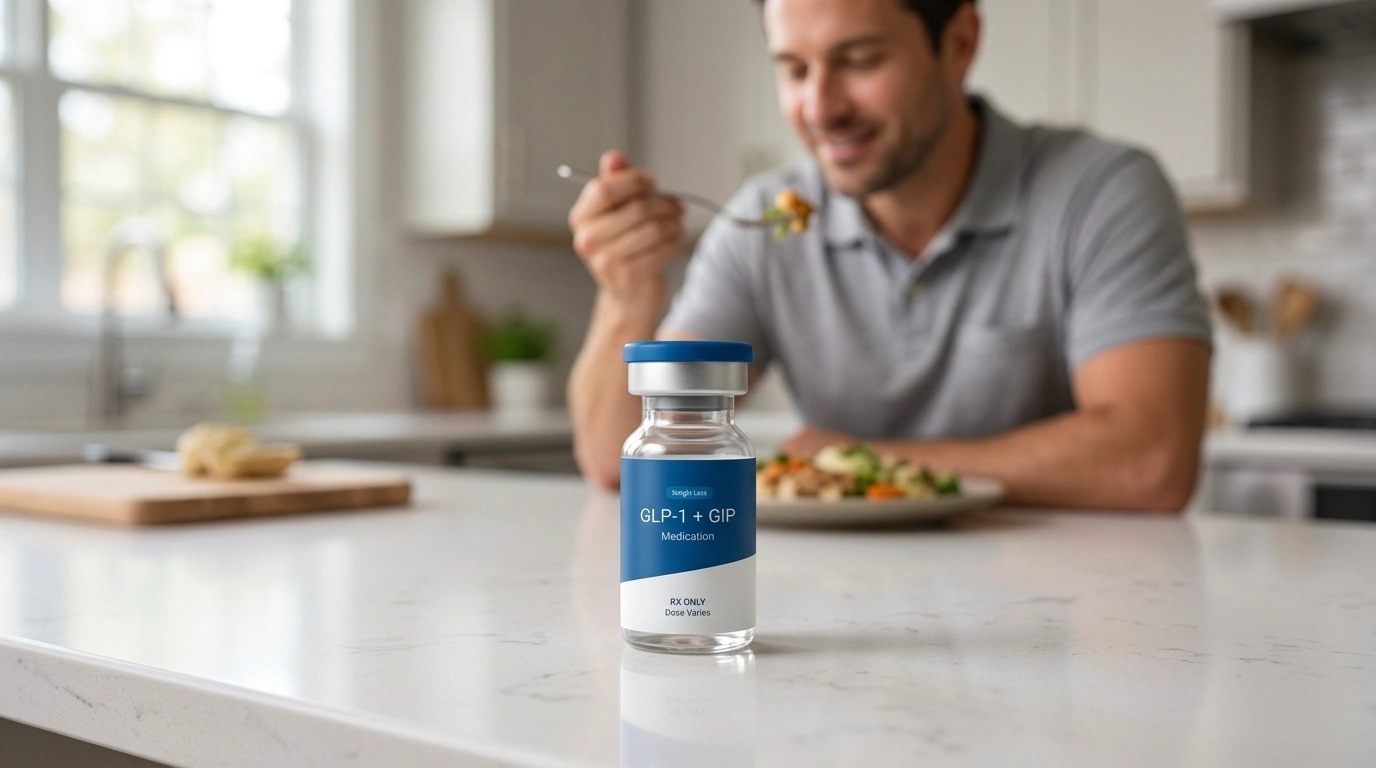
Many individuals choose to access their treatment through telehealth platforms that partner with FDA-registered, inspected compounding pharmacies. Compounded tirzepatide is often provided in a multi-dose vial. In this scenario, you will use a traditional insulin syringe to draw the medication and administer the dose.
When using a syringe, you must ensure you have the correct size. Most pharmacies provide “insulin syringes” with the needle already attached. These are almost always 31-gauge and range from 6mm to 8mm in length. Because you are manually handling the syringe, it is important to follow sterile techniques and ensure you are comfortable with the process. If you are reviewing injection locations as well, this guide to injecting compounded tirzepatide provides related information.
Note: Compounded tirzepatide is not FDA-approved. It is prepared by licensed compounding pharmacies to meet specific patient needs or to address medication shortages. Always consult a licensed healthcare provider to ensure this is the right option for your health profile.
Why Subcutaneous Injections Use Small Needles
The science of subcutaneous delivery is what allows these needles to be so small. The skin is composed of the epidermis (outer layer) and the dermis (inner layer). Directly below the dermis is the subcutaneous fat. This fat layer has relatively few blood vessels and nerve endings compared to other tissues.
Because the fat layer is quite close to the surface, a long needle is unnecessary. In fact, research has shown that shorter needles (like 4mm or 5mm) are just as effective as longer needles (like 12mm) for delivering medications like tirzepatide, but with a much lower risk of accidentally injecting into the muscle. This is particularly important for individuals who may have a lower body mass index (BMI) or less body fat in certain injection areas. You can also review this overview of GLP-1 injections for broader context about injectable treatment.
Best Practices for Using Tirzepatide Needles
Selecting the right needle is only half the battle; how you use it is equally important for comfort and safety. Following a consistent routine can help reduce the risk of bruising, redness, or irritation at the injection site. This home injection guide for tirzepatide covers preparation and technique in greater detail.
Step 1: Clean the area. / Use an alcohol swab to clean the skin where you plan to inject. Let the skin air dry completely to prevent a stinging sensation. Step 2: Choose your site. / The abdomen, outer thighs, and back of the upper arms are the best locations. Ensure you are at least two inches away from the belly button. Step 3: Rotate every time. / Never inject into the exact same spot two weeks in a row. Rotating sites helps prevent “lipohypertrophy,” which is a buildup of fatty tissue that can interfere with medication absorption. Step 4: Use a fresh needle. / If you are using syringes, never reuse a needle. A needle becomes dull after just one use, even if it looks sharp to the eye. A dull needle causes more pain and increases the risk of infection. Step 5: Inject at a 90-degree angle. / With the short needles used for tirzepatide (4mm to 8mm), you generally do not need to “pinch the fat” or inject at a 45-degree angle. A straight-in, 90-degree approach is usually best.
Myth: A longer needle ensures the medication works faster or better. Fact: Medication effectiveness is based on the dosage and the correct tissue layer. A needle that is too long can reach the muscle, which might actually cause the medication to be absorbed too quickly, potentially increasing side effects.
Selecting the Right Syringe for Your Dosage
If you are using compounded tirzepatide from a pharmacy, the syringe size matters as much as the needle size. Syringes are measured in milliliters (mL) or units.
- 0.3 mL syringe: Holds up to 30 units. Best for smaller doses.
- 0.5 mL syringe: Holds up to 50 units.
- 1.0 mL syringe: Holds up to 100 units. Best for higher maintenance doses.
The needle is almost always integrated into these syringes. When you receive your shipment from a pharmacy via TrimRx, the supplies are specifically matched to your prescribed dose. Always double-check your prescription label to ensure the “units” you draw into the syringe match what your provider has instructed.
Common Concerns and Comfort Tips
Even with the smallest needle, it is natural to feel some hesitation. Here are some expert-backed tips to make the process as easy as possible:
Temperature Matters Some people find that injecting cold medication straight from the refrigerator can cause a slight sting. You can take your syringe or auto-injector out of the fridge about 15–30 minutes before your injection to let it reach room temperature. However, never use a microwave or hot water to warm it up, as heat can damage the medication.
Relax the Muscle If you are injecting into your thigh, make sure your leg is relaxed and your weight is off that leg. If the muscle is tense, the injection might feel more uncomfortable.
Don’t Hesitate When it is time to inject, use a quick, firm motion. Moving slowly through the skin can actually cause more discomfort because it triggers more nerve endings. Think of it like removing a bandage—quick is usually better.
Manage Redness It is normal to see a small red dot or a tiny bit of bruising after an injection. This usually fades within a day or two. If you experience significant swelling, itching, or a rash that spreads, contact your healthcare provider, as this could be a sign of a localized allergic reaction.
Safety and Disposal
Proper disposal of needles is a critical part of your treatment plan. Used needles are considered biohazardous waste. They should never be thrown directly into your regular household trash or recycling bin.
How to Dispose of Needles Safely:
- Use a Sharps Container: You can purchase a red plastic sharps container at most pharmacies.
- DIY Alternative: If you do not have a sharps container, a heavy-duty plastic bottle (like a laundry detergent bottle) with a screw-on lid can work. Ensure it is clearly labeled “SHARPS – DO NOT RECYCLE.”
- Follow Local Guidelines: Every state has different rules for how to dispose of sharps containers. Some allow them to be dropped off at hospitals or fire stations, while others have specific mail-back programs.
Bottom line: The correct needle size for tirzepatide is a 31-gauge needle that is 4mm to 8mm long, ensuring a safe, effective, and nearly painless subcutaneous delivery of the medication.
Conclusion
Understanding the specifics of needle size—from the gauge to the length—is a vital part of taking control of your metabolic health. While the idea of self-injection can be intimidating, the modern needles used for medications like tirzepatide are designed with patient comfort as a priority. By using a fine, short needle and following proper injection techniques, you can ensure that your treatment is both effective and easy to manage as part of your weekly routine.
At TrimRx, we are dedicated to providing more than just a prescription. We offer a personalized, science-backed approach to weight loss that prioritizes your safety and your success. Our mission is to support you through every step of your journey, providing the daily nutritional support and metabolic support you need to achieve sustainable health.
Whether you are curious about medication or ready to begin a supervised program, we are here to guide you toward a healthier future. If you are ready to see if a personalized weight loss program is right for you, the next step is simple.
FAQ
Does a higher gauge needle hurt more?
No, it is actually the opposite. In needle sizing, a higher gauge number means the needle is thinner. A 31-gauge needle is much thinner and generally much more comfortable than a 21 or 23-gauge needle commonly used for drawing blood or giving vaccines.
Can I use the same needle for multiple injections?
No, you should never reuse a needle. Even after a single use, the tip of the needle becomes dull and can develop microscopic barbs that cause pain and skin damage. Reusing needles also significantly increases the risk of infection.
Why was I sent 8mm needles instead of 4mm?
Both 4mm and 8mm needles are considered safe and effective for subcutaneous injections. While 4mm is often preferred for comfort, an 8mm needle is still very short and is frequently used to ensure the medication reaches the fat layer in individuals with different body compositions.
What should I do if I am afraid of needles?
If you have a needle phobia, you may want to discuss branded options like Mounjaro® or Zepbound® with a provider, as these use auto-injectors where the needle is hidden. If you are using a syringe, many people find that icing the injection site for a minute beforehand numbs the skin and makes the process much easier. If you are still deciding whether prescription treatment is appropriate, you can complete a free assessment quiz.
Disclaimer: This content is for informational purposes only and does not constitute medical advice. It is not intended to diagnose, treat, cure, or prevent any disease or condition. Individual results may vary. Always consult a qualified healthcare professional before starting any weight loss program or medication.

Transforming Lives, One Step at a Time
Keep reading

Starting Tirzepatide While on the Pill: The First Four Weeks
You have your first box and you take an oral contraceptive. There is a labeled instruction that applies to you, and the mistake almost…
Marathon Training on Tirzepatide When You Can’t Fuel
You have a plan on the fridge and a medication that has made eating feel optional. Those two things are in genuine conflict, and…

Paying Cash for Tirzepatide? Don’t Stretch Your Supply
When every vial comes out of your own pocket, the arithmetic is hard to ignore. If a month’s supply costs what it costs, and…


