What’s the Best Diet for Depression and Weight? Nutrition Strategies

Introduction
Food won’t cure depression. But the diet a person eats every day affects mood in measurable ways, and the dietary patterns that help mood happen to be the same ones that support weight management. Here’s what’s actually been tested and what the numbers look like.
At TrimRx, we believe that understanding your options is the first step toward a more manageable health journey, and you can take the free assessment quiz if you’re ready to see whether a personalized program is a fit for you.
What Does the SMILES Trial Show About Diet and Depression?
The SMILES trial, published by Jacka and colleagues in BMC Medicine in 2017, was the first randomized controlled trial of dietary change as a primary depression treatment. Sixty-seven adults with moderate to severe major depressive disorder were randomized to dietary support based on a modified Mediterranean diet or social support befriending sessions over 12 weeks.
Quick Answer: The SMILES trial (Jacka 2017, BMC Medicine) found 32% remission from major depression after 12 weeks of Mediterranean-style eating, versus 8% in the social support control.
The diet group ate more vegetables, fruits, whole grains, legumes, fish, lean meats, raw nuts, olive oil, and reduced refined grains, sweets, fried food, processed meat, and sugary drinks. They had seven sessions with a clinical dietitian.
At 12 weeks, 32% of the diet group achieved remission, defined as a score of 10 or below on the Montgomery-Asberg Depression Rating Scale, versus 8% in the social support group. The effect size was large. Drop-out rates were similar in both groups, which matters because diet trials often fail on adherence.
A follow-up trial (HELFIMED) and the AMMEND trial in young adults reported similar directional effects, though smaller. The data isn’t enormous, but the SMILES result was strong enough to put dietary change on the map as a real depression intervention, not just a wellness suggestion.
What Dietary Pattern Actually Supports Both Mood and Weight?
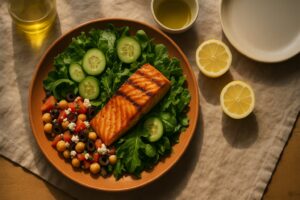
A Mediterranean-style dietary pattern supports both mood and weight better than most alternatives. It’s high in vegetables, fruit, legumes, whole grains, fish, olive oil, and nuts, and low in processed food, refined sugars, and red meat. The pattern shows up in mood, cardiovascular, and weight outcomes across multiple long-term studies.
The PREDIMED trial randomized over 7,000 Spanish adults at cardiovascular risk to a Mediterranean diet (with extra olive oil or nuts) or a low-fat control. After about five years, the Mediterranean groups had 30% lower cardiovascular event rates, modest weight benefits, and a lower incidence of depression in subgroup analyses.
For weight specifically, Mediterranean patterns produce 4-7% body weight loss in many trials, especially when paired with reduced portion sizes or modest calorie reduction. They aren’t usually marketed as weight loss diets, but they work, and they’re sustainable in ways crash diets aren’t.
The mechanism likely combines lower glycemic load, more fiber, more polyphenols, more omega-3s, and less ultra-processed food. None of those is the single answer. The pattern matters more than any one component.
Do Omega-3s Help Depression?
Omega-3 fatty acids, particularly EPA-dominant supplements, show modest antidepressant effects in meta-analyses. The Mocking 2016 meta-analysis in Translational Psychiatry pooled 13 randomized trials and found a small to moderate effect size, with EPA-dominant formulations outperforming DHA-dominant ones.
Effective doses in trials have generally been 1-2 grams per day of EPA, or combined EPA+DHA with EPA accounting for at least 60% of the total. Lower doses haven’t shown effects. Pure DHA hasn’t shown antidepressant effects in most trials.
Fish provides omega-3s in food form. Fatty fish like salmon, sardines, mackerel, and herring contain 1-2 grams of EPA+DHA per 3-ounce serving. Two to three servings per week is a common public health recommendation and matches cardiovascular guidance.
Omega-3s aren’t a standalone depression treatment for moderate to severe cases. They’re a reasonable adjunct, especially for patients with low fish intake, mild residual symptoms on antidepressants, or perinatal depression where evidence is somewhat stronger.
What About Vitamin D and Depression?
Vitamin D deficiency is common in adults with depression, and correcting deficiency can improve mood in deficient patients. The evidence for supplementation in non-deficient patients is weaker.
Roughly 40% of U.S. adults have vitamin D levels below 20 ng/mL, the cutoff for deficiency. Risk factors include darker skin, limited sun exposure, obesity, older age, and northern latitudes. Several depression studies show inverse correlations between vitamin D level and depressive symptoms, though causation is debated.
A 2014 meta-analysis in the British Journal of Psychiatry found vitamin D supplementation produced modest antidepressant effects, with the largest effect in patients who started deficient. The VITAL-DEP trial in 2020, with over 18,000 adults, did not find depression prevention benefit from vitamin D in a generally non-deficient population.
The practical approach: get a 25-hydroxyvitamin D level checked if you have depression risk factors and aren’t sure of your status. If you’re below 30 ng/mL, supplementation with 1,000-2,000 IU daily and recheck in three months is reasonable. Dosing higher is sometimes needed in obese patients due to fat-soluble sequestration.
Does Ultra-processed Food Make Depression Worse?
Higher intake of ultra-processed food correlates with significantly higher depression risk in multiple large cohort studies, even after adjusting for income, education, and overall calorie intake.
A 2023 analysis in JAMA Network Open of over 31,000 women in the Nurses’ Health Study found women in the highest quintile of ultra-processed food intake had 49% higher odds of depression versus the lowest quintile. A separate 2022 analysis in BMJ of UK adults found similar directional effects.
Ultra-processed food refers to industrial formulations including additives, artificial flavors, and ingredients not used in home cooking. Common examples are packaged sweets, sugary cereals, instant noodles, hot dogs, soft drinks, and many frozen meals. The category is broad, and not every food in it carries equal risk.
The mechanisms are likely some combination of low fiber, refined carbohydrates causing blood sugar swings, high omega-6 to omega-3 ratios, additive effects on the gut microbiome, and crowding out of nutrient-dense foods. Reducing ultra-processed intake by even 25-50% appears to move the risk meaningfully in observational analyses.
Do Fermented Foods and Probiotics Help Mood?
Emerging evidence suggests fermented foods and certain probiotic strains may modestly improve mood, likely through gut-brain axis pathways. The evidence is younger and weaker than for Mediterranean diet patterns, but the direction is consistent.
A 2021 study in Cell from Stanford researchers found increased fermented food intake (yogurt, kefir, kimchi, kombucha, fermented vegetables) lowered inflammatory markers and increased microbiome diversity over 10 weeks. Increased fiber didn’t have the same effect in that timeframe, though it has other benefits.
Probiotic supplements have shown mixed results in depression trials. Some specific strains (Lactobacillus helveticus, Bifidobacterium longum) have shown small effects in small trials. Others have shown nothing. Generic probiotic supplementation isn’t strongly supported as a depression treatment.
A practical takeaway: incorporating fermented foods into the diet a few times per week is reasonable and low-risk. Don’t expect them to replace established treatments.
Key Takeaway: Vitamin D deficiency is present in roughly 40% of U.S. adults and correction can improve mood in deficient patients.
What About Sugar and Refined Carbohydrates?
Diets high in added sugar and refined carbohydrates correlate with higher depression risk in large cohort studies. Mechanistic studies suggest blood sugar variability may contribute to mood instability in some people.
A 2017 analysis in Scientific Reports found men in the highest tertile of sugar intake had 23% higher odds of common mental disorder versus the lowest. The relationship persisted after adjustment for many confounders.
For weight, refined carbohydrates and added sugars contribute calories without satiety. Replacing them with whole grains, legumes, vegetables, and protein supports both weight management and stable blood sugar.
Cutting sugar entirely isn’t necessary for most people. Reducing intake to under 25-50 grams per day of added sugar (the WHO and AHA range) and replacing sugary drinks with water or unsweetened alternatives gets most of the benefit without becoming a full-time project.
Are There Foods That Help Energy and Motivation?
For energy and motivation, prioritizing protein at meals, adequate iron and B12 intake, and stable blood sugar through complex carbohydrates and fiber is the most reliable approach. Specific superfoods are less important than the overall pattern.
Iron deficiency causes fatigue and can mimic or worsen depression. Adult women, vegetarians, and people with heavy menstrual periods are at higher risk. A ferritin level under 30 ng/mL warrants attention even without anemia.
B12 deficiency causes fatigue, mood symptoms, and cognitive issues. It’s common in vegetarians, vegans, older adults, and patients on long-term proton pump inhibitors or metformin. A serum B12 level under 300 pg/mL warrants follow-up.
Protein intake of 1.2-1.6 grams per kilogram of body weight helps with satiety, lean mass preservation during weight loss, and stable energy through the day. For a 75 kg adult, that’s 90-120 grams per day, distributed across meals.
How Does This Fit with a GLP-1 Medication?
GLP-1 medications reduce appetite significantly, which can make protein and nutrient adequacy harder to maintain. Anyone on a GLP-1 should prioritize protein, vegetables, and whole foods at the eating moments they do have, and consider a multivitamin to cover gaps.
When you’re eating less, every bite has to do more nutritional work. A typical pattern that works: protein-forward breakfast (Greek yogurt with berries and nuts, or eggs with vegetables), a mid-day meal heavy on vegetables and lean protein, and a smaller dinner if appetite is low. Hydration is easy to neglect when food intake drops.
Fiber supports the gut and helps with the constipation many GLP-1 users encounter. Twenty-five to 30 grams per day from food is the goal. Vegetables, fruit, legumes, and whole grains hit this without supplements.
For mood specifically, the same Mediterranean patterns that help in non-medicated patients still apply. Fish twice a week, olive oil as the primary fat, beans or legumes a few times a week, plenty of produce.
What Does a Practical Week Look Like?
Real-world adherence beats theoretical perfection. A practical week might include three or four home-cooked dinners following Mediterranean patterns, two fish servings, a daily handful of nuts, daily vegetables and fruit, and minimal sugary drinks.
A simple template:
- Breakfast: Greek yogurt with berries and walnuts, or eggs with whole-grain toast and avocado.
- Lunch: Salad with chickpeas or salmon, olive oil and lemon dressing, side of fruit.
- Dinner: Sheet-pan vegetables with chicken or fish, or lentil soup with whole-grain bread.
- Snacks: Almonds, an apple with peanut butter, hummus and carrots.
The goal isn’t to follow a recipe-based plan to the letter. It’s to shift the overall pattern toward more whole foods and away from ultra-processed ones.
The Bottom Line
The dietary patterns that support depression recovery overlap heavily with those that support weight management and cardiometabolic health. A Mediterranean-style approach, with attention to omega-3s, vitamin D status, ultra-processed food reduction, and adequate protein, is the strongest evidence-based dietary approach for both goals.
Diet isn’t a replacement for therapy or medication when those are needed. But the food choices someone makes most days affect how they feel most days, and the science backing this is more solid than it was a decade ago.
If you’re in crisis, please call or text 988.
Bottom line: Fermented food intake and microbiome diversity are linked to better mood in observational data, with emerging trial evidence.
Myth vs. Fact: Setting the Record Straight
Misconceptions about treatment can delay good decisions. Here are three worth correcting before you make any choices about your care.
Myth: Antidepressants always cause weight gain. Fact: Drug choice matters. Paroxetine, mirtazapine, and olanzapine cause significant gain. Bupropion (Wellbutrin) is often weight-neutral or weight-loss. Vortioxetine is relatively neutral. Talk to your prescriber about weight-friendly options.
Myth: GLP-1 medications cause depression. Fact: The FDA reviewed this in early 2024 and found no causal link to suicidality. NIH 2024 retrospective data actually showed lower suicidal ideation on semaglutide vs other anti-obesity medications. Some patients report ‘flattened mood,’ but it’s not the same as clinical depression.
Myth: If you’re depressed, focus on mental health first, then weight. Fact: Bidirectional research (Luppino 2010 meta-analysis) shows depression and obesity worsen each other. Treating both simultaneously, with medications that don’t conflict, is now standard of care.
The Path Forward with TrimRx
Managing your metabolic health shouldn’t be a journey you take alone. The science behind GLP-1 medications offers a new level of hope for people facing depression and weight and the related challenges that come with it. By addressing root hormonal and metabolic causes, these treatments provide a path toward more stable energy, better cardiovascular health, and improved quality of life.
At TrimRx, we’re committed to providing an empathetic and transparent experience. We understand the frustrations of traditional healthcare: the long waits, the unclear costs, and the lack of personalized care. Our platform is designed to put you back in control of your health. By combining clinical expertise with modern technology, we help you access the treatments you need while providing the 24/7 support you deserve.
Our program includes:
- Doctor consultations: professional guidance without the in-person waiting room
- Lab work coordination: baseline health markers monitored properly
- Ongoing support: 24/7 access to specialists for dosage changes and side effect management
- Reliable medication access: FDA-registered, inspected compounding pharmacies prepare Compounded Semaglutide or Compounded Tirzepatide when branded medications aren’t the right fit
Sustainable health is about more than a number on a scale or a single lab result. It’s about feeling empowered in your own body. Whether you’re starting to research your options or ready to take the next step with a free assessment, we’re here to guide you with science-backed, personalized care.
Bottom line: TrimRx provides a streamlined, medically supervised path to access the latest advancements in depression and weight and weight management, all from the comfort of home.
FAQ
Can I Treat My Depression with Diet Alone?
For mild depression, diet plus exercise plus sleep changes can sometimes be enough. For moderate to severe depression, dietary changes are a useful complement to therapy or medication, not a substitute. The SMILES trial showed real effects but not 100% remission rates.
Is Intermittent Fasting Good or Bad for Depression?
The evidence is mixed. Some patients report improved mood and energy on time-restricted eating. Others report worsening anxiety, irritability, or low mood, especially with longer fasts. If you’re trying it and notice mood changes for the worse, stop or shorten the window.
Should I Take a Multivitamin for Depression?
A daily multivitamin is reasonable insurance against gaps, especially during weight loss or restrictive eating, but it’s not a depression treatment. Specific supplements like vitamin D, B12, omega-3s, or iron should be guided by lab work where possible.
Does Gluten or Dairy Affect Mood?
For most people, no. A small subset with celiac disease or non-celiac gluten sensitivity may experience mood changes from gluten. Dairy is less clear and often confused with lactose intolerance or other digestive issues. Elimination diets without medical guidance often create more problems than they solve.
Is Keto Good for Depression?
Ketogenic diets show mixed effects on mood. There’s interest in their use for treatment-resistant bipolar disorder and small trials in major depression, but the evidence isn’t yet strong for general use. They’re hard to maintain long-term and may worsen mood in some patients.
Will Eating Better Help If I’m on a GLP-1?
Yes. GLP-1s help reduce appetite, but they don’t tell you what to eat. A nutrient-dense pattern within the smaller portions you’ll naturally want makes a real difference for energy, body composition, and mood during weight loss.
Disclaimer: This content is for informational purposes only and does not constitute medical advice. It is not intended to diagnose, treat, cure, or prevent any disease or condition. Individual results may vary. Always consult a qualified healthcare professional before starting any weight loss program or medication.

Transforming Lives, One Step at a Time
Keep reading

Construction Work in Summer on a GLP-1
Summer on a job site means early starts, heavy physical work, direct sun or hot interiors, and lunch from a cooler or the back…

Colonoscopy Prep on a GLP-1
If you are on a GLP-1 and have a colonoscopy, upper endoscopy, or any procedure with sedation coming up, the single most important step…
Clergy and Community Meals on a GLP-1
For pastors, priests, rabbis, imams, chaplains, and other community leaders, food is part of the work. Potlucks, fellowship dinners, holiday meals, funeral receptions, and…


