When Does Compound Semaglutide Expire? Important Safety Facts
Introduction
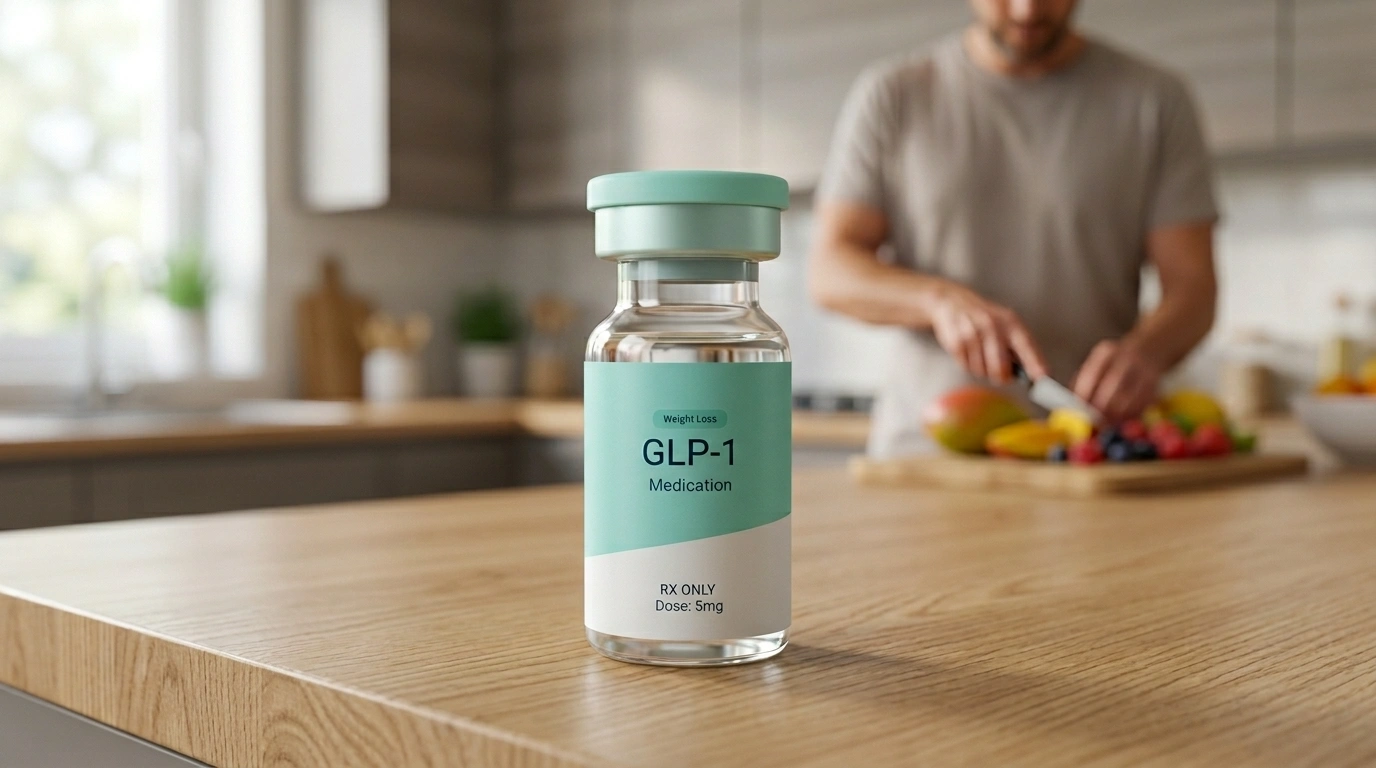
Finding a forgotten vial of medication in the back of the refrigerator is a common experience. If you are on a weight loss journey, you might wonder if that leftover dose is still safe to use. When it comes to compounded semaglutide, the answer to when it expires is critical for both your safety and your progress. Unlike mass-produced medications that may sit on a shelf for years, compounded treatments have specific timelines known as Beyond-Use Dates.
At TrimRx, we believe that understanding the science behind your medication is the first step toward a successful health transformation. If you’re considering a personalized program, take the assessment quiz. In this article, we will cover how long compounded semaglutide remains effective, the risks of using it past the deadline, and how to store your medication to ensure it stays potent. Our goal is to provide you with the clarity needed to manage your personalized weight loss program with confidence.
Understanding the Shelf Life of Compounded Semaglutide
When you receive a prescription for a compounded medication, you will notice a date on the label. This is often called the Beyond-Use Date (BUD) rather than a standard expiration date. While they seem similar, they serve different purposes in the world of pharmacy.
Expiration Date vs. Beyond-Use Date
A standard expiration date is found on commercially manufactured medications. This date is determined by the drug manufacturer after extensive stability testing. It represents the point until which the manufacturer guarantees the drug’s full potency and safety.
A Beyond-Use Date is assigned to compounded medications by a licensed pharmacist. Because compounded semaglutide is customized for an individual patient, it does not undergo the same multi-year shelf-life testing as a mass-produced product. The pharmacist calculates the BUD based on the specific ingredients used, the environment in which it was made, and the likelihood of the medication remaining sterile.
Quick Answer: Compounded semaglutide typically remains stable for 28 to 90 days, depending on the specific pharmacy’s formulation and whether the vial has been punctured. Always refer to the Beyond-Use Date (BUD) printed on your medication label for the most accurate timeline.
Defining Compounded Semaglutide
Compounded semaglutide is a customized version of the active ingredient found in branded medications like Wegovy® or Ozempic®. It is a GLP-1 (glucagon-like peptide-1) receptor agonist. If you want a deeper look at the hormone itself, How GLP-1 Actually Works for Weight Loss breaks down the biology.
These medications are prepared in FDA-registered, inspected compounding pharmacies. They are often requested when a patient needs a specific dosage not available in branded versions or when there are shortages of those branded products. It is important to note that while the active ingredient is well-studied, compounded versions themselves are not FDA-approved.
Why Does Semaglutide Expire?
To understand when compounded semaglutide expires, you must understand what it is made of. Semaglutide is a peptide. A peptide is a short chain of amino acids, which are the building blocks of proteins.
Peptides are naturally fragile molecules. They are sensitive to their environment, including temperature, light, and exposure to air. Over time, the chemical bonds that hold the peptide together can begin to break down. This process is called degradation. When a peptide degrades, it loses its “shape.” Because the body recognizes these hormones based on their shape, a degraded peptide can no longer send the correct signals to your brain to tell you that you are full.
Factors That Accelerate Degradation
Several environmental factors can cause your medication to expire faster than the date on the label.
- Heat: High temperatures cause molecules to move faster, which speeds up chemical reactions that break the peptide bonds.
- Light: Ultraviolet (UV) light can provide enough energy to break apart chemical structures.
- Air Exposure: Every time a needle enters a multi-dose vial, a tiny amount of air enters. Oxygen and moisture in the air can contribute to the breakdown of the medication.
- Contamination: If bacteria or fungi are introduced into the vial through improper handling, they can feed on the ingredients and ruin the solution.
How Long Does Compounded Semaglutide Last?
The exact timeframe for your medication depends heavily on the instructions provided by the compounding pharmacy. However, there are general industry standards that most licensed pharmacists follow. For a broader comparison of brand-name and compounded timelines, Does Semaglutide Expire? What You Need to Know to Stay Safe and Effective is a helpful reference.
| Storage Condition | Typical Duration |
|---|---|
| Unopened (Refrigerated) | 30 to 90 days (Check label) |
| Opened/Punctured (Refrigerated) | 28 to 30 days |
| Left at Room Temperature | Varies (Often 14 to 28 days) |
| Frozen | Not recommended (Discard immediately) |
The 28-Day Rule for Punctured Vials
Most multi-dose vials containing preservatives are rated for use for 28 days once they have been punctured for the first time. Even if the Beyond-Use Date on the label is three months away, the clock changes once you insert a needle.
This is because the rubber stopper, while designed to reseal, is no longer a perfect barrier once it has been pierced. Each subsequent use increases the risk of introducing microscopic contaminants. Most clinical guidelines suggest discarding a vial 28 days after the first dose to ensure you are not injecting a solution that has lost its sterility.
Key Takeaway: The “clock” on your medication often accelerates once you take your first dose. Even if the label says the medication is good for 90 days, you should generally discard any remaining liquid 28 to 30 days after the first time you puncture the vial.
Risks of Using Expired Compounded Semaglutide
It can be tempting to use a vial that is only a few days past its date, especially if there is still liquid left. However, doing so introduces several risks to your health and your weight loss progress. For a closer look at the risks, What Happens If You Use Expired Semaglutide? Understanding the Risks and Best Practices covers what can go wrong.
Loss of Potency
The most common result of using expired semaglutide is that it simply stops working. If the peptide has degraded, it cannot effectively bind to the GLP-1 receptors in your body. You may notice that your appetite returns, your cravings become stronger, or you no longer feel full after small meals. This can stall your progress and lead to frustration.
Risk of Infection
Compounded semaglutide is an injectable medication. Anything that enters your body via a needle must be sterile. Over time, the preservatives in the medication that prevent bacterial growth can weaken. If you inject expired, contaminated medication, you risk developing an infection at the injection site. Signs of this include redness, swelling, warmth, and pain that does not go away.
Unknown Chemical Changes
When a complex molecule like a peptide breaks down, it doesn’t just disappear. It turns into other chemical sub-products. While there is no evidence that expired semaglutide becomes “toxic” in the traditional sense, these breakdown products have not been tested for safety. They could potentially cause unexpected side effects or allergic reactions that you would not experience with fresh medication.
Proper Storage for Maximum Potency
To ensure your medication lasts until its Beyond-Use Date, you must follow strict storage guidelines. Our team at TrimRx works with pharmacies that provide clear instructions, but the following tips are universal for maintaining GLP-1 stability. If you want a more detailed storage guide, How to Store Compounded Semaglutide or Tirzepatide at Home is a helpful companion.
The Importance of Refrigeration
Compounded semaglutide must be kept cold. The ideal temperature range is typically between 36°F and 46°F (2°C to 8°C).
- Store in the center: Do not store your medication in the refrigerator door. The temperature in the door fluctuates every time you open the fridge. Instead, keep it on a middle shelf toward the back.
- Do not freeze: If your medication freezes, it is ruined. Freezing temperatures can cause the peptide to “aggregate” or clump together, which permanently changes its structure. If you see ice crystals in the vial or if it was pushed against the back cooling element and froze, dispose of it immediately.
Protection from Light
Most compounded semaglutide comes in amber-colored vials or is packaged in a way that blocks light. This is intentional. You should keep the vial in its original box or a dark container inside the refrigerator to shield it from the light that turns on every time the door opens.
Handling and Travel
If you are traveling, you should use a medical-grade cooling pouch to keep your medication within the required temperature range. Avoid leaving your medication in a hot car or in checked luggage on a plane, where temperatures can reach extremes.
Note: If your medication has been left at room temperature for more than a few hours, consult with your healthcare provider or pharmacist before using it. They can help determine if the specific formulation is still stable.
Visual Signs Your Medication Has Expired or Degraded
You should inspect your vial before every single dose. Even if you are well within the Beyond-Use Date, environmental factors could have compromised the solution.
What your medication should look like:
- Clear
- Colorless
- Free of any visible particles or “clumps”
- Liquid consistency (like water)
Warning signs to watch for:
- Cloudiness: If the solution looks milky or cloudy, it has likely been contaminated or the proteins have broken down.
- Discoloration: Any tint of yellow, brown, or pink suggests a chemical change.
- Particles: If you see tiny “flakes,” crystals, or strings floating in the liquid, do not use it.
- Change in thickness: If the liquid looks “stringy” or thicker than usual, the peptide has likely aggregated.
Bottom line: If the solution does not look like clear water, do not inject it. It is always better to wait for a replacement than to risk an adverse reaction.
Safe Disposal of Expired Medication
If you find that your compounded semaglutide has expired, you must dispose of it safely. This is not just about the liquid, but also the needles and syringes used for administration.
Disposing of the Liquid and Vial
Do not flush your medication down the toilet or pour it down the sink unless specifically instructed by your local waste management. The best way to dispose of the vial is to follow your state’s guidelines for medication disposal. Many pharmacies have “take-back” programs where you can drop off unused or expired medications.
The Sharps Container
Any needles or used syringes must go into an FDA-cleared sharps container. If you do not have one, you can use a heavy-duty plastic household container, such as a laundry detergent bottle, as long as it has a tight-fitting, puncture-resistant lid. Once the container is three-quarters full, follow your local community guidelines for disposal. Never throw loose needles or sharps containers into the regular household trash.
How TrimRx Supports Your Journey
Navigating the world of GLP-1 medications can feel overwhelming, especially when dealing with storage and expiration concerns. We focus on making this process as transparent and stress-free as possible.
When you join a personalized program through our platform, you aren’t just getting a prescription. You are getting a comprehensive service designed for sustainability. Our programs include:
- Direct Access to Specialists: We provide 24/7 access to a dedicated team. If you are ever unsure if your vial is still safe to use, you can reach out for guidance immediately.
- Licensed Compounding Pharmacies: We only work with FDA-registered and inspected compounding pharmacies. This ensures that the Beyond-Use Date on your label is based on professional standards and high-quality ingredients.
- Personalized Dosing: Our licensed providers customize your program based on your health profile. This helps ensure you are using the right amount of medication at the right time, minimizing waste.
- Transparent Logistics: Your medication is shipped directly to your door with all necessary supplies, including clear instructions on storage and disposal.
We believe that weight loss is about more than just a number on a scale; it is about reclaiming your health through science and support. If you’re ready to take the next step, take the assessment quiz.
Summary of Action Steps
If you are currently using or considering compounded semaglutide, follow these steps to stay safe:
- Check the label: Locate the Beyond-Use Date (BUD) the moment you receive your package.
- Mark your calendar: Write down the date you first puncture the vial. Plan to discard it 28–30 days after that date.
- Verify your fridge: Use a thermometer to ensure your refrigerator stays between 36°F and 46°F.
- Inspect every dose: Look for clarity and a lack of particles before every injection.
- Consult a professional: If you miss a dose because your medication expired, contact your provider via our platform to discuss the best way to get back on track.
FAQ
Can I use compounded semaglutide if it is one week past the expiration date?
It is not recommended to use any medication past its Beyond-Use Date. After this date, the pharmacist can no longer guarantee the medication is potent or sterile. If you need a fresh start, take the assessment quiz to see whether a personalized program is a fit.
Does compounded semaglutide expire faster than Ozempic®?
Generally, yes. Branded medications like Ozempic® are manufactured in large batches and have been tested for multi-year stability in their specific pen delivery systems. Compounded medications are prepared individually and lack the long-term preservative testing of mass-produced pens, leading to shorter Beyond-Use Dates.
Why does my medication have to stay in the refrigerator?
Semaglutide is a peptide, which is a fragile chain of amino acids. Heat causes these chains to break apart or “unravel,” making the medication ineffective. Keeping it at a stable, cool temperature preserves the shape of the molecule so it can work correctly in your body. For a fuller storage guide, How Long Does Semaglutide Last in the Fridge? Storage Tips and Best Practices goes deeper.
What should I do if my medication was delivered and the ice packs were melted?
Check the temperature of the vial itself. If the vial still feels cool to the touch, it is likely fine, but you should contact your provider or the pharmacy immediately to confirm. If the vial is warm or hot, do not use it, as the heat may have already caused the peptide to degrade.
Disclaimer: This content is for informational purposes only and does not constitute medical advice. It is not intended to diagnose, treat, cure, or prevent any disease or condition. Individual results may vary. Always consult a qualified healthcare professional before starting any weight loss program or medication.

Transforming Lives, One Step at a Time
Keep reading
What Is CagriSema? Cagrilintide and Semaglutide Explained
CagriSema is an investigational once-weekly injectable from Novo Nordisk that combines two different weight-loss ingredients in one shot: cagrilintide, an amylin analog, and semaglutide,…

Taste Changes on Semaglutide: Why Food Tastes Different
Yes, semaglutide can change how food tastes. Some people notice a metallic or off taste, foods they used to love losing their appeal, or…
Bruising and Injection Site Reactions on Semaglutide
Bruising and mild injection site reactions, meaning redness, a small lump, itching, or tenderness, are common with subcutaneous semaglutide and are usually harmless. Bruising…


