Why Am I Gaining Weight on Ozempic?

Gaining weight while taking Ozempic is uncommon, but it does happen, and it’s understandably frustrating. If the scale is moving in the wrong direction, the medication isn’t suddenly working against you. Something else is going on. The most common culprits include fluid retention from a recent dose change, medications that promote weight gain, hormonal or metabolic conditions, dietary shifts that have quietly increased your calorie intake, or a loss of the appetite suppression effect that sometimes occurs at lower doses.
Let’s go through each one so you can pinpoint what’s happening and course-correct.
Rule Out Water Retention First
Before you panic about actual fat gain, consider that what you’re seeing on the scale might be water. Several things can cause temporary fluid retention that looks like weight gain but isn’t:
A recent dose increase can trigger mild GI inflammation, which causes your body to hold water. Starting a new exercise routine, particularly resistance training, can lead to water retention in muscles as they repair. Increased sodium intake from even a couple of restaurant meals can add two to four pounds of water weight overnight. Hormonal fluctuations throughout the menstrual cycle can cause significant water retention, sometimes five pounds or more.
If your “weight gain” appeared suddenly over a few days, it’s very likely water. True fat gain happens gradually. Weigh yourself at the same time each morning for two weeks and track the trend rather than reacting to any single reading.
Your Appetite Suppression May Have Weakened
Ozempic (semaglutide) works partly by slowing gastric emptying and acting on brain receptors that regulate hunger and satiety. For most people, this produces noticeable appetite reduction. But the strength of that effect can vary over time.
Some patients find that the appetite suppression they felt strongly during the first few months becomes less pronounced as their body adapts to the medication. When that happens, old eating patterns can quietly creep back in. Portion sizes inch up. Snacking returns. Calorie-dense comfort foods reappear. The shift is often gradual enough that you don’t notice it happening until the scale starts climbing.
If this sounds familiar, a dose increase may restore the appetite control you initially experienced. Ozempic’s dosing goes from 0.25 mg up to 2 mg, and many patients who feel the effect weakening at one level find it returns at the next. The Ozempic weight loss before and after data shows that higher doses consistently produce stronger results across clinical trials.
Other Medications Could Be the Cause
This is one of the most overlooked factors. Several commonly prescribed medications are known to cause weight gain, and they can overpower Ozempic’s effects if the balance tips far enough.
The biggest offenders include insulin and sulfonylureas (for diabetes), corticosteroids like prednisone, certain antidepressants (mirtazapine, paroxetine, amitriptyline, and some older tricyclics), antipsychotics (olanzapine, quetiapine), beta-blockers, gabapentin, and valproic acid.
Let’s say a patient starts prednisone for a flare-up of an autoimmune condition while they’re on Ozempic. Prednisone increases appetite dramatically and promotes fat storage. Even a short course can lead to noticeable weight gain that has nothing to do with Ozempic failing.
If you’ve recently started a new medication or had a dose change on an existing one, check whether it’s on the list of drugs associated with weight gain. Don’t stop anything without your doctor’s guidance, but do raise the question. Sometimes alternatives exist that don’t carry the same metabolic side effects.
A Medical Condition May Be Working Against You
Certain conditions create metabolic environments where weight gain happens more easily, even on a GLP-1 medication.
Hypothyroidism tops the list. An underactive thyroid slows your metabolism and can cause weight gain even when your eating habits haven’t changed. It’s common (affecting roughly 5% of the general population and a higher percentage of women over 50) and easily diagnosed with a TSH blood test. If your thyroid is the issue, treating it with levothyroxine can remove the barrier.
Cushing’s syndrome, caused by prolonged exposure to high cortisol levels, is rarer but worth considering if you’re gaining weight primarily in your face, abdomen, and upper back while your arms and legs stay relatively thin. That distribution pattern is a hallmark.
Insulin resistance and PCOS can also make weight management harder by disrupting how your body processes and stores energy. Both are testable and treatable.
If you’ve been gaining weight despite doing everything right, ask your provider for a full metabolic workup: thyroid function, fasting insulin, fasting glucose, HbA1c, and cortisol if warranted. A study in Obesity Reviews (Bray et al., 2018) found that identifying and treating underlying endocrine conditions significantly improved weight loss outcomes in patients who had previously been resistant to standard interventions.
Your Calorie Intake Has Shifted Without You Noticing
This is more common than most people want to admit. Weight gain on Ozempic almost always traces back to consuming more calories than you’re burning, even if it doesn’t feel that way.
Here’s how it typically happens. Early in treatment, Ozempic’s appetite suppression is strong and novel. You eat less naturally without much effort. Over time, you adapt. You start eating slightly larger portions. You add back snacks. You eat out more frequently because you feel confident the medication is doing the heavy lifting. Slowly, your calorie intake drifts upward until it exceeds your expenditure.
Consider this scenario: a patient was eating around 1,200 calories a day during the first three months on Ozempic and losing weight steadily. By month five, their intake has gradually crept up to 1,800 calories. They haven’t noticed because they still feel like they’re “not eating much.” But 600 extra calories per day adds up to roughly a pound of fat gain per week.
The fix is straightforward: track your food for a week. Not as a permanent habit, just as a diagnostic tool. Compare what you’re actually eating now to what you were eating when you were losing.
You’ve Lost Muscle Mass
If you’ve been losing weight rapidly without doing any resistance training, some of that loss was likely muscle. Muscle is metabolically active tissue. It burns calories even at rest. When you lose a significant amount of it, your basal metabolic rate drops, meaning your body now needs fewer calories to maintain its current weight.
This creates a situation where the calorie intake that previously produced weight loss now produces maintenance, or even slight gain. It’s one of the reasons why Ozempic face and other signs of rapid lean mass loss are worth paying attention to early in treatment.
The solution is adding resistance training. You don’t need to become a bodybuilder. Two to three sessions per week of basic strength exercises (squats, lunges, rows, presses) can preserve your existing muscle, support your metabolism, and actually improve your body composition even if the scale doesn’t move much.
Your Dose Is Too Low
Ozempic’s full dosing range goes up to 2 mg. If you’re on 0.5 mg or even 1 mg and you’re gaining weight, you may simply not be at a dose that produces enough appetite suppression and metabolic benefit for your body. Everyone responds differently. Some people get strong results at 0.5 mg. Others need the full 2 mg to see meaningful effects.
If you’ve been on the same dose for more than four to six weeks and the scale is going the wrong direction, a dose increase is a reasonable conversation to have with your provider. The semaglutide timeline data shows that weight loss often accelerates with each dose step-up.
What to Do Next
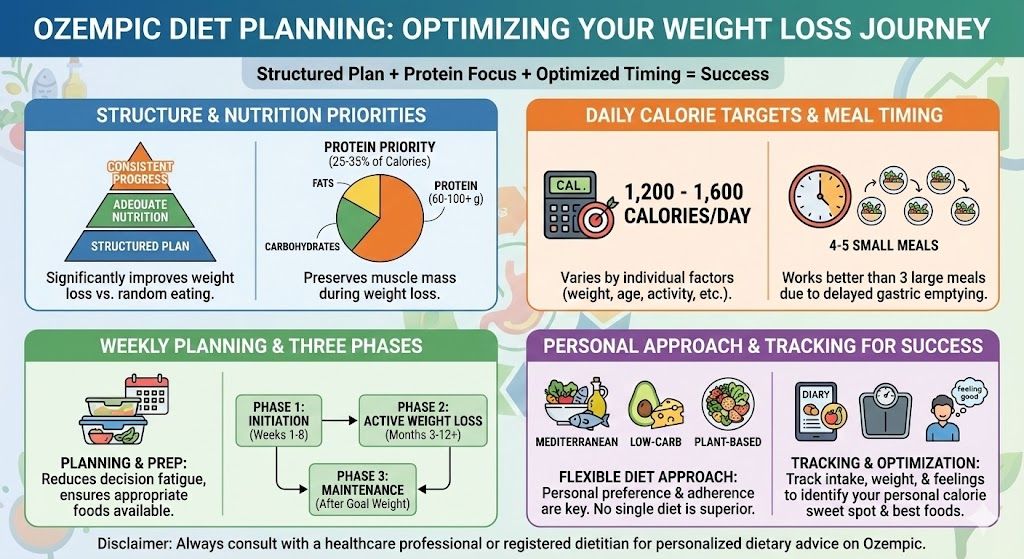
If you’re gaining weight on Ozempic, here’s your action plan:
Track your food intake for a full week to see where your calories actually stand. Weigh yourself at the same time daily and focus on the two-week trend, not individual readings. Review all your current medications with your provider and flag anything that may promote weight gain. Request bloodwork if you haven’t had labs in the past six months (thyroid, metabolic panel, fasting insulin at minimum). Add resistance training two to three times per week to protect your muscle mass and metabolic rate. Talk to your provider about a dose adjustment if your current dose isn’t producing adequate appetite suppression.
If you need help getting your treatment optimized, TrimRx offers telehealth consultations with providers who specialize in GLP-1 weight management. You can also explore compounded semaglutide options for more flexible and affordable dosing. Weight gain on Ozempic is a signal that something needs adjusting, not a sign that the medication can’t work for you.
This information is for educational purposes and is not medical advice. Consult with a healthcare provider before starting any medication. Individual results may vary.

Transforming Lives, One Step at a Time
Keep reading

Ozempic for Emotional Eating: Does It Help?
Emotional eating is one of the most common and least discussed barriers to sustainable weight loss. For people who eat in response to stress,…

Hashimoto’s and Ozempic: Safety Considerations
Hashimoto’s thyroiditis is the most common autoimmune condition in the United States, affecting an estimated 14 million people, the majority of them women. It’s…

Ozempic and Anxiety: Side Effects and Interactions (2026)
Anxiety is one of the more nuanced topics that comes up in conversations about GLP-1 medications. Some people report that starting Ozempic worsened their…


