Zepbound Not Working: Troubleshooting Your Weight Loss
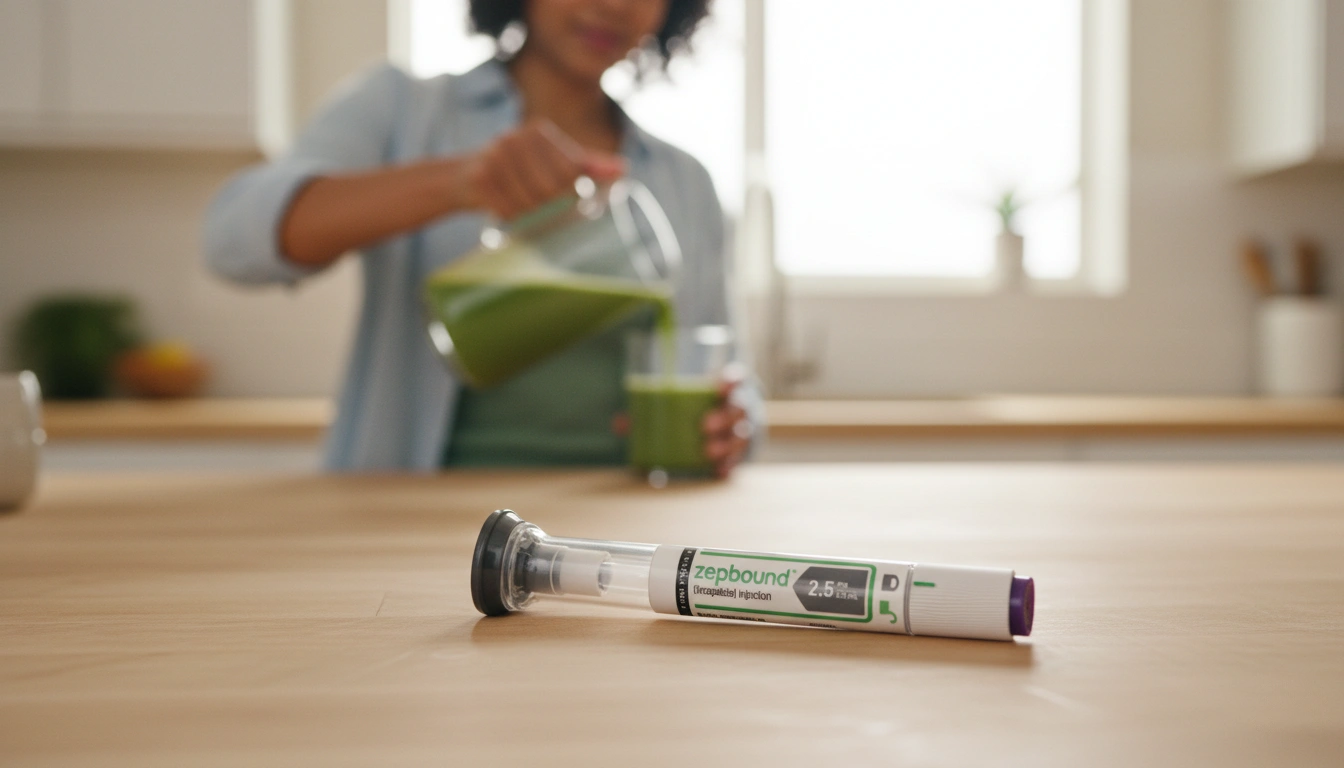
If Zepbound doesn’t seem to be producing the weight loss you expected, the medication probably isn’t the issue. Zepbound contains tirzepatide, a dual GIP/GLP-1 receptor agonist that clinical trials have shown can produce average weight loss of 15% to over 22% of body weight. When results aren’t showing up, there’s almost always a specific, correctable reason: you’re still on a low dose, your calorie intake is higher than you think, a medical condition is interfering, or you haven’t given the drug enough time to reach its full effect.
Here’s how to troubleshoot each possibility so you can figure out what’s actually going on.
Give It Enough Time Before You Judge
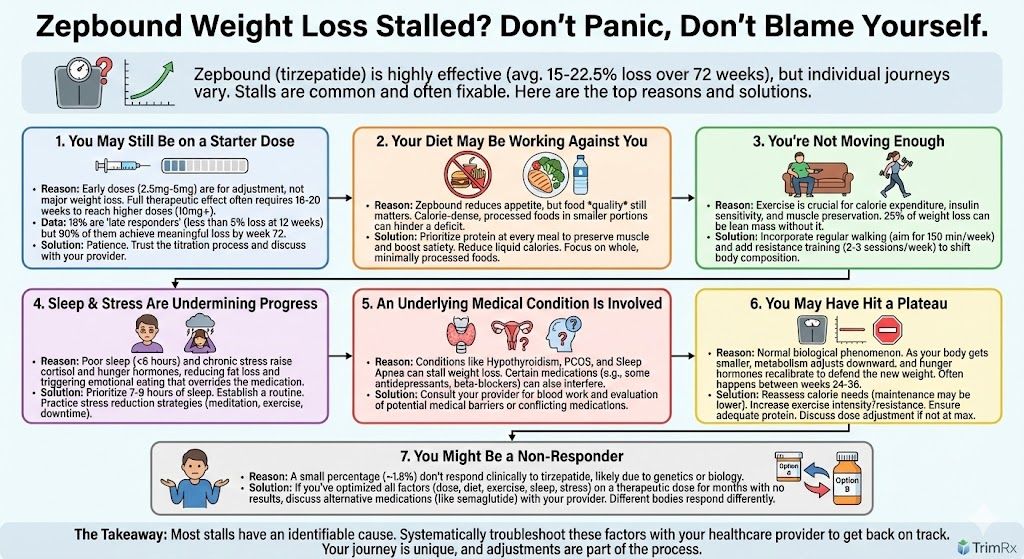
This is the most common mistake. Zepbound’s starting dose of 2.5 mg is an onboarding dose. It exists to let your GI system adjust to the medication and minimize nausea, vomiting, and diarrhea during those early weeks. For most people, it doesn’t produce significant appetite suppression or weight loss. That’s by design.
The standard titration moves you to 5 mg after four weeks, then up through 7.5, 10, 12.5, and 15 mg at four-week intervals based on your response and tolerability. Many patients don’t see their best results until they reach 10 mg or higher. If you’re still in the first two months, you’re likely not yet at your effective dose.
Think of those initial weeks as building a foundation. The results come later, and when they do, they tend to come faster than you’d expect. For a detailed look at how timelines typically play out with this medication’s active ingredient, the tirzepatide results timeline breaks it down week by week.
Separate a True Stall from Normal Fluctuation
Weight loss never happens in a smooth, continuous line. Your body naturally fluctuates by one to four pounds on any given day due to water retention, sodium intake, hormonal shifts, bowel regularity, and glycogen storage in your muscles. These fluctuations can easily mask fat loss that’s actually happening underneath.
Let’s say a patient loses six pounds during their first month on Zepbound, then sees the scale stay flat for 12 days. That’s not a stall. That’s completely normal. A true plateau means four or more consecutive weeks with no change in weight and no change in body measurements while you’re consistently following your nutrition plan.
If you’ve been “stuck” for less than three weeks, patience is likely the right move. Weigh yourself at the same time each day (morning, after using the bathroom, before eating), and look at the weekly average rather than any single reading. The weekly trend is what matters.
Your Dose Probably Needs to Increase
Zepbound’s dosing range goes from 2.5 mg to 15 mg. That’s a six-fold difference, and the weight loss data reflects it. Results from the SURMOUNT-1 trial published in the New England Journal of Medicine showed that participants on 5 mg lost roughly 15% of body weight on average, while those on 15 mg lost over 20% (Jastreboff et al., NEJM, 2022). Higher doses produce more appetite suppression, greater metabolic effects, and ultimately more weight loss.
If you’ve been sitting at the same dose for more than four weeks and your results have flatlined while side effects remain manageable, talk to your provider about stepping up. Dose titration isn’t a sign of failure. It’s how this medication is designed to work. The full prescribing information anticipates that most patients will need to move up through multiple dose levels before finding their sweet spot.
Take an Honest Look at Your Diet
Zepbound reduces appetite. That’s one of its primary mechanisms. But reduced appetite doesn’t automatically equal a calorie deficit, and without a deficit, fat loss doesn’t happen regardless of what medication you’re on.
There are a few patterns that commonly trip people up:
Calorie-dense “healthy” foods are a big one. Avocado, nuts, olive oil, cheese, and granola are all nutritious, but they pack a lot of calories into small portions. You can eat what feels like very little and still consume more calories than your body burns.
Liquid calories are another blind spot. A large latte with whole milk and flavored syrup can easily hit 300+ calories. Two glasses of wine at dinner adds another 250 to 300. Smoothies made with fruit, yogurt, and nut butter can top 500 calories. None of these feel like “meals,” but they all count.
Then there’s the weekend effect. Consider this scenario: a patient stays disciplined Monday through Friday, eating around 1,300 calories per day. Over the weekend, they eat out twice, have a few drinks, and snack more freely. Those two days can add 3,000+ excess calories, which completely erases the weekly deficit they built during the work week.
You don’t need to track calories forever. But tracking for five to seven days, honestly and completely, can reveal patterns you didn’t realize were there.
Screen for Medical Conditions That Slow Weight Loss
Certain conditions create metabolic headwinds that even a potent medication like Zepbound has to fight against. The most common ones include hypothyroidism, insulin resistance, PCOS, sleep apnea, and chronically elevated cortisol from prolonged stress.
Hypothyroidism is particularly worth checking because it’s common (especially in women over 40), easy to test for, and very treatable. A simple TSH blood test can confirm or rule it out. If your thyroid is underactive and you don’t know it, you could be doing everything right and still struggling to lose weight.
Insulin resistance is another frequent culprit. When your cells don’t respond efficiently to insulin, your body tends to store more fat and resist releasing it, even when you’re in a calorie deficit. Tirzepatide does address insulin sensitivity as part of its mechanism, but severe insulin resistance can still slow your progress.
If you haven’t had comprehensive bloodwork since starting Zepbound, ask your provider to run a metabolic panel, thyroid function, fasting insulin, and HbA1c. These tests are straightforward and can identify problems that have simple solutions.
Check Your Medication List
Certain prescription drugs actively promote weight gain or make it harder to lose. Common offenders include corticosteroids (prednisone, dexamethasone), some antidepressants (paroxetine, mirtazapine, amitriptyline), beta-blockers, certain anticonvulsants (gabapentin, valproic acid), and insulin or sulfonylureas for diabetes.
If you’re taking one or more of these, it doesn’t mean Zepbound can’t work. But it may mean your results are blunted compared to what they’d otherwise be. Talk to your prescribing doctor about whether alternatives exist for those medications that carry less metabolic impact. Don’t stop anything on your own. Just have the conversation.
Prioritize Sleep and Stress Management
Poor sleep and chronic stress both create hormonal environments that fight against fat loss. When you sleep fewer than seven hours consistently, ghrelin (your hunger hormone) goes up, leptin (your fullness hormone) goes down, and cortisol rises. That combination increases cravings, promotes fat storage around the midsection, and can partially override the appetite-suppressing effects of your medication.
You don’t need a complete lifestyle overhaul. But honestly evaluating whether you’re sleeping enough and managing stress reasonably well is a worthwhile exercise. Small adjustments, like cutting caffeine after noon, establishing a consistent bedtime, or adding even a 10-minute wind-down routine, can have outsized effects on your hormonal environment.
Build in Consistent Movement
Exercise alone won’t drive dramatic weight loss, but it plays a supporting role that matters. Walking 7,000 to 10,000 steps daily and adding two to three resistance training sessions per week helps in two important ways: it increases your calorie burn modestly, and it preserves lean muscle mass. Keeping your muscle while losing fat protects your metabolic rate and makes it easier to sustain results long-term.
If you’re currently sedentary, start small. A 20-minute daily walk is a perfectly fine starting point. The Zepbound 3-month results data shows that patients who pair the medication with consistent lifestyle changes tend to see stronger, more sustained outcomes.
What to Do Right Now
If Zepbound feels like it’s not working, work through this troubleshooting sequence:
Confirm you’ve been on your current dose for at least four weeks before evaluating. Track food and beverages accurately for one week to identify hidden calorie sources. Take body measurements (waist, hips, thighs) alongside the scale, since body composition changes can be invisible to weight alone. Ask your provider about moving to the next dose level if side effects are tolerable. Request updated bloodwork to rule out thyroid issues, insulin resistance, or other metabolic factors. Review your full medication list for drugs that may promote weight gain. Honestly assess your sleep and stress habits.
If you need a provider who specializes in GLP-1 treatment, TrimRx offers telehealth consultations with licensed clinicians experienced in optimizing Zepbound and compounded tirzepatide therapy. Getting the right support makes a real difference when you’re trying to identify what’s stalling your progress.
This information is for educational purposes and is not medical advice. Consult with a healthcare provider before starting any medication. Individual results may vary.

Transforming Lives, One Step at a Time
Keep reading

How to Get Zepbound in Texas: Your Guide
Getting Zepbound in Texas is straightforward once you know your options. You can get a prescription through a telehealth provider from home, through your…

How to Get Zepbound in California: Where to Start
Zepbound (tirzepatide) is available to California residents through your primary care provider, a weight loss clinic, or a telehealth service that prescribes and delivers…
Stopping Zepbound: Managing the Transition
When you stop taking Zepbound, your appetite returns to pre-medication levels within a few weeks and most people regain a meaningful portion of their…


