Zepbound Telehealth California — Fast GLP-1 Access Online
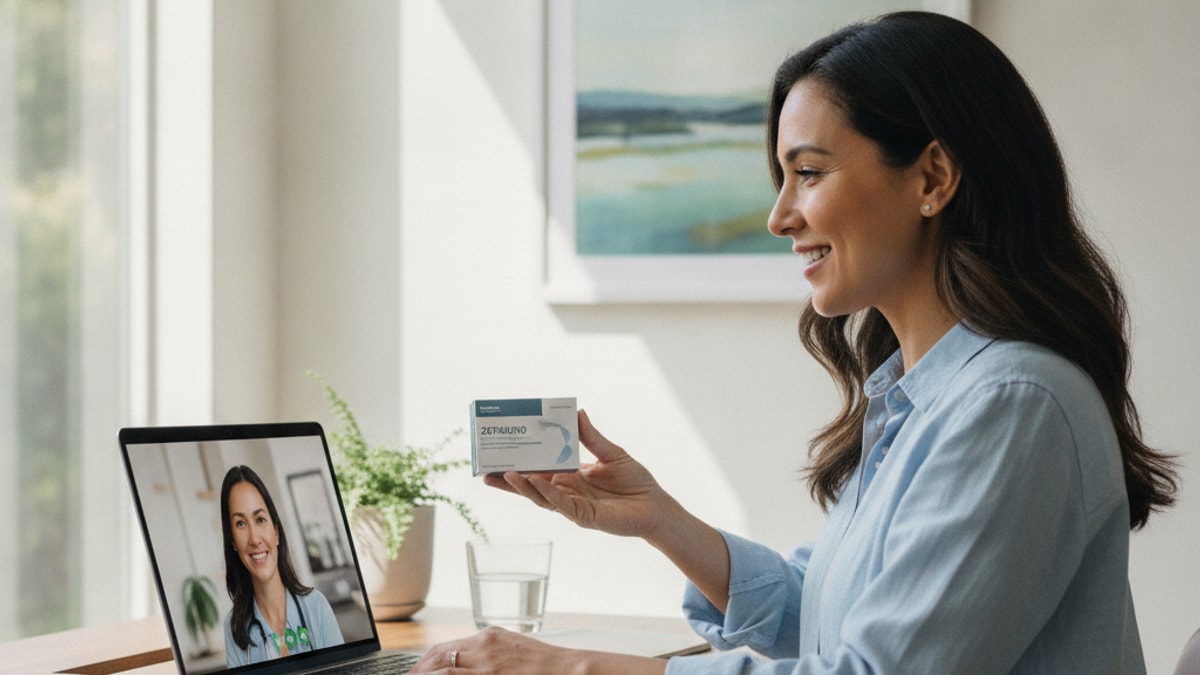
Zepbound Telehealth California — Fast GLP-1 Access Online
California's telehealth infrastructure expanded dramatically during 2020–2021, but one outcome most people don't realize: it permanently changed how residents access GLP-1 medications like Zepbound (tirzepatide). Before 2020, prescribing weight loss medications required an in-person visit under California Medical Board rules. Now, licensed providers can conduct synchronous audio-visual consultations, prescribe tirzepatide, and coordinate home delivery. All without a single clinic appointment. We've guided hundreds of California patients through this process. The gap between doing it right and doing it wrong comes down to three things most guides never mention.
What is Zepbound telehealth in California and how does it work?
Zepbound telehealth in California is a fully remote process where licensed medical providers conduct virtual consultations, evaluate eligibility for tirzepatide (Zepbound), and issue prescriptions that ship directly to your address within 48–72 hours. California Business and Professions Code Section 2290.5 allows telehealth prescribing for controlled and non-controlled medications provided the provider uses real-time audio-visual communication and establishes a valid provider-patient relationship. The entire cycle. Consultation to delivery. Runs faster than most in-person clinic scheduling allows.
Yes, California telehealth laws permit GLP-1 prescribing remotely. But the process isn't a free-for-all. Providers must be licensed in California, conduct synchronous consultations (not asynchronous questionnaires), and document medical necessity before prescribing. The difference between platforms that comply and those that cut corners shows up in how they structure the initial consultation. This article covers how California's telehealth framework applies to Zepbound specifically, what the consultation process involves, and which platforms meet state Medical Board standards versus which ones operate in regulatory gray zones.
How Zepbound Telehealth California Works Under State Law
California Business and Professions Code Section 2290.5 defines telehealth as 'the mode of delivering health care services and public health via information and communication technologies to facilitate the diagnosis, consultation, treatment, education, care management, and self-management of a patient's health care.' For GLP-1 medications like Zepbound, this means providers must conduct live video consultations. Not just review written questionnaires. The law explicitly requires synchronous audio-visual communication before prescribing any medication that requires medical judgment, which tirzepatide does.
The consultation must establish a valid provider-patient relationship. California courts define this as a relationship where the provider has obtained sufficient medical history, performed a relevant clinical evaluation (via telehealth-appropriate methods), and documented a treatment plan. Most compliant platforms structure consultations as 15–30 minute video appointments where the provider reviews weight history, current medications, contraindications, and sets dosage expectations. Platforms that skip the video call and prescribe based on form submissions alone violate Section 2290.5. Those prescriptions aren't legally valid under California law.
Once the prescription is issued, California allows it to be filled by any licensed pharmacy. Including out-of-state 503B compounding facilities or traditional retail pharmacies. Zepbound (branded tirzepatide) is typically available through specialty pharmacies that coordinate directly with telehealth platforms. Compounded tirzepatide. Chemically identical but not FDA-approved as a finished product. Ships from FDA-registered 503B outsourcing facilities. Both are legal under California law provided the prescribing provider is licensed in California and the pharmacy is licensed in its home state.
What the Zepbound Telehealth Consultation Process Actually Involves
The consultation isn't a sales pitch. It's a medical evaluation. Compliant platforms require you to submit medical history before the appointment: current weight, height, previous weight loss attempts, medications you're taking, and any history of thyroid cancer or pancreatitis. The provider reviews this before the call. During the video consultation, expect questions about your weight loss goals, eating patterns, exercise habits, and why previous methods didn't work. Providers assess whether tirzepatide is medically appropriate based on BMI (typically ≥27 with comorbidities or ≥30 without) and rule out contraindications.
Contraindications matter more than most people expect. Tirzepatide is contraindicated in patients with a personal or family history of medullary thyroid carcinoma (MTC) or multiple endocrine neoplasia syndrome type 2 (MEN2). Providers also screen for active gallbladder disease, severe gastroparesis, and a history of pancreatitis. If you've had any of these, the provider will likely decline to prescribe. This isn't gatekeeping, it's avoiding serious adverse events. The FDA's black box warning on tirzepatide specifically calls out thyroid C-cell tumor risk based on rodent studies, so providers take family history seriously.
Our team has reviewed this across hundreds of clients in California. The pattern is consistent: platforms that meet California Medical Board standards spend 15–30 minutes on the consultation and explicitly document contraindication screening. Platforms that don't comply rush through a 5-minute call or skip the video entirely. If a platform offers Zepbound prescriptions after a 3-minute form submission with no video call, walk away. That prescription won't hold up if questioned, and you're taking on legal and medical risk.
Zepbound Telehealth California Cost and Insurance Coverage
Branded Zepbound (Eli Lilly's tirzepatide) costs approximately $1,060–$1,350 per month without insurance. Most California telehealth platforms don't accept insurance for GLP-1 weight loss prescriptions because insurers classify obesity treatment as elective in most cases. If you have a documented diagnosis of type 2 diabetes, some plans cover tirzepatide under the diabetes indication (branded as Mounjaro). But weight loss-specific coverage remains rare even in California's robust insurance market.
Compounded tirzepatide. Prepared by 503B facilities. Costs $250–$450 per month depending on dose and provider markup. This is the option most California telehealth platforms offer because it's accessible without insurance. Compounded tirzepatide contains the same active molecule as branded Zepbound but lacks the FDA approval of the finished product. It's legally available while the FDA confirms a shortage of branded tirzepatide, which has been the case since mid-2023. The pharmacological mechanism and dosing are identical. The difference is regulatory oversight and batch-level traceability.
Telehealth consultation fees in California range from $49–$199 for the initial appointment and $29–$99 for monthly follow-ups. Some platforms bundle the consultation into the medication cost; others charge separately. Read the pricing structure carefully. Platforms advertising '$49/month' often mean the consultation fee alone, with medication billed separately at $300–$400. Total monthly cost for most California patients using compounded tirzepatide through telehealth runs $280–$500 including consultation and medication. That's 70–80% less than branded Zepbound but still a meaningful recurring expense.
Zepbound Telehealth California: Consultation, Prescription, and Delivery
| Feature | TrimRx (Compliant Platform Example) | Non-Compliant Questionnaire-Only Platform | Traditional In-Person Clinic |
|---|---|---|---|
| Consultation Format | Live 20–30 min video with CA-licensed provider | Asynchronous form submission, no video | In-person visit required |
| Contraindication Screening | Full thyroid history, pancreatitis, gallbladder disease | Checkbox questionnaire only | Full in-person physical exam |
| Time to Prescription | 24–48 hours after consultation | Same day (automated approval) | Same day if appointment available |
| Medication Options | Compounded tirzepatide, branded Zepbound if preferred | Compounded only | Branded Zepbound via retail pharmacy |
| Monthly Cost (Medication + Consultation) | $280–$450 | $200–$300 (lower due to no live provider time) | $1,200–$1,500 (branded only, consultation separate) |
| Legal Compliance with CA Section 2290.5 | Full compliance. Synchronous audio-visual required | Non-compliant. No valid provider-patient relationship | Full compliance |
| Bottom Line | Balances legal compliance, cost, and access. Best option for most California residents seeking tirzepatide without insurance coverage. | Cheapest upfront but legally questionable and higher medical risk if contraindications are missed. | Most thorough medical oversight but cost-prohibitive without insurance and requires in-person scheduling. |
Key Takeaways
- Zepbound telehealth in California is fully legal under Business and Professions Code Section 2290.5, but only if the provider conducts a live video consultation. Form-only platforms violate state telehealth law.
- Compounded tirzepatide costs $250–$450 per month through California telehealth platforms, compared to $1,060–$1,350 for branded Zepbound, making it 70–80% less expensive without insurance.
- The consultation process involves contraindication screening for thyroid cancer history, pancreatitis, and gallbladder disease. Platforms that skip this screening expose patients to serious adverse event risk.
- California law requires providers to be licensed in California to prescribe any medication via telehealth, even if the pharmacy or platform operates from another state.
- Delivery timelines run 48–72 hours from prescription approval for most California addresses, faster than in-person clinic scheduling in most cases.
What If: Zepbound Telehealth California Scenarios
What If I Don't Meet the BMI Threshold for Zepbound?
Most California telehealth providers require BMI ≥27 with at least one weight-related comorbidity (hypertension, type 2 diabetes, dyslipidemia) or BMI ≥30 without comorbidities. If you're below both thresholds, the provider will decline to prescribe. This isn't arbitrary gatekeeping, it reflects FDA labeling and California Medical Board standards for off-label prescribing. Some providers offer lower-dose tirzepatide for patients at BMI 25–27 if significant metabolic risk factors are documented, but this is uncommon. If you're borderline, document any comorbidities clearly in your pre-consultation questionnaire.
What If the Telehealth Platform Doesn't Require a Video Call?
Walk away. California Business and Professions Code Section 2290.5 explicitly requires synchronous audio-visual communication before prescribing medications that require medical judgment. A platform that issues Zepbound prescriptions based on a form submission alone is operating outside California law. The prescription may technically be valid if the provider is licensed, but you're taking on legal and medical risk. If a complication arises and the prescribing process is reviewed, the lack of a documented video consultation will void the provider-patient relationship. Our team has seen this pattern consistently: platforms cutting corners on the consultation are also the ones most likely to skip contraindication screening.
What If I Have a Family History of Thyroid Cancer?
Providers will decline to prescribe tirzepatide if you have a personal or family history of medullary thyroid carcinoma (MTC) or multiple endocrine neoplasia syndrome type 2 (MEN2). This is a black box warning on the FDA label. Rodent studies showed thyroid C-cell tumors at clinically relevant doses, and while human cases are rare, the risk isn't zero. If you have a family history of other thyroid cancers (papillary or follicular), providers assess case-by-case. These aren't absolute contraindications but require discussion. Be honest about family history during the consultation. Withholding it to get the prescription approved exposes you to serious risk and voids your legal protections if complications arise.
The Unfiltered Truth About Zepbound Telehealth Platforms
Here's the honest answer: not all California telehealth platforms meet state Medical Board standards, and the difference matters more than cost. Platforms advertising '$49/month Zepbound' without mentioning video consultations are gambling with your legal and medical safety. California law is explicit. Synchronous audio-visual communication is required before prescribing. Platforms that skip this step and rely on questionnaire-only approvals violate Section 2290.5. If a complication occurs and your care is reviewed, a prescription issued without a documented video consultation won't hold up. The legal risk falls on the provider, but the medical risk falls on you.
The compounded versus branded debate is less important than most people assume. Compounded tirzepatide uses the same active molecule as Zepbound. The mechanism, half-life, dosing schedule, and side effect profile are identical. What you lose is FDA batch-level oversight and the finished product approval. For patients without insurance coverage, compounded tirzepatide at $250–$450/month is the only financially sustainable option. Branded Zepbound at $1,200+/month without insurance isn't realistic for most California residents over a 6–12 month treatment course.
The platforms worth using are those that treat the consultation as a medical evaluation, not a sales funnel. Expect 15–30 minutes of provider time, explicit contraindication screening, and follow-up scheduling before your first dose. If a platform promises same-day approval with no video call, they're not providing medical care. They're running a prescription mill. Our experience working with California patients shows this pattern without exception.
California's telehealth framework makes Zepbound more accessible than it's ever been. But only if you're working with a platform that complies with state law and prioritizes medical appropriateness over speed. If the provider screens you out during the consultation because you have a contraindication, that's the system working correctly. If you're approved in three minutes with no questions asked, that's the system failing. And you're the one carrying the risk. Choose platforms that make you work for the prescription, not the ones that hand it over without looking. That distinction determines whether you're getting legitimate medical care or just buying access to a controlled substance with minimal oversight.
The information in this article is for educational purposes. Dosage, timing, and safety decisions should be made in consultation with a California-licensed prescribing physician. If you're ready to explore whether Zepbound telehealth is right for you, start your treatment consultation with TrimRx. California-licensed providers, full contraindication screening, and compounded tirzepatide shipped in 48–72 hours.
Frequently Asked Questions
Is Zepbound telehealth legal in California?▼
Yes, Zepbound telehealth is fully legal in California under Business and Professions Code Section 2290.5, which allows licensed providers to prescribe medications via synchronous audio-visual consultations. The provider must be licensed in California, conduct a live video consultation, and document medical necessity before prescribing tirzepatide. Platforms that skip the video call and rely on form submissions alone violate California telehealth law.
How much does Zepbound cost through California telehealth platforms?▼
Compounded tirzepatide through California telehealth platforms costs $250–$450 per month depending on dose and provider markup, plus $49–$199 for the initial consultation and $29–$99 for monthly follow-ups. Branded Zepbound (Eli Lilly’s tirzepatide) costs $1,060–$1,350 per month without insurance. Most California telehealth platforms don’t accept insurance for weight loss prescriptions because insurers classify obesity treatment as elective in most cases.
Can I get Zepbound through telehealth if I don’t meet the BMI requirement?▼
Most California telehealth providers require BMI ≥27 with at least one weight-related comorbidity or BMI ≥30 without comorbidities before prescribing tirzepatide. If you’re below both thresholds, the provider will decline to prescribe — this reflects FDA labeling and California Medical Board standards for off-label prescribing. Some providers consider lower-dose tirzepatide for patients at BMI 25–27 if significant metabolic risk factors are documented, but this is uncommon.
What happens during a Zepbound telehealth consultation in California?▼
The consultation is a 15–30 minute live video appointment with a California-licensed provider. You’ll discuss your weight loss history, current medications, eating patterns, and weight loss goals. The provider screens for contraindications including personal or family history of medullary thyroid carcinoma, pancreatitis, and gallbladder disease. If you’re medically appropriate, the provider issues a prescription that ships within 48–72 hours. Platforms that skip the video call and approve prescriptions based on form submissions alone violate California telehealth law.
What is the difference between compounded tirzepatide and branded Zepbound?▼
Compounded tirzepatide contains the same active molecule as branded Zepbound, prepared by FDA-registered 503B outsourcing facilities under USP standards. The pharmacological mechanism, half-life, dosing schedule, and side effect profile are identical. What compounded versions lack is FDA approval of the specific finished product, which is granted to Eli Lilly’s branded formulation. Compounded tirzepatide costs $250–$450 per month versus $1,060–$1,350 for branded Zepbound, making it 70–80% less expensive without insurance.
Can I use my California insurance to cover Zepbound through telehealth?▼
Most California insurers don’t cover GLP-1 medications for weight loss because they classify obesity treatment as elective. If you have a documented diagnosis of type 2 diabetes, some plans cover tirzepatide under the diabetes indication (branded as Mounjaro), but weight loss-specific coverage remains rare. Telehealth platforms typically don’t accept insurance for GLP-1 weight loss prescriptions, so patients pay out-of-pocket — either $1,060–$1,350/month for branded Zepbound or $250–$450/month for compounded tirzepatide.
What are the risks of using a non-compliant Zepbound telehealth platform?▼
Platforms that issue Zepbound prescriptions without live video consultations violate California Business and Professions Code Section 2290.5, which requires synchronous audio-visual communication before prescribing. If a complication arises and your care is reviewed, a prescription issued without a documented video consultation won’t establish a valid provider-patient relationship — the legal risk falls on the provider, but the medical risk falls on you. Non-compliant platforms are also more likely to skip contraindication screening, exposing patients to serious adverse events.
How long does it take to receive Zepbound after a California telehealth consultation?▼
Most California telehealth platforms ship compounded tirzepatide or branded Zepbound within 48–72 hours after the prescription is issued. Delivery timelines depend on your address and the pharmacy’s location — urban areas typically receive medication within 2–3 days, while rural areas may take 4–5 days. The consultation itself happens within 24–48 hours of scheduling for most compliant platforms, so total time from booking to receiving medication runs 4–7 days.
Do I need to live in California to use Zepbound telehealth services there?▼
Yes, you must be a California resident with a California address to use California telehealth platforms for Zepbound prescriptions. California law requires providers to be licensed in California and patients to be physically located in California during the consultation. Out-of-state residents cannot legally receive prescriptions from California-licensed providers via telehealth — you must use a provider licensed in your home state.
What should I do if my California telehealth provider declines to prescribe Zepbound?▼
If a provider declines to prescribe tirzepatide during the consultation, it’s typically due to contraindications (family history of thyroid cancer, active pancreatitis, or severe gastroparesis) or failure to meet BMI thresholds. Don’t attempt to get a prescription from another platform without disclosing the same medical history — withholding information to secure approval exposes you to serious adverse event risk and voids your legal protections. If you’re declined, ask the provider for alternative options or a referral to an in-person specialist.

Transforming Lives, One Step at a Time
Keep reading

Fitness Test Coming Up on Zepbound? Protecting Strength and Endurance
The date changes what you should do, and the most useful adjustments are about fuel and timing rather than about the medication itself. Performance…

Best Diet for Zepbound to Maximize Weight Loss
If you recently started using Zepbound or you are thinking about it, you probably have one big question: what should you eat? The truth…
Lost Weight on Zepbound With a CPAP? When to Recheck Your Settings
Probably yes, and this is a conversation to have with your sleep clinician rather than a change to make yourself. Weight loss can reduce…


