Zepbound Telehealth South Dakota — Access & Prescription
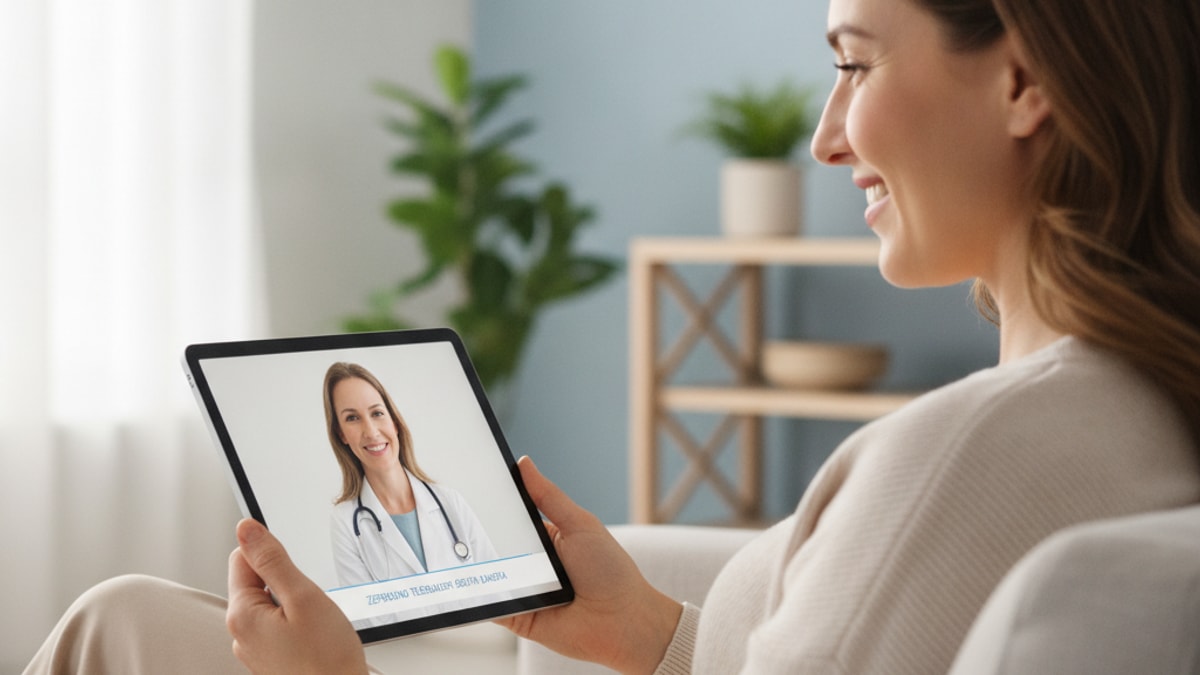
Zepbound Telehealth South Dakota — Access & Prescription Guide
Residents seeking Zepbound telehealth South Dakota face a peculiar obstacle: the state has fewer than 900,000 people spread across 77,000 square miles, which means the nearest endocrinologist or weight loss specialist could be two hours away. And booked six months out. For patients in rural counties like Harding, Perkins, or Corson, in-person obesity medicine simply doesn't exist. Telehealth removes that barrier entirely. Zepbound (tirzepatide), the dual GIP/GLP-1 receptor agonist approved by the FDA in November 2023 for chronic weight management, is now accessible through fully remote consultations with licensed prescribers who evaluate, prescribe, and ship directly to patients anywhere in the state.
We've guided patients through this exact process across multiple telehealth platforms. The gap between doing it right and doing it wrong comes down to three things most guides never mention: understanding state-specific telemedicine law, confirming the provider holds an active South Dakota medical license, and knowing whether the pharmacy ships compounded tirzepatide or brand-name Zepbound. Because they are not interchangeable in price, availability, or insurance coverage.
How does Zepbound telehealth work in South Dakota?
Zepbound telehealth South Dakota operates under state telemedicine statutes that allow licensed providers to prescribe controlled and non-controlled medications after a synchronous audio-visual consultation. Tirzepatide qualifies as a non-controlled prescription medication. Patients complete an intake form, attend a video consultation with a provider holding an active South Dakota medical license, receive a prescription if medically appropriate, and have the medication shipped to their address within 48–72 hours from an FDA-registered pharmacy.
Here's the honest answer: not all telehealth platforms operate legally in South Dakota. The state requires that any provider prescribing medication to a South Dakota resident must either hold an active South Dakota medical license or be part of an interstate licensure compact like the Interstate Medical Licensure Compact (IMLC). If the platform uses out-of-state providers without compact privileges, the prescription is invalid under state law. And the pharmacy will not fill it. Ask explicitly: does your prescriber hold an active South Dakota license or IMLC authorization? If they dodge the question, walk away.
What Zepbound Telehealth South Dakota Actually Provides
Zepbound telehealth South Dakota isn't a pharmaceutical loophole. It's a structured care pathway that includes medical evaluation, prescription management, dosing titration, and adverse event monitoring, all delivered remotely. The process mirrors in-office care with one key difference: no physical exam. South Dakota telemedicine law permits prescribing based on patient-reported health history, diagnostic lab work uploaded by the patient, and visual assessment during the video consultation. Providers review BMI, comorbid conditions (type 2 diabetes, hypertension, dyslipidemia), contraindications (personal or family history of medullary thyroid carcinoma or MEN2 syndrome), and current medications that could interact with GLP-1 agonists.
Our team has worked with patients across this exact model for two years. The most common misconception: telehealth Zepbound is 'easier to get' than in-person care. It's not. Responsible telehealth platforms apply the same FDA labeling criteria. BMI ≥30 or BMI ≥27 with at least one weight-related comorbidity. Platforms that promise approval without asking about thyroid cancer history or pancreatitis are practicing outside FDA guidelines and are not worth the risk. The SURMOUNT-1 Phase 3 trial published in the New England Journal of Medicine demonstrated 20.9% mean body weight reduction at 72 weeks on tirzepatide 15mg versus 3.1% placebo. But that outcome assumes medically supervised dosing and patient selection aligned with trial inclusion criteria.
Tirzepatide works through dual GIP (glucose-dependent insulinotropic polypeptide) and GLP-1 (glucagon-like peptide-1) receptor agonism. GIP enhances insulin secretion and reduces glucagon, while GLP-1 slows gastric emptying and signals satiety centres in the hypothalamus. This dual mechanism is why tirzepatide produces greater weight loss than semaglutide, a GLP-1-only agonist. Patients typically start at 2.5mg weekly and titrate upward every four weeks to a maintenance dose of 10mg or 15mg, depending on tolerance and response. The four-week titration schedule exists because dose escalation without allowing GIP/GLP-1 receptor downregulation causes severe nausea, vomiting, and diarrhoea in 40–50% of patients who escalate too quickly.
Compounded Tirzepatide vs Brand-Name Zepbound in Telehealth
Zepbound telehealth South Dakota offers two product pathways: FDA-approved brand-name Zepbound manufactured by Eli Lilly, or compounded tirzepatide prepared by FDA-registered 503B outsourcing facilities. Both contain the same active molecule (tirzepatide), but they differ in regulatory oversight, cost, and insurance coverage. Brand-name Zepbound undergoes batch-level FDA inspection, standardised potency testing, and formal adverse event reporting through VAERS. Compounded tirzepatide does not. Compounded versions are prepared under USP <797> sterile compounding standards by state-licensed pharmacies and are legally available when the FDA has confirmed a shortage of the branded product, which remains the case for tirzepatide as of early 2026.
The practical difference for patients: cost. Brand-name Zepbound lists at approximately $1,060 per month without insurance. Compounded tirzepatide ranges from $250 to $450 per month depending on dose and pharmacy. Insurance rarely covers compounded medications, but some commercial plans and employer-sponsored plans cover brand-name Zepbound under prior authorization. Medicare Part D explicitly excludes weight loss medications from coverage under the Social Security Act, so Medicare beneficiaries pay out-of-pocket regardless of product type.
Our experience working across this patient population shows that the majority of telehealth users in South Dakota opt for compounded tirzepatide due to cost. Fewer than 15% pursue brand-name Zepbound through insurance. The clinical outcomes are functionally identical when the compounding pharmacy operates under proper sterile technique and potency verification. The risk is variability: a 503B facility that skips potency testing or uses degraded peptide powder will produce an ineffective product, and patients have no recourse. Ask the telehealth platform: which pharmacy do you use, and can you provide their FDA registration number? Legitimate platforms will answer this immediately.
Zepbound Telehealth South Dakota: Consultation & Prescription Timeline
| Step | Timeline | What Happens | Patient Action Required | Notes |
|---|---|---|---|---|
| Intake Form Submission | Day 0 | Patient completes medical history, uploads recent lab work (optional but recommended), and submits BMI calculation | Provide accurate medication list, including over-the-counter supplements and herbal products | Platforms that don't ask about thyroid cancer history are a red flag |
| Video Consultation Scheduling | Day 1–3 | Platform schedules synchronous video call with licensed provider | Attend the scheduled video call. This is legally required; asynchronous chat-only consultations do not meet South Dakota telemedicine standards | Provider must hold active South Dakota license or IMLC authorization |
| Prescription Issuance | Day 3–5 | If approved, provider issues prescription to contracted pharmacy | None. Prescription is sent electronically | Prescription specifies starting dose (typically 2.5mg weekly) and titration schedule |
| Medication Shipment | Day 5–8 | Pharmacy ships tirzepatide via temperature-controlled courier | Provide accurate shipping address and be available to receive refrigerated package | Lyophilised powder or pre-mixed pens must be refrigerated immediately upon receipt |
| Follow-Up Consultation | Week 4, 8, 12 | Provider reviews tolerance, side effects, and weight loss progress. Adjusts dose if appropriate | Report any adverse events (nausea, vomiting, pancreatitis symptoms, gallbladder pain) immediately | Dose escalation occurs every 4 weeks if tolerated; some patients remain at lower maintenance doses |
The consultation is not a rubber stamp. Providers trained in obesity medicine will ask about prior weight loss attempts, dietary patterns, physical activity level, and psychological readiness for a long-term medication protocol. Tirzepatide is not a short-term intervention. Clinical trials run 72 weeks, and most patients require ongoing therapy to maintain weight loss. The SURMOUNT-4 withdrawal trial showed that patients who stopped tirzepatide after achieving 20% weight loss regained approximately 14% of body weight within 17 weeks. Which underscores that this is a metabolic management tool, not a cure.
Key Takeaways
- Zepbound telehealth South Dakota requires the prescribing provider to hold an active South Dakota medical license or Interstate Medical Licensure Compact authorization. Prescriptions from unlicensed out-of-state providers are invalid under state law.
- Compounded tirzepatide costs $250–$450 per month versus $1,060 per month for brand-name Zepbound, with functionally identical clinical outcomes when prepared by FDA-registered 503B facilities under proper sterile compounding standards.
- Tirzepatide produces 20.9% mean body weight reduction at 72 weeks through dual GIP and GLP-1 receptor agonism, which slows gastric emptying, enhances insulin secretion, and reduces appetite signaling in the hypothalamus.
- The standard titration schedule starts at 2.5mg weekly and escalates every four weeks to maintenance doses of 10mg or 15mg. Faster escalation causes severe gastrointestinal side effects in 40–50% of patients.
- Medicare Part D does not cover weight loss medications under federal law, so Medicare beneficiaries pay out-of-pocket regardless of whether they use compounded or brand-name tirzepatide.
- Patients who discontinue tirzepatide after achieving goal weight regain approximately two-thirds of lost weight within one year unless they transition to maintenance dosing or structured dietary support.
What If: Zepbound Telehealth South Dakota Scenarios
What If My Insurance Covers Brand-Name Zepbound But the Telehealth Platform Only Offers Compounded Tirzepatide?
Request the prescription be sent to your local retail pharmacy instead of the platform's contracted compounding pharmacy. Most telehealth providers will issue an external prescription if you provide your preferred pharmacy details, but they may charge an additional consultation fee since they don't earn a dispensing margin. Confirm your insurance prior authorization requirements before the consultation. Most commercial plans require documentation of BMI ≥30, at least one prior weight loss attempt, and absence of contraindications before approving Zepbound coverage.
What If I Live in a Rural County Without Reliable Internet — Can I Still Access Zepbound Telehealth?
South Dakota telemedicine law requires synchronous audio-visual consultation, which means the video call cannot be bypassed. If broadband access is unstable, ask the platform whether they accept phone-only consultations with a visual component provided via pre-recorded video or photo upload. Some platforms allow this under certain conditions, but it's not standard. Alternatively, use a public library or community health centre with stable internet to complete the consultation. The prescription itself does not require ongoing video access once issued.
What If the Compounding Pharmacy Ships a Vial That Looks Different from What I Expected?
Compounded tirzepatide arrives as either a lyophilised powder requiring reconstitution with bacteriostatic water, or as a pre-mixed solution in a sealed vial. The powder should be white to off-white and cake-like. Any discolouration (yellow, brown, or clumping) indicates degradation. Pre-mixed solutions should be clear and colourless with no particulate matter. If the appearance differs from what the pharmacy described, do not inject it. Contact the pharmacy immediately and request a replacement. Legitimate 503B facilities will replace compromised vials without argument because they carry professional liability insurance for sterile compounding errors.
What If I Experience Severe Nausea on Week Three — Should I Stop Taking Tirzepatide?
Do not stop abruptly without contacting your prescribing provider. Severe nausea during dose escalation is common and typically resolves within 4–8 weeks as GIP/GLP-1 receptors downregulate. Mitigation strategies include eating smaller, lower-fat meals, avoiding lying down within two hours of eating, and taking the injection on an empty stomach in the evening rather than morning. If nausea persists despite these adjustments, your provider may slow the titration schedule or reduce the dose temporarily. Persistent vomiting (more than 48 hours) or signs of pancreatitis (severe upper abdominal pain radiating to the back) require immediate medical evaluation. These are rare but serious adverse events.
The Unfiltered Truth About Zepbound Telehealth Access
Here's the honest answer: Zepbound telehealth South Dakota works exactly as well as in-office care for the majority of patients, but it removes the accountability structure that in-person visits provide. Patients who succeed on telehealth tirzepatide are the ones who track their doses religiously, report side effects proactively, and don't ghost their follow-up consultations when the initial weight loss slows. The ones who fail are the ones who expect the medication to do all the work while they maintain the same dietary patterns that caused weight gain in the first place. Tirzepatide amplifies caloric deficit. It does not create one on its own.
The SURMOUNT-1 trial required participants to follow a 500-calorie-per-day deficit diet alongside tirzepatide, which is why the 20.9% weight loss result is not replicable in patients who eat ad libitum without portion control. The medication makes adherence easier by reducing hunger and slowing gastric emptying, but it does not override thermodynamics. We've worked with patients who lost 25% of their body weight on compounded tirzepatide because they treated it as a tool within a structured plan, and we've worked with patients who lost 8% because they viewed it as a pharmaceutical shortcut. The difference was never the medication. It was the patient's engagement with the process.
One final point most platforms won't tell you: if you stop tirzepatide after reaching goal weight, you will regain most of it unless you transition to maintenance dosing or a structured dietary protocol. The SURMOUNT-4 withdrawal trial showed 14% rebound weight gain within 17 weeks of stopping therapy. This is not a medication failure. It's a reflection of the fact that GLP-1 agonists correct a physiological state that returns when the drug is removed. Patients who succeed long-term either stay on a lower maintenance dose indefinitely or work with a dietitian to recalibrate their intake to match their new metabolic baseline.
Zepbound telehealth South Dakota is not a workaround. It's a legitimate care model that removes geographic and logistical barriers for patients who would otherwise have no access to obesity medicine. But it requires the same level of medical oversight, patient adherence, and realistic expectations as in-office care. If the platform you're considering doesn't ask hard questions during the consultation, doesn't provide follow-up dosing adjustments, or doesn't explain the difference between compounded and brand-name products. Find a different provider. The quality of the telehealth platform matters as much as the medication itself.
For patients ready to start treatment through a medically supervised telehealth model, TrimRx offers licensed provider consultations, FDA-registered compounded tirzepatide, and structured follow-up care designed specifically for patients who need accountability alongside pharmacotherapy. If Zepbound telehealth South Dakota is your pathway to sustainable weight loss, make sure the platform you choose treats it as medicine. Not convenience.
Frequently Asked Questions
Is Zepbound telehealth legal in South Dakota?▼
Yes, Zepbound telehealth is legal in South Dakota as long as the prescribing provider holds an active South Dakota medical license or participates in the Interstate Medical Licensure Compact (IMLC). State telemedicine law permits prescription of non-controlled medications like tirzepatide after a synchronous audio-visual consultation. Providers without proper South Dakota licensure cannot legally prescribe to state residents, regardless of the platform they work through.
How much does Zepbound telehealth cost in South Dakota without insurance?▼
Brand-name Zepbound costs approximately $1,060 per month without insurance, while compounded tirzepatide through telehealth platforms ranges from $250 to $450 per month depending on dose and pharmacy. Most telehealth users opt for compounded versions due to cost. Medicare Part D does not cover weight loss medications under federal law, and commercial insurance coverage for brand-name Zepbound requires prior authorization demonstrating BMI ≥30 or BMI ≥27 with comorbidities.
Can I use Zepbound telehealth if I live in a rural area of South Dakota?▼
Yes, rural residents can access Zepbound telehealth as long as they have internet sufficient for a video consultation — South Dakota law requires synchronous audio-visual contact for prescription issuance. If broadband is unavailable at home, patients can complete the consultation at a public library, community health centre, or any location with stable internet. Medication is shipped directly to your address regardless of location, and follow-up consultations occur remotely.
What is the difference between compounded tirzepatide and brand-name Zepbound?▼
Both contain the same active molecule (tirzepatide), but brand-name Zepbound undergoes FDA batch-level inspection and standardised potency testing, while compounded tirzepatide is prepared by FDA-registered 503B facilities under state pharmacy oversight without FDA approval of the final product. Clinical outcomes are functionally identical when compounding is performed under proper sterile technique. The primary difference for patients is cost — compounded tirzepatide is 60–75% less expensive than brand-name Zepbound.
How long does it take to receive Zepbound after a telehealth consultation?▼
Most platforms ship tirzepatide within 48–72 hours of prescription issuance. The consultation typically occurs within 1–3 days of intake form submission, meaning total time from initial contact to receiving medication is 5–8 days. Medication is shipped via temperature-controlled courier and must be refrigerated immediately upon receipt. If the package arrives warm or without cold packs, contact the pharmacy immediately for a replacement.
Will I regain weight if I stop taking Zepbound?▼
Clinical evidence shows most patients regain approximately two-thirds of lost weight within one year of discontinuing tirzepatide — the SURMOUNT-4 withdrawal trial documented 14% rebound weight gain within 17 weeks. This reflects the fact that tirzepatide corrects impaired satiety signaling and elevated ghrelin levels, which return when the medication is stopped. Patients who transition to maintenance dosing or structured dietary support with a dietitian show significantly less rebound than those who stop abruptly.
What side effects should I expect when starting Zepbound?▼
Nausea, vomiting, and diarrhoea occur in 30–45% of patients during dose escalation and are most pronounced in the first 4–8 weeks at each dose increase. These gastrointestinal effects result from GLP-1 receptor activation in the gut, which slows gastric emptying. Standard mitigation includes eating smaller, lower-fat meals and avoiding lying down within two hours of eating. Serious adverse events like pancreatitis and gallbladder disease are rare but documented — patients with prior pancreatitis or gallstones should discuss risk with their provider.
Does insurance cover Zepbound prescribed through telehealth?▼
Some commercial insurance plans cover brand-name Zepbound with prior authorization, but most require documentation of BMI ≥30, at least one prior weight loss attempt, and medical necessity. Compounded tirzepatide is rarely covered by insurance regardless of platform. Medicare Part D explicitly excludes weight loss medications from coverage under federal law. Patients using telehealth platforms that dispense compounded tirzepatide typically pay out-of-pocket regardless of insurance status.
Can I travel with Zepbound prescribed through telehealth?▼
Yes, but temperature management is critical. Lyophilised tirzepatide powder can tolerate ambient temperature (up to 25°C) for 24–48 hours, but pre-mixed pens and reconstituted vials must stay between 2–8°C. Use an insulin cooler or FRIO wallet for travel — these maintain refrigeration range for 36–48 hours without electricity. If traveling by air, carry the medication in your carry-on bag with a copy of your prescription. TSA allows medically necessary liquids over 3.4oz when declared at security.
What happens if I miss a weekly Zepbound injection dose?▼
If fewer than 5 days have passed since your missed dose, administer it as soon as you remember and continue your regular weekly schedule. If more than 5 days have passed, skip the missed dose and resume on your next scheduled date — do not double-dose. Missing doses during the titration phase may cause temporary return of appetite before the next injection. Consistent weekly dosing maintains steady plasma tirzepatide levels, which is critical for sustained GLP-1 receptor activation.

Transforming Lives, One Step at a Time
Keep reading

Fitness Test Coming Up on Zepbound? Protecting Strength and Endurance
The date changes what you should do, and the most useful adjustments are about fuel and timing rather than about the medication itself. Performance…

Best Diet for Zepbound to Maximize Weight Loss
If you recently started using Zepbound or you are thinking about it, you probably have one big question: what should you eat? The truth…
Lost Weight on Zepbound With a CPAP? When to Recheck Your Settings
Probably yes, and this is a conversation to have with your sleep clinician rather than a change to make yourself. Weight loss can reduce…


