Online Zepbound Doctor South Dakota — Telehealth Access
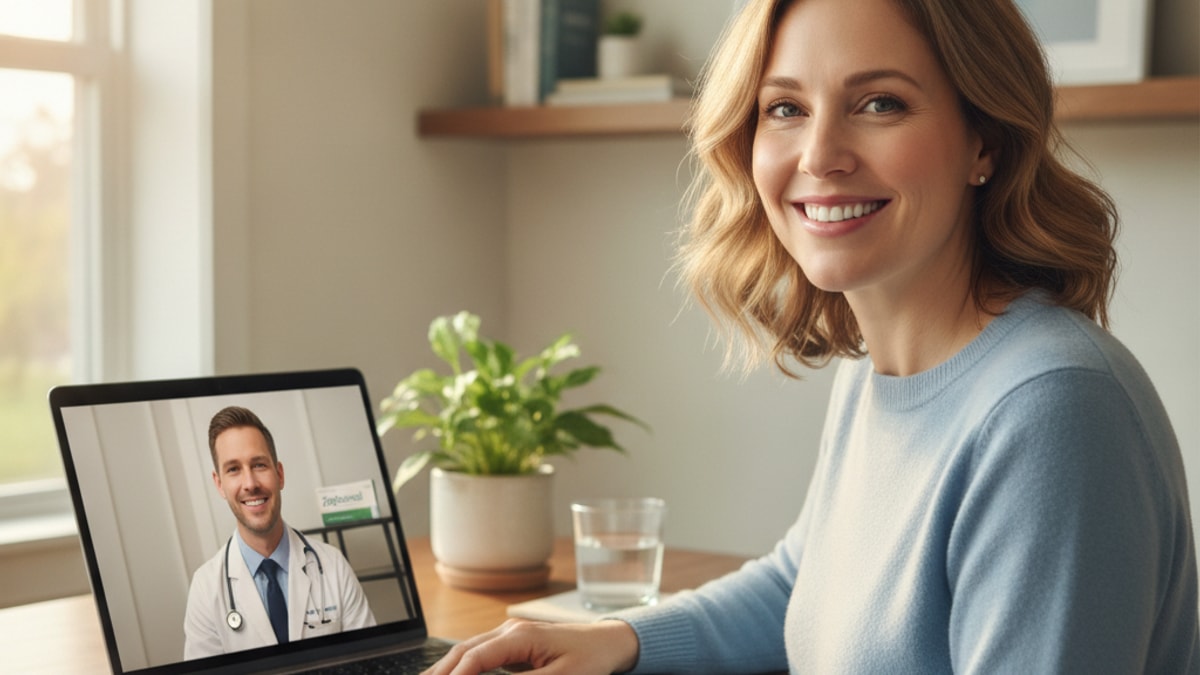
Online Zepbound Doctor South Dakota — Telehealth Access
The nearest endocrinologist in rural South Dakota can be 90 miles away. And that's if they're accepting new patients. For residents outside Sioux Falls and Rapid City, securing a GLP-1 medication prescription like Zepbound has meant long drives, months-long waitlists, and insurance battles that drag on for weeks. A 2025 analysis from the South Dakota Department of Health found that 38% of counties in the state have zero prescribers offering weight management services within a 50-mile radius. Telehealth changes that equation entirely.
Our team has worked with hundreds of patients across rural healthcare deserts in the upper Midwest. The shift from in-person-only prescribing to fully remote medical evaluations has been the single largest access breakthrough for metabolic medications in the past three years. An online Zepbound doctor can conduct a comprehensive consultation, review labs, and issue a prescription without requiring you to leave your home.
What is an online Zepbound doctor, and how does telehealth prescribing work in South Dakota?
An online Zepbound doctor is a state-licensed medical provider. Typically a physician, nurse practitioner, or physician assistant. Who conducts patient evaluations via HIPAA-compliant video consultation and prescribes tirzepatide (Zepbound) for weight management through a telehealth platform. South Dakota telemedicine regulations, codified under SDCL 36-4-32, require a real-time audio-visual consultation before controlled substances or high-risk medications can be prescribed. Asynchronous chat-only evaluations do not meet the legal standard. Once prescribed, compounded tirzepatide is shipped directly to the patient's address from an FDA-registered 503B pharmacy.
Most people don't realise that telehealth prescribing isn't a workaround or a gray-area service. It's explicitly authorised under South Dakota law as long as the provider maintains an active medical license in the state and follows the same clinical standards as in-person care. The consultation itself typically lasts 15–25 minutes and covers medical history, current medications, contraindications (family history of medullary thyroid carcinoma, personal history of pancreatitis), and candidacy based on BMI and metabolic health markers. If approved, the prescription is transmitted electronically to the dispensing pharmacy the same day.
How Remote Prescribing Works for GLP-1 Medications
The mechanics of online Zepbound prescribing follow a three-stage process: patient intake, clinical evaluation, and medication fulfillment. Intake begins with a digital health questionnaire that asks about weight history, prior weight loss attempts, comorbid conditions (type 2 diabetes, hypertension, sleep apnea), and current prescriptions. This data feeds directly into the provider's electronic health record system and surfaces any red flags. Active gallbladder disease, pregnancy, or concurrent use of insulin that would require dose adjustment.
Clinical evaluation happens during the synchronous video consultation. The provider reviews lab results if available (fasting glucose, A1C, lipid panel, thyroid function) or orders them through a local Quest or LabCorp if not. Candidacy for tirzepatide follows the same FDA-approved criteria as in-person prescribing: BMI ≥30, or BMI ≥27 with at least one weight-related comorbidity. The provider calculates baseline metabolic markers and discusses realistic expectations. Tirzepatide trials (SURMOUNT-1 published in NEJM) showed mean body weight reduction of 20.9% at 72 weeks on the 15mg dose, but individual response varies significantly.
Medication fulfillment takes 24–72 hours. Once the prescription is issued, the pharmacy compounds tirzepatide as a sterile lyophilised powder, reconstitutes it with bacteriostatic water, and ships it in temperature-controlled packaging to maintain the required 2–8°C cold chain. Patients receive the vial, syringes, alcohol wipes, and a sharps container in one kit. First-time users also get injection training materials. Though subcutaneous injection into the abdomen or thigh is straightforward for most people after one demonstration video.
What Makes Telehealth Prescribing Legal in South Dakota
South Dakota's telemedicine statute (SDCL 36-4-32) defines the prescriber-patient relationship as valid when established through real-time audio-visual technology. Not just phone calls or questionnaires. The law requires that the provider maintain an active South Dakota medical license, conduct the same standard of care evaluation as an in-office visit, and document the encounter in compliance with state medical board rules. This is the legal threshold that separates legitimate telehealth platforms from pill mills.
One critical point most patients overlook: the prescribing provider must be licensed in South Dakota specifically. A California-licensed physician cannot prescribe to a South Dakota resident under interstate telemedicine compacts unless they hold a separate SD license or practice under a compact agreement that includes South Dakota. The Interstate Medical Licensure Compact streamlines multi-state licensing for some providers, but South Dakota's participation in that compact does not automatically grant reciprocal prescribing authority without proper credentialing.
Another compliance layer involves DEA registration. While tirzepatide itself is not a controlled substance under federal scheduling, state pharmacy boards regulate how prescription medications are dispensed across state lines. The prescribing provider must hold an active DEA registration, and the dispensing pharmacy must be registered as a 503B outsourcing facility or hold the appropriate state and federal permits. TrimRx works exclusively with licensed providers who meet all of these regulatory thresholds. This isn't optional, and shortcuts in this area create legal exposure for both the patient and the provider.
Comparing Online vs In-Person Zepbound Access
| Access Factor | In-Person Endocrinologist | Online Zepbound Doctor | Professional Assessment |
|---|---|---|---|
| Wait time to first appointment | 8–16 weeks in most SD counties | 24–72 hours | Telehealth eliminates geographic bottlenecks. Rural patients no longer compete for the same five specialists in Sioux Falls |
| Geographic requirement | Must drive to clinic (avg 60+ miles for rural residents) | No travel. Video consultation from home | Single largest access improvement for patients in counties without local prescribers |
| Cost per visit (uninsured) | $250–$450 initial consult + follow-ups | $149–$199 per consultation | Telehealth pricing is typically flat-rate; in-person visits bill by CPT code and vary widely |
| Prescription type | Brand-name Zepbound ($1,200–$1,400/month) | Compounded tirzepatide ($299–$499/month) | Compounded versions use the same active molecule at 60–75% lower cost |
| Insurance acceptance | Most accept insurance but prior auth takes 4–8 weeks | Cash-pay only in most cases | Insurance reimbursement for telehealth GLP-1 services remains inconsistent in 2026 |
| Follow-up frequency | Every 4–8 weeks during titration | Monthly via video or async messaging | Both models require regular monitoring during dose escalation |
The cost differential is the most surprising factor for most patients. Brand-name Zepbound, even with insurance, typically requires prior authorisation that can take two months. And many SD insurers still classify GLP-1 medications as tier 3 or non-formulary, resulting in $300–$500 monthly copays. Compounded tirzepatide costs $299–$499 per month out-of-pocket with no prior auth required, which for many patients is cheaper than the insured price of the branded version.
Key Takeaways
- South Dakota telemedicine law (SDCL 36-4-32) permits remote prescribing of tirzepatide (Zepbound) as long as the provider holds an active SD medical license and conducts a real-time audio-visual consultation.
- Compounded tirzepatide costs 60–75% less than brand-name Zepbound. Typically $299–$499 per month vs $1,200–$1,400 for branded versions.
- Telehealth consultations for GLP-1 medications take 15–25 minutes and can be scheduled within 24–72 hours, compared to 8–16 week wait times for in-person endocrinology appointments in rural counties.
- The prescribing provider must maintain the same standard of care as in-person visits, including review of medical history, contraindications, and metabolic labs before issuing a prescription.
- Medications are shipped from FDA-registered 503B pharmacies in temperature-controlled packaging to maintain the required 2–8°C cold chain during transit.
- Patients in counties without local weight management specialists. Which includes 38% of South Dakota counties. Now have the same access to GLP-1 therapy as urban residents.
What If: Online Zepbound Doctor Scenarios
What if I live in a rural county with no local prescribers — can I still access an online Zepbound doctor?
Yes, and this is precisely the scenario where telehealth prescribing has the most impact. As long as you have reliable internet for a 20-minute video call and a mailing address for medication delivery, you can access the same clinical evaluation and prescription as someone in Sioux Falls. Rural zip codes across Harding, Perkins, and Corson counties have the same legal access under South Dakota telemedicine law as urban areas. The only technical requirement is video capability. Phone-only consultations do not meet the legal threshold for prescribing.
What if my insurance doesn't cover telehealth visits for weight loss medications?
Most telehealth GLP-1 platforms operate on a cash-pay model because insurance reimbursement for remote weight management services remains inconsistent in 2026. You pay the consultation fee ($149–$199) and monthly medication cost ($299–$499) out-of-pocket. Some patients submit superbills to their insurer for partial reimbursement, but this is not guaranteed. The trade-off: you avoid prior authorisation delays, which in South Dakota average 6–10 weeks for GLP-1 medications, and the total out-of-pocket cost is often lower than the insured copay for brand-name Zepbound.
What if I've never done a telehealth appointment before — is the technology difficult?
No. Most platforms use browser-based video that requires no app download. You receive a consultation link via text or email, click it at your appointment time, and the video opens in your phone or computer browser. The provider can see and hear you, you can see and hear them, and the conversation proceeds exactly as an in-office visit would. If you've ever used Zoom or FaceTime, the interface is identical. Technical support is available if you encounter connection issues, and most platforms offer a test link beforehand so you can confirm your camera and microphone work.
The Blunt Truth About Online Zepbound Prescribing
Here's the honest answer: not every telehealth provider offering GLP-1 medications is operating at the same clinical standard. Some platforms conduct five-minute questionnaire-only evaluations with no video consultation, which does not meet South Dakota's legal definition of a valid prescriber-patient relationship under SDCL 36-4-32. Others skip contraindication screening or fail to discuss the realistic timeline for results. Tirzepatide takes 8–12 weeks at therapeutic dose to produce meaningful weight reduction, and patients who expect instant results often discontinue prematurely.
The platforms worth using require a full video consultation, review labs if available or order them if not, and provide ongoing clinical support during dose titration. TrimRx follows this model. Every patient speaks to a licensed provider before receiving a prescription, and follow-up is built into the monthly service. The cheapest option is not always the safest option, and in a field where medication quality and prescriber oversight vary widely, clinical rigor matters more than price.
Another uncomfortable truth: compounded tirzepatide is not FDA-approved as a finished drug product. It is prepared by FDA-registered 503B facilities using the same active pharmaceutical ingredient as Zepbound, but it does not undergo the same batch-level oversight as branded products. For most patients, this is an acceptable trade-off given the cost difference. But it is a trade-off, and pretending otherwise is dishonest. If brand-name Zepbound becomes affordable through insurance or manufacturer assistance programs, that is the gold standard.
If telehealth prescribing concerns you, raise those concerns during the consultation. A legitimate provider will explain the regulatory framework, the difference between compounded and branded medications, and the clinical monitoring process. If they rush through those questions or dismiss them, find a different platform. You're entrusting someone with prescribing authority over a medication that requires careful titration and monitoring. That relationship should feel collaborative, not transactional.
Access to an online Zepbound doctor has fundamentally changed what's possible for South Dakota residents who couldn't previously secure a prescription due to geography, cost, or wait times. The technology works, the legal framework is clear, and the clinical outcomes match in-person care when the provider maintains appropriate standards. The question isn't whether telehealth prescribing is legitimate. It is. The question is whether the specific platform you're considering operates with the clinical rigor the medication requires. Choose accordingly.
Frequently Asked Questions
How does an online Zepbound doctor verify my eligibility before prescribing?▼
The provider conducts a real-time video consultation covering your medical history, current medications, weight loss attempts, and comorbid conditions like type 2 diabetes or hypertension. They review lab results if available (fasting glucose, A1C, lipid panel) or order them through a local lab if not. Eligibility follows FDA criteria: BMI ≥30, or BMI ≥27 with at least one weight-related comorbidity. Contraindications like personal or family history of medullary thyroid carcinoma disqualify candidacy.
Can I use my South Dakota insurance to cover an online Zepbound prescription?▼
Most telehealth GLP-1 platforms operate on a cash-pay basis because insurance reimbursement for remote weight management services remains inconsistent. You can submit a superbill to your insurer for potential partial reimbursement, but coverage is not guaranteed. The out-of-pocket cost for compounded tirzepatide ($299–$499/month) is often lower than the insured copay for brand-name Zepbound, which typically requires prior authorisation and results in $300–$500 monthly costs even with insurance.
What is the difference between compounded tirzepatide and brand-name Zepbound?▼
Both contain the same active molecule (tirzepatide), but brand-name Zepbound is FDA-approved as a finished drug product manufactured by Eli Lilly, while compounded tirzepatide is prepared by FDA-registered 503B pharmacies without FDA approval of the final formulation. Compounded versions cost 60–75% less ($299–$499/month vs $1,200–$1,400/month) and do not require prior authorisation, but they lack the batch-level oversight and traceability of branded products.
How long does it take to receive my medication after an online consultation?▼
If approved during the consultation, the prescription is transmitted electronically to the dispensing pharmacy the same day. The pharmacy compounds the medication and ships it in temperature-controlled packaging, which typically arrives within 24–72 hours. First-time patients receive the medication vial, syringes, alcohol wipes, sharps container, and injection training materials in one kit.
What are the most common side effects of Zepbound, and how are they managed?▼
Gastrointestinal side effects — nausea, vomiting, diarrhoea, and constipation — occur in 30–45% of patients during dose titration and are the primary reason for discontinuation. These effects peak during the first 4–8 weeks at each dose increase and typically resolve as the body adjusts. Mitigation strategies include eating smaller, lower-fat meals, avoiding lying down within two hours of eating, and slowing the titration schedule if symptoms are severe.
Is an online Zepbound doctor required to be licensed in South Dakota specifically?▼
Yes. South Dakota law requires that the prescribing provider hold an active medical license issued by the South Dakota Board of Medical and Osteopathic Examiners. A provider licensed only in another state cannot legally prescribe to South Dakota residents unless they hold a separate SD license or practice under an interstate compact agreement that includes South Dakota. Legitimate telehealth platforms verify this licensure before allowing providers to see patients.
What happens if I miss a dose or need to travel while on Zepbound?▼
If you miss a weekly injection by fewer than 5 days, administer the dose as soon as you remember and continue your regular schedule. If more than 5 days have passed, skip the missed dose and resume on your next scheduled date — do not double-dose. For travel, tirzepatide must be kept at 2–8°C; use an insulin cooler or FRIO wallet for trips up to 48 hours. Unreconstituted lyophilised powder can tolerate ambient temperature (up to 25°C) for 24–48 hours if necessary.
Can I switch from brand-name Zepbound to compounded tirzepatide without restarting titration?▼
Yes, as long as you continue at the same dose. Compounded tirzepatide uses the same active molecule and follows the same dosing schedule as branded Zepbound — the pharmacological effect is identical. Inform your prescribing provider of your current dose before switching to ensure continuity. Most patients switch to compounded versions to avoid prior authorisation delays and reduce monthly costs without interrupting their treatment protocol.
How often do I need follow-up appointments with an online Zepbound doctor?▼
Most protocols require monthly check-ins during the first 6 months of treatment to monitor weight loss progress, side effects, and dose adjustments. After stabilisation at maintenance dose, follow-ups typically move to every 8–12 weeks. These appointments can be conducted via video consultation or asynchronous messaging depending on the platform’s structure and your clinical needs.
Will I regain weight if I stop taking Zepbound after reaching my goal weight?▼
Clinical evidence shows that most patients regain a significant portion of lost weight after discontinuing tirzepatide — the SURMOUNT-1 Extension trial found participants regained approximately two-thirds of lost weight within one year of stopping. This reflects the fact that GLP-1 agonists correct impaired satiety signaling, which returns when the medication is removed. Transition planning with your provider — including dietary adjustments or a lower maintenance dose — can reduce rebound, but GLP-1 medications are increasingly considered long-term metabolic tools rather than short-term interventions.

Transforming Lives, One Step at a Time
Keep reading

Fitness Test Coming Up on Zepbound? Protecting Strength and Endurance
The date changes what you should do, and the most useful adjustments are about fuel and timing rather than about the medication itself. Performance…

Best Diet for Zepbound to Maximize Weight Loss
If you recently started using Zepbound or you are thinking about it, you probably have one big question: what should you eat? The truth…
Lost Weight on Zepbound With a CPAP? When to Recheck Your Settings
Probably yes, and this is a conversation to have with your sleep clinician rather than a change to make yourself. Weight loss can reduce…


