What to Do If the Needle Bends on Your Semaglutide Pen
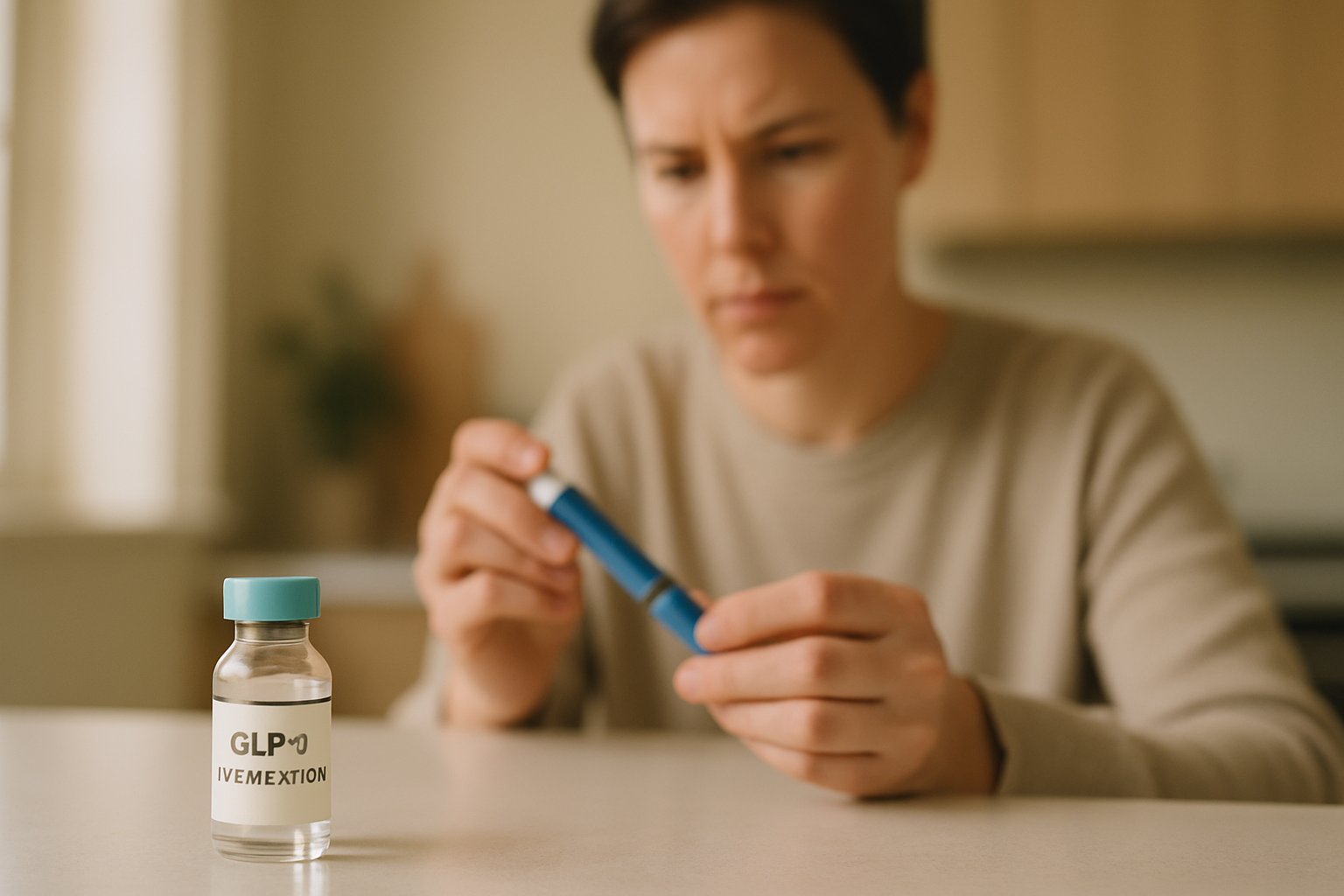
Do not straighten a bent needle and do not reuse it. Remove it carefully using the outer needle cap, drop it in a sharps container, attach a fresh needle, and continue. A bent needle is compromised in ways you cannot assess by looking at it: the tip is dulled, the silicone coating that lets it pass through skin is damaged, and the metal now has a stress point that makes breakage more likely on the next use.
There is one situation that is not a routine annoyance. If the needle broke and any part of it is still in your skin, do not dig for it. Seek medical care the same day.
Removing a bent needle safely
The risk here is a needlestick to your own fingers, which is why technique matters more than speed.
- Do not touch the needle itself. Use the outer cap that came with it.
- Place the outer cap on a flat surface and guide the needle into it without holding the cap in your other hand. Scooping the cap onto the needle keeps your fingers away from the point.
- Twist to unscrew once the needle is capped.
- Drop it into a sharps container. A rigid, puncture-resistant container with a lid. If you do not have a dedicated one, a heavy-duty plastic container with a screw-on lid works as an interim measure, though your local rules may differ.
If the needle is bent badly enough that it will not go into the cap, use tweezers or pliers to grip the hub rather than the shaft, and unscrew it directly into the sharps container.
If the needle broke rather than bent
Look at the needle you removed and confirm it is intact. If the tip is missing, or if you felt a snap during injection, treat this as urgent. Do not attempt to remove anything from your skin yourself, do not press or squeeze the area, and do not wait to see whether it works itself out.
Contact your provider or an urgent care clinic the same day. A retained needle fragment is uncommon but it needs imaging and proper removal, and it is far easier to deal with immediately than after it has migrated.
Why the needle bent in the first place
Understanding this prevents the repeat.
Pressing at an angle
Pen needles are designed to go in perpendicular to the skin. Approaching at a slant puts lateral force on a very thin piece of metal. This is the most common cause and it usually happens when injecting somewhere awkward to reach, like the back of the arm.
Injecting through clothing
It happens, usually when someone is rushing. Fabric offers resistance the needle was not designed to pass through and it deflects the tip.
Hitting scar tissue or a firm area
Repeated injections into the same spot can create firm, thickened tissue that a needle does not enter cleanly. This is a real and well-documented consequence of not rotating sites. In one study of injecting patients, nearly two-thirds had developed thickened injection-site tissue, and failure to rotate sites was the strongest predictor.
Reusing a needle
A needle that has been through skin once is already blunted and its coating is scratched. The second use requires more force, which is exactly the condition that bends metal.
Recapping incorrectly
Trying to put the small inner cap back on a used needle is a common cause of both bent needles and needlesticks. Use the outer cap.
The pen moved mid-injection
Consider this scenario: a patient injects into the abdomen while sitting, shifts position halfway through to reach for something, and levers the pen sideways while the needle is still in the skin. The needle bends against the tissue. This is why staying still through the full injection, including the several-second hold after the counter reaches zero, is worth the discipline.
Checking your injection site afterward
A bent needle can cause a rougher entry than usual, so look at the site. Expect possibly a small bruise, a bit more soreness than normal, or a drop of blood. Those resolve.
Call your provider if you see spreading redness, warmth, or increasing pain over the next day or two, if a hard lump forms and persists, or if the site drains anything.
Did you get your dose?
This depends on when the bend happened.
Bent before injection, noticed before you pressed the button. No dose was delivered. Replace the needle and inject as normal.
Bent during injection, counter reached zero. The dose almost certainly went in. A bent needle still has a lumen.
Bent during injection, counter did not reach zero. Some or all of the dose may not have been delivered. Do not re-inject on your own judgment. Call your provider, tell them the number the counter stopped at, and let them decide.
That last rule is worth stating plainly because the instinct to make up a partial dose is strong and the consequence of overshooting a weekly GLP-1 is a rough few days of nausea and vomiting.
Preventing the next one
Rotate sites systematically. Not randomly, systematically. A set pattern keeps tissue healthy and reduces the firm spots that bend needles. Our guide on how to rotate injection sites for semaglutide and tirzepatide gives a rotation you can follow without thinking.
Use a new needle every time. Every injection, no exceptions. Needles are single-use devices and reuse causes both the bending problem and the tissue damage that leads to more bending.
Inject at ninety degrees to the skin. Straight in, straight out.
Choose a site you can reach comfortably. If the back of your arm requires contortion, use the abdomen or thigh instead. Our overview of GLP-1 injection sites covers which areas work best and why.
Stay still through the hold. Counter to zero, then a slow count before withdrawing, without moving the pen.
Bare skin only. Never through clothing.
Keep spares
The practical takeaway most people miss: keep more needles than you have doses. A bent needle only ruins your day if it was your last one. Ask your pharmacy for extras when you refill, since they cost very little and they turn a potential missed dose into a thirty-second inconvenience.
The short version
Cap it with the outer cap, bin it in sharps, attach a new one, and inject. Never straighten, never reuse. If it broke and something is still in your skin, get seen today.
If you want a care team that will talk you through a device problem instead of leaving you to search for the answer, TrimRx includes provider access alongside semaglutide treatment.
This information is for educational purposes and is not medical advice. Consult with a healthcare provider before starting any medication. Individual results may vary.

Transforming Lives, One Step at a Time
Keep reading

Hair Shedding Months Into Semaglutide
It shows up in the shower drain first, then on the pillow, then in the brush. By the time most people search this, they…

Vision Changes on Semaglutide: What to Know
Three different things get bundled together under this question, and they carry very different levels of urgency. Separating them is most of the work….

High-Altitude Hiking on Semaglutide
You have a trip booked and an appetite that already does not work the way it used to. The worry is reasonable, and there…


