How to Tell If Your Semaglutide Has Gone Bad
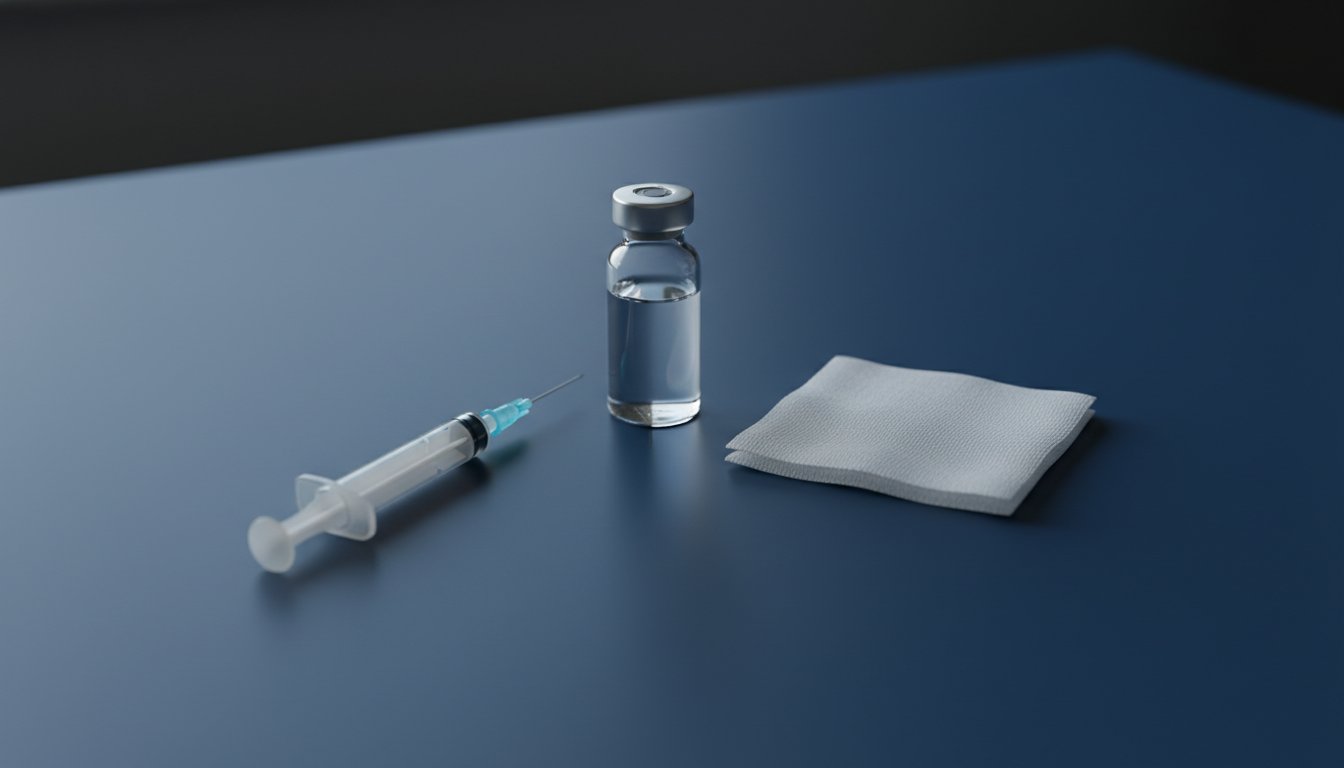
Four checks, in order of how much they actually tell you: storage history, dating, appearance, and how you have been responding. Most people run only the third one, which is the least reliable of the four. Semaglutide can lose potency without any visible change, so a clear vial is not evidence that the medication is fine.
The useful framing is that appearance can rule a problem in but almost never rules one out. If it looks wrong, stop. If it looks right, you still need the other three checks.
Check 1: Storage history
This is the strongest predictor and the one people skip because it requires remembering rather than looking.
Ask yourself whether the medication has ever been:
- Left out of the refrigerator overnight or longer
- In a car, a bag, or on a porch during warm weather
- Pushed against the back wall of the fridge where freezing is possible
- In a refrigerator that lost power or failed
- Shipped in a cooler that had already warmed on arrival
Any yes is more informative than any amount of squinting at the liquid. Freezing in particular is decisive: a product that has frozen should be discarded even if it thawed perfectly clear, because ice crystal formation damages peptide structure in ways that do not reverse and do not show.
Check 2: Dating
Find the expiration date or beyond-use date, and separately find the in-use window that started when you first used the pen or first punctured the vial stopper. The second one is usually shorter and is the one that catches people.
Past either date, the product is done regardless of how it looks or how it was stored.
Check 3: Appearance
Hold it against a plain white background in good light.
Clarity. You should be able to read text through the liquid. Haze, milkiness, or a faint cloudiness means stop.
Color. Clear and colorless through very slightly yellow is expected. Brown, pink, or a distinctly deeper yellow is not.
Particles. No floaters, flakes, strands, or sediment at the bottom.
Container. Intact glass, no cracks, an undisturbed stopper or seal, no dampness around the neck or the needle hub.
What cloudiness represents is worth understanding. Semaglutide is a peptide, and when peptides are stressed by heat, freezing, or agitation, individual molecules partially unfold and stick to one another. Aggregated protein has reduced or absent biological activity and can carry different immune reactivity than the properly folded molecule. Visible haze is the late stage of a process that starts invisibly.
Consider this scenario: a patient checks the vial in kitchen light, thinks it looks slightly off, then holds it near a window and decides it looks fine. That inconsistency is the answer. A clear solution looks clear in every light. Hunting for a flattering angle is itself a result.
Check 4: How you have been responding
This one is a lagging indicator, not a diagnostic, and it should never be the only thing you rely on.
If appetite suppression that had been steady for months noticeably faded starting the week you opened a particular vial, that is worth reporting. If it faded gradually over many weeks, that is more likely to be something else entirely, including the ordinary plateau that many people hit or a dose that needs revisiting.
The reason to track this at all is that it catches the failure mode appearance misses. Our guide to tracking your progress on semaglutide or tirzepatide covers what to record so a change like this is visible rather than a vague impression.
What “it looks fine” does not prove
Three things, specifically:
It does not prove potency. Degradation from heat exposure over time can be substantial without a visual signature.
It does not prove sterility. For a compounded multi-dose vial past its in-use window, this is the concern the dating exists to manage, and it is invisible by definition.
It does not undo storage history. A vial that spent an afternoon in a hot car is not restored by looking normal afterward.
When to stop and call
Do not inject, and contact the pharmacy, if:
- The solution is cloudy, discolored, or has any visible particles
- The container is cracked, leaking, or the seal is disturbed
- You know or suspect it froze
- It is past its expiration date, beyond-use date, or in-use window
- It went through a significant temperature excursion
- Something is different from every previous vial and you cannot explain why
Have the lot number and dating ready. Photograph the label before you call.
What not to do
Do not shake it to clear haze. Aggregation is not settling, and agitation makes it worse.
Do not warm it to see if the cloudiness resolves. Heat is one of the causes.
Do not filter it. Nothing available at home makes an unstable protein solution safe again.
Do not use it because it is your last one. A delayed dose is recoverable. An injection of compromised product buys you nothing and carries a risk you cannot size.
Do not double up afterward if you decide a previous dose was weak. That decision belongs to your provider.
Preventing the question
The reason storage gets so much attention in this space is that it is the variable you control and the one that most often goes wrong quietly. A refrigerator thermometer that records minimum and maximum temperatures costs very little and converts guesswork into a number. Keeping the product in its carton on a middle shelf, away from both the door and the rear wall, handles most of the rest.
The full setup is covered in our guide to storing compounded semaglutide or tirzepatide at home, which applies equally to branded pens.
When to involve your provider
Call your provider rather than just the pharmacy if you injected from a vial you later decided was compromised, if you develop an unusual reaction at the injection site, if a replacement will delay your dosing, or if you have noticed a change in how the medication is working and want that evaluated properly rather than attributed to a bad vial by default.
That last point matters. Reduced response has several possible explanations, and a suspect vial is only one of them.
The short version
Storage history first, dating second, appearance third, response fourth. Looking at it is the check people trust most and the one that proves least. When in doubt, do not inject and make the call.
If you want cold-chain delivery and a care team who will actually answer this question, TrimRx pairs semaglutide treatment with pharmacy coordination and ongoing provider access.
This information is for educational purposes and is not medical advice. Consult with a healthcare provider before starting any medication. Individual results may vary.

Transforming Lives, One Step at a Time
Keep reading

Hair Shedding Months Into Semaglutide
It shows up in the shower drain first, then on the pillow, then in the brush. By the time most people search this, they…

Vision Changes on Semaglutide: What to Know
Three different things get bundled together under this question, and they carry very different levels of urgency. Separating them is most of the work….

High-Altitude Hiking on Semaglutide
You have a trip booked and an appetite that already does not work the way it used to. The worry is reasonable, and there…


