Why Does My Ozempic Injection Sting More Some Weeks Than Others?
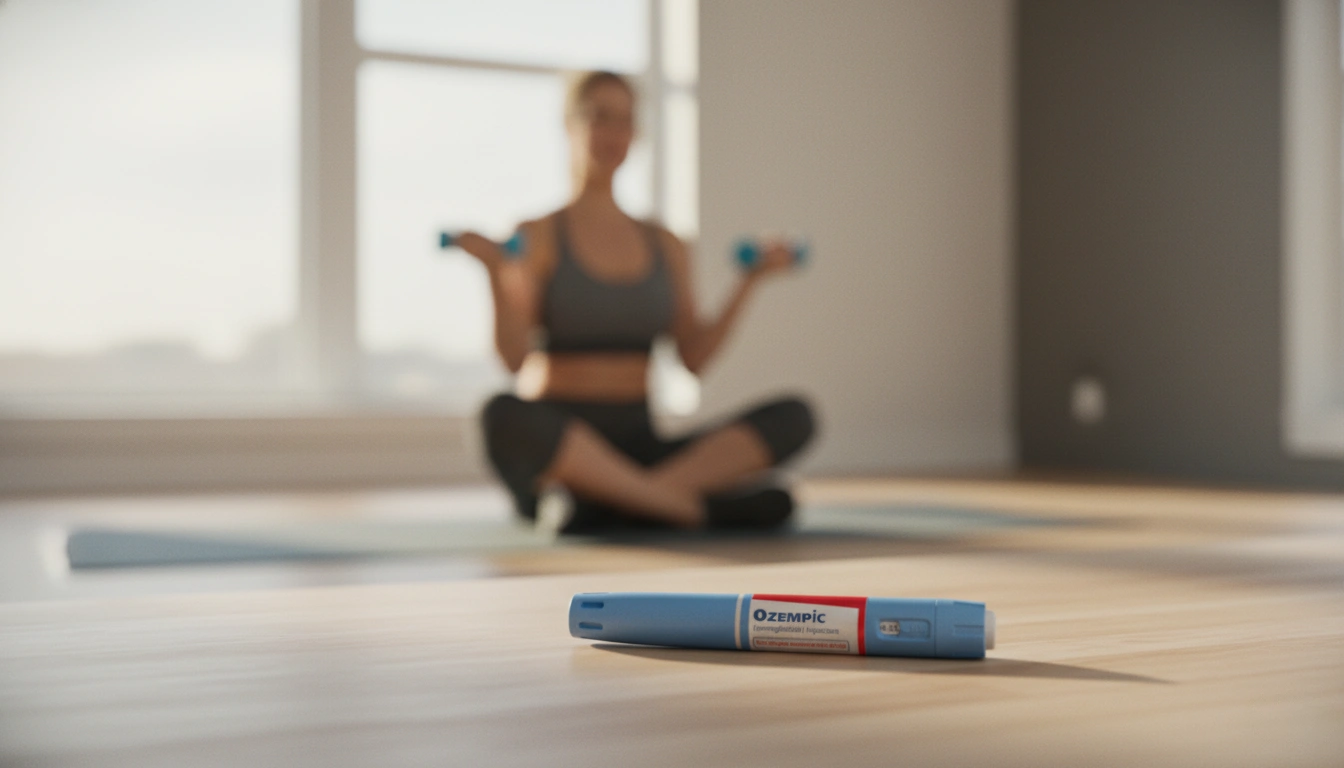
Because more variables change between injections than most people realize. Temperature of the medication, which site you used, how deep the needle went, how sharp it was, how fast you pushed, whether the alcohol had dried, and how much volume you injected all shift week to week. Any one of them can turn an unremarkable injection into one that stings.
The good news is that the biggest contributor is also the easiest to fix: injecting medication straight out of the refrigerator.
What actually drives injection pain
A review of the factors influencing pain at subcutaneous injection sites lists a consistent set: needle features, the anatomic injection site, the volume injected, injection speed, and properties of the formulation itself including osmolality, viscosity, pH, and the excipients used. Short, thin, sharp, well-lubricated needles minimize pain, and the site you choose affects it independently.
Notice how many of those are things that vary from week to week in ordinary home use. That is the whole answer to why the same medication feels different on different Sundays.
The variables you control
Temperature
Cold liquid is more viscous and more irritating going in. Taking the pen or vial out fifteen to thirty minutes before injecting is the single highest-value change most people can make.
Site
The abdomen and the thigh do not feel the same, and neither do different areas within each. Nerve ending density varies, subcutaneous depth varies, and both affect the experience. A week that stings more may simply be a week you used a different region.
Depth and angle
A needle that lands too shallowly deposits medication closer to the dermis, which is considerably more sensitive than the fat below it. This usually comes with a raised pale bump at the surface and unusual resistance. Injecting straight in at ninety degrees keeps you in the right layer.
Needle sharpness
A fresh needle parts tissue. A reused one tears it. Reuse is the most common cause of a step change in how injections feel, and it is entirely avoidable.
Alcohol that has not dried
If you swab, let it dry fully. Injecting through wet alcohol carries it into the puncture and produces a sharp, burning sting that people often attribute to the medication.
Injection speed
A fast push distends tissue suddenly. A controlled few seconds is more comfortable.
Volume
This is the one people miss after a dose increase. A higher dose can mean a larger injection volume, and volume independently affects pain. An injection that suddenly stings more starting the week you stepped up is often just that. Our guide to semaglutide dose escalation covers what else changes at each step.
The variables you do not control
Where the nerve endings are. You cannot see them, and a needle entering at random will occasionally find one. This produces a sharp, brief sting that is unrelated to anything you did.
Tissue condition on the day. Sites vary in how they feel depending on hydration, recent activity, and how recently that area was used.
Skin sensitivity. Some people are simply more sensitive in some areas than others, and this does not always follow a pattern.
Consider this scenario: a patient has six months of uneventful injections, then one that stings sharply for a few seconds and is entirely fine afterward. Nothing changed in their routine. That is most likely a nerve ending, and the correct response is to note it and move on rather than to reorganize their entire technique around one data point.
What stinging does not mean
It does not mean the medication is bad. Appearance, storage history, and dating are how you assess that. A sting tells you about tissue, not about the product.
It does not mean the dose failed. Pain and delivery are unrelated.
It does not mean you need to stop or switch. Injection discomfort is usually a technique problem with a technique solution.
Fixing it
The order that resolves most cases:
- Warm the medication for fifteen to thirty minutes before injecting
- Use a brand new needle every single time
- Let alcohol dry completely, or skip the swab if your provider says clean skin is sufficient
- Insert straight in at ninety degrees
- Push at a controlled pace over a few seconds
- Hold the needle in place for a slow count of six, then withdraw straight out
- Do not rub the site afterward
- Rotate systematically rather than choosing a spot in the moment
That last one does more than people expect. Repeated injection into the same area changes the tissue over time, and tissue that has been used heavily behaves differently. Our guide on how to rotate injection sites for semaglutide and tirzepatide gives a pattern you can follow without deciding each week.
When stinging is a red flag
A brief sting during and immediately after injection is ordinary. These are not:
- Burning that persists for many minutes or hours after the needle is out
- Pain accompanied by spreading redness, warmth, or swelling over the following days
- Hives, itching, or rash appearing anywhere beyond the injection site
- A hard lump that forms and does not resolve
- Pain severe enough that you are dreading injection day
Contact your provider for any of those. The last one in particular deserves a real conversation rather than endurance, because injection discomfort is one of the reasons people quietly stop taking a medication that was otherwise working.
If you are early in treatment
Injections tend to feel more significant in the first weeks, partly because you are paying close attention and partly because the technique has not become automatic yet. Most people find that both the discomfort and the anxiety around it fade over the first month or two.
If you are still finding your footing, our guide to the Ozempic starting dose covers what else the early stretch typically involves.
The short version
Warm it up, use a fresh needle, let alcohol dry, go in straight, push steadily, hold for six. That sequence removes most week-to-week variation. What remains is mostly nerve endings, which are random and not your fault.
If injection discomfort is making you dread the weekly routine, that is worth raising with a clinician rather than tolerating. TrimRx includes ongoing provider access alongside treatment.
This information is for educational purposes and is not medical advice. Consult with a healthcare provider before starting any medication. Individual results may vary.

Transforming Lives, One Step at a Time
Keep reading
Ozempic Changed How You and Your Partner Spend Time
Friday night was a place you both liked and a bottle of something. Sunday was a long breakfast. Holidays were planned around restaurants. That…

Partner Says You’re Not Eating Enough on Ozempic?
It has become a thing at dinner. They watch your plate. You feel watched. Something gets said, or pointedly not said, and the meal…

Weekly Client Dinners on Ozempic: A Plan for Recurring Work Meals
Managing one difficult dinner is a matter of ordering well. Managing four a week indefinitely is a different problem, because anything that relies on…


