Partner Says You’re Not Eating Enough on Ozempic?
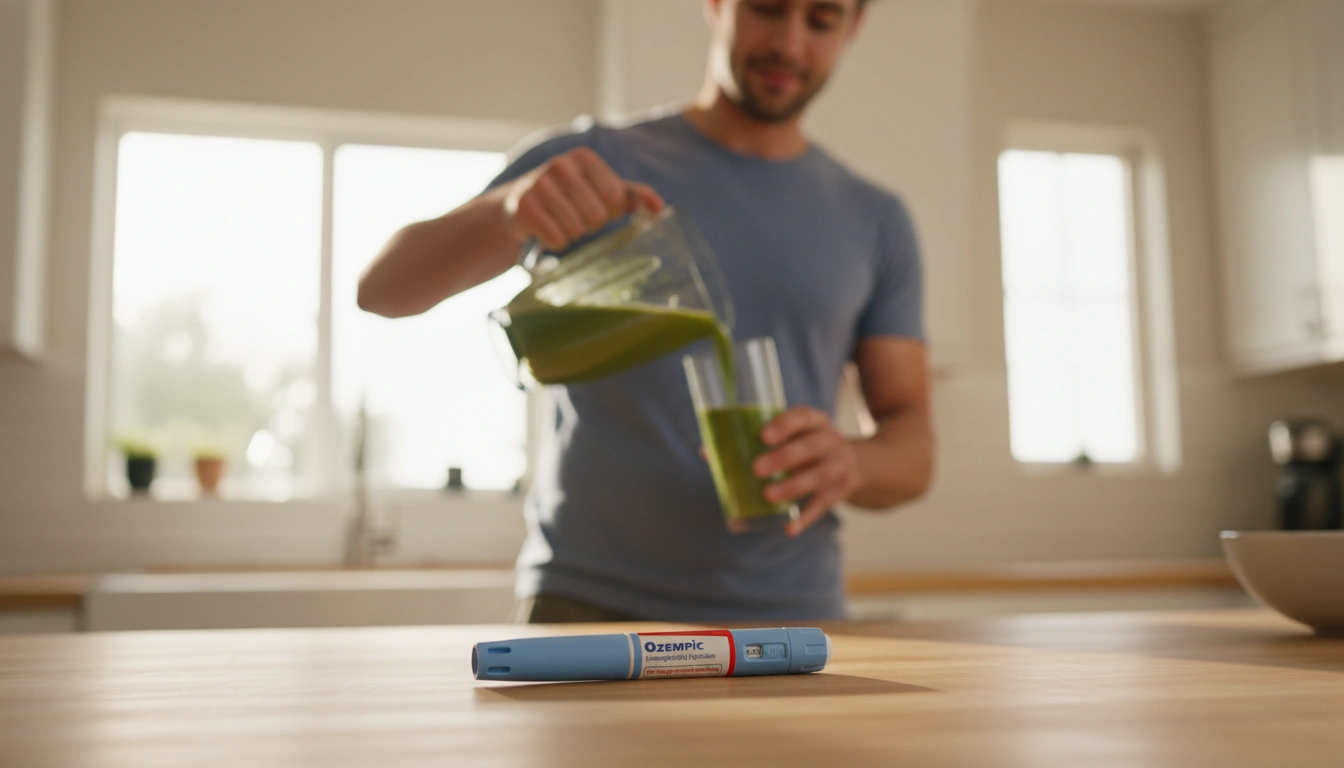
It has become a thing at dinner. They watch your plate. You feel watched. Something gets said, or pointedly not said, and the meal goes quiet.
Two things can be true here and it is worth separating them. Your partner may be right about the eating. They may also be handling it in a way that is making everything harder. Those need different responses, and most people in this situation only address one.
Start with the first question, because it is the one that actually matters.
Are they right?
Not “do you feel fine,” because reduced appetite is the medication working, and feeling no hunger is not the same as eating adequately. The honest check is a set of signals, and the useful thing about them is that they are mostly not about food.
Watch for a cluster rather than any one item:
- Persistent fatigue that sleep does not fix
- Feeling cold when everyone else is comfortable
- Hair shedding noticeably more than usual
- Dizziness or lightheadedness on standing
- Losing strength, or finding ordinary physical things harder
- Difficulty concentrating
- Weight coming off faster than you or your provider intended
One of these on its own often means nothing. Several together is the pattern that says intake has drifted below what your body needs, whatever the scale says.
There is a second thing worth knowing, because it is invisible and it is the part partners are often sensing without having words for it. Weight lost on these medications is not purely fat. A 2024 review of lean body mass changes with GLP-1 based therapies found that the share of total weight loss made up by lean mass varied widely across studies, from a large fraction in some to a small one in others. The review’s own reading is that some of this may be an adaptive response rather than a harm, and that a change in lean mass is not the same thing as a change in muscle. What it does establish is that the scale is not measuring one thing, which is worth knowing before you treat a fast-falling number as unambiguously good news.
So the question is not whether you are hungry. It is whether your body is getting what it needs while it changes.
If the signals are there
This is a provider conversation, not a willpower one. Under-eating on a GLP-1 is usually a dosing or timing problem rather than a discipline problem, and it has practical answers.
What tends to help: eating on a schedule rather than waiting for appetite, since appetite is not coming; prioritizing protein when you do eat, because the window in which you can eat comfortably is smaller than it used to be; and using the hours when you feel best rather than the hours the household happens to eat.
Our guide on what to eat to minimize nausea covers the practical side of eating when your stomach is working slowly.
It is also worth asking whether your dose is the issue. If intake fell off a cliff after a recent increase, that is a known and fixable pattern, and holding at a dose or moving up more slowly is a normal adjustment rather than a failure. Our guide on dose escalation covers how that progression is meant to work.
Bring specifics to the conversation rather than impressions. Our guide on tracking your progress covers what is worth recording, and a week of honest notes is more useful to a provider than any amount of describing.
If the signals are not there
Then your partner is worried, and worry is not the same as being right. It still needs answering.
Something that usually helps more than reassurance: tell them what you are watching for. “My provider and I are tracking these specific things, and here is where they are” converts a vague fear into a shared checkpoint. Most anxious partners are anxious partly because they are on the outside of a process they cannot see.
Inviting them to one appointment, or letting them hear a provider say what is normal, resolves more of this than months of dinner-table debate.
Consider this scenario: someone six weeks in is eating noticeably less and has none of the warning signs, and their partner is frightened because a family member once lost weight rapidly for a much worse reason. Every small plate reads as evidence. The conversation that helps is not about dinner at all. It is the one where the partner says what they are actually afraid of, and it turns out to be something the reader can address directly.
When the comments are the problem
Sometimes the eating is fine and the monitoring has become its own issue. Being watched at every meal is corrosive, and it can push people toward eating alone or downplaying what they eat, which makes everything worse and harder to see.
If you are eating away from your partner to avoid the comments, or editing what you tell them, that is worth noticing. Not as a failing, but as a sign the dynamic has gone somewhere unhelpful.
What works better than asking them to stop: agree on what would actually reassure them, and how often. A provider check at a set interval, a specific set of signals you will both watch, an agreement that dinner is not where this gets discussed. People tend to stop monitoring when they trust the monitoring is happening somewhere.
And if you have found yourself pleased by how little you are eating, or quietly reluctant to fix it, that is worth saying out loud to your provider. It is a common thing to feel on these medications and it is much easier to address early than late.
Talk to your provider if
Several of the signals above are present, your intake dropped sharply after a dose increase, you are avoiding meals with people, weight is coming off faster than planned, or you are uncertain whether what you are eating is enough. That last one is a legitimate reason to call on its own. Uncertainty is not something you have to resolve alone before you are allowed to ask.
The short version
Answer the factual question first, using the signals rather than your appetite, because appetite is not reporting accurately right now. If the signals are there, it is a provider conversation and usually a fixable one. If they are not, your partner still needs something better than reassurance, and bringing them inside the process works better than defending yourself at dinner.
If you want a provider who treats eating enough as part of the plan rather than an afterthought, TrimRx includes ongoing provider access alongside treatment.
This information is for educational purposes and is not medical advice. Consult with a healthcare provider before starting any medication. Individual results may vary.

Transforming Lives, One Step at a Time
Keep reading

Ozempic Changed How You and Your Partner Spend Time
Friday night was a place you both liked and a bottle of something. Sunday was a long breakfast. Holidays were planned around restaurants. That…

Weekly Client Dinners on Ozempic: A Plan for Recurring Work Meals
Managing one difficult dinner is a matter of ordering well. Managing four a week indefinitely is a different problem, because anything that relies on…
How to Keep an Ozempic Routine on Rotating Shifts
The good news is that the injection is the easiest part of this. Semaglutide is dosed weekly and has a long duration of action,…


