Does the Color of Compounded Semaglutide Mean Anything?
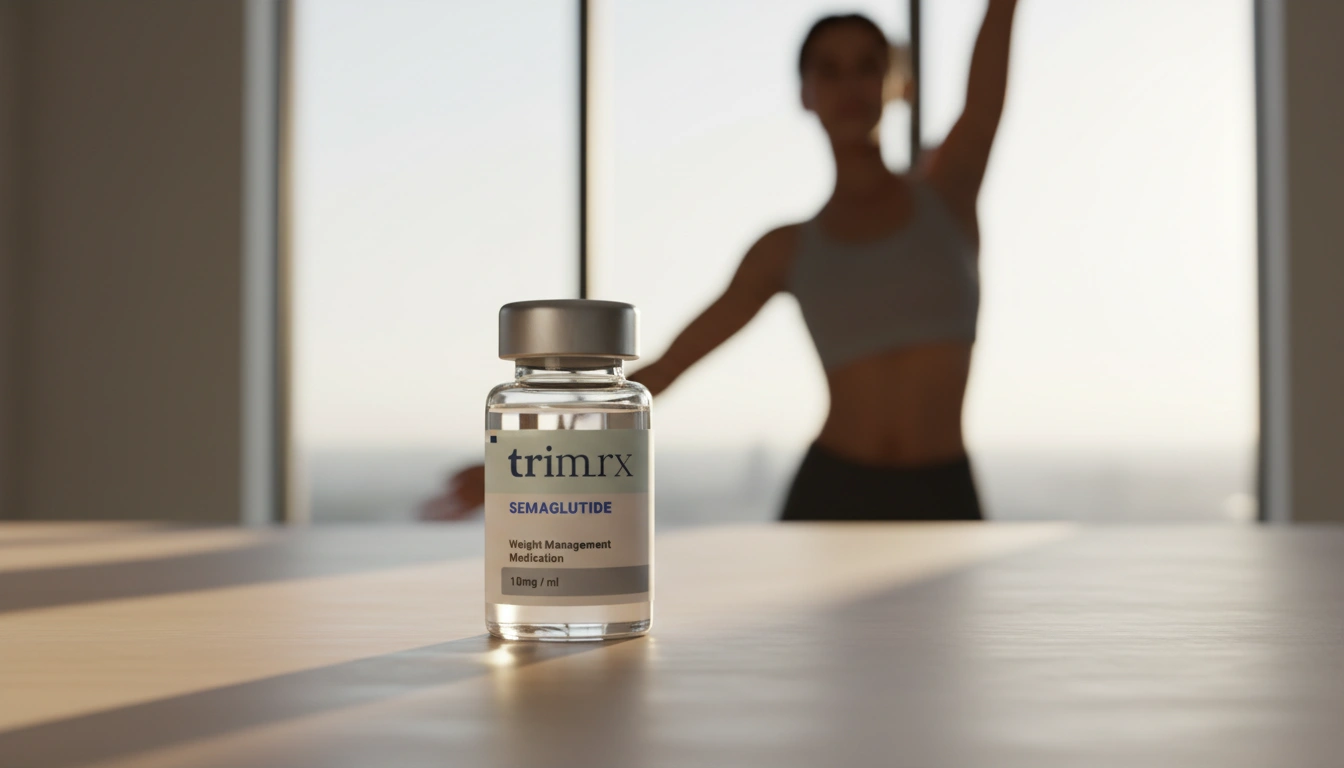
Yes, and the useful version of that answer is narrow. Semaglutide solution should be clear and colorless, and a very faint yellow tint is generally within what is described as acceptable. Anything beyond that, meaning a distinct yellow, any brown, pink, or orange, or any cloudiness or visible particles, means do not inject and call the pharmacy.
What color cannot do is confirm the product is good. A degraded solution frequently looks entirely normal, so appearance rules a problem in and never rules one out.
What normal looks like
Hold the vial against a plain white background in good light, then against a plain dark background. You are checking three things:
Clarity. You should be able to read text through the liquid. Any haze, milkiness, or opalescence is a problem.
Color. Clear and colorless through very faintly yellow.
Particles. Nothing floating, no flakes, no strands, no sediment at the bottom.
If you find yourself hunting for an angle or a light where it looks acceptable, that inconsistency is itself the answer. A clear solution looks clear everywhere.
Why cloudiness is the more informative sign
Color changes get the attention, but haze is the more meaningful finding.
Semaglutide is a peptide, and peptides degrade through several pathways, the most visible of which is aggregation, where individual molecules partially unfold under stress and stick to one another. Aggregated protein has reduced or absent biological activity, and aggregates can carry different immune reactivity than the properly folded molecule.
Cloudiness is the late, visible stage of a process that begins invisibly. By the time you can see it, a good deal has already happened.
What causes a color change
Heat exposure. The most common cause, and the reason storage matters. A shipment left on a hot porch, a night in a car, a fridge that failed.
Freezing. Worse than heat for a peptide, and often invisible afterward, which is why suspected freezing means discard regardless of appearance.
Light exposure. Part of why medication should stay in its carton rather than sitting on an open shelf.
Age. Past the beyond-use date, or past the in-use window that started when the stopper was first punctured.
Agitation. Vigorous shaking creates interfaces where peptides unfold.
Something in the preparation itself. Rare, and a reason the lot number matters when you call.
Consider this scenario: a patient notices their vial looks slightly more yellow than they remember from three weeks ago. It is not cloudy, there are no particles, and it has been in the fridge the whole time. The honest position here is that memory of a faint tint is unreliable, and the useful move is not to squint harder but to check the beyond-use date, the in-use window, and whether anything happened to the storage. If all three are clean and the solution is clear with no particles, it is probably fine. If any are uncertain, call.
Compare against something, not against memory
The single most practical habit: photograph a new vial against a white background on the day it arrives. It takes ten seconds and gives you a reference for the rest of the fill.
Comparing against a photograph is far more reliable than comparing against a recollection, and it also gives the pharmacy something concrete if you end up needing to call.
What to do if the color is wrong
- Do not inject
- Photograph the vial against a plain background, including the label with the lot number and beyond-use date
- Note what you know about storage, including any temperature excursions and how long it has been in use
- Call the dispensing pharmacy and ask for a replacement
- Ask your provider what to do about your injection schedule while you wait
Reputable pharmacies replace product that has changed appearance, and they will want the lot information. A pharmacy that argues about it is telling you something, and our guide on verifying a compounding pharmacy is safe and legitimate covers what to expect from one that handles this well.
What not to do
Do not shake it to clear haze. Aggregation is not settling, and agitation makes it worse.
Do not warm it to see whether the appearance improves. Heat is one of the causes.
Do not filter it. Nothing available at home makes an unstable protein solution safe.
Do not use it because it is your last dose. A delayed dose is recoverable and an injection of compromised product buys you nothing.
Do not compare against someone else’s photograph online. Different lighting, different cameras, different preparations, no useful information.
Does compounded semaglutide look different from branded?
It should not look meaningfully different, because the molecule and the general appearance of the solution are the same. What differs is the presentation, since compounded products more often arrive as multi-dose vials rather than sealed pens, which means more handling and more chances to notice.
If your compounded product looks noticeably different from a branded product you used previously, that is worth a question to the pharmacy rather than an assumption in either direction. Our guide on what a compounding pharmacy is and how it works explains why preparations differ between pharmacies and what that does and does not imply.
The check that matters more than color
Storage history. If you know the medication has been consistently refrigerated, within dating, and never frozen or overheated, a faint tint is unlikely to be meaningful. If you do not know that, the color is the least of what you should be assessing.
Our guide on storing compounded semaglutide or tirzepatide at home covers where in the fridge it should live and why both the door and the rear wall are wrong.
When to call
Call the pharmacy for any distinct color, any cloudiness, any particles, a cracked or leaking container, suspected freezing, or a product that looks different from previous fills.
Call your provider if you injected from a vial you later decided was compromised, if you develop an unusual reaction at the injection site, or if a replacement will delay your dosing.
The short version
Clear and colorless to very faintly yellow is expected. Distinct color, haze, or particles means stop and call. And remember that looking fine proves nothing on its own, which is why storage history and dating deserve more of your attention than the shade of the liquid.
If you want cold-chain delivery and a care team who will look at a photograph and give you a straight answer, TrimRx pairs treatment with pharmacy coordination and provider access.
This information is for educational purposes and is not medical advice. Consult with a healthcare provider before starting any medication. Individual results may vary.

Transforming Lives, One Step at a Time
Keep reading

Hair Shedding Months Into Semaglutide
It shows up in the shower drain first, then on the pillow, then in the brush. By the time most people search this, they…

Vision Changes on Semaglutide: What to Know
Three different things get bundled together under this question, and they carry very different levels of urgency. Separating them is most of the work….

High-Altitude Hiking on Semaglutide
You have a trip booked and an appetite that already does not work the way it used to. The worry is reasonable, and there…


