Does Heat Make Your Semaglutide Absorb Faster?
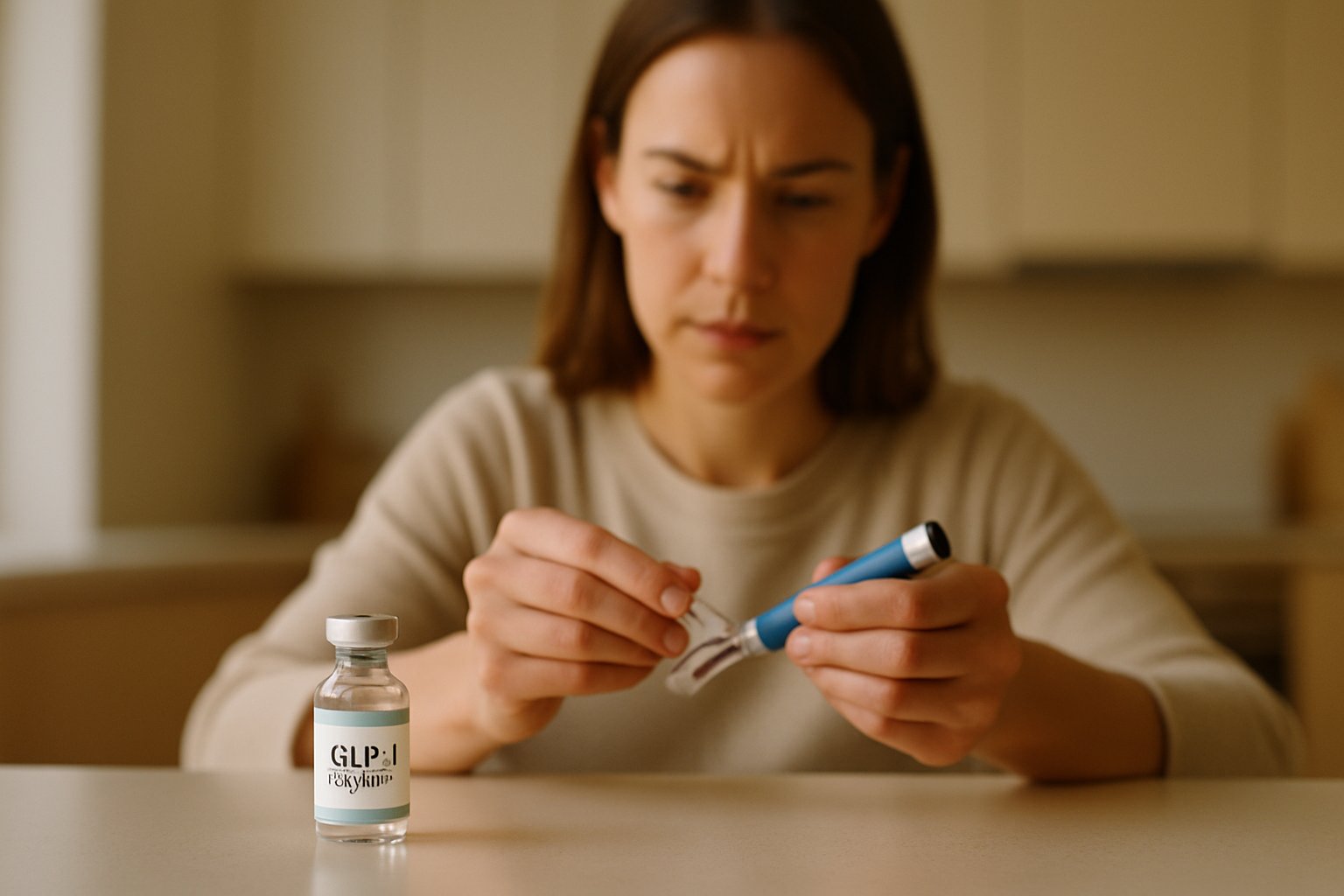
Probably not meaningfully, and the reason is a distinction that gets lost every time this topic is repeated online. Heat does accelerate absorption of some subcutaneous medications. It specifically did not do so for the longer-acting formulations that were tested, which is the category semaglutide belongs to.
Understanding that distinction answers a whole family of questions at once: hot showers, saunas, hot tubs, heating pads, summer weather, and heated car seats.
The research, in full
The finding people quote. A 1980 study in the British Medical Journal put patients in a Finnish sauna and measured absorption of rapid-acting insulin from a subcutaneous injection site. Absorption accelerated by around 110 percent compared with room temperature, and blood glucose fell correspondingly.
The finding people leave out. The same investigator repeated the experiment with an amorphous, longer-acting insulin formulation under identical sauna conditions. Absorption was not significantly stimulated and blood glucose did not fall.
The confirmation from another study. A separate investigation of subcutaneous absorption kinetics tested local heat, exercise, and massage on long-acting insulin preparations. Local heat had no effect. Massage did accelerate absorption. In the rapid-acting arm of the same work, a hot bath dramatically increased serum insulin in the first ninety minutes, and a cold bath substantially delayed it.
So the accurate summary is: heat has a real and measurable effect on rapid-acting subcutaneous medications, and did not show one for longer-acting preparations.
Why the distinction exists
It comes down to what limits absorption.
A rapid-acting formulation is designed to leave the depot quickly, and how fast it does so depends heavily on local blood flow. Heat increases blood flow, so heat speeds it up.
A long-acting formulation is rate-limited by the formulation itself rather than by perfusion. The medication is released slowly from the depot by design, and increasing blood flow around it does not overcome that.
Semaglutide is a once-weekly medication with a half-life of roughly a week, absorbed gradually over days. It is firmly in the second category.
The practical answer for each situation
Hot shower. No practical concern. Ten minutes of warm water against a week-long absorption window is negligible.
Sauna or hot tub. No established absorption concern for a weekly medication. Dehydration and standing up too quickly are the real risks.
Summer weather. Not a concern for absorption in your body. Very much a concern for the pen in your bag.
Heating pad on the injection site. The one place to be a little thoughtful, since it applies sustained local heat to a specific spot. No strong reason to worry, and easy to avoid by not putting a heat pad directly over a recent site.
Heated car seat. Same reasoning, and equally easy to avoid.
Consider this scenario: a patient injects into their abdomen, then sits with a heating pad on their stomach for an hour because of period cramps, and spends the evening worrying they have altered their dose. The available evidence on long-acting preparations suggests local heat did not change absorption. Using a different injection site next month removes even that small uncertainty.
What heat genuinely does damage
Your medication, before it is injected.
Semaglutide is a peptide, and peptides degrade with heat through pathways including aggregation, where molecules partially unfold and stick together, reducing biological activity. The critical point is that this damage is frequently invisible: a pen that looks perfectly clear can have lost potency.
This is where heat actually matters, and it is a far bigger deal than anything happening under your skin. A pen in a hot car, a bag on a sunny poolside, a warm gym locker, or a delivery left on a porch in July all pose a real risk to the product.
Our guide on how to store compounded semaglutide or tirzepatide at home covers where medication should live, and GLP-1 medications and travel covers keeping it safe away from home.
What about cold?
The same research found a cold bath substantially delayed absorption of rapid-acting insulin. The same logic applies in reverse: for a long-acting weekly medication, brief cold exposure is unlikely to matter.
What does matter is that freezing destroys the medication itself, and that is worse than heat because it can happen in an ordinary refrigerator without you noticing. That is a storage issue rather than an absorption one.
There is a separate, practical cold point: injecting medication straight from the fridge is uncomfortable and stings more. Letting it reach room temperature for fifteen to thirty minutes before injecting is worth doing for comfort alone.
The variable that actually changes absorption
Not heat. Site.
Research on subcutaneous absorption found meaningful differences between injection regions, with the abdomen absorbing faster than the arm, and the arm faster than the thigh. Tissue condition matters too: repeatedly injecting into the same small area causes thickening that makes absorption unpredictable.
That is why rotation is emphasized and heat is not. Our guides on GLP-1 injection sites and how to rotate injection sites for semaglutide and tirzepatide cover both.
When to call your provider
Contact your provider if you notice a change in how the medication seems to be working, if you have firm or thickened tissue at sites you use, or if your medication has been through a significant heat exposure and you are unsure whether to use it.
For that last one, do not simply refrigerate it and carry on. Cooling a product after a heat excursion does not reverse anything.
The short version
Heat speeds up rapid-acting subcutaneous medications. In the studies that tested longer-acting formulations, it did not. Semaglutide is a weekly medication, so showers, saunas, and summer weather are not the concern. Where heat genuinely matters is your unopened pen, which degrades in ways you cannot see.
If you want a provider who will distinguish real concerns from repeated ones, TrimRx includes ongoing clinical access alongside treatment.
This information is for educational purposes and is not medical advice. Consult with a healthcare provider before starting any medication. Individual results may vary.

Transforming Lives, One Step at a Time
Keep reading
How Long Should You Wait to Exercise After a Semaglutide Injection?
A few minutes, and only so the puncture closes. There is no meaningful waiting period, and the question people should be asking is not…

Can You Inject Semaglutide Before a Workout?
Yes, and there is one small habit that removes the only genuine consideration: inject into your abdomen rather than into a limb you are…

Can You Use a Sauna After a Semaglutide Injection?
Yes. The concern you may have read about comes from research on insulin, and specifically on the fast-acting kind, which behaves very differently from…


