Why Do I Feel Bloated But I’m Still Losing Weight on Semaglutide?
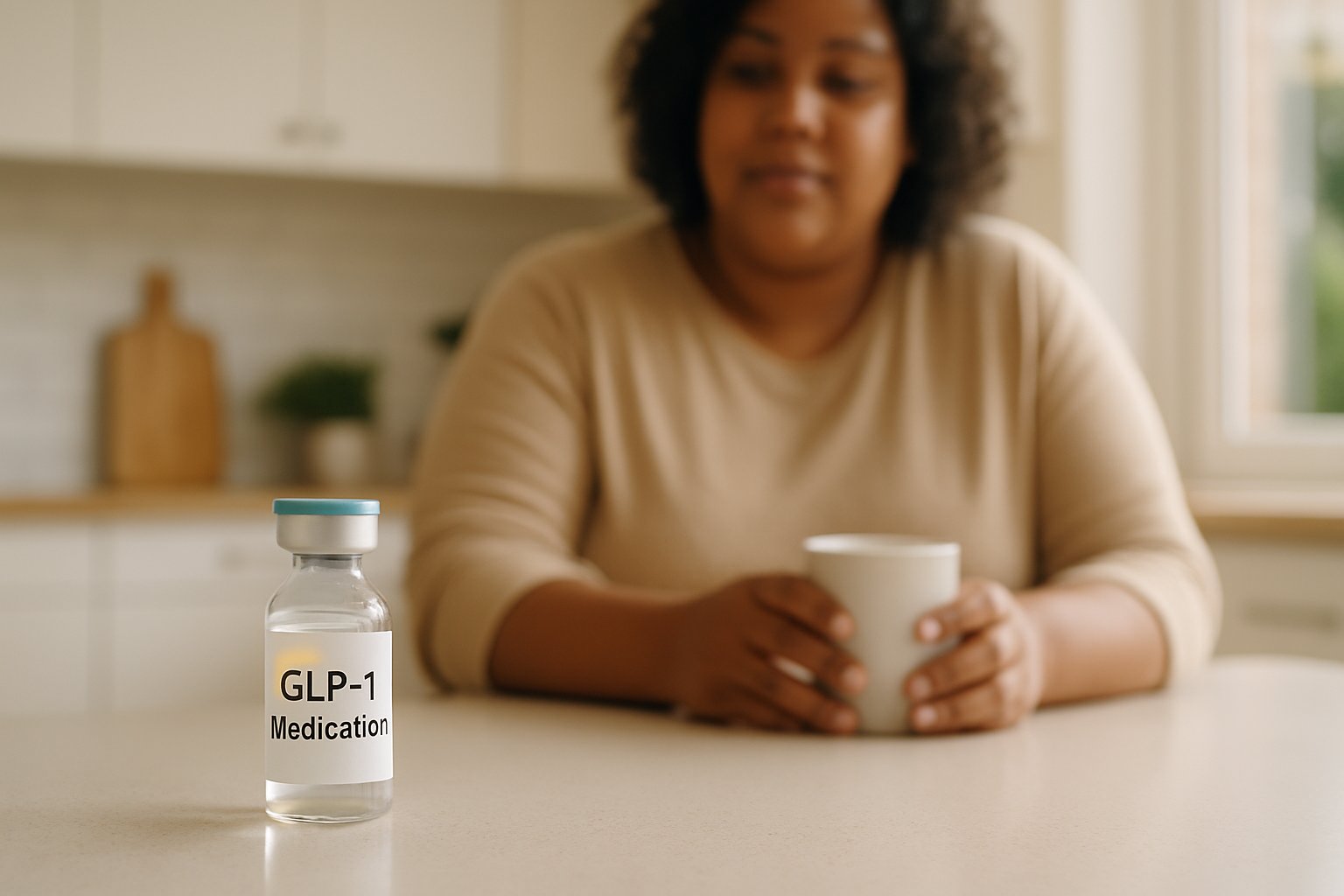
Because bloating and fat loss are unrelated processes, and there is no contradiction between them. Bloating is gas, fluid, and slowed transit producing distension in your abdomen. Fat loss happens gradually across your whole body over weeks and months. One is a day-to-day fluctuation, the other is a long-term trend.
You can lose meaningful fat and still have days where your stomach looks and feels larger than it did before treatment. That is frustrating rather than concerning, and it usually improves.
Why the two feel contradictory
The frustration is real: you are doing everything right, the scale is moving, and your clothes fit worse on some days than they did in month one.
What is happening is that abdominal distension is being driven by something the scale does not measure. Gas has effectively no weight. A litre of gas in your intestines changes how you look and feel considerably and registers as nothing.
Consider this scenario: a patient has lost a substantial amount over four months and is pleased with it, but photographs of themselves look worse on some days than others and they cannot work out why. Comparing those days against what they ate reveals a pattern: the bad days follow high-fiber meals and sparkling water. The fat loss is steady underneath a fluctuation that comes and goes on a daily cycle.
What is producing the bloating
Slowed gastric emptying. Contents sit longer, so there is more volume in your digestive tract at any given moment.
Gas. A genuinely prominent feature of this medication rather than something unusual to you, driven by slower transit, swallowed air, and fermentation.
Constipation. Common on this medication and a direct cause of distension. If you are going less often than you used to, that alone can account for it.
Increased fiber. Many people raise their vegetable and fiber intake alongside starting treatment, and a sudden increase produces exactly this.
Fluid shifts. Weight loss is not linear, and fluid retention varies with sodium, hormones, carbohydrate intake, and activity.
What helps
Address constipation first, because it is the most common single contributor and the most fixable. Fluid on a schedule, fiber increased gradually alongside it, and regular movement. Our guide on fiber on Ozempic covers how to build up without making things worse.
Eat slowly and in smaller portions, which reduces both swallowed air and the volume sitting in a slow stomach.
Cut carbonation.
Check for sugar alcohols. Sorbitol, xylitol, and erythritol in sugar-free products and protein bars are a common and under-recognized cause.
Walk after meals.
Do not lie down right after eating.
Identify your own triggers. Most people have two or three foods that reliably do it.
Our guide on how GLP-1 medications affect your gut health and microbiome covers the broader digestive changes.
Stop judging progress by how you look on a given day
A practical point worth stating.
Daily appearance is a poor measure of fat loss, because it is dominated by fluctuations in gas, fluid, and digestive contents. Weight over weeks, measurements over months, and how clothes fit over time are all more reliable.
Our guide on tracking your progress on semaglutide or tirzepatide covers what is actually worth recording, and how your body shape changes on GLP-1 medications covers what to expect over the longer arc.
Do not eat less to fix it
The instinct is to restrict further when your stomach looks distended. That is the wrong response for two reasons.
Bloating is not caused by eating too much overall, it is caused by what and how you eat and by transit. Restricting does not address either.
And inadequate intake causes its own problems, including fatigue, feeling cold, hair thinning, and accelerated muscle loss. Adequate protein and fluid matter throughout treatment. Our guide on how much protein you need on Ozempic or semaglutide covers what to aim for.
When bloating is not just bloating
Contact your provider if you have:
- A firm, tense, or visibly swollen abdomen that does not settle
- No bowel movement combined with vomiting and abdominal pain
- Severe abdominal pain, particularly radiating through to your back
- Pain confined to one side, especially the upper right
- Persistent vomiting, particularly of food eaten hours earlier
- Bloating that is steadily worsening over weeks rather than fluctuating
- Bloating with unintended weight loss beyond what treatment explains
That second combination warrants prompt attention rather than another attempt at a home remedy.
Routine reasons to call include bloating severe enough to affect your daily life, bloating that started or worsened sharply after a dose increase, or persistent constipation not responding to the usual measures. The dose increase point is often actionable, since holding at your current level for longer before stepping up is a standard adjustment.
Does it improve?
Usually. Bloating tends to be most pronounced in the first weeks and after each dose increase, then eases as your body adapts. Most people find it becomes occasional rather than constant.
Constipation is the part most likely to persist if left alone, because the fluid and fiber gap does not close on its own when appetite suppression keeps intake low. That has to become a deliberate habit.
The short version
Gas and fluid weigh essentially nothing, so a distended stomach and a falling scale are entirely compatible. Fix constipation first, build fiber gradually, cut carbonation, check for sugar alcohols, and walk after meals. Judge progress over weeks rather than by how you look on a Tuesday. And do not restrict further to fix it, because that addresses nothing and costs you elsewhere.
If you want a provider who will treat the digestive side rather than just the weight, TrimRx includes ongoing clinical access alongside semaglutide treatment.
This information is for educational purposes and is not medical advice. Consult with a healthcare provider before starting any medication. Individual results may vary.

Transforming Lives, One Step at a Time
Keep reading

Why Do My Nails Have Ridges on Semaglutide?
The direction of the ridges matters more than their presence, and it is the single most useful thing to check before worrying. Vertical ridges,…

Why Did My Resting Heart Rate Change on Semaglutide?
Because two things are happening at once and they push in opposite directions. Upward: a modest increase in resting heart rate is a recognized…

Why Do I Feel Full But Still Hear My Stomach Growling on Semaglutide?
Because fullness and stomach noise are two entirely different things, and neither of them is a reliable measure of hunger. Fullness is a signal…


