How Much of Your Weight Loss on Semaglutide Is Muscle? How to Tell
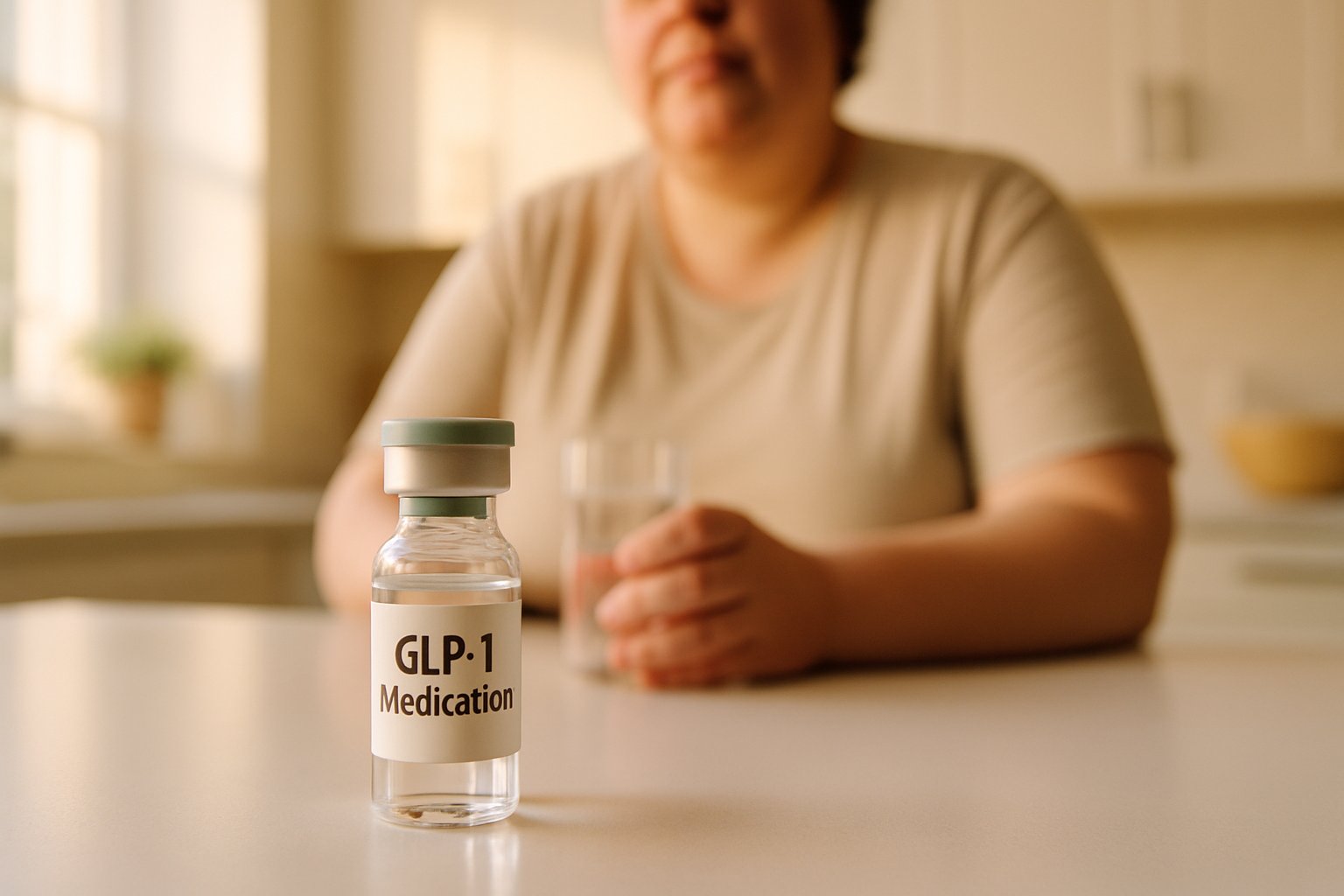
The best available answer is roughly a quarter, and the important finding is that this proportion does not appear to be unusual. In the body composition substudy of a major tirzepatide trial, participants lost about 21 percent of their body weight, and approximately 75 percent of what they lost was fat while 25 percent was lean tissue. The same proportional split was seen in the placebo group, who lost less weight overall.
That last detail is the one that gets left out of most coverage. The split looked the same whether or not people were on the medication. What differs is the total, which means larger weight loss produces a larger absolute amount of lean tissue lost even when the ratio is ordinary.
Why this is a genuinely contested area
Worth knowing that the picture is not settled, because you will encounter confident claims in both directions.
Arguments that this is a real concern point to the absolute quantities. Losing a fifth of your body weight means several kilograms of lean tissue, which matters more in older adults and in people who did not have much to spare.
Arguments that it is overstated point to the proportion being comparable to what happens with dieting and with bariatric surgery at similar magnitudes of loss.
A further complication: lean mass on a scan is not the same thing as skeletal muscle. It includes water, organ tissue, and connective tissue, all of which change during weight loss. A drop in lean mass is not automatically a drop in muscle.
And function does not always track the number. In a twelve-month study of people on semaglutide, lean mass declined initially and then stabilized, while measured grip strength improved and the prevalence of sarcopenic obesity fell. Those participants started with high body weight and impaired function, so the result does not generalize to everyone, but it shows that composition and capability can move in different directions.
How you would actually know
You mostly cannot tell from a scale. Weight is undifferentiated. Two people down the same amount can have very different compositions.
Body composition scanning is the direct route, with real limitations. DXA is the most commonly used research method. Bioimpedance devices, including home scales, are less accurate in absolute terms but can be useful for tracking direction if you use the same device under the same conditions.
Function is the more practical measure. Are you getting weaker at things you do regularly? Can you carry, climb, and stand up as easily as before? For most people this is more informative than a scan, and it is free.
Measurements plus the mirror. Losing fat while holding muscle changes your shape in a way that a flat scale can hide.
Consider this scenario: a patient several months into treatment is alarmed by a home scale reporting a drop in muscle mass. Their grip is stronger, they have added weight to their lifts, and they can carry shopping further than a year ago. Those are direct measurements of the thing the scan is estimating. When a proxy and the thing it is a proxy for disagree, the proxy is usually the problem.
What actually influences the split
This is where your effort matters, because the proportion is not fixed.
Protein intake. The single most studied lever. Getting enough is harder on a GLP-1, which is exactly why it needs attention rather than assumption.
Resistance training. The other major lever, and the one that provides the stimulus telling your body to keep muscle.
Rate of loss. Very rapid loss tends to come with a less favorable split.
Age. Older adults lose lean tissue more readily and rebuild it more slowly.
How much you were carrying to begin with, and what your composition was before you started.
Our guide on getting the most out of your GLP-1 treatment covers these in practical terms, and our guide to tracking your progress covers recording strength alongside weight so you have something better than a scan to go on.
Who should pay closer attention
- Adults over about 60
- Anyone with existing low muscle mass or frailty
- Anyone losing very fast
- Anyone who cannot manage much protein
- Anyone unable to do resistance training for any reason
If several of those apply, raise it with your provider rather than assuming the general picture applies to you. Our guide to the starting dose of tirzepatide covers how pace gets set, and pace is one of the things that can be adjusted.
What not to do
Do not cut your food further to lose faster. Faster loss makes the split worse, and under-eating brings its own cluster: persistent fatigue, feeling cold, hair shedding, dizziness on standing, losing strength.
Do not stop treatment over this. The alternative to treated obesity is untreated obesity, which carries its own effects on muscle and function.
Do not take unregulated compounds marketed for muscle preservation. Tell your provider before taking anything new.
Do not judge from a home bioimpedance reading alone. Use it for direction, under consistent conditions, and weigh it against what you can actually do.
When to call
Contact your provider if you are noticeably weaker at everyday tasks, if you are struggling to eat enough protein, if you are over 60 or have existing frailty, if you are losing faster than expected, or if several signs of under-eating are present.
The short version
About a quarter of the weight lost is lean tissue, and the trial data suggests that proportion is roughly what happens with weight loss generally rather than something the medication is doing to you. The absolute amount is larger because the total is larger. Protein and resistance training are the levers, function is a better measure than a scan, and cutting food further makes it worse rather than better.
If you want a provider who will weigh muscle preservation alongside the number on the scale, TrimRx includes ongoing provider access alongside treatment.
This information is for educational purposes and is not medical advice. Consult with a healthcare provider before starting any medication. Individual results may vary.

Transforming Lives, One Step at a Time
Keep reading
Is a Body Composition Scan Worth It While You’re on Semaglutide?
Worth it if it will change something you do, and mostly not if it will not. That is the whole test. A scan that…
Why a Stomach Bug on Semaglutide Can Change Your Kidney Labs
Dehydration is almost always the explanation, and the reason it happens faster on a GLP-1 is that several things stack. You were already drinking…
Gallstones Found on a Scan While on Semaglutide: Do You Have to Stop?
Not automatically. Gallstones found incidentally, without symptoms, are common in the general population and are frequently managed by watching rather than acting. The decision…


