Ozempic and Social Isolation: When Food Was How You Connected
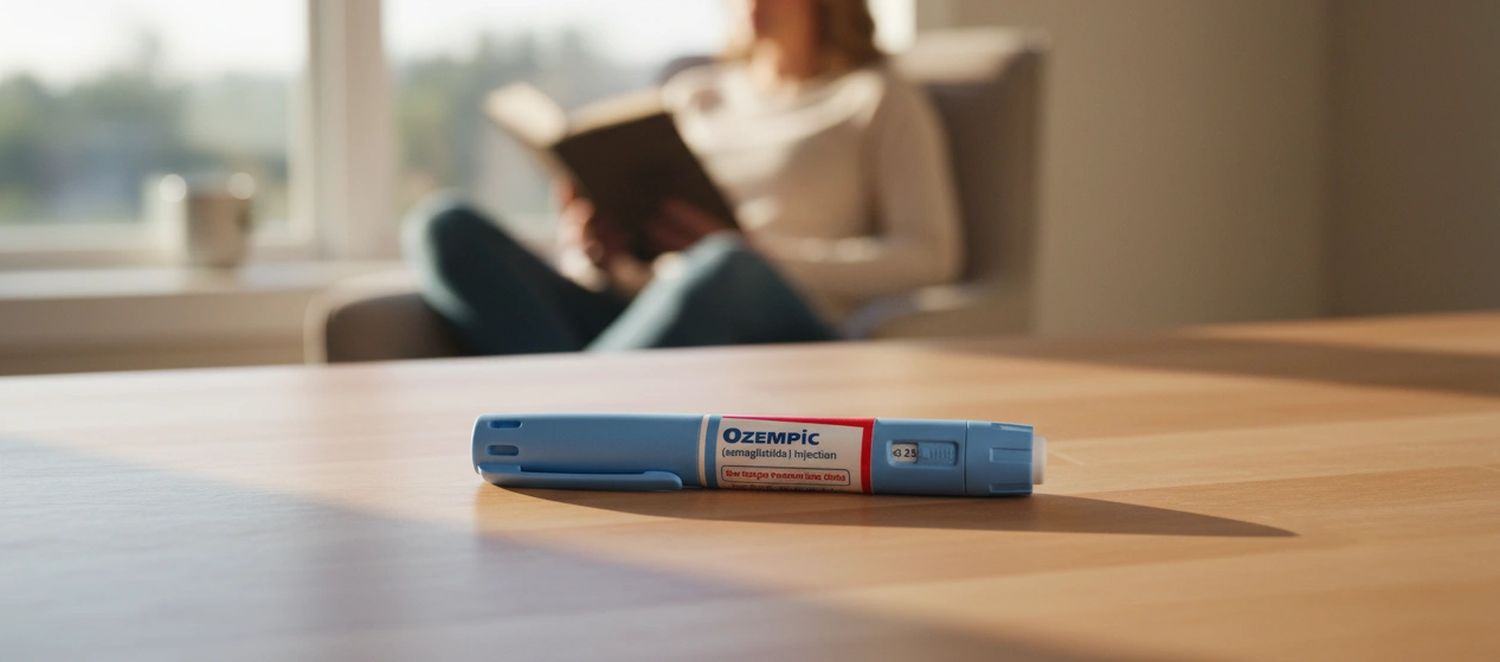
This is a real cost of treatment and it does not get discussed much, partly because it sounds minor next to the medical benefits. It is not minor. If most of your time with people happened around meals, and eating has become something you do less of and enjoy less, you can lose a substantial part of your social life without ever deciding to. It tends to happen gradually, through individual declined invitations that each seemed reasonable.
The useful reframe is that the problem is usually attendance rather than eating. Most of what you valued about those occasions was not the food.
How the withdrawal happens
Rarely a decision. Usually a sequence.
Declining because you will not eat much. It feels wasteful or awkward to sit with a plate you barely touch, so you skip it.
Avoiding questions. Not eating much invites comment, and comment invites explaining, and explaining is tiring.
Losing the anticipation. Looking forward to a meal out was part of what made it an event. Without that, the effort of going registers more.
The food itself being unappealing. Restaurant portions and richer food can be genuinely difficult, so the venues that used to be easy are not.
Nobody suggesting alternatives. Your friends plan around food because that is what you always did together. They are not going to change it unless someone says something.
Consider this scenario: someone five months into treatment realizes they have not seen a close group of friends since starting, and cannot identify a moment when they decided not to. Each individual occasion had a reason: they were not hungry, the restaurant was heavy, they did not want to explain. No decision was ever made and the outcome is the same as if one had been.
The part worth being honest about
Sometimes the reluctance is not about food at all. It is about not wanting to discuss your treatment, or not wanting attention on your body, or not being sure how to answer a direct question.
Those are legitimate and they are also solvable in ways that do not require withdrawing. Deciding in advance what you will say when someone comments removes most of the dread, and it does not have to be detailed. A short answer that closes the topic works better than an explanation.
What helps
Go anyway and eat less. The most direct fix and the one people resist. You are allowed to order a starter, eat half of something, or eat nothing. Nobody at the table is monitoring your plate as closely as you imagine.
Change what you suggest rather than declining what is offered. Be the person who proposes a walk, a coffee, a film, or a thing to do. Your friends are not attached to restaurants; they are attached to seeing you.
Keep one food occasion that matters. Not all of them, but pick the one you actually value and protect it. Our guide on what to eat to minimize nausea covers making a difficult meal more manageable.
Time it around your week. If your appetite and side effects follow a pattern across the week, plan social eating into the easier part of it.
Tell one person. Having someone who knows why you are eating less removes the performance from the whole occasion.
Notice the drift early. If you cannot remember the last time you saw someone, that is the signal.
If the loss feels larger than logistics
For some people, food was not just the setting for connection. It was a shared pleasure, a form of care, or the thing that made an occasion feel like an occasion. Losing your capacity to participate in that is a real loss, and treating it as a scheduling problem does not address it.
That version of this deserves acknowledgment rather than a workaround. It is worth saying out loud to someone, and it is a reasonable thing to raise with a therapist if it is affecting you.
Where this connects to something more
Watch for whether the withdrawal is spreading. If you are also avoiding occasions that have nothing to do with food, if you have stopped things you used to enjoy, or if you are turning down invitations you would previously have accepted, that is a different picture and it is worth reporting. Our guide on getting the most out of your GLP-1 treatment covers the parts of treatment that support how you feel generally, but withdrawal that extends beyond food belongs in a conversation with your provider.
Also watch for avoidance driven by not wanting to eat in front of people, or by distress about eating normally. That is a different problem from logistics and it responds to different help.
What not to do
Do not decline by default. The default is what produces the outcome.
Do not eat less on the days you are going out to make room. It makes the occasion harder and the eating worse.
Do not wait until you feel like going. Anticipation was part of what the food provided, and it may not return in the same form. Going without looking forward to it is still going.
Do not assume your friends have noticed and are fine with it. Most people read repeated declines as disinterest rather than as a medication side effect.
Do not stop treatment over this without a conversation. If the social cost has you thinking about coming off, that is worth raising rather than acting on, and our guide on taking a break and restarting covers why any stop should be planned.
When to call
Contact your provider if you are avoiding social situations more broadly, if you have lost interest in things unrelated to food, if you are avoiding eating in front of other people specifically, if your mood has been low for more than a couple of weeks, or if the isolation is affecting your work or relationships.
If you are having thoughts of harming yourself, contact a healthcare professional promptly, or in the US call or text 988 to reach the Suicide and Crisis Lifeline.
The short version
This is usually an attendance problem rather than an eating problem. Go and eat less, become the person who suggests non-food plans, protect the one food occasion you genuinely value, and tell at least one person why you are eating differently. And if the withdrawal is spreading beyond food, that is a separate finding worth raising.
If you want a provider who counts this as part of how treatment is going, TrimRx includes ongoing provider access alongside treatment.
This information is for educational purposes and is not medical advice. Consult with a healthcare provider before starting any medication. Individual results may vary.

Transforming Lives, One Step at a Time
Keep reading
Can’t Comfort Eat on Ozempic and Don’t Feel Better? Why That Happens
Because the eating was doing a job, and removing your capacity to do it does not remove the need it was meeting. That is…
Food Noise Came Back on Ozempic? Whether It’s Your Dose or Your Stress
The pattern tells you more than the intensity does. Food noise that returns gradually over weeks and stays constant points toward the medication. Food…

Prediabetes A1C Improved on Ozempic but Fasting Glucose Still High?
The two measures are answering different questions, which is why they can disagree. A1C is a rolling average of roughly the previous three months….


