How to Create a Personalized Adherence Plan
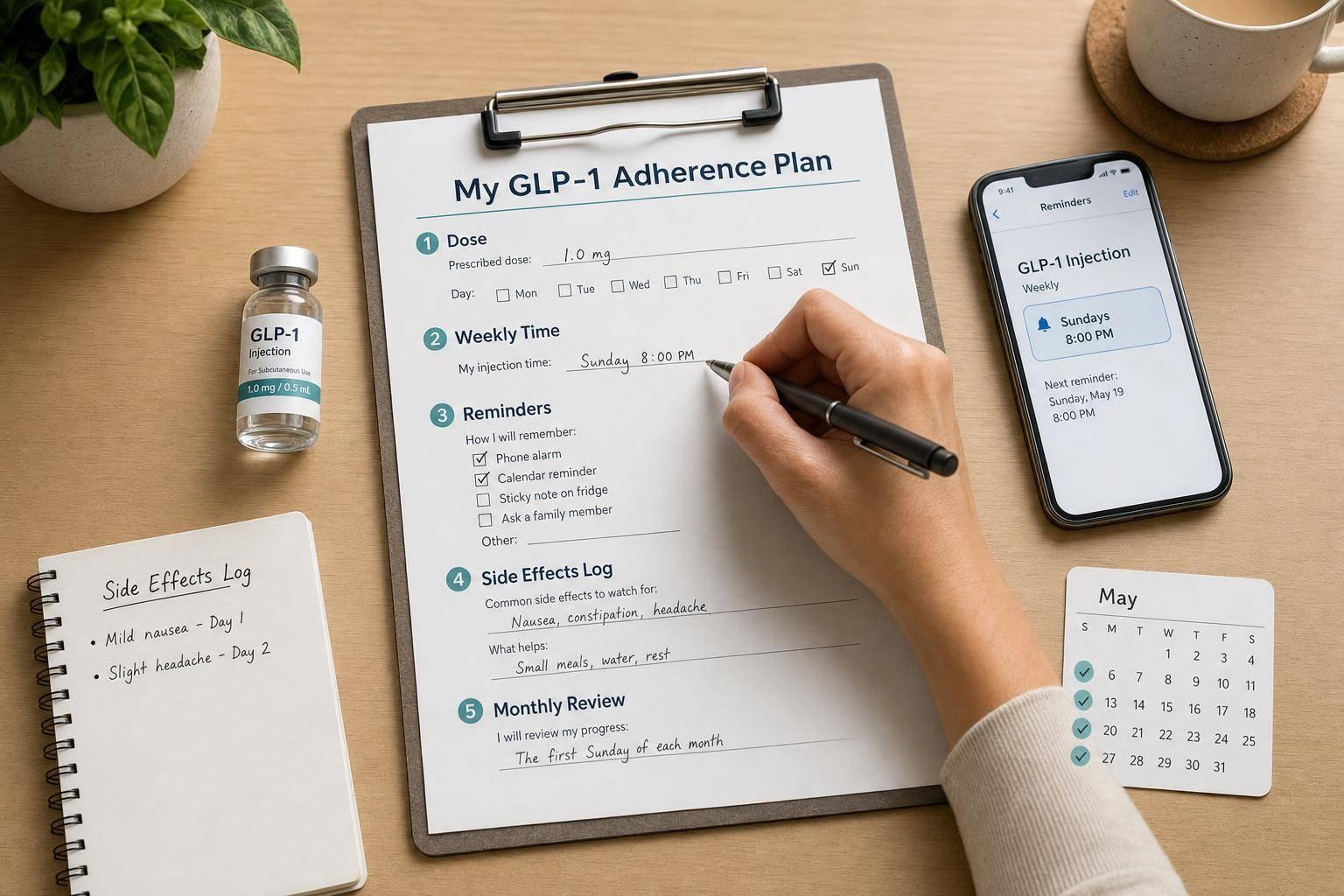
A personalized GLP-1 adherence plan is a one-page guide that helps me take my medication the right way every time. It should cover my dose, day and time, titration dates, missed-dose rule, storage, side effects, refill timing, and when to call my care team.
Here’s the short version:
- I write down my exact prescription – drug name, current dose, dose-change dates, and last injection site.
- I pick one set dose day and time and link it to a weekly habit.
- I set 2 reminders – one main alert and one backup.
- I add my missed-dose rule from the product label, so I’m not guessing later.
- I track side effects and barriers like nausea, travel, refill delays, or schedule changes.
- I review the plan once a month and update anything that changed.
That matters because GLP-1 treatment often involves step-up dosing over time, and changing the dose or timing on my own can lead to more side effects or weaker results. A written plan cuts down on guesswork and helps me stay on schedule, even during travel or busy weeks.
A good plan should answer these questions fast:
- What medication am I taking?
- What dose am I on right now?
- When is my next dose?
- When does my dose increase?
- What do I do if I miss a dose?
- What side effects am I watching?
- When should I call my prescriber?
In short, I’m not just trying to “remember my shot.” I’m building a clear routine I can follow week after week.
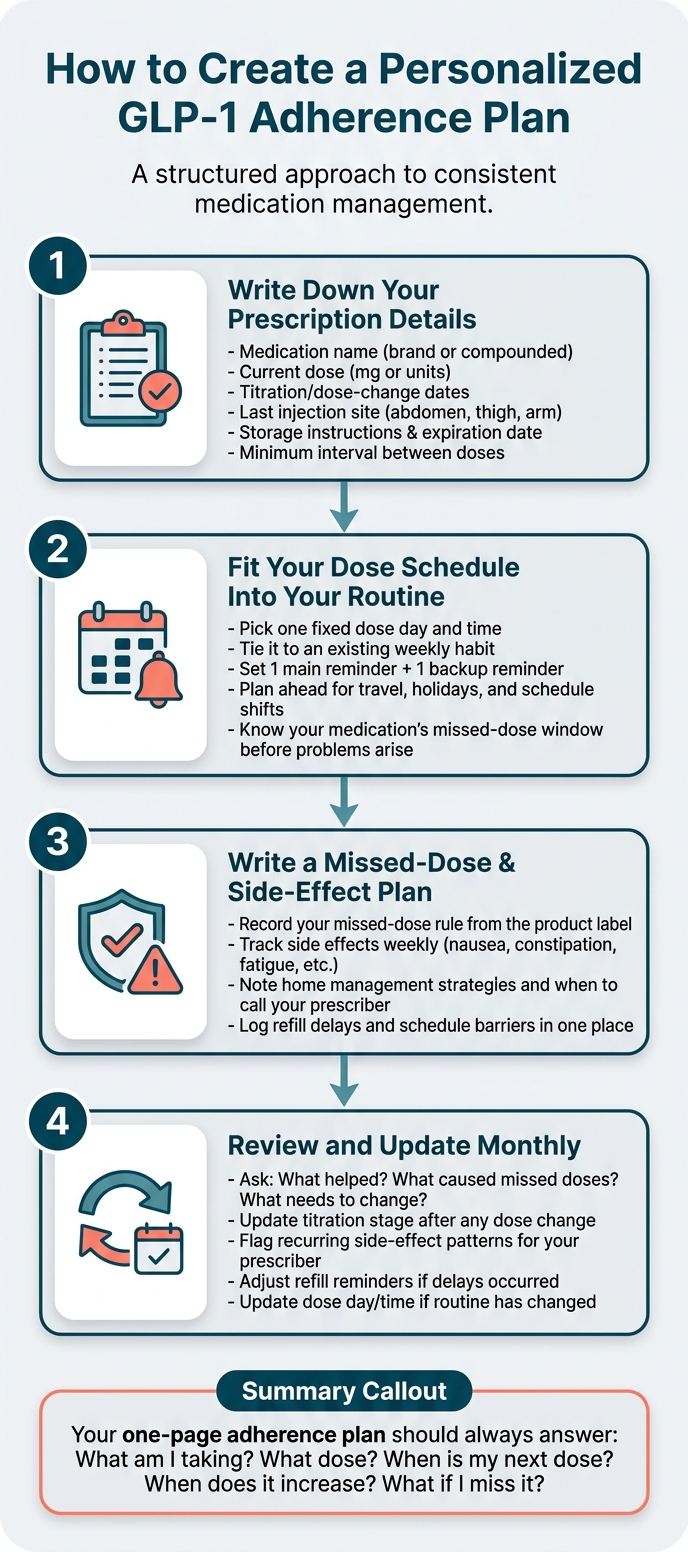
How to Build a GLP-1 Adherence Plan: 4-Step Visual Guide
Step 1: Write Down Your Prescription Details and Starting Point
Before your next dose, put all of your prescription details in one spot. That simple snapshot makes the next step – building a dose schedule – a lot easier.
Semaglutide and tirzepatide are not interchangeable. Follow the exact dosing and device directions for your product.
| Prescription Detail | What to Record |
|---|---|
| Medication Name | Exact name and whether it is compounded or brand-name |
| Current Dose | The specific mg or units you are currently prescribed |
| Titration Plan | Dates for scheduled dose increases (for example, moving from 2.5 mg to 5 mg) |
| Injection Site | Which site was used last (abdomen, thigh, or arm) to track rotation |
| Storage Instructions | Temperature requirements and expiration date |
| Minimum Interval | The shortest allowed time between two doses per official labeling |
Create a one-page checklist
Keep this checklist tight and practical. Stick to dose, schedule, storage, side effects, and barriers. Also write down your main goal so the plan stays tied to something concrete.
This page should lead straight into scheduling, so focus on the details you’ll need to track each week: current dose, titration dates, minimum interval, and injection-site rotation.
Note Storage, Supplies, and Access Needs
Write down the storage directions from your product label, including whether it needs refrigeration and the expiration date on your current supply. If the product or device changes, update these notes before your next dose.
A one-page checklist can include:
- Your current dose
- Planned dose-change dates
- The minimum time allowed between doses
- Your last injection site
- Storage rules and expiration date
- side effects to watch
- Any barriers, like travel, refill timing, or supply issues
Once those details are written down, it becomes much easier to fit the plan into your routine.
sbb-itb-e2779c3
Step 2: Fit Your Dose Schedule Into Your Daily Routine
Use what you figured out in Step 1 to pick one steady dose day and time. Tie your dose to a weekly habit you already do, then stick with that same time. After that, write it down on the same one-page checklist from Step 1.
Pick a Dose Day, Time, and Backup Reminder
Set up one main reminder and one backup. A simple setup can work well: use a recurring alarm or calendar block that syncs across your devices, then add a printed dose-tracking chart somewhere you’ll notice every day. You can also use a phone calendar, alarm, or dose-tracking app to remind you and log each dose.
Add these details to your checklist from Step 1:
- Dose day
- Reminder time
- Primary reminder
- Backup reminder
- Dose log
Plan Ahead for Travel, Holidays, and Schedule Changes
Travel, holidays, and random schedule shifts can throw off your timing fast. That’s why it helps to check the rules before you move a dose. Update your reminders to match your itinerary so you don’t miss your dosing window.
Use the table below before moving a dose:
| Medication | Take the Dose If… | Skip If… |
|---|---|---|
| Ozempic (Injection) | Within 5 days of the scheduled dose | More than 5 days have passed; resume at the next scheduled time |
| Wegovy (Injection) | The next dose is more than 48 hours away | Less than 48 hours remain before the next dose; if 2 or more doses are missed, contact your provider |
| Mounjaro / Zepbound | Within 4 days (96 hours) of the scheduled dose | More than 4 days late; make sure at least 72 hours pass between any 2 doses |
| Trulicity | At least 72 hours remain before the next dose | Less than 72 hours remain before the next dose |
| Saxenda (Daily) | The dose is missed within the same day | More than 1 day has passed; if more than 3 days are missed, restart at 0.6 mg |
| oral semaglutide | N/A | Take the next dose the following day |
Write down the rule for your medication on the one-page checklist. That way, if plans change, you won’t have to figure it out in the moment. Just copy the row that matches your medication.
Note: Tirzepatide can reduce the effectiveness of oral contraceptives; use non-oral or barrier contraception for 4 weeks after starting and after each dose increase.
Step 3: Write a Missed-Dose and Side-Effect Plan Before Problems Happen
A good adherence plan needs two things: a backup rule for missed doses and a simple way to track side effects. Missed doses happen. That’s normal.
Write your missed-dose rule on the same page as your dose schedule. If you’re not sure what to do, follow the product label or your prescriber’s instructions.
Use the same one-page checklist from Step 1 so your missed-dose rule and side-effect notes stay in one place.
Missed-Dose Decision Table by Medication
Your prescriber and the official product label are always the final authority. Use this table as a quick reference for what to write on your checklist.
| Medication | What to Write on Your Checklist |
|---|---|
| Ozempic / Wegovy | Within the allowed window: take the missed dose as directed by the label; otherwise skip and wait for the next dose. |
| Mounjaro / Zepbound | Within the allowed window: take the missed dose as directed by the label; otherwise skip and wait for the next dose. |
If your medication isn’t listed, copy the label instruction onto your checklist.
Once you’ve written down the missed-dose rule, add the symptoms and barriers you want to track each week.
Track Side Effects, Warning Signs, and Barriers
Focus on patterns, not one-off moments, so your monthly review is faster and more useful. Track symptoms, schedule barriers, and refill issues in one spot.
| Symptom | Home Management Strategy | When to Contact Prescriber |
|---|---|---|
| Nausea | Smaller meals, bland food, ginger/peppermint, evening injections. | Vomiting for more than 1 week. |
| Constipation | 64–80 oz of water, 25–30 g of fiber, regular activity, MiraLAX. | Severe constipation or no relief with OTC treatment. |
| Abdominal pain | Avoid high-fat or greasy foods. | Urgent: Severe pain radiating to the back (potential pancreatitis) – seek immediate care, do not wait for your next check-in. |
| Fatigue | Hydration, consistent sleep (7–9 hours), light movement like walking. | New or worsening mood changes, anxiety, or depression. |
| Weight-loss plateaus | Track waist measurements and health markers like A1c and blood pressure. | No weight loss after 12–16 weeks on the maximum tolerated dose. |
| Hair loss | Ensure adequate protein, iron, and zinc intake. | Excessive shedding: ask your provider to check ferritin and thyroid levels. |
This doesn’t need to be fancy. A few quick notes each week can make it much easier to spot what’s changing, what’s getting in the way, and what you may need to bring up at your next visit.
Step 4: Review and Update Your Plan Each Month
Use the notes from Step 3 to adjust your plan once a month. A monthly review helps you spot dose changes, side effects, refill delays, and schedule changes before they turn into bigger problems.
Pick one day each month for a recurring check-in. Keep it simple. Ask yourself:
- What helped me stay on track?
- What led to missed doses?
- What should I change before the next refill?
What to Cover in Your Monthly Check-In
Update your one-page checklist with any changes in the items below:
- Doses taken vs. missed – Write down missed doses and the reason behind them.
- Titration stage – Update your checklist any time your prescriber changes your dose.
- Side-effect patterns – If the same side effects keep coming back, flag them for your prescriber.
- Refill timing – Note any delays, then move your next refill reminder earlier if needed.
- Routine changes – New work hours or shifts in meal timing? Adjust your dose day or reminder to match.
How TrimRX Can Support Your Adherence Plan
If your monthly review shows a pattern you want to talk through, bring it to your care team. It’s much easier to make monthly changes when your care team is easy to reach. TrimRX offers personalized GLP-1 programs with ongoing support, including consultations, prescriptions, and free delivery.
That kind of support can help you review missed doses, side effects, and refill timing between visits. TrimRX does not replace your prescriber’s instructions or emergency care.
FAQs
How do I create a one-page GLP-1 plan?
Write down your injection anchor, dosing rules, tracking, and when to call prompts. Pick a set weekly day and time if you can, like Tuesday at 7:00 p.m. If your schedule shifts, tie it to a routine instead, like after dinner or before bed.
Keep your doses about seven days apart, and never take one sooner than your product instructions allow.
Log each injection date and dose, then set the next reminder for seven days later. On the same page, track your weekly weight under the same conditions. Also note side effect timing, appetite, and energy.
If you miss a full week or more, contact your provider before restarting. Never double up.
What should I do if I miss a dose?
If you miss a dose, do not take two doses at once.
If you’re only 1–2 days late, take the dose when you remember and reset your schedule from that day.
If it has been fewer than 4–5 days, take the dose when you remember. If more than 4–5 days have passed, skip that dose and wait until your next scheduled day.
If you’ve missed a full week or more, contact your TrimRX care team before injecting.
When should I update my adherence plan?
Update your adherence plan if your schedule is causing missed doses, not just late ones.
You should also check with your provider if you’re not sure about your product’s minimum interval, want to formally change your dosing pattern, or are dealing with side effects that are tough to manage around work or personal commitments. It’s best to bring this up early.
Related Blog Posts

Transforming Lives, One Step at a Time
Keep reading
Weight Loss Progress Tracker
Track your weight loss over time, see progress clearly, and stay motivated with simple charts, summaries, and goal-based insights.

Weight Loss Medication Dosage Calculator
Estimate weight loss medication doses by weight and drug type, with starting guidance, dose progression info, and a clear medical disclaimer.

Long-Term Effects of GLP-1 Medications on Metabolic Health
GLP-1 drugs improve weight, A1c, blood pressure and some heart/kidney outcomes while used — gains often fade after stopping.


