What To Do After Missing A Weekly GLP-1 Injection
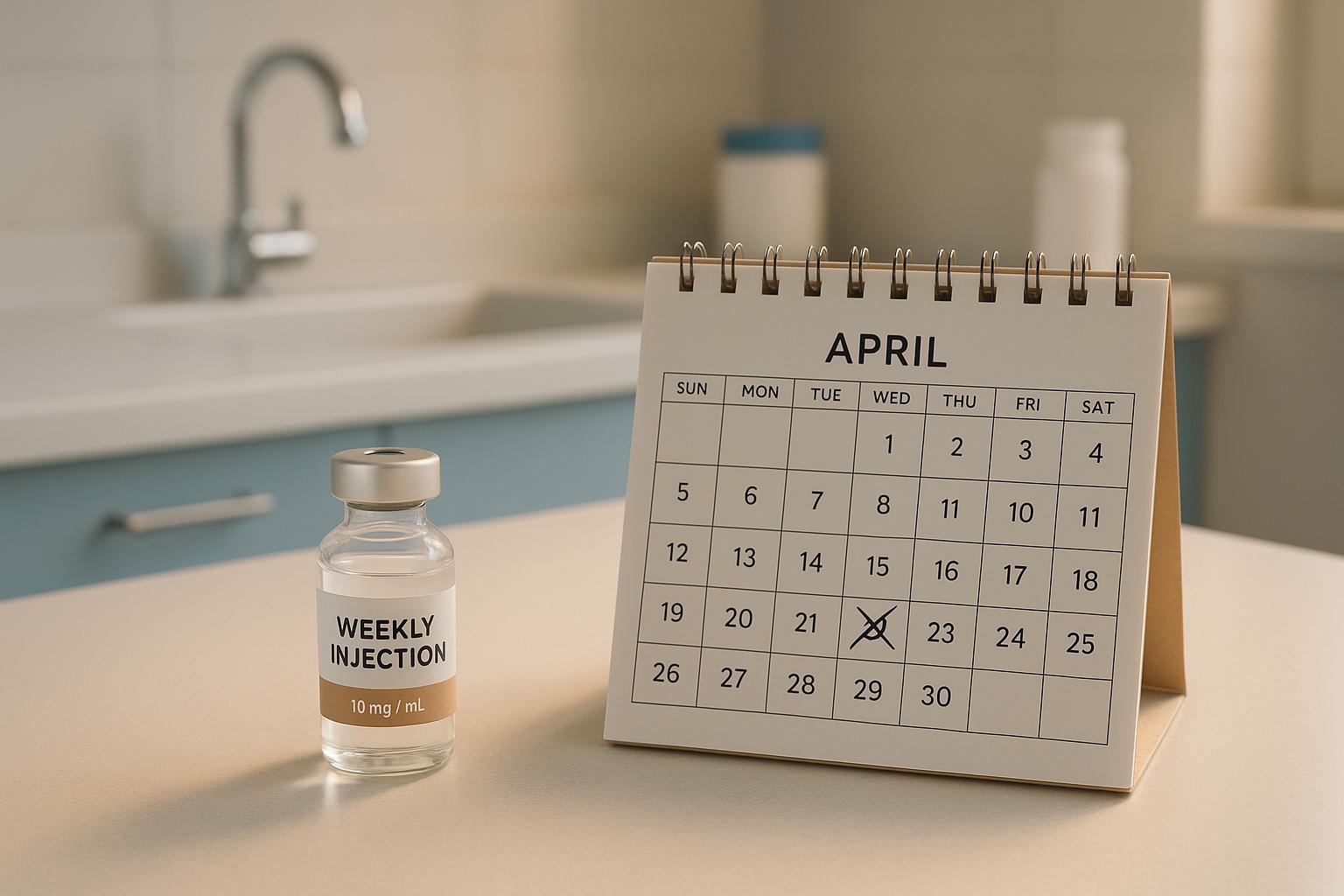
Missed your weekly GLP-1 injection? Here’s what you need to know:
- Missing one dose isn’t an emergency. These medications, like Semaglutide (Ozempic, Wegovy) or Tirzepatide (Mounjaro), stay active for days due to their long half-life.
- The effects, such as appetite suppression and blood sugar control, may weaken if doses are skipped.
- If you’re within the safe window (up to 5 days for Semaglutide, 4 days for Tirzepatide), take the missed dose and adjust your weekly schedule. Otherwise, skip it and wait for your next scheduled dose.
- Never double up on doses or take them too close together – this can cause severe side effects.
- If you’ve missed multiple doses, consult your doctor before restarting to avoid side effects like nausea.
Key steps:
- Check how much time has passed since your missed dose.
- Follow your medication’s specific guidelines for taking late doses.
- Contact your doctor if you’re unsure, especially after missing multiple doses.
Staying consistent is essential for these medications to work effectively. Use reminders or tools to help maintain your weekly schedule.
Weekly GLP-1 Medications Explained
How GLP-1 Medications Work
GLP-1 receptor agonists mimic a hormone your body naturally produces called glucagon-like peptide-1. This hormone is key in managing blood sugar levels and controlling appetite. When you use medications like Semaglutide, Tirzepatide, Wegovy, or Ozempic, you’re essentially amplifying this natural process.
These medications work in several ways to support your body. They slow down how quickly your stomach empties, signal your brain to curb cravings, and boost insulin production while reducing unnecessary glucose output.
One of the most noticeable effects is appetite suppression, which leads to smaller portions and fewer cravings. This natural decrease in calorie consumption, paired with better blood sugar regulation, sets the stage for sustainable weight loss.
For those managing type 2 diabetes, the blood sugar benefits are just as critical. GLP-1 medications help keep glucose levels more stable throughout the day, preventing sharp spikes after meals and improving long-term diabetes management.
These benefits rely on consistent, weekly injections to maintain their effectiveness.
Why Weekly Timing Matters
The weekly injection schedule is carefully designed to keep medication levels steady in your bloodstream. These medications have a long half-life, meaning they remain active in your system for several days, but consistent weekly doses ensure they stay at optimal levels.
By sticking to the schedule, you maintain the medication’s effectiveness. Think of it like keeping a steady flame under a pot – consistent heat ensures consistent results.
Missing doses can disrupt your progress. Skipping a dose for even five to seven days can weaken appetite suppression and blood sugar control. Some people also experience "rebound hunger", where their appetite returns stronger than before starting treatment.
Consistency also helps reduce side effects. When medication levels remain stable, your body adjusts more easily. Irregular dosing can lead to side effects like nausea or digestive discomfort.
Your injection day becomes a key part of your routine. Whether it’s Sunday morning or Wednesday evening, having a set day and time makes it easier to stay on track. Many find it helpful to set phone reminders or pair their injection with a weekly habit, like meal prepping or watching a favorite show.
What to do if You Miss a Dose of Wegovy/Mounjaro? | Obesity Expert Explains

Steps to Take Right After Missing Your Weekly Dose
If you’ve missed your weekly GLP-1 injection, don’t panic. The long half-life of these medications gives you a few days to act without completely derailing your treatment. The first thing to do is check how much time has passed since your scheduled injection. This will help you decide your next steps.
Start by noting how long it’s been since your missed dose. The specific timeframe for taking it depends on the medication you’re using, so knowing the details is key to staying on track.
Time Limits for Taking Missed Doses
Each GLP-1 medication has its own grace period for missed doses, based on how long the drug remains active in your system and when it’s safe to administer again.
- Semaglutide users (Ozempic, Wegovy): You have up to five days (120 hours) to take your missed dose. For example, if your usual injection day is Sunday and you remember on Wednesday, you’re still within the safe window. But if it’s Friday or later, skip the dose and wait for your next scheduled injection.
- Tirzepatide users (Mounjaro, Zepbound): The window is slightly shorter – four days (96 hours). If Sunday is your usual day, you’ll need to take the dose by Thursday. If it’s Friday or beyond, skip it and resume your regular schedule the following week.
Once you take the missed dose, adjust your weekly schedule to reflect the new day. For instance, if you normally inject on Sunday but take the missed dose on Wednesday, your new weekly injection day will now be Wednesday.
Safety Rules for Missed Doses
Timing is crucial, but following safety precautions is just as important. Here are some key rules to keep in mind:
- Never take two doses too close together. For Semaglutide, allow at least 48 hours between doses. For Tirzepatide, wait a minimum of 72 hours. Taking doses too close together can lead to severe nausea, vomiting, and even more serious complications like pancreatitis.
- Avoid doubling up on doses. Doubling won’t make up for a missed dose and only increases the risk of side effects like prolonged vomiting or dangerously low blood pressure.
- Log your missed dose. Use a reminder app or tool to track your injections. This helps your healthcare provider monitor your treatment and make any necessary adjustments.
- Skip alcohol when taking a late dose. Alcohol can worsen nausea and increase the risk of hypoglycemia, especially when combined with the effects of GLP-1 medications.
- Monitor your blood sugar closely if you have diabetes. Missing a dose can impact glucose control, with studies showing an average A1c increase of 0.1% per missed week. Don’t make insulin adjustments on your own – consult your doctor for guidance.
- Contact your doctor if you miss two or more consecutive doses. You may need to restart at a lower dose and gradually work back up to avoid severe gastrointestinal side effects.
What to Do If You Miss Multiple Doses
Keeping a consistent treatment schedule is essential. Missing several GLP-1 injections in a row can reduce the medication’s effectiveness and create challenges in managing your condition. Restarting the treatment without consulting a healthcare provider could also trigger serious gastrointestinal side effects.
Problems Caused by Missing Several Doses
Skipping multiple doses can disrupt your body’s adjustment to GLP-1 medications, which are meant to work gradually over time. This disruption can interfere with appetite regulation and glucose control, potentially undoing the progress you’ve made.
If you restart the medication at a higher dose after a gap, you might experience side effects that had previously gone away, such as nausea or stomach discomfort. Sticking to a regular dosing schedule is crucial for maintaining the benefits of your treatment and avoiding unnecessary setbacks.
How to Restart GLP-1 Medications Safely
If you’ve missed multiple doses, the first step is to contact your healthcare provider. They’ll guide you on how to safely restart the medication, often recommending a lower dose and a gradual increase to minimize side effects. Never resume your medication without professional advice.
Your doctor may also suggest a personalized plan, which could involve closer monitoring of your blood work and adjustments to other medications. During this restart period, you might notice changes in your weight or appetite. Keeping a simple journal of your symptoms and overall well-being can help your provider fine-tune your treatment plan. Rebuilding a consistent dosing routine is critical for regaining the full benefits of the medication.
sbb-itb-e2779c3
When You Need to Contact Your Doctor
If you’ve missed an injection and are unsure how to proceed, reaching out to your healthcare provider is a smart move. While skipping a single dose might not always require urgent attention, certain symptoms could signal the need for medical advice to keep your treatment on track. Here’s what to watch for.
Warning Signs That Shouldn’t Be Ignored
- Severe abdominal pain that doesn’t improve with rest or over-the-counter remedies could indicate a more serious condition and needs evaluation.
- Persistent vomiting that makes it hard to stay hydrated is concerning. Watch for dehydration symptoms like dizziness, dark-colored urine, or confusion.
- Significant blood sugar changes outside your usual range, especially if you’re managing diabetes, require prompt attention.
- Allergic reaction symptoms like difficulty breathing, swelling in the face or throat, or a widespread rash demand immediate medical care.
If you notice any of these issues or if your condition worsens, don’t hesitate to contact your doctor for guidance on next steps.
Adjusting Your Treatment Plan with Professional Guidance
Missing multiple doses or feeling unsure about restarting your medication? That’s a good time to consult your healthcare provider. They can evaluate your overall health, possibly run tests, and determine the safest way to resume your treatment. If you’re dealing with ongoing gastrointestinal discomfort or other unusual symptoms, it’s worth bringing these up during your appointment.
Planning a trip? Factors like time zone shifts or medication storage might complicate your dosing schedule, so discussing your plans with your doctor can help you stay on track. Similarly, if you’ve noticed unexpected weight changes after missing doses, your healthcare provider can offer advice to keep your treatment effective and safe.
How TrimRX Helps You Stay on Track

TrimRX is designed to make sticking with your GLP-1 treatment easier and more effective. By combining personalized support with convenient services, it helps you maintain your weekly injections and stay focused on your weight loss journey.
Custom Medical Support and Prescriptions
With TrimRX, you get access to tailored medical guidance, including unlimited check-ins to address missed doses or adjust your schedule as needed. This approach ensures you receive advice that fits your specific needs. The program also offers personalized dosing for GLP-1 medications like Semaglutide, Tirzepatide, Mounjaro, Zepbound, Wegovy, and Ozempic, based on how your body responds to the treatment. Plus, regular consultations with your healthcare team help fine-tune your regimen to keep you on track.
Easy and Convenient Services
Convenience is key when it comes to sticking with any treatment plan. TrimRX offers free medication delivery, along with weight loss programs and nutritional support tailored to your goals. For instance, the GLP-1 Daily Support supplement ($119) includes ingredients like Alpha Lipoic Acid, Berberine, Chromium, and a multivitamin blend – all designed to support your overall wellness as you work toward your weight loss targets.
When life throws you off schedule, TrimRX steps in with professional guidance to help you stay consistent and keep your treatment plan on course.
Key Points for Handling Missed GLP-1 Injections
Staying on track with your GLP-1 medication, such as Semaglutide, Tirzepatide, Wegovy, or Ozempic, is critical for effective treatment. Weekly doses work best when taken around the same time each week, ensuring consistent results. Here’s how to handle missed injections effectively.
First, always refer to your medication’s specific guidelines. If you’re within the safe window provided by your healthcare provider, you can still take the missed dose. If you’re outside that window, skip it and wait until your next scheduled dose. When in doubt, reach out to your healthcare provider for advice – they can guide you on the safest course of action.
Never double up on doses. Taking extra medication to "make up" for a missed dose can lead to serious side effects, including nausea, vomiting, or dangerous changes in blood sugar levels. If you’ve missed several doses, you may need to restart at a lower dose under medical supervision.
Pay attention to warning signs. Severe abdominal pain, prolonged vomiting, or other unusual symptoms should not be ignored. Seek medical attention right away if you experience these issues.
To help you stay consistent, consider using adherence tools. Many platforms now offer features like missed-dose calculators and symptom management tools that align with your treatment plan. For example, TrimRX provides real-time support, including unlimited check-ins, personalized medical guidance, and even free delivery of your medication. These services are designed to keep you on track and make managing your treatment as seamless as possible.
Consistency is key, and with the right tools and support, you can maintain your treatment schedule and stay focused on your health goals.
FAQs
What should I do if I miss my weekly GLP-1 injection?
If you miss a weekly GLP-1 injection, what you do next depends on how much time has passed. If it’s just been a few days, take the missed dose as soon as you can, but make sure your next dose is at least a week apart. For medications like Zepbound, you have up to four days to take the missed dose. However, if it’s been longer than a few days, skip the missed dose and return to your regular schedule.
If you’ve missed two weeks or more, it’s a good idea to reach out to your prescribing physician. They can guide you on how to safely adjust your treatment plan. For extra support, TrimRX provides personalized weight loss programs that include GLP-1 medications and ongoing assistance tailored specifically to your needs.
What should I do if I miss my weekly GLP-1 injection while traveling?
If you forget to take your weekly GLP-1 medication, like tirzepatide, you can still take the missed dose as long as it’s within four days (96 hours) of your scheduled time. However, if more than four days have gone by, it’s best to skip the missed dose and stick to your regular schedule for the next injection.
For extra support with your GLP-1 treatment, you might want to check out TrimRX. They provide customized weight loss programs and continuous care to help you manage your treatment effectively.
What happens if I frequently miss my weekly GLP-1 injections?
Missing your weekly GLP-1 injections, such as Semaglutide or Tirzepatide, can throw off your treatment plan. Skipping doses might lead to weight gain, make blood sugar levels harder to control, and lessen the medication’s overall impact.
On top of that, restarting after missed doses could increase the chances of experiencing side effects. To keep things on track, consider setting reminders or building a routine that helps you stick to your injection schedule. If staying consistent feels challenging, talk to your healthcare provider. You might also explore options like TrimRX, a personalized program designed to provide extra support.
Related Blog Posts

Transforming Lives, One Step at a Time
Keep reading

GLP-1 Medications and Mental Health: What to Expect and When to Get Support
Most of what gets written about GLP-1 medications covers the body. Dosing, appetite, nausea, what to eat, what to expect on the scale. Less…

Mons Pubis Fat Loss on GLP-1s: The “Pubic Area” Change Nobody Mentions
One change that surprises people on GLP-1 medications rarely comes up in conversation: the mons pubis, the soft fat pad over the pubic bone,…

How to Adjust Weight Loss Goals on GLP-1 Medications
Adjust weight goals on GLP-1 meds by tracking body composition and labs, optimizing protein, activity, sleep, and working with your provider on dosing.


