How Long Can Compounded Semaglutide Be Unrefrigerated?
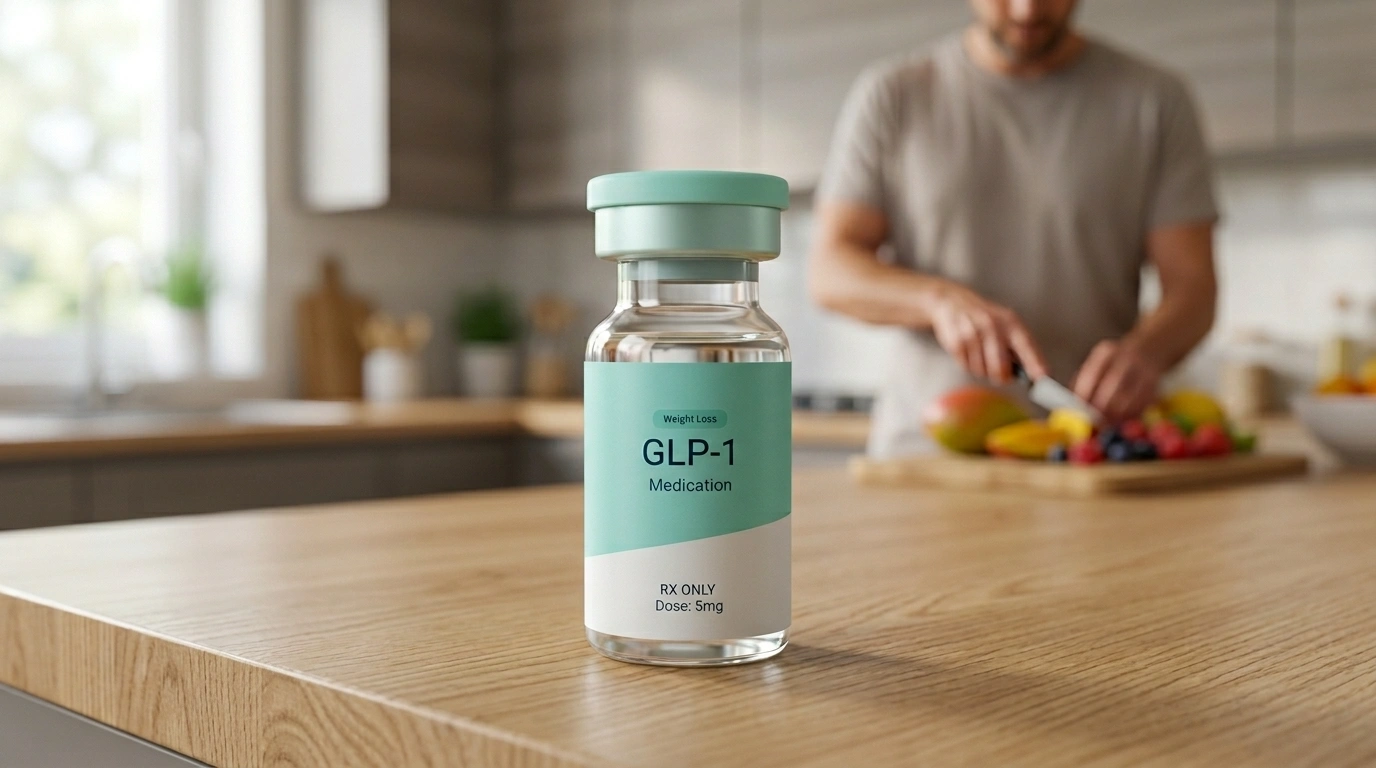
Introduction
You finally received your shipment, and the journey toward your health goals feels more real than ever. But as you unpack your medication, a common wave of anxiety hits: what happens if the vial sits on the counter for a few hours? Or what if you need to travel and won’t have access to a fridge for a full day? Understanding how long compounded semaglutide can be unrefrigerated is a vital part of your treatment plan. At TrimRx, we believe that your success depends not just on the medication itself, but on the confidence you have in handling it safely every day.
If you’re considering whether prescription GLP-1 care is right for you, take the free assessment quiz to see whether a personalized program is a fit.
Proper storage ensures the active ingredients remain potent and effective for your weight loss or metabolic health goals. This article will explore the specific timeframes for keeping semaglutide out of the cold, the science behind peptide stability, and practical tips for managing your medication during travel or unexpected power outages. For a broader look at handling semaglutide safely, see our semaglutide storage and travel guide. By the end, you will have a clear roadmap for keeping your treatment safe and effective.
The Importance of Proper Storage for GLP-1 Medications
When we talk about semaglutide, we are discussing a class of medications known as GLP-1 receptor agonists (glucagon-like peptide-1). These are essentially small proteins, or peptides, that mimic a hormone naturally produced in your gut. Because they are biological in nature, they are much more sensitive to their environment than a standard aspirin tablet might be.
The structure of a peptide is held together by delicate chemical bonds. These bonds are designed to stay stable within a specific temperature range. When those bonds are exposed to excessive heat or even extreme cold (like freezing), they can begin to break apart. This process, called denaturation, means the medication “unfolds” and loses its ability to communicate with the receptors in your body. If the medication is no longer structurally sound, it may support weight loss much less effectively—or not at all.
What Is Semaglutide?
Semaglutide is a medication that mimics the GLP-1 hormone, which helps regulate appetite and blood sugar. By signaling to the brain that you are full and slowing down how fast your stomach empties, it can help reduce overall calorie intake. Whether you are using it for metabolic support or weight management, the molecule must remain intact to do its job.
How Long Can Compounded Semaglutide Be Unrefrigerated?
The question of how long the medication can stay out of the fridge is one of the most frequent concerns for patients. While the short answer is that it depends on the specific pharmacy’s formulation, there are general industry standards that provide a helpful baseline. For a related breakdown of room-temperature limits, How Long Can Semaglutide Stay Out of the Fridge? Storage Insights for Optimal Use.
Typically, most injectable forms of semaglutide are stable at room temperature—defined as 59°F to 86°F (15°C to 30°C)—for a specific window of time. For many compounded formulations, this window is often up to 28 days. However, some pharmacies may provide stability data that extends this to 56 days, similar to some branded versions.
Quick Answer: Most compounded semaglutide can remain at room temperature (under 86°F) for up to 28 days once it has been removed from the refrigerator. However, you must always verify the specific “Beyond-Use Date” (BUD) and storage instructions printed on your pharmacy label, as different formulations vary.
The Room Temperature Threshold
It is critical to distinguish between “room temperature” and “heat.” If your home is 72°F, your medication is likely safe for that 28-day window. However, if the medication is left in a car on a summer day, or on a windowsill in direct sunlight, the temperature can quickly exceed 86°F. Once the medication crosses that upper threshold, the degradation happens much faster. Even a few hours in extreme heat can render the peptide useless. For a deeper explanation of what heat exposure can do, read about what happens if semaglutide is not refrigerated.
Factors That Influence Stability
Several factors determine how long your specific vial can stay out of the fridge:
- The Formulation: Some pharmacies include specific stabilizers or preservatives that help the peptide resist heat.
- Preservatives: Compounded medications often contain benzyl alcohol as a preservative to prevent bacterial growth. While this helps with safety, it doesn’t always protect the peptide structure from heat.
- Vial vs. Pen: Compounded semaglutide is typically provided in a glass vial rather than a pre-filled pen. Glass is a good insulator, but it cannot protect the liquid from prolonged temperature shifts. For more on storage differences, Does Semaglutide Have to Be Refrigerated? What You Need to Know About Proper Storage.
Branded vs. Compounded: Storage Differences
It is helpful to look at the storage guidelines for branded medications to understand the general behavior of the semaglutide molecule. Branded medications like Ozempic® and Wegovy® are manufactured in large-scale facilities and have undergone extensive stability testing.
Branded Injectables
For Ozempic®, the manufacturer states that after the first use, the pen can be stored at room temperature (up to 86°F) or in the refrigerator for up to 56 days. Wegovy® has slightly different guidelines, stating that if necessary, an unused pen can be kept at room temperature (up to 86°F) for up to 28 days.
Compounded Formulations
Compounded semaglutide is not FDA-approved, and because it is prepared in smaller batches by individual compounding pharmacies, the stability testing may be different from the branded versions. Compounding pharmacies are required to follow strict guidelines (often referred to as USP <797> for sterile preparations). For a focused look at shelf life and beyond-use dates, Compounded Semaglutide Storage and Shelf Life is a helpful companion guide.
These pharmacies assign a “Beyond-Use Date” (BUD) rather than a standard expiration date. The BUD is the date after which the medication should not be used. For many sterile compounded injectables, the BUD is often 28 to 30 days once the vial has been punctured, or up to 90–120 days if kept refrigerated and unpunctured. If you want more detail on how refrigeration affects shelf life, How Long Does Semaglutide Last in the Fridge? Storage Tips and Best Practices covers that in more depth.
Note: Always prioritize the instructions provided by the pharmacy that dispensed your medication. If their label says “keep refrigerated at all times,” you should follow that instruction strictly, even if other forms of semaglutide allow for room temperature storage.
Understanding the Beyond-Use Date (BUD)
The Beyond-Use Date is perhaps the most important piece of information on your vial’s label. Unlike a traditional expiration date, which tells you when a drug loses its chemical potency in a sealed container, the BUD for a compounded medication also accounts for the risk of contamination.
Because compounded semaglutide is often drawn from a multi-dose vial using a syringe, every time the stopper is punctured, there is a tiny risk of introducing environmental bacteria. The BUD ensures that you are using the medication while it is still both potent and sterile. For a more practical look at home handling, How to Store Compounded Semaglutide or Tirzepatide at Home is worth a read.
Key Takeaway: The Beyond-Use Date (BUD) is a conservative estimate of how long the medication remains safe and effective. Using the medication after this date increases the risk of decreased potency and potential bacterial growth.
Why BUDs Vary
You might notice that one batch of medication has a longer BUD than another. This can happen if the pharmacy changes its testing protocols or if the specific mixture of ingredients (like the concentration of the semaglutide) changes. Generally, lower temperatures help extend the life of the medication, which is why refrigeration is the gold standard for storage.
Risks of Using Unrefrigerated or Expired Semaglutide
What actually happens if you use medication that has been sitting out for too long or has passed its BUD? While it is rarely “toxic” in the sense of being a poison, there are two primary risks: loss of efficacy and risk of infection.
Loss of Efficacy
The most likely outcome is that the medication simply stops working. If the semaglutide molecule has denatured due to heat, it cannot bind to the GLP-1 receptors in your brain and gut. For a patient, this might feel like a sudden return of “food noise” or a plateau in weight loss progress. It can be incredibly frustrating to feel like you’ve hit a wall, only to realize the issue was the storage of the medication.
Risk of Bacterial Growth
If a multi-dose vial is kept at room temperature for too long after being punctured, the preservatives may eventually fail to inhibit bacterial growth. Injecting a contaminated solution can lead to skin infections at the injection site or more serious systemic issues.
Signs your semaglutide has spoiled:
- The liquid has become cloudy or “milky.”
- There are visible particles or “clumps” floating in the vial.
- The color has changed (semaglutide should be clear and colorless).
- The liquid has a strange odor.
If you notice any of these signs, do not inject the medication. Consult your healthcare provider or the pharmacy for guidance on how to dispose of it and obtain a replacement.
Practical Tips for Storing Your Medication at Home
Keeping your medication safe doesn’t have to be complicated. A few simple habits can protect your investment in your health. For more everyday storage guidance, How to Store Compounded Semaglutide or Tirzepatide at Home offers a helpful overview.
- The “Middle Shelf” Rule: Store your vial on a middle or lower shelf in the refrigerator. Avoid the door, as the temperature fluctuates every time you open it. Also, avoid the very back of the fridge or the area near the cooling element, as this can lead to accidental freezing.
- Original Packaging: Keep the vial inside its original box or a small opaque container. This protects the medication from light exposure, which can also contribute to the breakdown of the peptide.
- Digital Thermometer: If you want extra peace of mind, place a small digital refrigerator thermometer near your medication. This ensures your fridge is consistently between 36°F and 46°F.
- Mark Your Calendar: When you first puncture a vial, write the date on the box. This helps you track the 28-day window (or whatever window your pharmacy recommends) for use after opening.
Traveling with Semaglutide: A Step-by-Step Guide
Traveling shouldn’t stop you from staying consistent with your program. Whether you are going on a road trip or a long-haul flight, you can keep your semaglutide at the right temperature with a little planning. If you’re comparing storage and travel best practices, Semaglutide Storage, Travel & Handling: Everything You Need to Know is a useful reference.
Step 1: Choose Your Cooler
Invest in a small, medical-grade insulated travel case. Many are designed specifically for insulin or GLP-1 pens and vials. These cases often come with gel packs that stay cold for several hours.
Step 2: Avoid Direct Contact with Ice
If you are using a standard cooler with ice, never let the vial touch the ice directly. Freezing is just as damaging to semaglutide as heat. Wrap the vial in a small cloth or bubble wrap before placing it near the cold source.
Step 3: Flight Safety
Always keep your medication in your carry-on luggage. The cargo hold of an airplane can experience extreme temperature fluctuations (both freezing and high heat). Additionally, keeping it with you ensures it doesn’t get lost if your checked luggage goes astray.
Step 4: Hotel Logistics
Upon arrival, check the hotel room’s mini-fridge. Be cautious—mini-fridges are notorious for being inconsistent. Sometimes they are not cold enough, and sometimes they are so cold they freeze everything in the back. Set it to a medium setting and place your medication toward the front.
What to Do If You Leave Your Medication Out
Accidents happen. If you realize you left your vial on the counter overnight, don’t panic.
- Check the Temperature: How warm was the room? If the room was under 86°F and the vial was only out for 8–12 hours, it is likely still safe to use, provided you return it to the fridge immediately.
- Inspect the Liquid: Hold the vial up to the light. Is it still perfectly clear? If you see any cloudiness or floating bits, the medication must be discarded.
- Calculate the Time: If the vial has been out for several days, you should consider the 28-day “room temperature” clock to have started. If the vial was already near its BUD, it may be time to replace it.
- Consult the Experts: When in doubt, call the pharmacy that dispensed the medication. They have the most accurate stability data for their specific formulation.
The TrimRx Approach to Personalized Weight Loss
At TrimRx, we know that successful weight loss is about more than just a prescription. It’s about having a team that supports you through the logistics of daily life—including the “what-ifs” of medication storage. We connect you with licensed providers who create programs tailored to your unique health profile. If you’re still deciding whether a prescription program is the right fit, complete the intake quiz.
Our platform is designed to make the process as transparent as possible. When you join our program, you get access to medical supervision and high-quality medications prepared by FDA-registered compounding pharmacies. We prioritize your safety and results, ensuring you have the information you need to handle your treatment with confidence. Our mission is to bridge the gap between clinical science and your real-world lifestyle, providing a telehealth experience that feels personal, empathetic, and effective.
Bottom line: While refrigeration is the best way to maintain the potency of compounded semaglutide, most formulations can handle being unrefrigerated for up to 28 days as long as the temperature stays below 86°F and the liquid remains clear. If you want a personalized starting point, start with the free assessment quiz.
FAQ
Can I still use my semaglutide if it accidentally froze in the back of the fridge?
No, you should not use semaglutide that has been frozen. Freezing temperatures can permanently damage the molecular structure of the peptide, making it ineffective. If you see ice crystals in the vial or if the liquid was solid at any point, it is best to discard it and contact your provider for a replacement.
Why does the medication need to be protected from light?
Semaglutide is photosensitive, meaning that exposure to UV light or even strong indoor light can cause the chemical bonds in the peptide to break down over time. This is why the vials are often amber-colored or why it is recommended to keep the vial inside its original cardboard box. Keeping it in the dark helps preserve its potency for the full duration of the Beyond-Use Date.
Is it okay to leave my semaglutide in my checked luggage during a flight?
It is strongly recommended to keep your medication in your carry-on bag rather than checked luggage. The temperature in an airplane’s cargo hold is not regulated and can reach extreme levels of cold or heat that will damage the medication. Additionally, keeping it in your carry-on ensures you have access to it if your travel is delayed or your luggage is lost. If travel logistics are making treatment harder to manage, take the free assessment quiz.
What should I do if my medication turns cloudy?
If your semaglutide appears cloudy, discolored, or contains visible particles, you should stop using it immediately. These changes are often signs that the medication has either denatured due to temperature exposure or has become contaminated with bacteria. Contact your pharmacy or healthcare provider to report the issue and discuss obtaining a new vial.
Disclaimer: This content is for informational purposes only and does not constitute medical advice. It is not intended to diagnose, treat, cure, or prevent any disease or condition. Individual results may vary. Always consult a qualified healthcare professional before starting any weight loss program or medication.

Transforming Lives, One Step at a Time
Keep reading

Why Do I Wake Up at 3am on Semaglutide?
The useful question is not why you wake, but what you feel when you do. Waking at the same time most nights has several…

Why Does One Glass of Wine Hit Harder on Semaglutide?
Because several things changed at once, and all of them push in the same direction. You are eating considerably less, and food in the…
Why Do I Sweat at Night on Semaglutide?
Night sweats are not an established effect of this medication, and that is the most useful thing to know about them. Because there is…


