Where Do I Store My Mounjaro Pen? A Safety Guide
Introduction
Starting a journey with a GLP-1 medication can feel like a significant turning point in your health and wellness story. Whether you are managing blood sugar levels or pursuing sustainable weight loss, the logistics of handling your medication should be the least of your worries. However, because medications like Mounjaro® are peptides—sensitive proteins that can break down if mishandled—knowing exactly how to store them is essential for maintaining their potency. At TrimRx, we believe that education is the foundation of a successful health transformation, and if you are still deciding whether prescription treatment is the right next step, you can take the free assessment quiz before you get started. In this guide, we will cover the precise temperature requirements, light protection needs, and travel tips for your medication. Our goal is to ensure you feel confident and supported as you integrate this treatment into your daily life. Proper storage is not just about following rules; it is about protecting the investment you are making in your future health.
Quick Answer: You should store unopened Mounjaro® pens in the refrigerator between 36°F and 46°F (2°C to 8°C). If necessary, a pen can be kept at room temperature (up to 86°F or 30°C) for up to 21 days, but it must be discarded after that period even if medication remains.
The Science of Medication Stability
To understand why storage matters, it helps to understand what is inside the pen. Mounjaro® contains tirzepatide, a dual-acting medication that mimics two hormones in the body: glucagon-like peptide-1 (GLP-1) and glucose-dependent insulinotropic polypeptide (GIP). These hormones help regulate appetite and blood sugar.
Because tirzepatide is a peptide, it is structurally delicate. Peptides are chains of amino acids held together by bonds that can be broken by extreme heat, freezing temperatures, or even excessive vibration. When these bonds break, the medication “denatures,” meaning it loses its specific shape and, consequently, its ability to work effectively in your body. For more context on storage basics, see TrimRx’s tirzepatide refrigeration guide. This is why following manufacturer guidelines is critical for achieving the results you and your healthcare provider expect.
Refrigeration: The Gold Standard
The primary home for your medication should always be the refrigerator. Keeping the pens cold ensures the chemical structure remains stable until the expiration date printed on the carton.
Ideal Temperature Range
The recommended temperature for storing Mounjaro® is between 36°F and 46°F (2°C to 8°C). Most home refrigerators are set to about 37°F or 38°F by default, which is perfect. However, it is a good idea to verify your fridge’s performance, especially if it is an older model or prone to “hot spots.”
Where to Place Your Pens
Bold the middle shelf for the most consistent temperature. Avoid the very back of the refrigerator, as this area is often the coldest and may accidentally freeze items. Similarly, avoid the refrigerator door. The temperature in the door fluctuates every time you open it to grab milk or snacks, which can lead to “temperature cycling” that stresses the medication.
Protection from Light
Tirzepatide is sensitive to light. Exposure to UV rays or even consistent indoor lighting can accelerate the breakdown of the active ingredients. Always keep your pens inside their original cardboard carton until you are ready to use them. This provides an extra layer of insulation and total darkness.
Key Takeaway: Stability is the goal. Use the middle shelf of your refrigerator and keep the pens in their original box to protect them from both temperature spikes and light exposure.
Room Temperature Rules and the 21-Day Limit
Life happens. You might travel, experience a power outage, or simply forget to put your medication back in the fridge after a dose. The manufacturer has accounted for this by testing how the medication holds up at room temperature.
The 21-Day Clock
You can store a single-dose Mounjaro® pen at room temperature—up to 86°F (30°C)—for a cumulative total of 21 days. This is particularly helpful for those who find that injecting cold medication causes minor discomfort. You can take your pen out about 30 to 60 minutes before your scheduled dose to let it reach room temperature.
Important Caveats
Once a pen has spent time at room temperature, you cannot “reset” the clock by putting it back in the fridge. While you can physically put it back, the 21-day limit still applies from the moment it first warmed up. If a pen has been out of the refrigerator for more than 21 days, it must be disposed of, even if the liquid looks clear and the expiration date on the box has not passed.
| Storage Method | Temperature Range | Duration |
|---|---|---|
| Refrigerated | 36°F – 46°F (2°C – 8°C) | Until expiration date |
| Room Temperature | Up to 86°F (30°C) | Maximum 21 days |
| Freezer | Below 32°F (0°C) | Do not use (discard immediately) |
Avoiding the “Freeze Zone”
One of the most common mistakes is allowing the medication to freeze. You might think that if cold is good, colder is better—but this is not true for peptides.
If Mounjaro® freezes, the tirzepatide molecules can crystallize and break. This renders the medication completely ineffective and potentially unsafe. If you notice ice crystals in the pen, or if you know your refrigerator dipped below freezing, do not use the pen. Even if the medication thaws and looks normal, the molecular structure has likely been compromised.
Note: If you suspect your medication was accidentally frozen, contact your pharmacist or healthcare provider. Never attempt to “thaw” a frozen pen in the microwave or under hot water.
Handling Compounded Alternatives
While Mounjaro® is a branded medication, many individuals who use the TrimRx platform are prescribed compounded versions of Tirzepatide. Compounded medications are prepared by licensed, FDA-registered compounding pharmacies to meet specific patient needs or address shortages.
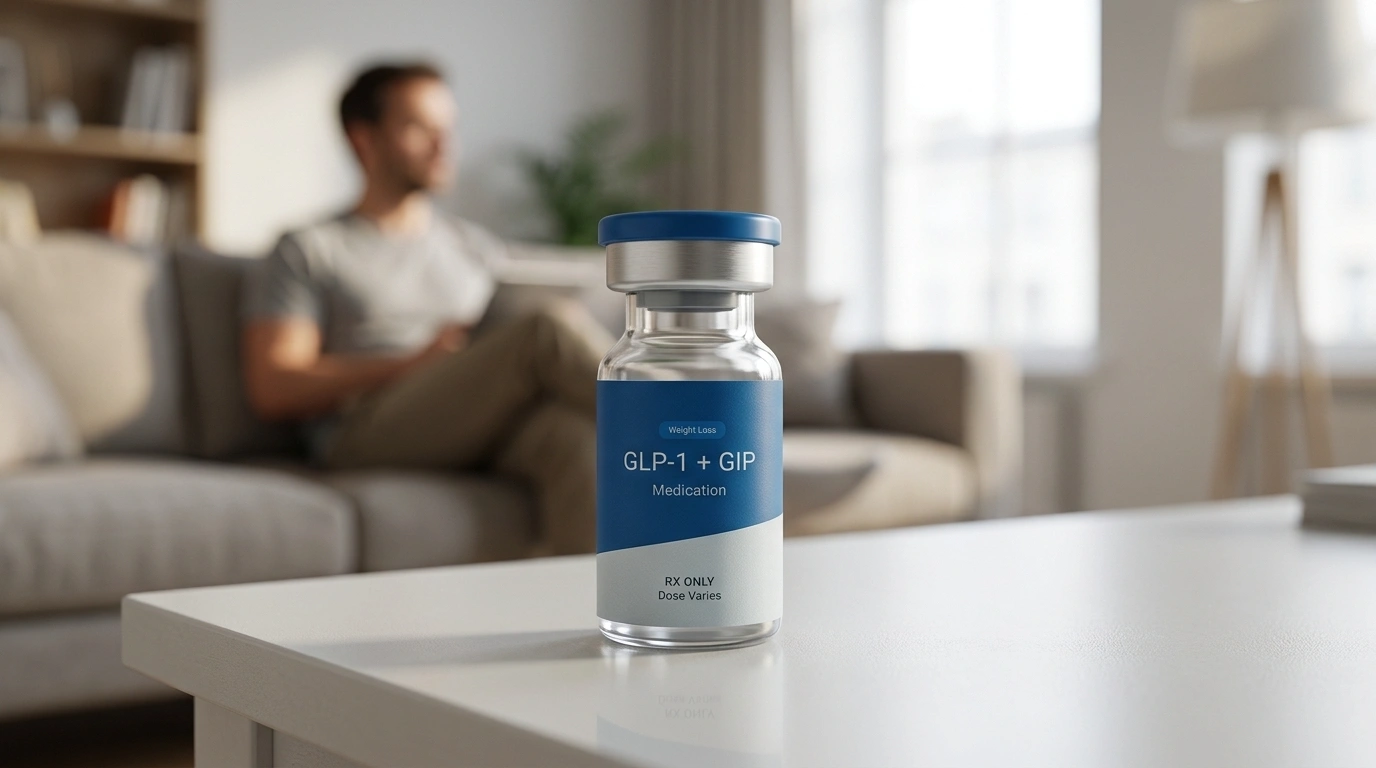
The storage requirements for Compounded Tirzepatide are generally very similar to the branded version, but there is one key difference: the format. Compounded versions often come in multi-dose vials rather than pre-filled pens. For a related look at vial handling, read the compounded tirzepatide storage guide.
For Compounded Tirzepatide vials, you must:
- Keep the vial refrigerated between 36°F and 46°F at all times.
- Follow the “beyond-use date” (BUD) provided by the compounding pharmacy, which may be shorter than the expiration date on a branded pen.
- Wipe the rubber stopper with an alcohol prep pad before every use to maintain sterility.
We provide access to these medications through a personalized program that includes clinical oversight, and if you are ready to see whether that program is a fit for you, you can complete the free assessment quiz to get started.
How to Perform a Safety Check
Before every injection, you should perform a visual inspection of your pen. This is a simple but vital step in your routine.
Step 1: Check the expiration date. / Look at the side of the pen or the carton to ensure the date has not passed. Step 2: Inspect the liquid. / The medication should be clear, colorless, or slightly yellowish. Step 3: Look for particles. / If you see any cloudiness, “strings” floating in the liquid, or solid particles, do not use the pen. Step 4: Check for damage. / Ensure the pen casing is not cracked and the cap is securely in place.
Myth: “If the medication is cloudy, I can just shake it to mix it back up.” Fact: You should never shake a Mounjaro® pen. Shaking can damage the delicate proteins. If the liquid is cloudy or contains particles, it has likely degraded and should be discarded.
Traveling with Your Medication
Maintaining your weight loss momentum often means taking your medication on the road. With a little planning, traveling with your pens is straightforward. For practical travel and temperature tips, TrimRx also has a detailed tirzepatide storage, travel, and handling guide.
Air Travel
Always pack your medication in your carry-on luggage. The cargo hold of an airplane is not temperature-controlled and can reach extreme temperatures (both hot and cold) that will ruin the medication. Additionally, keeping it with you prevents the risk of your medication being lost if your checked luggage goes missing.
When going through security, you do not need to worry about the X-ray machine; it will not harm the medication. However, you should inform the TSA officer that you are carrying liquid medication. Keeping the pens in their original carton with the pharmacy prescription label attached will help speed up the process.
Road Trips and Heat
If you are traveling by car, never leave your medication in a glove box or a hot trunk. On a 90°F day, the inside of a car can reach 120°F in minutes. Use a small insulated travel cooler designed for insulin or other injectable medications. Just be sure the pen does not touch an ice pack directly, as this could cause it to freeze.
Safe Disposal Practices
Once you have finished your injection, the pen is considered “medical sharps” waste. You should never throw used pens into your regular household trash or recycling bin.
The Sharps Container
Place the used pen immediately into an FDA-cleared sharps disposal container. These are heavy-duty plastic containers that prevent needles from poking through. If you do not have an official sharps container, you can use a heavy-duty plastic household container, such as a laundry detergent bottle, as long as it has a tight-fitting, puncture-resistant lid.
Disposal Rules
When the container is about three-quarters full, follow your local community guidelines for disposal. Some areas allow for “drop-off” sites at pharmacies or hospitals, while others have specific mail-back programs. Using a platform like ours often gives you access to a dedicated support team that can help answer questions about safe disposal in your area.
Why Proper Storage Supports Your Results
At the end of the day, the goal of using a GLP-1 or GIP/GLP-1 receptor agonist is to see real, tangible improvements in your health. Whether that is a lower number on the scale, better energy levels, or improved metabolic markers, the medication can only do its job if it remains chemically active. If you want extra support while you work toward those goals, you can look into the Weight Loss Boost supplement.
When a pen is stored improperly, its potency drops. You might find that your appetite suppression feels “weaker” than usual, or your weight loss stalls, not because the treatment isn’t working, but because the medication itself has degraded. By mastering these storage habits, you are removing a variable of uncertainty from your journey.
Managing Your Routine with TrimRx
We believe that weight loss is a comprehensive experience that goes beyond a prescription. Our personalized programs are designed to fit into your lifestyle, providing the tools and knowledge you need to succeed from day one. Through our telehealth platform, you have 24/7 access to specialists who can guide you through everything from injection techniques to storage questions. If you are looking for daily nutritional support during GLP-1 treatment, the GLP-1 Daily Support supplement may be a helpful part of your routine.
If you are just starting out or considering a GLP-1 medication, our free assessment quiz is the first step. It allows our partner providers to understand your unique health profile and determine the best course of action for your goals. We are here to simplify the process, ensuring you can focus on your progress while we handle the clinical logistics.
Bottom line: Your Mounjaro® pen is a sophisticated tool for your health; treat it with care by keeping it refrigerated, protected from light, and away from extreme heat to ensure every dose is as effective as the first.
FAQ
Can I use Mounjaro if it was left out of the fridge overnight?
Yes, as long as the temperature of the room did not exceed 86°F (30°C). You have a 21-day window to use that specific pen once it has reached room temperature, so make a note of the date it was left out to ensure you use it or discard it within that timeframe. If you are still deciding whether prescription treatment is the right fit, you can take the free assessment quiz.
What should I do if my refrigerator loses power?
Keep the refrigerator door closed as much as possible to maintain the cold air. If the power is out for an extended period, check the temperature of the medication; if it feels warm or if the power has been out for more than 21 days, you should consult with your healthcare provider or pharmacist before using the pens. For more guidance on storage limits, the how long Mounjaro pens last unopened guide explains the refrigerator window in more detail.
Is it okay to store my pens in a mini-fridge?
You can use a mini-fridge, but be cautious. Mini-fridges often have inconsistent cooling and can be prone to freezing items placed near the cooling element or back wall. It is highly recommended to use a standalone thermometer to monitor the internal temperature of a mini-fridge before trusting it with your medication. If you want a broader explanation of tirzepatide refrigeration, see the tirzepatide refrigeration guide.
Can I travel internationally with my Mounjaro pens?
Yes, you can travel internationally, but you should carry a copy of your prescription or a letter from your doctor to avoid issues at customs. Always keep the medication in your carry-on luggage and use an insulated travel case to maintain a stable temperature during long flights or layovers in warm climates. For more travel-specific tips, the tirzepatide storage, travel, and handling guide covers those logistics in more detail.
Disclaimer: This content is for informational purposes only and does not constitute medical advice. It is not intended to diagnose, treat, cure, or prevent any disease or condition. Individual results may vary. Always consult a qualified healthcare professional before starting any weight loss program or medication.

Transforming Lives, One Step at a Time
Keep reading

Mounjaro Alternatives: What Else to Consider
If Mounjaro isn’t the right fit, the closest alternatives are other GLP-1 medications, chiefly semaglutide (Ozempic for diabetes, Wegovy for weight), along with a…

Mounjaro vs Zepbound: Same Drug, Two Brands
Like their semaglutide counterparts, Mounjaro and Zepbound are the same medication (tirzepatide) sold under two names for two purposes: Mounjaro is approved for type…

Retatrutide vs Mounjaro: Triple Agonist vs Dual Agonist
The core difference between retatrutide and Mounjaro comes down to how many hormone targets each hits: retatrutide activates three receptors, while Mounjaro (tirzepatide) activates…


