5 Common Mistakes When Using GLP-1 for Weight Loss
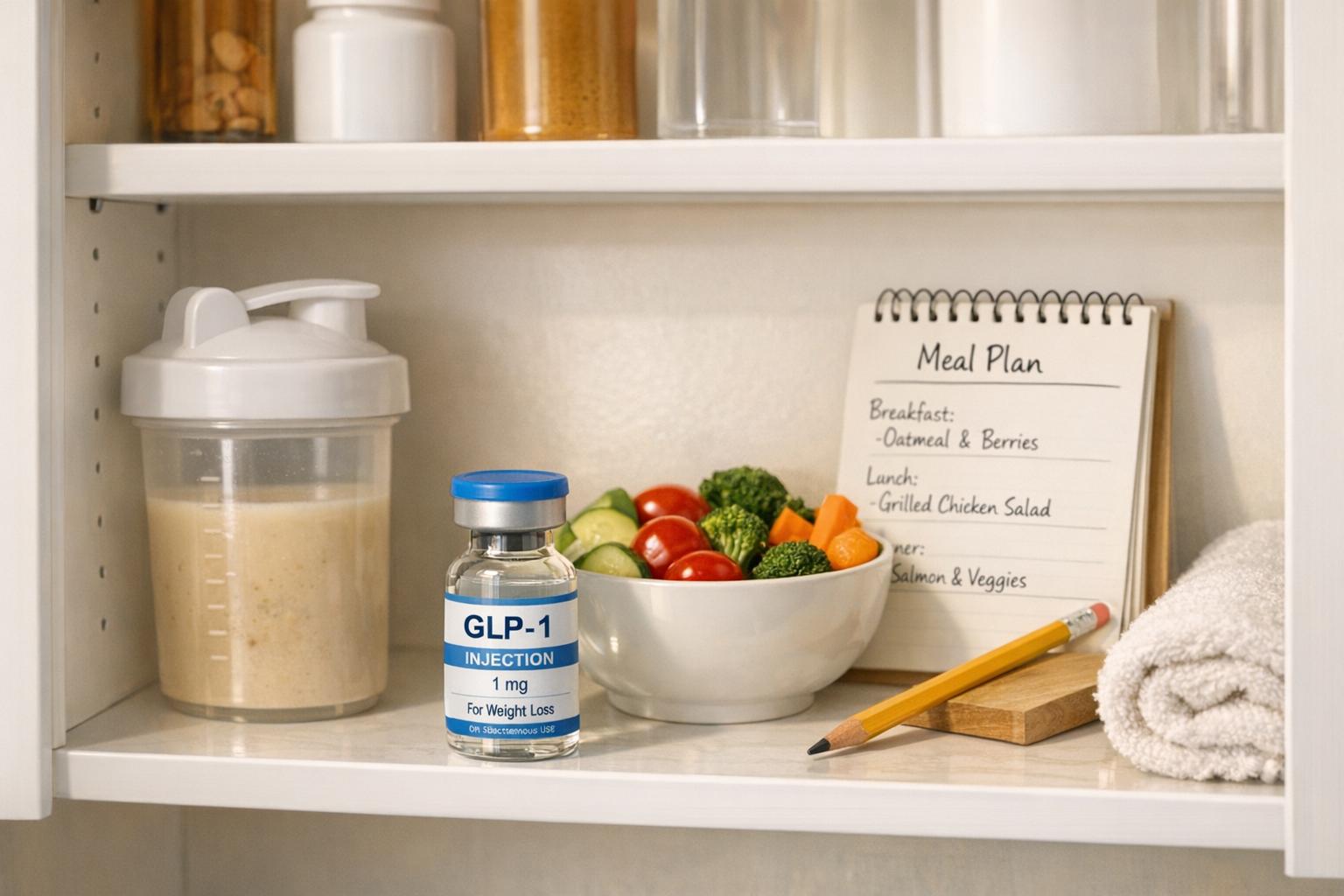
When using GLP-1 medications for weight loss, many people make mistakes that can derail their progress or even cause health issues. Here are the five most common pitfalls and how to avoid them:
- Missing doses or inconsistent schedules: Missing doses reduces the medication’s effectiveness and can lead to weight regain. Stick to a consistent schedule and set reminders to avoid missed doses.
- Neglecting protein and diet quality: GLP-1s reduce appetite, but failing to prioritize protein can lead to muscle loss. Aim for at least 0.55 grams of protein per pound of body weight daily and pair it with resistance training.
- Stopping treatment too soon: Quitting GLP-1 therapy often leads to rapid weight regain. If you’re considering stopping, consult your doctor to explore tapering or alternative options.
- Extreme calorie restriction: Eating too little can cause muscle loss, slow metabolism, and nutritional deficiencies. Focus on balanced meals and avoid skipping meals, even if you’re not hungry.
- Using medication without medical guidance: Self-medicating or buying from unregulated sources can lead to severe side effects or ineffective results. Always work with a healthcare provider for proper dosing and monitoring.
Key takeaway: GLP-1 medications can be effective, but success depends on proper use, balanced nutrition, and ongoing medical supervision. Avoid these mistakes to achieve better, long-term results.
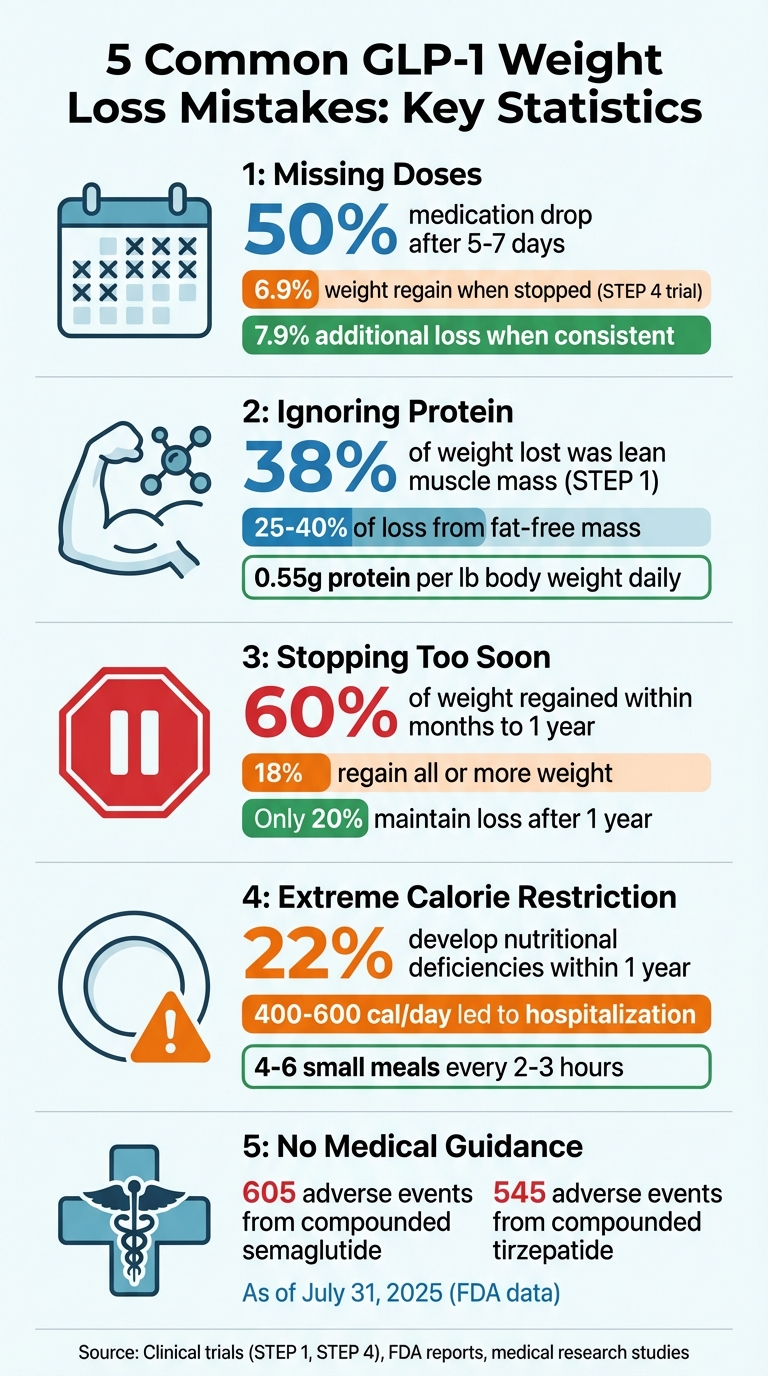
5 Common GLP-1 Weight Loss Mistakes: Key Statistics and Outcomes
10 Biggest Mistakes People Make on GLP-1 Medications (Ozempic, Mounjaro, Wegovy, Zepbound)
1. Missing Doses or Following an Inconsistent Schedule
Sticking to a regular schedule is crucial when taking GLP-1 medications. These drugs mimic hormones that help regulate hunger, but their effects fade quickly if doses are missed. In fact, after just 5 to 7 days without a dose, the medication levels in your body drop by 50%, significantly impacting its ability to help with weight management.
The impact of missed doses isn’t limited to feeling hungrier. Results from the STEP 4 clinical trial show that participants who stopped their medication regained 6.9% of their body weight. Meanwhile, those who stayed on track lost an additional 7.9%. Missing doses for 14 days or more can reset the medication’s effects entirely. Restarting at your previous dose after such a break could lead to severe gastrointestinal issues.
"GLP-1 receptor agonists work to decrease your appetite and help you feel fuller sooner. Those effects can wear off when you don’t take it as prescribed." – Mopelola Adeyemo, MD, MPH, UCLA Health
What to do if you miss a dose: Each medication has specific guidelines for missed doses. If you’ve passed the allowed window, skip that dose entirely. If you miss two or more weeks, consult your healthcare provider before resuming your previous dosage to avoid complications.
To prevent missed doses, request refills ahead of time and set calendar reminders. And remember – never double up on doses to make up for a missed one. Consistency is key to maintaining the benefits of GLP-1 therapy.
2. Ignoring Protein Intake and Diet Quality
GLP-1 medications can significantly reduce appetite, cutting food intake by as much as 50%. This means every bite matters. If you’re not prioritizing protein and nutrient-packed foods, you risk losing muscle along with fat. For example, in the STEP 1 clinical trial for semaglutide, 38% of the total weight lost was lean body mass, not just fat. Other studies show that 25% to 40% of weight lost during GLP-1 therapy can come from fat-free mass – muscle, bone, and water – instead of fat. This highlights the importance of carefully planning your protein intake when using GLP-1 medications.
Protein is crucial for maintaining muscle tissue during weight loss. Without enough protein, your body will start breaking down muscle, which can slow your metabolism.
"If you aren’t eating enough protein throughout the day – and actually with each meal – then your muscles are going to start breaking down." – Geri Lynn Grossan, Registered Dietitian Nutritionist
To support your muscles, aim for at least 0.55 grams of protein per pound of body weight each day. For someone who weighs 150 pounds, that’s about 82 grams of protein. Include high-quality protein sources like eggs, chicken, fatty fish, Greek yogurt, cottage cheese, tofu, lentils, and beans. Start meals with protein-rich foods to help counteract early feelings of fullness.
If nausea makes it hard to eat solid foods, try high-protein, low-sugar shakes. Pair your protein intake with resistance training – like weightlifting or bodyweight exercises – to help preserve muscle while losing fat. Without exercise, those extra protein calories might be stored as fat instead of supporting muscle maintenance.
3. Stopping Treatment Too Soon
It’s common for people to stop taking GLP-1 medications once they’ve reached their target weight, assuming the job is done. But here’s the thing: obesity isn’t a condition you can just “fix” and forget. It’s chronic. When you stop taking the medication, its appetite-regulating effects disappear, and the weight often comes back quickly.
"I know from practicing for more than 10 years that when people stop – even if their lifestyle modifications such as diet and exercise are perfect – there will almost always be weight regain. That’s because we’re no longer addressing what’s going on inside of the body." – Dr. Maria Cecilia Asnis, Medical Director of the Center for Weight Management at Stamford Health
This observation isn’t just anecdotal – it’s backed by research. Studies show that patients regain about 60% of the weight they lost within months to a year. Even more striking, nearly 18% of patients end up regaining all or even more of the weight they initially lost. Only about 20% manage to maintain their weight loss a year after discontinuing the medication. This rebound can also reignite obesity-related health issues like type 2 diabetes, heart disease, and sleep apnea.
If you’re thinking about stopping treatment – whether it’s due to side effects, financial concerns, or because you’ve reached your goals – it’s crucial to talk to your healthcare provider first. They can guide you through options like tapering off the medication gradually, exploring alternative treatments, or setting benchmarks for when restarting might be necessary. For example, data presented at the European Congress on Obesity in May 2024 showed that patients who tapered their semaglutide dosage over an average of 9 weeks maintained stable body weight for at least 26 weeks. That’s a far better outcome than quitting abruptly.
Whatever the reason, don’t make the decision alone. Your provider can help you plan the transition carefully, avoiding high-stress times like the holidays, and prepare strategies to manage the return of food cravings and "food noise" that often resurface when the medication is stopped.
sbb-itb-e2779c3
4. Skipping Meals or Cutting Calories Too Drastically
When it comes to weight loss with GLP-1 therapy, sticking to consistent meal timing is just as important as proper dosing and balanced nutrition. While these medications are highly effective at curbing appetite, drastically cutting back on food can lead to serious health issues.
Even if you don’t feel hungry, your body still needs fuel. Extreme calorie restriction can cause muscle loss, slow down your metabolism, and even affect how well your organs function – all in as little as five days. Your brain, too, relies on adequate energy, and slashing carbohydrates too much can lead to brain fog and trouble concentrating.
"If you eat too little, your body will break down muscle for energy – even if you consume adequate protein. Losing muscle mass lowers metabolism and makes it harder to keep the weight off long term."
- Beth Samuelson, Registered Dietitian Nutritionist, Lakes Regional Healthcare
Another concern? Nutritional deficiencies. Research shows that 22% of GLP-1 patients develop deficiencies within a year, with vitamin D being a common issue. In one alarming case from February 2024, a patient consuming only 400–600 calories daily, along with minimal fluids, ended up hospitalized for acute kidney injury. Their creatinine levels jumped from 0.6 to 3.6 mg/dL.
To stay on track, try eating 4–6 small meals or snacks every 2–3 hours and aim for 1.2 to 1.5 grams of protein per kilogram of body weight daily – that’s about 100 grams for someone weighing 150 pounds. Keep meal portions to 2 cups or less, and drink 8–10 glasses of water daily, as GLP-1 therapy can reduce thirst. Setting reminders on your phone can help you maintain a regular eating schedule, even when your appetite is low.
"GLP-1s slow food moving through the intestines. It tells your brain it’s not hungry. I’ve had to remind some of my clients that they still need to eat."
- Sara Fausett, Registered Dietitian, Intermountain Health
5. Using Medication Without Medical Guidance or Incorrect Dosing
Taking GLP-1 medications without proper medical supervision – or sourcing them from unregulated sellers – can lead to serious health risks. Without a healthcare provider to guide the process, people often take incorrect doses or skip the necessary gradual titration, which can result in severe gastrointestinal issues and, in some cases, hospitalizations. For context, as of July 31, 2025, the FDA recorded 605 reports of adverse events tied to compounded semaglutide and 545 reports linked to compounded tirzepatide.
Another major issue is the quality of the medication itself. In April 2025, the FDA banned the sale of "counterfeit" semaglutide and tirzepatide from unauthorized sources. These products often contain incorrect or harmful ingredients. For example, some compounders use unapproved salt forms, such as semaglutide sodium or acetate, which haven’t been tested for safety. Additionally, these medications require strict refrigeration to maintain their effectiveness, and improper storage can render them useless – or worse, unsafe.
"Many direct-to-consumer brands don’t have full access to a patient’s medical history. That can lead to gaps in treatment, making the medication less effective or even unsafe."
- Patrick Welch, PharmD, BCACP, Advanced Clinical Pharmacist, Intermountain Health
Medical oversight is crucial to ensure safe and effective treatment. Healthcare providers screen for contraindications, such as a family history of thyroid cancer, MEN2, or pancreatitis, and perform essential lab tests like A1C, TSH, metabolic panels, and lipid profiles before starting treatment. Regular follow-ups allow providers to monitor for rare but serious complications, including gallbladder issues or changes in heart rate. GLP-1 medications can also interact with other treatments, like blood pressure or diabetes medications, potentially leading to dangerous drops in blood sugar levels.
With proper medical supervision, these risks can be significantly reduced. Providers like TrimRX ensure safe and effective use of GLP-1 medications by offering personalized consultations, tailored dosing plans, and regular check-ins. Their programs, starting at $179 per month for oral semaglutide, include free delivery of FDA-approved medications stored and shipped under the right conditions. This comprehensive support helps you avoid the dangers of self-medicating while achieving optimal results on your weight loss journey.
Conclusion
GLP-1 medications can deliver results, but only when used as intended. Common missteps – like skipping doses, neglecting proper nutrition, stopping too soon, extreme calorie restriction, or going it alone without guidance – can derail your progress.
To succeed, it’s crucial to stick to a regular dosing schedule, focus on balanced nutrition to maintain muscle mass, and commit to a sustainable, long-term plan to prevent weight regain.
"GLP-1 agonists are a tool to support you on your health journey. You still have to nourish your body with enough fuel – and the right fuels – to perform."
- Shannon Christen, Registered Dietitian, UCHealth
Success with GLP-1 medications often calls for expert guidance. That’s where TrimRX steps in. By working with healthcare professionals, you can ensure safe titration, manage side effects effectively, and stay on track. TrimRX offers personalized consultations, proper medication storage, free delivery, and ongoing support to help you avoid these pitfalls and achieve lasting results.
FAQs
What should I do if I forget to take my GLP-1 medication?
If you miss a weekly GLP-1 injection but remember within 48 hours, take it as soon as you can and then stick to your regular schedule. However, if it’s been more than 48 hours, skip the missed dose – don’t take two doses to make up for it – and just proceed with your next scheduled injection. To help stay consistent, try setting reminders, and don’t hesitate to contact your healthcare provider if you have any questions or concerns about your dosing routine.
How can I prevent muscle loss while using GLP-1 medications for weight loss?
To keep your muscle mass intact while using GLP-1 medications, prioritize protein intake and resistance training. A good guideline is to aim for 0.8–1.2 grams of protein per pound of body weight each day. For example, if you weigh 150 pounds, that’s about 120–180 grams of protein daily. Spread this across your meals and snacks, and include high-quality protein sources like Greek yogurt, salmon, tofu, cottage cheese, or even protein shakes.
Pair your protein intake with strength training at least twice a week. Exercises such as squats, lunges, and resistance-band movements send a clear signal to your body to hold onto muscle. On your rest days, lighter activities like walking or simple stretches can help keep your muscles engaged and active. To track your progress, tools like periodic DEXA scans can give you a clearer picture of whether you’re losing fat while maintaining muscle.
For a more tailored approach, TrimRX provides GLP-1 prescriptions alongside customized nutrition plans, protein recommendations, and virtual strength-training support. This combination ensures you can work toward sustainable weight loss without sacrificing muscle.
Why is medical supervision crucial when using GLP-1 medications for weight loss?
Medical supervision is critical when using GLP-1 medications because these drugs can have a major impact on blood sugar levels, appetite, and multiple organ systems. Without proper oversight, there’s a chance of using unapproved versions, incorrect dosages, or missing potential health concerns. This can lead to serious side effects, including nausea, gallbladder problems, or even rare conditions like pancreatitis.
A healthcare provider plays a key role in tailoring the medication to your specific health needs, keeping an eye out for side effects, and adjusting doses safely over time. Programs like those from TrimRX go a step further by combining GLP-1 therapy with personalized consultations, lifestyle guidance, and free medication delivery. This kind of support helps you stay consistent and avoid common mistakes, like relying solely on medication or skipping doses. By taking this well-rounded approach, you can achieve safer and more effective results for long-term weight loss.
Related Blog Posts

Transforming Lives, One Step at a Time
Keep reading

GLP-1 Medications and Mental Health: What to Expect and When to Get Support
Most of what gets written about GLP-1 medications covers the body. Dosing, appetite, nausea, what to eat, what to expect on the scale. Less…

Mons Pubis Fat Loss on GLP-1s: The “Pubic Area” Change Nobody Mentions
One change that surprises people on GLP-1 medications rarely comes up in conversation: the mons pubis, the soft fat pad over the pubic bone,…

How to Adjust Weight Loss Goals on GLP-1 Medications
Adjust weight goals on GLP-1 meds by tracking body composition and labs, optimizing protein, activity, sleep, and working with your provider on dosing.


