Will Ozempic Work if Not Refrigerated? Storage Guide
Introduction
You reach into your bag and realize your medication has been sitting on the counter since yesterday. It is a moment of instant panic for many on a weight loss journey. You might wonder if the medication is still safe or if you have just wasted a valuable resource. At TrimRx, we understand that managing a metabolic health program involves many moving parts, from dosing schedules to proper storage.
This post covers exactly what happens to your medication when it leaves the cold, the official storage timelines you must follow, and how to tell if your pen is still effective. If you are still deciding whether a personalized program is the right fit, you can take the free assessment quiz to see what may work for your health goals. We will look at the science behind why temperature matters for GLP-1 medications and provide practical steps for handling accidental exposures.
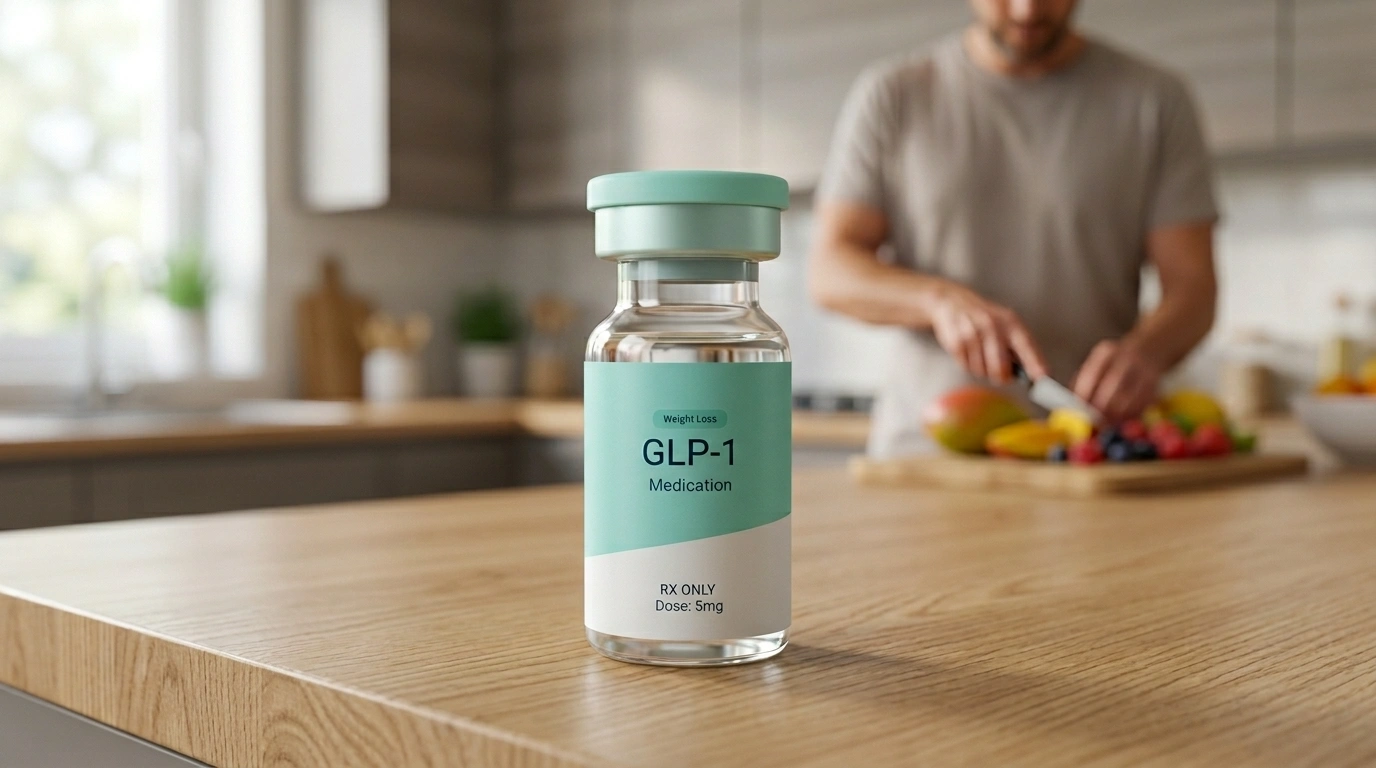
Quick Answer: An unopened Ozempic® pen must be refrigerated to remain effective until its expiration date. Once a pen is opened and in use, it can stay at room temperature (59°F to 86°F) for up to 56 days. If an unopened pen is left out of the refrigerator for an extended period, its potency may decrease, and it should generally be discarded.
The Science of Temperature and GLP-1 Potency
To understand why refrigeration is necessary, we have to look at what is inside the pen. Ozempic® contains semaglutide, which is a GLP-1 receptor agonist (glucagon-like peptide-1). In plain English, semaglutide is a synthetic version of a hormone your body naturally produces. This hormone helps regulate blood sugar and signals to your brain that you are full.
If you want a deeper look at how this medication behaves during transport and at home, our semaglutide storage, travel, and handling guide explains the basics in more detail. Chemically, semaglutide is a peptide, which is a short chain of amino acids. Think of a peptide like a delicate origami structure. For the medication to work, that structure must stay perfectly folded.
Why Refrigeration is the Standard
Manufacturing facilities and pharmacies keep these medications chilled to preserve the molecular structure in place. This helps protect shelf life for months or even years. When you keep your medication between 36°F and 46°F (2°C to 8°C), you are slowing down the natural chemical breakdown that happens to biological products.
Key Takeaway: Proper storage is not just a suggestion; it is a chemical necessity to ensure the semaglutide molecules stay intact so they can effectively communicate with your brain and digestive system.
Unopened vs. Opened Pens: The 56-Day Rule
The storage requirements for your medication change the moment you take your first dose. This is often where the most confusion happens.
Storing Unopened Pens
If you have a fresh pen that you have not used yet, it belongs in the refrigerator. Unopened pens must be stored between 36°F and 46°F. As long as they stay in this range, they are safe to use until the expiration date printed on the side of the pen or the box.
For a broader look at refrigerated storage and shelf life, our compounded semaglutide storage and shelf life guide covers the same cold-chain basics in more detail. If an unopened pen is left at room temperature for more than a few hours, the manufacturer guidelines typically suggest it should no longer be considered “shelf-stable” until the printed expiration date.
Storing Opened (In-Use) Pens
Once you have attached a needle and administered your first dose, the clock starts. An opened pen is much more flexible. You can choose to:
- Keep it in the refrigerator.
- Store it at room temperature (between 59°F and 86°F).
Regardless of which option you choose, the pen must be discarded 56 days after the first use. Even if there is medication left in the pen after 56 days, it should be thrown away. The preservatives in the solution are only guaranteed to keep the medication sterile and effective for that eight-week window.
| Feature | Unopened Pen Storage | Opened (In-Use) Pen Storage |
|---|---|---|
| Temperature | 36°F to 46°F (Refrigerated) | 59°F to 86°F (Room Temp) OR Refrigerated |
| Duration | Until Expiration Date | Max 56 Days |
| Avoidance | Do not freeze | Keep away from direct heat/light |
Will It Work if It Gets Warm?
The question of whether it “will work” is a matter of degrees—both literally and figuratively. If your pen was left out for two hours in a cool house, it is likely still very potent. If it was left in a hot car in the middle of summer for two hours, the medication might be completely ruined.
If you are considering treatment and want help deciding what path fits your situation, you can see if you qualify for a personalized program before moving forward.
The Risk of Reduced Efficacy
If the semaglutide breaks down due to heat, it does not necessarily become “poisonous,” but it does become “useless.” If you inject degraded medication, you might notice:
- Your appetite returns sooner than usual.
- Your blood sugar levels do not stay as stable.
- The “food noise” you previously quieted begins to return.
The Danger of Freezing
While heat is a major enemy, cold can be just as bad. Never freeze your medication. If the solution freezes, the semaglutide molecules can be physically damaged by the forming ice crystals. This permanently destroys the medication. If you see ice in your pen or notice that your refrigerator is running so cold that the liquid has turned to slush, you must discard the pen.
Visual Cues: How to Tell if the Medication is Spoiled
You do not need a laboratory to do a basic safety check on your pen. Every time you prepare for an injection, you should perform a visual inspection.
Clear and Colorless: This is the gold standard. The liquid inside the pen should look exactly like water. It should be perfectly clear and have no color at all.
Signs of Trouble:
- Cloudiness: If the liquid looks like it has a drop of milk in it or appears “foggy,” it has likely broken down or become contaminated.
- Particles: If you see tiny floating specks or “strings” in the liquid, do not use it.
- Discoloration: If the liquid has a yellowish or brownish tint, the chemical structure has changed.
- Leaking: Any cracks in the pen or liquid on the outside of the barrel suggest the seal is broken.
If you want another storage-focused explainer, our guide to whether compounded semaglutide needs refrigeration walks through spoilage and temperature basics in a simple format.
What to Do if You Left Your Pen Out
If you realize your medication has been out of the fridge, do not panic. Follow these steps to determine your next move:
Step 1: Check the temperature.
Was the room actually hot? If the room stayed below 86°F, and the pen was already “opened” (you had used it before), you are perfectly fine. Just continue your 56-day countdown.
Step 2: Check the duration.
If the pen was unopened and left out for just an hour or two while you were putting groceries away, it is likely fine to put back in the fridge. However, if it was left out overnight or for several days, the expiration date on the box is no longer valid.
Step 3: Perform a visual inspection.
Look for cloudiness or particles as described above. If it looks perfectly clear, that is a good sign, but not a guarantee of potency.
Step 4: Consult a professional.
If you are unsure, contact your pharmacist or the healthcare provider you connected with through TrimRx. It is always better to be safe and ensure you are taking an effective dose.
Traveling Safely with GLP-1 Medications
Traveling is the most common time when refrigeration becomes a challenge. However, because of the 56-day room temperature allowance for opened pens, most domestic trips are easy to manage.
For more guidance on temperature-sensitive injectables, our travel and handling guide for semaglutide explains what to keep in mind when you are away from home.
Flight Logistics
Always keep your medication in your carry-on luggage. The cargo hold of an airplane is not temperature-controlled and can reach extreme temperatures—either freezing or overheating. Additionally, keeping your pens with you prevents them from being lost if your checked luggage goes missing.
Using Travel Cases
If you are traveling to a very hot climate or will be outdoors for a long time, consider an insulated medication travel bag. These often come with small gel packs.
Note: If you use a gel pack, ensure it does not touch the pen directly. Wrap the pen in a small hand towel or bubble wrap before placing it near the ice pack to prevent accidental freezing.
Hotel Tips
When you arrive at a hotel, be cautious with the “mini-fridge.” These units are notorious for being inconsistent. Sometimes they are not cold enough, and other times they are so cold they freeze everything in the back. If you use a hotel fridge, place your pen in the door or near the front, away from the cooling element.
The Importance of Professional Guidance
Managing weight loss with medications like Wegovy®, Mounjaro®, or Zepbound® involves more than just the injection itself. It requires an understanding of how these drugs interact with your lifestyle. This is why we focus on a comprehensive telehealth approach.
When you use our platform, you are not just getting a prescription; you are getting access to a team that understands the nuances of GLP-1 therapy. If you want help deciding whether prescription treatment is appropriate, you can complete the free assessment quiz and review your options with a licensed provider.
We provide access to compounded options through FDA-registered, inspected compounding pharmacies. These compounded versions of semaglutide or tirzepatide may have slightly different storage requirements depending on the specific formulation. Always refer to the specific pharmacy label provided with your shipment.
How TrimRx Supports Your Success
Success in weight loss is about removing barriers. The fear of “doing it wrong”—whether that is storing the medication incorrectly or missing a dose—can be a major barrier. Our platform is designed to provide clarity through every step of the process.
Our personalized programs are built around your health profile. We connect you with licensed providers who evaluate your medical history and goals to determine the best path forward. Because we use a telehealth-first model, you can get the support you need from your living room, without the stress of a waiting room.
If you are looking for nutritional support during treatment, the GLP-1 Daily Support supplement is designed to fit into a GLP-1 routine. We believe that metabolic health is a long-term commitment, and clear guidance can help keep the process manageable.
Why Consistency Matters for Metabolic Health
Your body thrives on patterns. GLP-1 medications work by mimicking a steady signal of satiety to the brain. When your medication is stored properly and remains potent, that signal stays strong. When you use degraded medication, the signal flickers.
This “flickering” signal can lead to a cycle of hunger and overeating that mimics the “yo-yo dieting” many people have struggled with for years. By prioritizing proper storage, you are protecting the integrity of that signal. This allows your body to stay in a state where it can focus on burning fat and improving insulin sensitivity rather than fighting off sudden surges of hunger.
Beyond the Pen: A Whole-Person Approach
While the question “will Ozempic work if not refrigerated” is a technical one, it reflects a deeper desire to make sure your efforts count. At TrimRx, we encourage a “whole-person” view of health. This means using the medication as a tool to build better habits.
While the medication handles the physiological side of hunger, you can focus on:
- Increasing protein intake to protect muscle mass.
- Prioritizing hydration to minimize common side effects.
- Incorporating movement that feels good for your body.
For additional support with energy and metabolic routines, our Weight Loss Boost supplement is another option that can complement your plan. Our program supports these lifestyle shifts, providing a foundation that lasts long after you have finished your final pen.
Conclusion
Proper refrigeration is the key to maintaining the potency and safety of your GLP-1 medication. Remember that unopened pens must live in the fridge, while opened pens have a 56-day window of flexibility. If your medication looks cloudy, contains particles, or has been exposed to temperatures above 86°F or below freezing, it is time to discard it and consult your provider.
Protecting your medication is protecting your progress. By following these storage guidelines, you ensure that every dose you take is as effective as the first one. We are here to guide you through these technical details so you can focus on the bigger picture: your health and well-being.
Bottom line: Temperature control preserves the molecular integrity of semaglutide; without it, the medication loses its ability to regulate appetite and blood sugar effectively.
If you are ready to start a personalized weight loss journey backed by clinical expertise and dedicated support, your first step is simple. You can take the free assessment quiz to see which program is right for your unique health profile.
FAQ
How long can Ozempic stay at room temperature?
An opened pen can stay at room temperature (59°F to 86°F) for up to 56 days. If an unopened pen is left at room temperature, it should generally be used immediately or discarded, as its long-term stability until the expiration date can no longer be guaranteed.
Can I put my pen back in the fridge after it has reached room temperature?
Yes, you can put an opened pen back in the refrigerator after it has been at room temperature. However, doing this does not “reset” the 56-day clock; the pen must still be discarded 56 days after its first use regardless of where it is stored.
What happens if I accidentally inject frozen Ozempic?
You should never inject medication that has been frozen, even if it has thawed. Freezing destroys the protein structure of the semaglutide, rendering it ineffective. If you realize your medication froze, contact your healthcare provider for a replacement.
Why does the liquid in my pen look cloudy?
Cloudiness is a sign that the medication has degraded or become contaminated. GLP-1 medications should always be clear and colorless like water. If the solution looks foggy, milky, or contains floating particles, do not use it and dispose of the pen safely.
Disclaimer: This content is for informational purposes only and does not constitute medical advice. It is not intended to diagnose, treat, cure, or prevent any disease or condition. Individual results may vary. Always consult a qualified healthcare professional before starting any weight loss program or medication.

Transforming Lives, One Step at a Time
Keep reading
I Took My Ozempic Two Days in a Row by Accident
Call for guidance now rather than waiting to see how you feel. In the United States, Poison Control is available free and around the…
Why Does My Ozempic Injection Sting More Some Weeks Than Others?
Because more variables change between injections than most people realize. Temperature of the medication, which site you used, how deep the needle went, how…

How to Store Your Ozempic Pen During a Power Outage
Keep the refrigerator door closed. An unopened refrigerator holds a safe temperature for roughly four hours, and a full freezer holds for considerably longer….


