Where Is GLP-1 Produced? The Body’s Hidden Hormone Factories
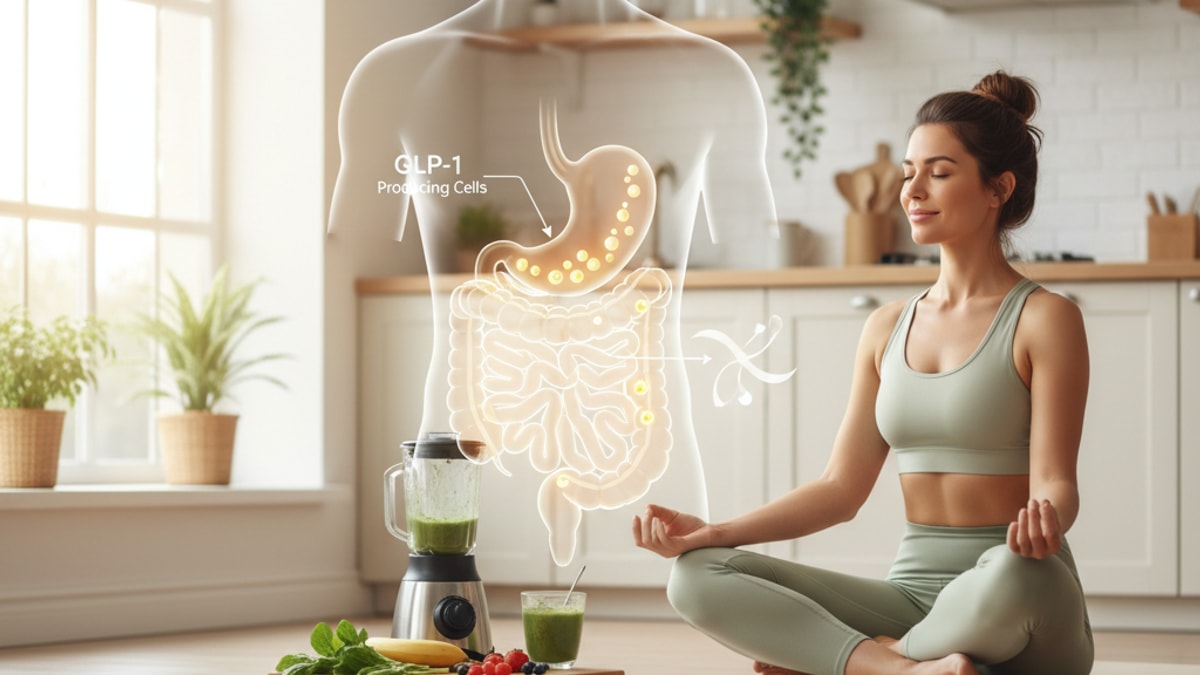
The Question Everyone's Asking in 2026
It seems like you can't have a conversation about health, wellness, or weight management in 2026 without hearing about GLP-1. It's the science behind some of the most transformative medical weight loss treatments we've ever seen, including the Semaglutide and Tirzepatide programs we manage here at TrimrX. We've seen its effects firsthand, helping countless patients break through frustrating plateaus and achieve sustainable, life-changing results. It’s a genuine revolution.
But amidst all the buzz, a fundamental question often gets lost: what exactly is this stuff, and where does it come from? It’s not some synthetic chemical invented in a lab, at least not originally. It's a hormone your body already makes. Understanding its origin story isn't just a fun piece of trivia; it’s mission-critical for anyone considering or currently using a GLP-1 medication. It empowers you to understand how these treatments work with your body's natural systems. So, let’s get into it. Where is GLP-1 produced?
Your Gut: The Epicenter of GLP-1 Production
The vast majority of your body's GLP-1—we're talking upwards of 90%—is produced in your gastrointestinal (GI) tract. It's not just one spot, either. The production is handled by highly specialized endocrine cells called enteroendocrine L-cells. Think of these L-cells as tiny, intelligent hormone factories scattered throughout the lining of your gut, waiting for the right signal to spring into action.
These L-cells are most densely concentrated in the lower part of your small intestine (the distal ileum) and your large intestine (the colon). This strategic placement is no accident. It's a masterpiece of biological engineering. Food takes time to travel from your stomach down to these lower regions of the gut. By placing the L-cells here, your body ensures that GLP-1 is released later in the digestive process, precisely when it's needed to signal that you're full and to manage the nutrients being absorbed.
When you eat a meal, particularly one containing fats, proteins, and carbohydrates, these nutrients travel down your digestive tract. As they reach the ileum and colon, they directly stimulate the L-cells. It’s a direct cause-and-effect relationship. The presence of undigested food in this part of the gut is the primary trigger. In response, these L-cells synthesize and secrete GLP-1 into your bloodstream. From there, it travels throughout your body to exert its powerful effects on your appetite, blood sugar, and even your brain. It's a beautifully orchestrated system, and it happens every single time you eat.
The Brain's Surprising Role in GLP-1 Synthesis
Now, this is where the story gets even more interesting, and it’s a detail that many people miss. Your gut isn't the only place where GLP-1 is produced. A small but significant amount is also synthesized directly within your brain.
Deep in the brainstem, in an area called the nucleus of the solitary tract (NTS), a specific population of neurons has the ability to produce GLP-1. This is a completely separate system from the gut. The GLP-1 made here doesn't enter your general circulation like the hormone from your L-cells. Instead, it acts locally as a neurotransmitter, sending signals directly to other areas of the brain that control appetite, satiety, and even reward-seeking behavior related to food. It's a more targeted, localized effect.
Why does the body have this redundant system? Our team believes it highlights the hormone's critical importance. The brain-derived GLP-1 helps reinforce the satiety signals coming from the gut. So, while your gut is telling your body, "Hey, we've got plenty of fuel, slow down," your brain is simultaneously creating its own GLP-1 to say, "Confirmed. We're satisfied, stop seeking food." This dual-action mechanism creates an incredibly robust system for appetite regulation. It's one reason why GLP-1's effects on reducing food cravings and 'food noise' can feel so profound for patients in our programs. It’s tackling the problem from two different, yet interconnected, biological angles.
It’s a truly fascinating piece of neurobiology.
The Trigger: What Tells Your Body to Make GLP-1?
We touched on this, but it's worth a closer look because it's so central to how your body manages energy. The release of GLP-1 isn't random; it's a direct, physiological response to eating. Let’s be blunt: this is the mechanism that modern GLP-1 medications are designed to mimic and amplify.
The process is elegantly simple. When food enters your digestive system, your body gets to work breaking it down. The key macronutrients—fats, proteins, and carbohydrates—are the primary stimulants for those L-cells we talked about. As these digested nutrients reach the lower intestine, they bind to specific receptors on the surface of the L-cells.
This binding action is like a key turning in a lock. It kickstarts a chain of events inside the cell that results in the production and secretion of GLP-1. Different nutrients can have slightly different effects on the amount of GLP-1 released, but the overall trigger is the physical presence of food. This is why you feel fuller after a balanced meal containing protein and healthy fats than you might after consuming simple sugars alone. Those more complex nutrients provide a stronger, more sustained signal for GLP-1 release.
This system is designed to be a real-time feedback loop. The more you eat, the more GLP-1 is released, which then tells your stomach to empty more slowly and your brain that you're full. It's your body's natural, built-in portion control system. The problem for many people struggling with weight is that this system can become dysregulated over time, leading to weaker signals and a constant feeling of hunger. That's where medical intervention can make a monumental difference.
The Problem: Natural GLP-1 Has a Short Lifespan
So, if our bodies are such efficient GLP-1 factories, why do so many people need medication? Here's the catch, and it's a big one. The GLP-1 your body produces naturally has an incredibly short half-life. We're talking about less than two minutes.
That's not a typo. Two minutes.
As soon as the GLP-1 from your gut enters the bloodstream, it's targeted by an enzyme called dipeptidyl peptidase-4, or DPP-4 for short. This enzyme is relentless. Its job is to find GLP-1 and break it down, deactivating it almost immediately. This rapid degradation means that the powerful satiety signals from your natural GLP-1 are fleeting. They do their job in the moment, but they don't stick around.
This is a critical, non-negotiable element of your biology. For someone with a healthy metabolism, this system works just fine. But for individuals battling insulin resistance, metabolic syndrome, or chronic weight issues, this short-lived signal just isn't enough to overcome the complex factors driving weight gain. The signal is too weak and vanishes too quickly. It’s like trying to put out a forest fire with a squirt gun. This is precisely the problem that GLP-1 agonist medications were developed to solve. They aren't just more of the same hormone; they are structurally different, engineered to do what our natural GLP-1 cannot: survive.
Natural vs. Medicated: A Tale of Two GLP-1s
Understanding the difference between the hormone your body makes and the medications we use in our medically-supervised programs is crucial. They share a name and a goal, but their execution is worlds apart. Our experience shows that when patients grasp this difference, their adherence and success with the treatment skyrocket. They understand the 'why' behind the medicine.
Let’s break it down in a simple table.
| Feature | Natural GLP-1 (Produced by your body) | GLP-1 Agonist Medications (e.g., Semaglutide) |
|---|---|---|
| Origin | L-cells in the gut and neurons in the brain. | Synthesized in a lab, administered via injection. |
| Half-Life | Extremely short; less than 2 minutes. | Extremely long; up to 7 days (for weekly doses). |
| Mechanism | Rapidly broken down by the DPP-4 enzyme. | Engineered to be resistant to the DPP-4 enzyme. |
| Effect | Provides a brief, post-meal signal for satiety and insulin release. | Provides a constant, steady-state level of GLP-1 activity. |
| Impact | A fleeting feeling of fullness and blood sugar regulation. | Sustained appetite suppression, reduced 'food noise', and significant weight loss. |
| Best For | Moment-to-moment metabolic regulation in a healthy system. | Medically-supervised treatment for chronic weight management and related conditions. |
See the difference? It's dramatic. GLP-1 medications like Semaglutide and Tirzepatide work by mimicking the effects of natural GLP-1 but are designed to resist breakdown by the DPP-4 enzyme. This allows them to remain active in your body not for minutes, but for days. This sustained action provides a constant, powerful signal to your brain and gut, leading to the profound appetite suppression and improved metabolic health that has made these treatments so effective in 2026. It's not about overriding your body; it's about amplifying a natural signal that has become too quiet.
Why This Knowledge Empowers Your Journey
So, why did we just spend all this time on a deep dive into cell biology? Because at TrimrX, we believe an empowered patient is a successful patient. When you understand that GLP-1 is produced in your own body, it demystifies the treatment. It's not some foreign substance; it's a medication that enhances a system you already have.
This knowledge helps you in several ways:
- It Builds Confidence: Knowing you're working with your body's natural pathways can be incredibly motivating. You're not fighting against your biology; you're giving it the support it needs to function optimally.
- It Improves Conversations: You can have more informed, productive discussions with our clinical team. You can ask smarter questions and better understand the nuances of your treatment plan. You become an active participant in your own care.
- It Fosters Realistic Expectations: You understand that the goal is to restore a powerful biological signal. This isn't a 'magic pill'; it's a sophisticated medical tool that, when combined with lifestyle adjustments, creates the right environment for sustainable weight loss.
Our most successful patients are the ones who get curious. They ask questions. They want to understand the science. They see their treatment not just as a prescription, but as a partnership with their own physiology. We can't stress this enough: your understanding is a powerful tool.
The TrimrX Approach: Expert Guidance on Your GLP-1 Path
Knowing where GLP-1 is produced is the first step. The next is figuring out how to leverage that science for real-world results. That's where we come in. Simply taking a GLP-1 medication isn't a complete strategy. Our entire program is built around the principle of medically-supervised, holistic care.
We start with a thorough evaluation to understand your unique physiology and health goals. Our clinical team doesn't just write a prescription; we create a comprehensive plan that uses powerful medications like Semaglutide or Tirzepatide as a cornerstone. We provide the expert guidance needed to manage dosage, mitigate side effects, and combine the medication with the right nutritional and lifestyle strategies to maximize its effectiveness.
We've found that this hands-on, supportive approach is what separates fleeting results from long-term, sustainable health transformations. We're harnessing the power of a hormone your body already knows and understands, but we're doing it with the precision and safety that only a dedicated medical team can provide. If you're ready to see how this science can change your life, we're ready to help. You can Start Your Treatment Now and begin your own journey with our expert team.
Understanding the 'where' and 'why' of GLP-1 production is more than just an academic exercise. It's the foundation of one of the most significant advances in weight management we've seen in decades. It’s the science of you, unlocked. And by partnering with a team that deeply understands that science, you're not just starting a diet; you're starting a new relationship with your body's own powerful biology.
Frequently Asked Questions
Where is GLP-1 produced in the body?
▼
The vast majority of GLP-1 is produced by specialized L-cells in your lower small intestine (ileum) and large intestine (colon). A smaller, but still important, amount is also produced by neurons in the brainstem, where it acts as a neurotransmitter.
Does everyone produce the same amount of GLP-1?
▼
No, there can be significant variation. Factors like genetics, gut health, and metabolic conditions like insulin resistance can affect how much GLP-1 your body produces and releases in response to a meal. This variation is one reason why responses to food can differ so much between individuals.
Can I increase my natural GLP-1 production with food?
▼
Yes, to an extent. Eating meals rich in protein, fiber, and healthy fats can stimulate a stronger release of natural GLP-1 from your L-cells compared to simple carbohydrates. However, for those with significant weight to lose, this natural boost is often insufficient, which is where GLP-1 medications come in.
What’s the difference between GLP-1 produced in the gut versus the brain?
▼
Gut-derived GLP-1 enters the bloodstream and acts as a hormone throughout the body, affecting the pancreas, stomach, and brain. Brain-derived GLP-1 acts locally as a neurotransmitter, directly signaling to appetite centers in the brain to promote feelings of fullness.
Why does my natural GLP-1 disappear so quickly?
▼
Your body has an enzyme called DPP-4 whose primary job is to break down and deactivate GLP-1. It does this very efficiently, giving natural GLP-1 a half-life of less than two minutes in the bloodstream.
How do medications like Semaglutide work if natural GLP-1 is so short-lived?
▼
GLP-1 agonist medications are specifically engineered to resist being broken down by the DPP-4 enzyme. This allows them to remain active in your body for days, providing a constant and powerful signal to reduce appetite and improve metabolic function.
Is the GLP-1 in medications the same as what my body makes?
▼
They are very similar but not identical. The medications are ‘analogs’ or ‘agonists,’ meaning they are designed to mimic the shape and function of natural GLP-1 to bind to the same receptors, but with structural modifications that make them last much longer.
Does exercise affect where GLP-1 is produced?
▼
Exercise doesn’t change where GLP-1 is produced, but some research suggests that intense exercise can increase GLP-1 secretion. This may be one of the many mechanisms through which physical activity helps regulate appetite and body weight.
If I take a GLP-1 medication, does my body stop producing its own?
▼
No, your body continues its natural production process. The medication works by adding to and amplifying the signals your body already produces, creating a much stronger and more sustained effect than your natural GLP-1 could achieve on its own.
Are there any conditions that decrease GLP-1 production?
▼
Yes, some studies suggest that individuals with type 2 diabetes or obesity may have a blunted or impaired GLP-1 response to food. This means their bodies may not produce enough of the hormone after a meal, contributing to poor blood sugar control and difficulty managing weight.
How does TrimrX help with GLP-1 treatment?
▼
At TrimrX, we provide medically-supervised treatment plans using FDA-registered GLP-1 medications. Our clinical team offers expert guidance on dosage, lifestyle integration, and side effect management to ensure you get the safest and most effective results from your therapy.
What is the main function of the L-cells?
▼
L-cells are enteroendocrine cells in your gut lining. Their main function is to sense the presence of nutrients from food and, in response, produce and secrete key hormones like GLP-1 and Peptide YY (PYY) that regulate digestion and appetite.

Transforming Lives, One Step at a Time
Keep reading
What Labs Should Your Doctor Run Now That You’re on a GLP-1?
There is no universal panel, and anyone handing you a fixed list is guessing about your situation. What gets checked depends on what conditions…

Can’t Eat Enough Protein on a GLP-1? Why It Matters and What Helps
This is one of the most common difficulties on these medications, and the tension in your question is real: protein is the thing most…
Type 2 Diabetes Medications and a New GLP-1: What to Tell Your Doctor
Tell whoever prescribed the GLP-1 exactly what diabetes medications you take, at what doses, before your first injection. That conversation needs to happen first,…


