How to Adjust Weight Loss Goals on GLP-1 Medications

Losing weight on GLP-1 medications like Wegovy or Ozempic isn’t just about hitting a number on the scale – it’s about tracking overall health and making adjustments along the way. These medications mimic hormones that reduce hunger and slow digestion, but your body’s response can change over time. Plateaus, muscle loss, or shifts in appetite are normal, and staying flexible with your goals is key to long-term success.
Here’s how to stay on track:
- Track progress beyond weight: Use tools like DEXA scans or waist measurements to monitor fat vs. muscle changes.
- Check your health markers: Regularly test blood sugar, cholesterol, and vitamin levels.
- Improve habits: Focus on protein-rich meals, strength training, and quality sleep to support weight loss.
- Adjust medication carefully: Work with your provider to tweak dosages or manage side effects.
Remember: Progress isn’t just about weight loss – it’s about better energy, mobility, and health.
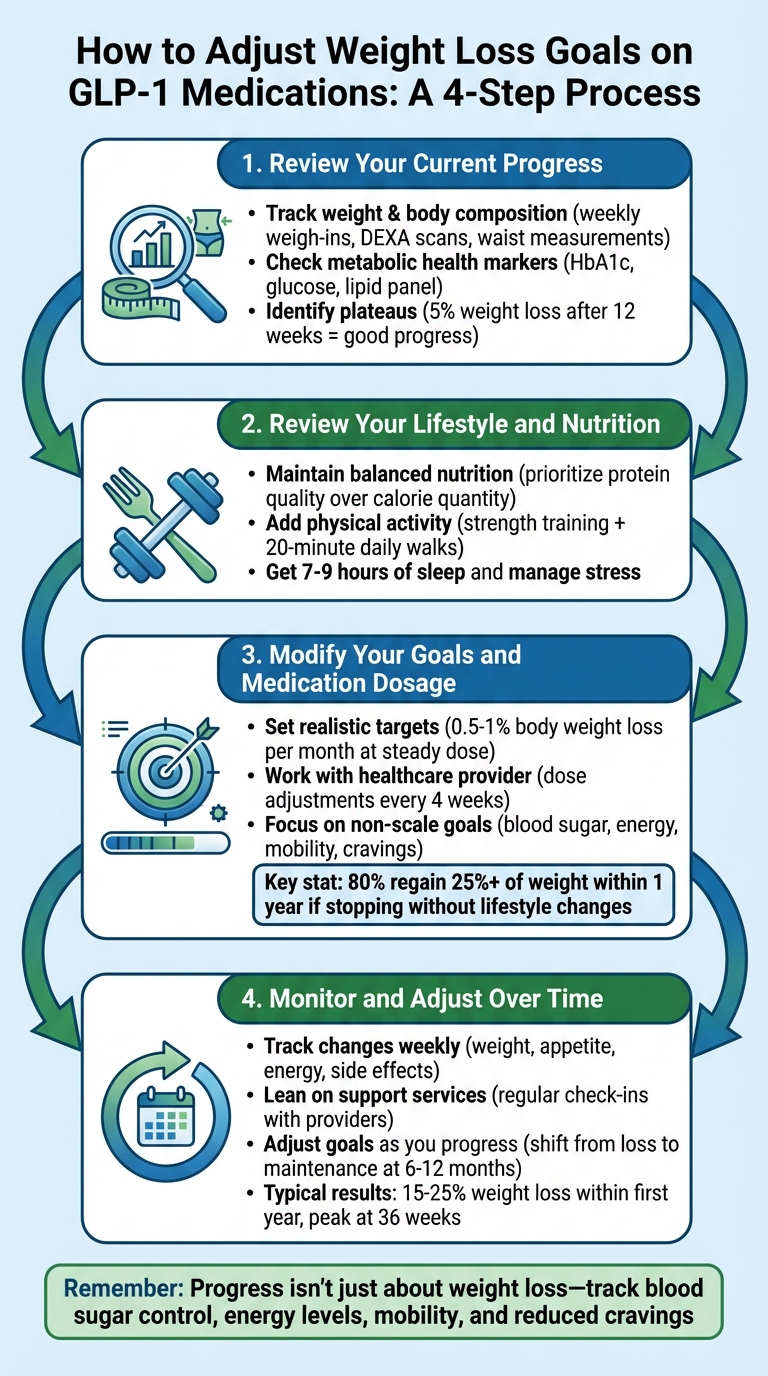
4-Step Process for Adjusting Weight Loss Goals on GLP-1 Medications
Are You Setting the Wrong Goal Weight on GLP 1?
sbb-itb-e2779c3
Step 1: Review Your Current Progress
Before adjusting your goals, it’s crucial to understand where you currently stand. The number on the scale is just one piece of the puzzle – your overall health and body composition are equally important.
Track Weight and Body Composition
Weigh yourself once a week under consistent conditions: in the morning, after using the bathroom, and before eating. This helps ensure accurate comparisons over time. But don’t rely solely on BMI – it doesn’t distinguish between muscle and fat. Tracking improperly could lead to unintended muscle loss.
For a precise breakdown of body composition, DEXA scans are highly regarded for measuring bone density, fat mass, and lean muscle. If DEXA scans aren’t accessible, bioelectrical impedance devices or even waist measurements can help track changes. A shrinking waistline, for example, often indicates a reduction in visceral fat, even if the number on the scale doesn’t budge much.
Dr. Yoshinori Abe advises, "GLP-1 users should track body composition, waist size, strength, and metabolic labs rather than weight or BMI alone, since BMI cannot show fat versus muscle."
Pay attention to your physical strength as well. If you notice tasks like carrying groceries or climbing stairs becoming harder despite weight loss, it could signal muscle loss. These physical indicators, combined with internal health markers, provide a more complete picture of your progress.
Check Your Metabolic Health Markers
Sometimes, the most meaningful changes happen inside your body before they’re visible externally. Monitoring markers like HbA1c (which reflects your average blood sugar over 2–3 months), fasting glucose, and fasting insulin levels can reveal how well your body is managing energy. A full lipid panel – including LDL, HDL, and triglycerides – can also show improvements in cardiovascular health.
Start with baseline lab tests before treatment, then retest after 3–6 months. After that, annual monitoring is usually sufficient unless new symptoms arise. Additionally, if your appetite has significantly decreased, you may develop nutritional deficiencies, particularly in Vitamin B12 and Folate. If this is a concern, ask your healthcare provider to check these levels. Pair these results with symptom tracking to stay on top of your progress and address any challenges.
Identify Plateaus and Side Effects
A 5% weight loss after 12 weeks on a maintenance dose is a good indicator of progress. If your progress slows, spend 7–10 days logging your calorie intake to identify subtle increases that might be stalling your results.
Keep a record of any gastrointestinal symptoms, such as nausea, vomiting, or constipation, using a 0–10 scale. This can help you and your provider make informed decisions about dosage adjustments. As your body adapts to weight loss, it may become more energy-efficient, which can naturally lead to plateaus. These are not failures but signals to reassess your nutrition and activity levels.
Step 2: Review Your Lifestyle and Nutrition
GLP-1 medications work best when paired with healthy lifestyle habits. How you eat, move, sleep, and handle stress can significantly impact your results and help maintain muscle while losing weight. To get the most out of your treatment, focus on improving your daily routines alongside your medication plan. Let’s start with your nutrition.
Maintain Balanced Nutrition
With GLP-1 medications, your appetite will likely decrease, making the quality of your meals more important than the quantity.
Amy J. Sheer, Associate Professor of Medicine at the University of Florida, emphasizes this: "With GLP-1 drugs, the goal for nutrition has shifted from calorie restriction to calorie quality."
To preserve muscle, prioritize protein at every meal. Great options include lean meats, fish, eggs, Greek yogurt, cottage cheese, or legumes. Since you’ll feel full more quickly, choose nutrient-packed foods like grilled chicken and vegetables instead of high-calorie snacks. If meeting your protein needs through food alone feels tough, a protein shake between meals can help fill the gap.
Add Physical Activity
[Staying active is key to maintaining muscle while losing weight on GLP-1 medications](https://trimrx.com/blog/can-you-exercise-on-glp-1-medications-a-comprehensive-guide/). Strength training is particularly helpful in protecting lean tissue and breaking through weight-loss plateaus. Even a brisk 20-minute walk each day can make a difference and keep you moving toward your goals.
Get Enough Rest and Manage Stress
Sleep and stress management are often overlooked but play a big role in weight loss. Losing weight can disrupt hunger hormones like ghrelin and leptin, which can lead to more cravings and poor sleep. Aim for 7–9 hours of sleep each night to keep your metabolism and hormones in balance. To manage stress, try simple techniques like walking, meditating, or deep breathing. Poor sleep and chronic stress can lead to emotional eating, which could undermine your progress on GLP-1 medications.
Step 3: Modify Your Goals and Medication Dosage
Once you’ve reviewed your progress and habits, it’s time to adjust your goals and work with your healthcare provider to fine-tune your medication dosage. As your body adapts to GLP-1 therapy, making these changes is key to staying on track.
Set Realistic Weight Loss Targets
Base your weight loss goals on the trends you’ve observed so far. For example, if you started at 200 pounds, an initial loss of 1-2% of your body weight is a reasonable expectation. As you continue, the pace of weight loss will naturally slow. Once you’ve reached a steady dose, aiming for 0.5-1% of body weight loss per month is more practical than hoping for rapid early results.
To maintain muscle mass while losing weight, focus on eating 1.0-1.5 grams of protein per kilogram of body weight daily. If you hit a plateau after 3-6 months, don’t be discouraged – this is normal. Instead, tweak your approach to keep moving forward.
Work with Your Healthcare Provider
Before making any adjustments to your GLP-1 medication, consult your healthcare provider. They’ll monitor your side effects, metabolic markers, and overall progress. Typically, providers increase doses gradually – about every four weeks – until you reach the maximum level you can handle without significant side effects, like nausea.
If you hit a plateau, your provider might adjust your dose. This could mean lowering it if cravings resurface or spacing out injections to reduce costs while maintaining progress. It’s worth noting that stopping GLP-1 therapy entirely can lead to weight regain. Research shows that within a year, people may regain about 14% of their body weight, with over 80% regaining at least 25% of what they lost. However, combining lifestyle changes with tailored dosing can help prevent this.
Services like TrimRX offer personalized dosing strategies with unlimited check-ins, allowing providers to make adjustments based on your body’s unique response. Beyond dosage, focus on health markers that go beyond the number on the scale.
Focus on Non-Scale Goals
While adjusting your dosage can support weight loss, it’s important to track other signs of progress. The scale only tells part of the story. Pay attention to improvements in areas like blood sugar control (lower A1C levels), increased daily energy, better blood pressure or cholesterol levels, fewer cravings, and greater mobility. These changes can be just as important as weight loss, especially during maintenance phases.
Keep a journal or use an app to document these wins. Maybe you’re walking farther without feeling tired, your clothes fit better, or you’re sleeping more soundly. The World Health Organization highlights that GLP-1 medications also reduce risks for heart and kidney issues, offering benefits that extend far beyond weight loss. When the scale isn’t moving, these non-scale victories remind you that your health is improving in meaningful ways.
Step 4: Monitor and Adjust Over Time
Once you’ve reviewed your progress and updated your goals, staying on top of things with regular monitoring is key. Managing weight loss with GLP-1 medications requires ongoing attention and timely tweaks. As your body changes, your strategies will need to adapt. Keep an eye on important metrics and work closely with your healthcare team to tackle any challenges early.
Track Changes and Spot Issues
Weekly weigh-ins can give you a quick overview of your progress, but they’re just part of the bigger picture. Pay attention to other signs, like shifts in your appetite or food cravings. For example, if cravings start creeping back after being under control, it might mean your current dose isn’t as effective anymore. Also, take note of how your clothes fit, your daily energy levels, and any new side effects, such as nausea or digestive discomfort.
Lab tests are another critical tool. Regularly check markers like HbA1c, blood pressure, and cholesterol levels. These often improve even if your weight loss slows down. But if you notice a steady weight gain, don’t wait – reach out to your healthcare provider to discuss possible adjustments.
Lean on Support Services
You don’t have to do this alone. Expert guidance can make a big difference. Regular check-ins with healthcare professionals and nutritionists can help you stay on track. Services like TrimRX offer continuous support with personalized dosing plans and unlimited consultations. A registered dietitian can also help you fine-tune your eating habits. For instance, they can create meal plans to ensure you’re getting enough protein – around 0.55 grams per pound of body weight (that’s about 82 grams a day for someone who weighs 150 pounds). This is crucial for maintaining muscle mass. They can also help you spot hidden calorie traps, like sugary drinks, creamy sauces, or processed snacks, that might slow your progress. Research shows that people who have consistent medical supervision tend to see better results over time.
Adjust Goals as You Move Forward
As you hit milestones, your goals should evolve to match your progress. In the first six months, many people aim to lose about 10% of their body weight. Once you’ve reached the consolidation phase – typically 6 to 12 months into treatment – the focus often shifts to maintaining your progress and celebrating achievements beyond the scale. These might include better blood sugar levels, improved mobility, or reduced cravings.
If your weight plateaus for several months while on a stable dose, it might be time to revisit your strategy with your provider. Two common adjustments include “stepping down,” where the dose is gradually lowered while monitoring for cravings, or “stretching out,” which involves extending the time between doses (e.g., moving from weekly to every 10–14 days). This can help maintain results while potentially lowering costs.
Regular follow-ups with your healthcare provider are essential, whether you’re actively losing weight or maintaining it. These visits allow you to reassess your goals and make adjustments based on where you are in your journey. For example, if your original goal was to lose 30 pounds but you’ve stabilized at 25 pounds while building strength through resistance training, it might make sense to shift your focus to long-term health and maintaining your current progress. This ongoing process of monitoring and fine-tuning is what helps ensure lasting success.
Conclusion
Adjusting your weight loss goals while using GLP-1 medications isn’t something you do just once – it’s a continuous process. Regular check-ins with your healthcare team are key. The process includes tracking your progress through weight and metabolic markers, assessing lifestyle habits like diet and activity, working with your provider to modify goals and dosage, and keeping an eye on how your body responds over time. This cycle helps set the stage for lasting results.
GLP-1 medications often lead to weight loss of 15–25% within the first year, with most people reaching their peak loss around 36 weeks. But here’s the catch: studies show that over 80% of individuals regain at least 25% of the weight within a year after stopping treatment if lifestyle changes aren’t in place. That’s why it’s important to shift your mindset beyond just the number on the scale. Celebrate wins like better blood pressure, more energy, or fewer cravings as you move from active weight loss to maintenance.
You don’t have to navigate this journey alone. Programs like TrimRX offer valuable support, including personalized consultations, custom dosing plans for GLP-1 medications (like Semaglutide, Tirzepatide, Mounjaro, Zepbound, Wegovy, and Ozempic), and unlimited check-ins to adjust your strategy as needed. Pairing this medical guidance with smart nutritional habits – such as eating 0.55 grams of protein per pound of body weight daily – helps protect muscle mass and keep your metabolism healthy. Staying flexible and committed to these steps is the key to managing your weight for the long haul.
FAQs
How do I know if my plateau is normal or a problem?
A weight loss plateau during GLP-1 treatment is a common occurrence and usually happens as your body adapts to the changes. Clinical trials often reveal a pattern of quick initial weight loss that eventually levels off. If the plateau continues for an extended period or causes concern, it might be helpful to reevaluate your habits, lifestyle, or even your medication dosage. Always reach out to your healthcare provider for tailored advice and support.
How can I avoid losing muscle while on a GLP-1?
To keep muscle loss at bay while taking GLP-1 medications, prioritize maintaining lean muscle mass by combining enough protein in your diet with resistance training. Protein plays a key role in supporting muscle health, while strength-focused exercises can help combat muscle atrophy. Keep track of your progress regularly and work with healthcare professionals to fine-tune your approach for the best outcomes and reduced muscle loss.
What should I track besides the scale to reset my goals?
When managing your progress during GLP-1 treatment, don’t just focus on the number on the scale. Keep an eye on other important metrics like body measurements (waist, hips, etc.), body fat percentage, muscle mass, and your physical activity levels. Tracking these gives you a more complete view of your progress and helps ensure your weight loss journey stays balanced and healthy.
Related Blog Posts

Transforming Lives, One Step at a Time
Keep reading

GLP-1 Medications and Mental Health: What to Expect and When to Get Support
Most of what gets written about GLP-1 medications covers the body. Dosing, appetite, nausea, what to eat, what to expect on the scale. Less…

Mons Pubis Fat Loss on GLP-1s: The “Pubic Area” Change Nobody Mentions
One change that surprises people on GLP-1 medications rarely comes up in conversation: the mons pubis, the soft fat pad over the pubic bone,…

Falsified Mounjaro pens prompt urgent safety advisory
MHRA warns of counterfeit Mounjaro pens (batch D873576); stop use and check batch numbers for infection risk.


