Strength Training on Ozempic: Preserving Muscle While Losing Fat
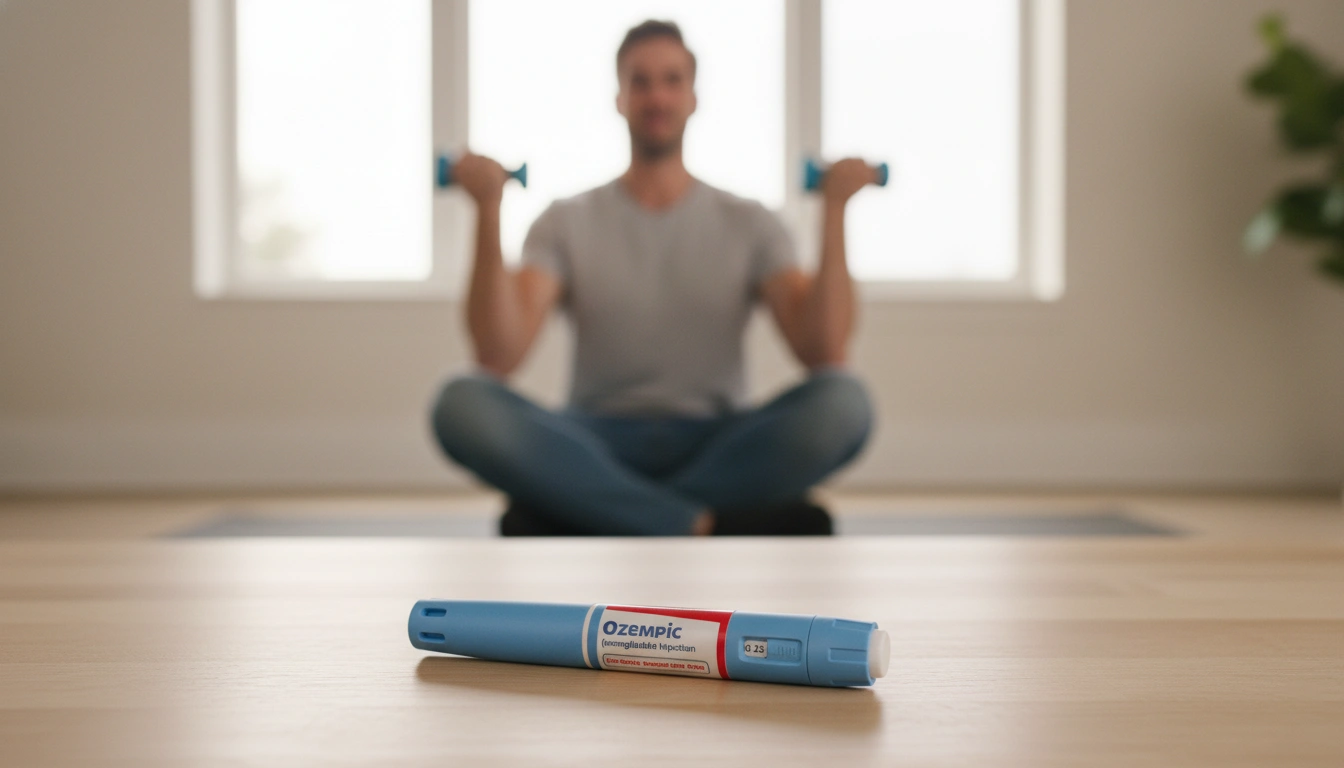
Strength training on Ozempic isn’t optional if your goal is a good body composition outcome. The appetite suppression that makes semaglutide so effective for weight loss also creates conditions where muscle loss can happen alongside fat loss if you’re not actively working against it. Resistance training is the most effective tool for preserving lean mass during a caloric deficit, and patients who add it to their treatment consistently end up looking and feeling better at the same weight than those who don’t. Here’s what you need to know to make it work.
Why Muscle Loss Happens on Semaglutide
When you eat less, your body draws on stored energy to meet its needs. Ideally, that stored energy comes entirely from fat. In practice, the body also breaks down some muscle protein for fuel during caloric restriction, a process called catabolism. How much muscle you lose depends on two things: how much protein you eat and whether you’re sending your muscles a signal to stay.
Semaglutide suppresses appetite broadly, which means many patients eat significantly less overall, including less protein. Without adequate protein and a mechanical stimulus telling the body to maintain muscle tissue, lean mass decreases alongside fat. Patients who lose 30 or 40 pounds without doing anything to preserve muscle often end up at a lower weight but with a higher body fat percentage than they expected, what researchers sometimes call sarcopenic weight loss.
The scale might show exactly the number you were aiming for, but the body composition behind that number matters enormously for how you look, how you feel, and how your metabolism functions long-term.
What the Research Shows
A 2021 analysis published in Obesity Reviews examined body composition changes during GLP-1 receptor agonist treatment and found that patients who combined resistance training with GLP-1 therapy preserved significantly more lean mass than those who relied on the medication alone. Fat loss was similar between groups, meaning exercise didn’t slow overall weight loss, it just improved the composition of what was lost.
This finding aligns with what providers working with GLP-1 patients see in practice. The medication does the heavy lifting on appetite suppression and fat mobilization. Resistance training handles muscle preservation. The two work together rather than against each other.
How Much Strength Training Do You Actually Need
The good news is that you don’t need to spend hours in the gym to preserve muscle on semaglutide. The threshold for maintaining lean mass during a caloric deficit is lower than most people assume.
Two to three resistance training sessions per week, each lasting 30 to 45 minutes, is sufficient for most patients to meaningfully preserve muscle during weight loss. The sessions don’t need to be intense. Moderate loads performed with good form and enough volume to challenge the muscles are what matter.
For patients who are new to strength training, starting with bodyweight exercises, resistance bands, or light machine weights is entirely appropriate. The goal in the early weeks is to establish the habit and send the muscle-preservation signal, not to maximize strength gains.
As the body adapts and weight loss progresses, gradually increasing resistance keeps the stimulus effective. Patients who stay at the same light load for months eventually lose the muscle-preservation benefit because the body adapts to that level of stimulus.
The Best Exercises for Patients on Ozempic
Compound movements, exercises that work multiple muscle groups simultaneously, give you the most return for time invested. For patients with limited time or gym access, a routine built around a handful of compound movements covers the full body efficiently.
Squats and variations. Bodyweight squats, goblet squats, or leg press all work the quadriceps, hamstrings, and glutes, the largest muscle groups in the body. Preserving leg muscle has an outsized effect on overall metabolism because these muscles are so large.
Hip hinges. Deadlifts, Romanian deadlifts, or kettlebell swings work the posterior chain, including the hamstrings, glutes, and lower back. These movements are particularly valuable for patients who sit for much of the day.
Pushing movements. Push-ups, dumbbell chest press, or overhead press work the chest, shoulders, and triceps. Upper body pushing strength declines quickly during caloric restriction without a training stimulus.
Pulling movements. Rows, lat pulldowns, or assisted pull-ups work the back and biceps. Upper body pulling strength is often undertrained and directly affects posture and how the torso looks as fat is lost.
Core work. Planks, dead bugs, and pallof presses build functional core strength that supports all other movements and contributes to a more defined midsection as fat is lost.
A simple three-day-per-week routine alternating between lower body and upper body emphasis, or full-body sessions each time, covers everything most patients need.
Timing Strength Training Around Injections
Some patients find that the day of or day after their weekly injection brings more nausea or fatigue, particularly in the first few months of treatment. Scheduling strength training sessions for days two through five after injection often feels better and produces more consistent workouts.
As side effects diminish with time, most patients find they can train on any day without significant disruption. The key is listening to your body in the early months and not forcing workouts on days when GI symptoms are affecting your energy or focus.
Protein and Strength Training Work Together
Resistance training sends the signal to preserve muscle. Protein provides the raw materials. Both are necessary. Neither alone is sufficient.
Patients who strength train but consistently under-eat protein don’t preserve muscle as effectively as those who do both. The general recommendation for patients on GLP-1 medications doing resistance training is 1.2 to 1.6 grams of protein per kilogram of body weight daily, which works out to roughly 100 to 140 grams for most patients in a typical treatment weight range.
Getting that protein in when appetite is suppressed requires some deliberate planning. Prioritizing protein at the start of each meal, before appetite suppression kicks in fully, and using protein-forward snacks like Greek yogurt, cottage cheese, or protein shakes helps patients hit their targets consistently.
What to Expect When You Start
Patients who begin strength training while on semaglutide sometimes notice their weight loss slows slightly in the first few weeks. This often reflects muscle glycogen replenishment and water retention in newly worked muscles, not a genuine slowing of fat loss. Patients who track measurements alongside scale weight during this period get a more accurate picture of what’s happening.
After the first month, the combination of semaglutide and resistance training typically produces the best body composition outcomes patients on GLP-1 medications achieve. For context on how body composition changes play out over the full treatment arc, the how your body shape changes on GLP-1 medications article covers what to expect at each stage.
For patients building their overall approach to exercise during treatment, the best exercises article in this series covers cardio alongside resistance training and how to combine both effectively. And if you haven’t started treatment yet and want to find out whether you’re a candidate, take the intake assessment to connect with a provider.
This information is for educational purposes and is not medical advice. Consult with a healthcare provider before starting any medication. Individual results may vary.

Transforming Lives, One Step at a Time
Keep reading

Ozempic and Social Isolation: When Food Was How You Connected
This is a real cost of treatment and it does not get discussed much, partly because it sounds minor next to the medical benefits….

Can’t Comfort Eat on Ozempic and Don’t Feel Better? Why That Happens
Because the eating was doing a job, and removing your capacity to do it does not remove the need it was meeting. That is…

Food Noise Came Back on Ozempic? Whether It’s Your Dose or Your Stress
The pattern tells you more than the intensity does. Food noise that returns gradually over weeks and stays constant points toward the medication. Food…


