How to Give Ozempic Shot in Belly: A Step-by-Step Guide

Introduction
Standing in the kitchen with a small, specialized pen in your hand for the first time can feel overwhelming. Many of our patients at TrimRx share the same initial hesitation: the thought of self-injecting a medication seems complicated, and the fear of “doing it wrong” is a common hurdle. If you’re considering a personalized treatment path, you can take our free assessment quiz to see whether a medically supervised GLP-1 program may be right for you. Whether you are managing type 2 diabetes or using this medication for weight management, learning how to give an Ozempic shot in the belly is a skill that quickly becomes second nature. This post covers everything from preparing your supplies to the actual injection technique and site rotation. By following these evidence-based steps, you can ensure your medication is delivered safely and effectively. We are here to support you in simplifying this process so you can focus on your health goals with confidence.
What is Ozempic® and How Does it Work?
Ozempic® (semaglutide) belongs to a class of medications known as GLP-1 receptor agonists. GLP-1 stands for glucagon-like peptide-1, which is a hormone naturally produced in your gut. This hormone plays a critical role in how your body manages blood sugar and appetite. When you inject semaglutide, it mimics this hormone, sending signals to your brain that you are full while also slowing down how quickly your stomach empties.
Because this medication has a long “half-life”—meaning it stays active in your system for a significant amount of time—it only needs to be administered once every seven days. It is designed for subcutaneous injection, which means it goes into the fatty tissue just beneath the skin rather than into a vein or a muscle. The belly is one of the most common and accessible areas for these types of injections.
Key Takeaway: Ozempic® mimics the natural hormone GLP-1 to regulate hunger and blood sugar, requiring only one weekly injection into the fatty tissue under the skin.
Why the Belly is a Preferred Injection Site
When looking for the best place to administer your weekly dose, the abdomen or “belly” area is often the top choice for both providers and patients. There are several reasons why this area is highly recommended:
- Ease of Access: Unlike the back of the arm, you can easily see and reach your abdomen, allowing for a more controlled injection.
- Consistency: The subcutaneous fat in the abdominal area provides a consistent environment for the medication to be absorbed into the bloodstream.
- Surface Area: The belly offers a large area for site rotation, which is essential for maintaining skin health over a long-term treatment program.
It is important to remember that you should stay at least two inches away from your navel (belly button). Avoid any areas where the skin is tender, bruised, red, or hard. You should also avoid injecting directly into scars or stretch marks, as these tissues may not absorb the medication as effectively.
For a deeper look at why rotating injection sites for semaglutide matters, this routine can help protect the skin over time.
Gathering Your Supplies
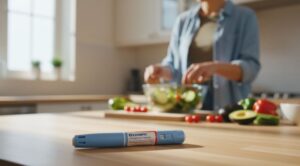
Before you begin, create a clean workspace. Having everything ready reduces anxiety and ensures you do not have to stop mid-process. If you want a closer look at the device itself, our Ozempic pen overview explains the pen in more detail. You will need:
- Your Ozempic® pen: Ensure it is the correct dose prescribed by your healthcare provider.
- A new pen needle: Each injection requires a fresh, sterile needle to prevent infection and ensure the needle is sharp.
- An alcohol swab: For disinfecting the skin at the injection site.
- A sharps container: For safe disposal of the used needle. If you do not have a medical sharps container, a heavy-duty plastic bottle with a screw-on lid (like a laundry detergent bottle) can work.
- A cotton ball or gauze: In case there is a tiny drop of blood after the injection.
Important Note: Always check the liquid inside the pen window. It should be clear and colorless. If the liquid looks cloudy, discolored, or has particles floating in it, do not use that pen and contact your pharmacy.
Preparing the Pen and Needle
Bolded Lead Sentence: Proper preparation of the device is the first step in a successful injection. If you want a fuller walk-through of the process, our how to inject semaglutide guide pairs well with these steps.
First, wash your hands thoroughly with soap and warm water. Remove the pen cap and set it aside. Take a new needle and pull off the paper tab. Push the needle straight onto the pen and turn it until it is tight.
Every needle comes with two caps: an outer cap and an inner cap. Pull off the outer needle cap and save it for later (you will use it to safely remove the needle). Then, pull off the inner needle cap and throw it away. You should now see the very fine needle at the tip of the pen.
Quick Answer: To prepare the pen, wash your hands, attach a new needle by twisting it on, and remove both the outer and inner needle caps before checking the flow.
Performing the Flow Check (Priming)
If you are using a brand-new pen for the very first time, you must perform a flow check. This ensures the pen is working correctly and removes any air bubbles.
Step 1: Turn the dose selector until you see the flow check symbol (a small line with a drop). Step 2: Hold the pen with the needle pointing up. Step 3: Press and hold the dose button until the dose counter returns to 0. Step 4: Look for a drop of medication at the needle tip.
If a drop appears, you are ready to proceed. If not, repeat the process. If no drop appears after six attempts, change the needle and try once more. If it still fails, the pen may be defective.
How to Give Ozempic Shot in Belly: The Injection Process
Once your pen is prepared and primed, you can move on to the actual administration.
Step 1: Select Your Prescribed Dose
Turn the dose selector until the counter shows your prescribed dose (for example, 0.25 mg, 0.5 mg, or 1 mg). The dial will click as you turn it. Ensure the number aligns perfectly with the dose pointer.
Step 2: Clean the Injection Site
Use an alcohol swab to clean a circular area on your belly, at least two inches away from your belly button. Let the skin air dry for a few seconds. Injecting into wet alcohol can cause a slight stinging sensation.
Step 3: Insert the Needle
Hold the pen so that you can see the dose counter window. Insert the needle straight into your skin at a 90-degree angle. You do not need to push hard; the needles are very thin and designed to glide into the fatty tissue easily.
Step 4: Deliver the Medication
Press the dose button all the way down. You will see the dose counter move back toward 0. Once the counter hits 0, do not pull the needle out immediately. Keep the button pressed and count slowly to six. This pause ensures that the full volume of the medication has left the needle and entered the subcutaneous layer.
Step 5: Remove and Dispose
Pull the needle straight out of your skin. If you see a tiny drop of blood, press gently with a cotton ball or gauze, but do not rub the area. Place the outer needle cap back onto the needle carefully and unscrew it from the pen. Drop the used needle into your sharps container immediately. Replace the pen cap to protect the remaining medication from light.
The Importance of Rotating Injection Sites
Bolded Lead Sentence: Frequently changing where you inject is vital for preventing skin complications. If you’d like more detail on best practices, our semaglutide injection site rotation guide explains why this matters.
If you inject into the exact same spot every week, you may develop a condition called lipohypertrophy. This is a buildup of fatty lumps under the skin. These lumps are not usually dangerous, but they can significantly interfere with how your body absorbs the medication. If you inject into a lump, the semaglutide may not work as well as it should.
We recommend a “clock” method for the belly. If you injected at the “12 o’clock” position (above the navel) this week, move to the “3 o’clock” position next week. As long as you stay at least two inches away from the belly button and at least one inch away from your last injection site, you will maintain healthy tissue.
Myth: You have to switch body parts (like moving from belly to thigh) every week. Fact: You can stay with the belly every week as long as you rotate the specific spot where the needle enters the skin.
Storage and Safety Guidelines
How you store your medication is just as important as how you inject it. Ozempic® is a protein-based medication, and it is sensitive to extreme temperatures.
- Unopened Pens: These must be stored in the refrigerator between 36°F and 46°F. Do not store them near the cooling element, as freezing will destroy the medication.
- Opened Pens (In-Use): Once you have used a pen for the first time, it can stay in the refrigerator or at room temperature (below 86°F) for up to 56 days.
- Light Protection: Always keep the pen cap on when you are not using it to protect the liquid from light.
- Travel: If you are traveling, use a small insulated bag to keep your pens at a consistent temperature. Never leave them in a hot car or checked luggage on an airplane.
Managing Common Side Effects and Reactions
While many people tolerate GLP-1 medications well, some experience side effects, particularly when starting a new dose. The most common issues are gastrointestinal, such as nausea, bloating, or a change in bowel habits.
For a broader look at the medication class, our GLP-1 weight loss medication guide is a helpful companion read.
Injection Site Reactions: You might notice slight redness, itching, or a small bruise at the site. This is usually mild and disappears within a day or two. If you notice a spreading rash, intense swelling, or hives, contact your healthcare provider immediately, as this could indicate an allergic reaction.
Nausea Management: To minimize nausea after your injection, try eating smaller, more frequent meals. Avoid greasy or highly processed foods on your injection day. Staying well-hydrated is also essential. For many, these symptoms are temporary and subside as the body adjusts to the medication.
If you want nutritional support during treatment, the GLP-1 Daily Support supplement is designed for that role.
Troubleshooting Common Issues
Sometimes, the process doesn’t go perfectly. Here is what to do in common scenarios:
- The dose counter didn’t hit 0: This usually means the needle is blocked or the pen is empty. Replace the needle and try again. If it still won’t move, you may need a new pen.
- Liquid is leaking from the needle: If you see liquid on your skin after the injection, you likely didn’t wait the full six seconds before pulling the needle out. Do not take a second dose; simply wait until your next scheduled day and remember to count slower next time.
- You missed your dose: If it has been five days or less since your scheduled day, take the dose as soon as you remember. If it has been more than five days, skip the dose and wait for your next scheduled day.
The TrimRx Approach to Weight Management
At TrimRx, we understand that a successful health journey requires more than just a prescription. It requires a partnership built on clinical expertise and personalized care. We provide a telehealth-first platform that connects you with licensed providers who can evaluate your health history and determine if GLP-1 medications are right for you. If you’re ready to see whether you qualify, take the free assessment quiz to get started.
Our programs are fully personalized, meaning your treatment plan is tailored to your specific metabolic needs and lifestyle goals. We believe in transparency and support, and for readers who want energy support during weight loss, the Weight Loss Boost supplement is another option.
Conclusion
Learning how to give an Ozempic shot in the belly is a straightforward process that gets easier with every week. By preparing your supplies, checking the flow, and following the “count to six” rule, you ensure that you are getting the most out of your treatment. Remember that site rotation and proper storage are key to long-term success and skin health.
Our mission is to help you embrace a healthier lifestyle through science and empathy. Sustainable weight loss is a marathon, not a sprint, and having the right tools and guidance makes all the difference.
- Wash hands and prep your pen with a fresh needle.
- Prime new pens and dial your specific dose.
- Clean the belly area (2 inches from the navel) and inject at a 90-degree angle.
- Hold and count to six before removing the needle.
- Rotate your site every week to keep your skin healthy.
If you are ready to begin your journey with a personalized, medically supervised program, take our free assessment quiz to see which treatment options may be right for your unique health profile.
FAQ
Does the Ozempic® injection in the belly hurt?
Most patients describe the sensation as a very minor pinch or a tiny prick. The needles used with Ozempic® pens are extremely thin and short, designed specifically to reach the fatty tissue just under the skin without hitting muscle or nerves.
Can I inject Ozempic® into my belly if I have stretch marks?
It is best to avoid injecting directly into stretch marks, scars, or areas with tattoos. These types of skin tissue are often more dense or have altered blood flow, which can lead to inconsistent absorption of the medication.
What happens if I forget to count to six after the injection?
If you pull the needle out too fast, you might see a small drop or stream of medication on your skin. This means you didn’t receive the full dose. Do not inject more medication; simply continue as usual and ensure you count to six (or even ten) during your next weekly dose.
Should I pinch my belly fat when I inject?
While some people find it helpful to gently pinch a fold of skin to create a firm surface, it is generally not required for these types of pens. The most important factor is inserting the needle straight in at a 90-degree angle to ensure it reaches the subcutaneous fat layer. If you’re still deciding whether this treatment fits your goals, start with the free assessment quiz.
Disclaimer: This content is for informational purposes only and does not constitute medical advice. It is not intended to diagnose, treat, cure, or prevent any disease or condition. Individual results may vary. Always consult a qualified healthcare professional before starting any weight loss program or medication.

Transforming Lives, One Step at a Time
Keep reading
Why Do I Feel Best Two Days After My Ozempic Injection?
Because you are noticing the shape of a weekly dose, and day two often sits in a useful window: the initial side effects have…

Does Pepto Bismol Help Nausea on Ozempic?
Ask your pharmacist before using it, because Pepto Bismol is not the neutral stomach remedy most people assume. Its active ingredient, bismuth subsalicylate, contains…

Can You Sunbathe With an Injection Site Bruise on Ozempic?
You can, and the better answer is to cover that specific spot. Ultraviolet light on skin that is actively healing can trigger post-inflammatory hyperpigmentation,…


