HIIT on Ozempic: Is High-Intensity Training Safe and Effective?
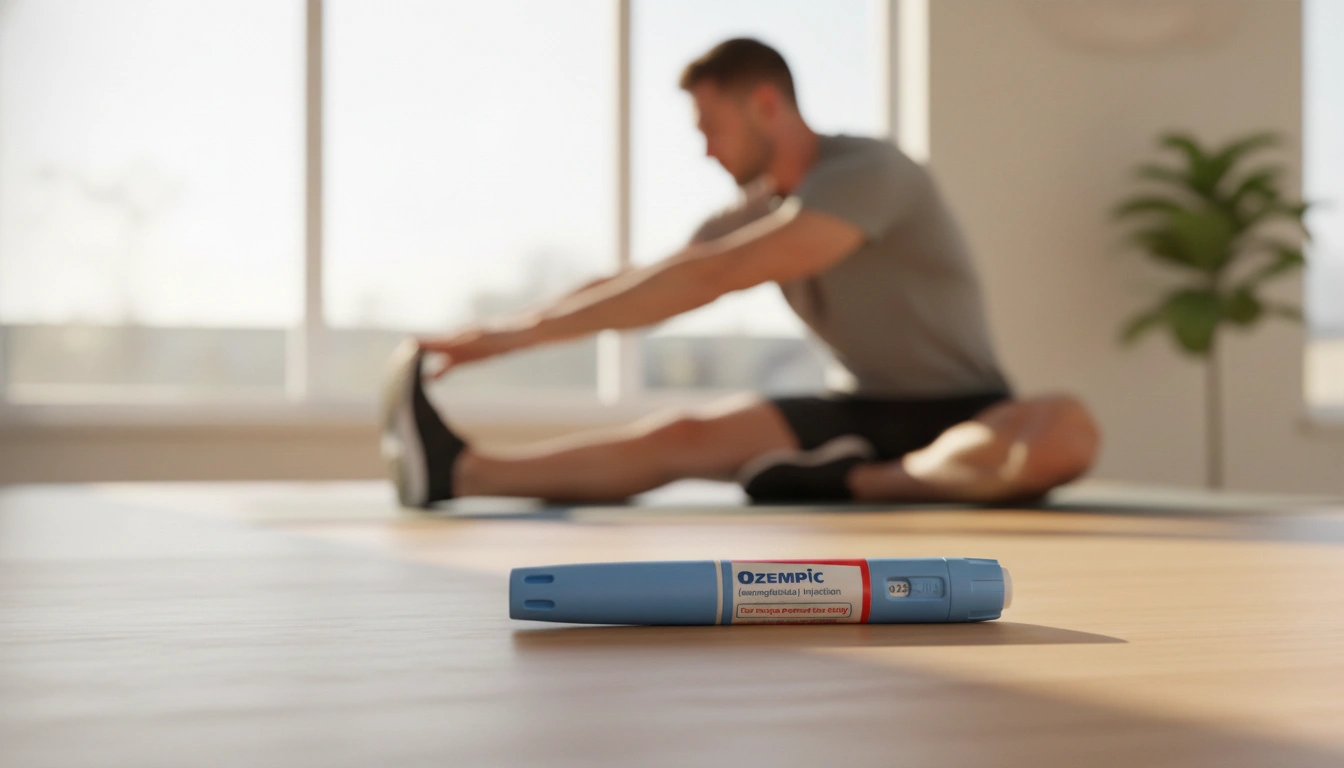
High-intensity interval training can absolutely work on Ozempic, but it requires more careful management than it does when you’re eating normally. The combination of significant caloric restriction, reduced glycogen availability, and a body already under metabolic stress means that HIIT done carelessly can backfire. Done right, it’s one of the more time-efficient tools in your exercise toolkit. Here’s how to approach it.
What Makes HIIT Different on Semaglutide
HIIT involves repeated bouts of high-effort work followed by recovery periods. Sprinting intervals, cycling efforts, rowing, jump rope, and circuit-style resistance work all fall under this umbrella. What they share is a reliance on anaerobic energy systems, meaning your body burns through stored carbohydrates (glycogen) rapidly during the hard efforts.
That’s exactly where the complication arises on semaglutide. When your food intake is significantly reduced, glycogen stores in your muscles and liver are lower than usual and replenish more slowly between sessions. Push hard into a HIIT workout with depleted glycogen, and a few things can happen: performance drops off quickly, perceived effort spikes, and your body may turn to muscle protein for fuel when carbohydrate stores run out. That last point is particularly relevant given that muscle preservation is already a priority on GLP-1 medications.
None of this makes HIIT off-limits. It means the context, timing, and frequency of HIIT sessions need to be managed more deliberately than they would for someone eating at maintenance calories.
Is HIIT Safe on Ozempic
For most patients, yes, with appropriate caveats.
The cardiovascular demands of HIIT are significant, and anyone with underlying heart conditions, uncontrolled blood pressure, or significant deconditioning should get provider clearance before attempting high-intensity work. This applies regardless of whether you’re on semaglutide. The medication itself doesn’t create any specific contraindication to high-intensity exercise, and semaglutide’s cardiovascular benefits (reduced inflammation, improved lipid profiles, lower blood pressure over time) are actually supportive of exercising at higher intensities as treatment progresses.
The practical safety concerns on semaglutide are more about energy availability and recovery than cardiac risk for most patients. Dizziness, nausea, and early fatigue are more likely during HIIT if you’ve eaten very little beforehand or if you’re in the first few weeks on the medication when side effects tend to peak. Timing your HIIT sessions for periods when nausea is lowest and making sure you’ve had some food in the two to three hours beforehand goes a long way toward managing this.
When HIIT Makes Sense and When It Doesn’t
Timing in your treatment matters here. Patients in the first four to eight weeks on semaglutide, when appetite suppression is strongest and the body is still adjusting, are generally better served by lower-intensity cardio. The article on cardio on semaglutide covers this foundation in detail.
Once your energy levels have stabilized, nausea has reduced, and you’re eating more consistently, introducing HIIT becomes more practical. Most patients reach this point somewhere between weeks six and twelve, though it varies.
HIIT makes the most sense when:
You’re eating relatively well on the day of the session and have some carbohydrate available. You’re not already fatigued from earlier training that week. You’re consistently hitting your protein targets, giving your muscles what they need to recover. You’ve established a base of lower-intensity cardio and aren’t jumping straight from sedentary to interval sprints.
HIIT is less appropriate when you’re running on minimal food, when you’re already managing significant fatigue or nausea, or when you’re stacking it on top of heavy resistance training days without adequate recovery.
How to Structure HIIT Sessions on Semaglutide
Less volume, more recovery. That’s the core principle for adapting HIIT to a semaglutide context.
A standard HIIT protocol for someone eating normally might involve 20 to 30 minutes of work-to-rest intervals, four to five times per week. On semaglutide, a more appropriate starting point is one to two sessions per week, with session duration closer to 15 to 20 minutes of actual interval work.
Work-to-Rest Ratios
Longer rest periods relative to work periods allow glycogen to partially replenish between efforts and reduce the likelihood of hitting a wall mid-session. A 1:2 or 1:3 work-to-rest ratio (for example, 20 seconds hard effort followed by 40 to 60 seconds of easy movement or rest) is more sustainable than the aggressive 1:1 ratios used in programs designed for athletes eating at full calories.
As your fitness improves and your body adapts to training on a deficit, you can gradually compress the rest periods or extend the work intervals. The key is progression that’s driven by how you’re actually recovering, not by what a generic program tells you to do.
Exercise Selection
Lower-impact HIIT formats tend to work better on semaglutide than plyometric or very high-impact options. Cycling intervals, rowing machine efforts, and resistance-based circuits are easier on joints (which are already under less stress as you lose weight) and allow you to modulate intensity more precisely than, say, jump squats or burpees.
That said, if you enjoy higher-impact formats and your joints are handling them well, there’s no reason to avoid them entirely. Listen to your body’s recovery signals more than you follow a rigid format.
The Muscle Preservation Angle
One genuine advantage of HIIT over steady-state cardio for semaglutide patients is its effect on muscle retention. Several studies have found that HIIT preserves lean mass better than equivalent volumes of moderate-intensity steady-state cardio during caloric restriction. The high-intensity stimulus sends a stronger muscle-maintaining signal than sustained lower-intensity work.
A 2017 meta-analysis published in Obesity Reviews found that HIIT produced comparable fat loss to moderate-intensity continuous training while better preserving lean mass, particularly in overweight and obese participants. (Wewege et al., Obesity Reviews, 2017, https://pubmed.ncbi.nlm.nih.gov/28401638/)
This is worth keeping in mind if your goal is improving body composition rather than just reducing the number on the scale. One well-structured HIIT session per week, combined with two to three resistance training sessions, is a more effective approach for maintaining muscle than five days of steady-state cardio.
For the full picture on how strength training fits alongside cardio during GLP-1 treatment, the article on strength training on Ozempic is worth reading alongside this one.
Fueling Before and After HIIT
Pre-session: aim for a small mixed meal or snack with both carbohydrates and protein roughly 90 minutes before your session. Something like a piece of toast with eggs, or a small bowl of oatmeal with Greek yogurt, gives your body enough glycogen to fuel the hard efforts without sitting heavily on a stomach that may already be sensitive.
Post-session: prioritize protein within 30 to 60 minutes of finishing. Twenty to 30 grams is the target. On days when solid food feels unappealing after a hard session, a protein shake is a practical solution. The article on protein shakes on semaglutide covers what to look for in a formula that won’t worsen nausea.
The Bottom Line
HIIT is safe and effective on Ozempic when it’s introduced at the right point in treatment, kept to a reasonable frequency, and supported by adequate protein and recovery. It’s not the first tool to reach for in the early weeks, but once you’ve stabilized, one to two sessions per week can meaningfully improve cardiovascular fitness and body composition outcomes alongside your medication.
If you’re ready to explore GLP-1 treatment with clinical support, start your TrimRx intake assessment here.
This information is for educational purposes and is not medical advice. Consult with a healthcare provider before starting any medication. Individual results may vary.

Transforming Lives, One Step at a Time
Keep reading

Ozempic and Social Isolation: When Food Was How You Connected
This is a real cost of treatment and it does not get discussed much, partly because it sounds minor next to the medical benefits….

Can’t Comfort Eat on Ozempic and Don’t Feel Better? Why That Happens
Because the eating was doing a job, and removing your capacity to do it does not remove the need it was meeting. That is…

Food Noise Came Back on Ozempic? Whether It’s Your Dose or Your Stress
The pattern tells you more than the intensity does. Food noise that returns gradually over weeks and stays constant points toward the medication. Food…


