Weight Lifting on Tirzepatide: How to Preserve Muscle on Mounjaro
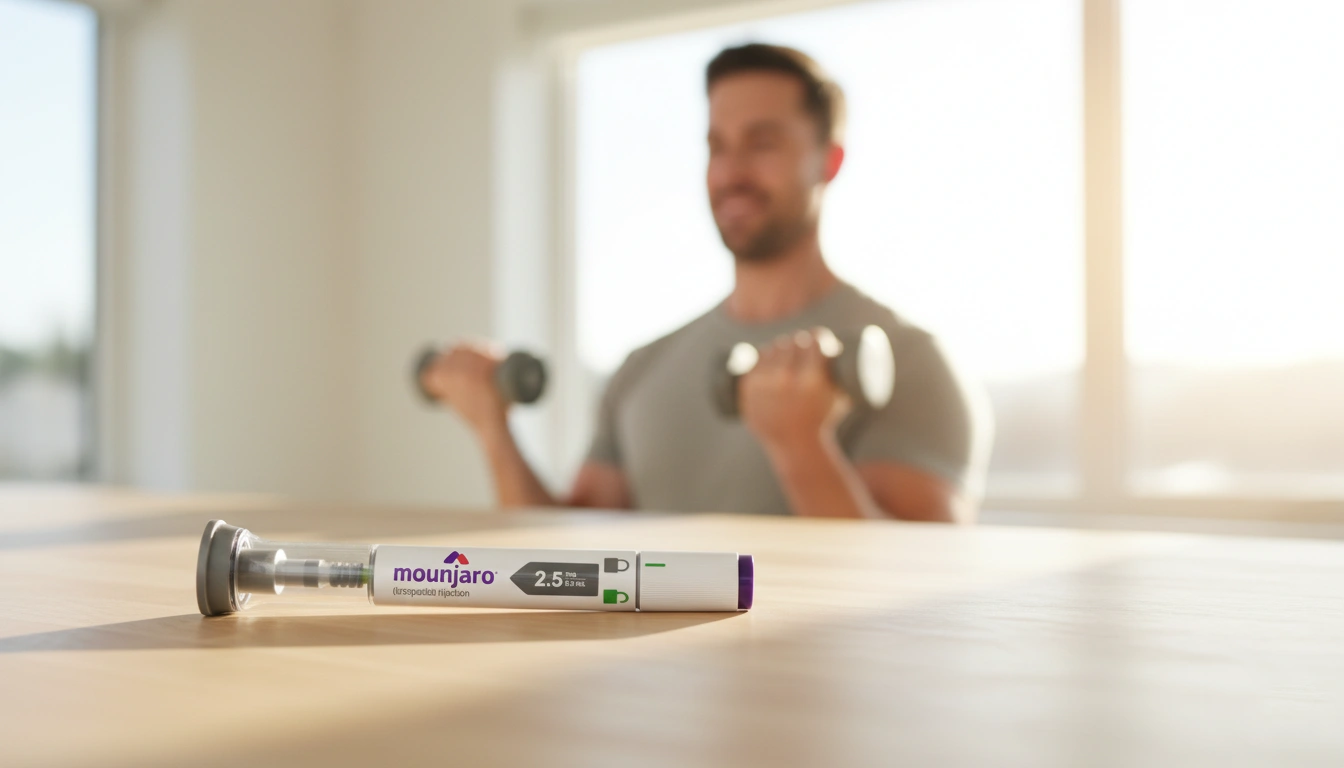
Tirzepatide produces some of the most significant weight loss numbers seen in clinical trials, but that speed comes with a tradeoff. The faster weight comes off, the higher the proportion of lean mass that can go with it if you’re not actively working to prevent it. Weight lifting is the most effective tool available for shifting that ratio in your favor. Here’s how to use it well on Mounjaro or Zepbound.
Why Tirzepatide Makes Muscle Preservation a Priority
Tirzepatide works through a dual mechanism, activating both GLP-1 and GIP receptors, which is part of why it tends to produce greater weight loss than semaglutide alone. The SURMOUNT-1 trial showed participants losing an average of 20.9 percent of body weight at the highest dose over 72 weeks. That’s a substantial amount of tissue leaving the body in a relatively compressed timeframe.
When weight loss is this significant and this rapid, the body doesn’t distinguish neatly between fat and muscle. Without a strong signal to preserve lean tissue, a meaningful portion of what you lose will come from muscle mass. Estimates from weight loss research generally put lean mass loss at 25 to 40 percent of total weight lost in patients who aren’t doing structured resistance training. On a medication as potent as tirzepatide, that translates to real functional consequences: reduced strength, slower metabolism, and a body composition that may not reflect the transformation you were working toward.
Weight lifting sends the clearest biological signal your body receives to hold onto muscle. When muscle fibers are challenged under load, they respond by prioritizing maintenance and growth, even in a caloric deficit. That signal overrides, at least partially, the catabolism that would otherwise occur.
How Tirzepatide Affects Your Training
Before getting into programming, it helps to know what’s actually different about lifting on tirzepatide versus lifting while eating normally.
Reduced caloric intake means less energy available for high-volume or high-intensity training. You may find that workouts that felt manageable before starting the medication now feel harder, or that your performance drops off toward the end of a session. This is normal and expected, particularly in the first two to three months.
Protein absorption is also relevant. Tirzepatide slows gastric emptying, which affects how quickly your body can process and use dietary protein. This doesn’t mean protein is less important; it means the timing and distribution of protein across the day becomes more significant. Spreading protein intake across three to four eating occasions rather than front-loading it in one or two meals supports better muscle protein synthesis throughout the day.
Recovery between sessions may also take longer than you’re used to. A body managing a significant energy deficit while losing weight rapidly has less spare capacity for repair. Building adequate rest into your training week isn’t optional on tirzepatide; it’s part of the program.
Building Your Lifting Program
The goal here is muscle preservation, not necessarily muscle building, though some patients do add lean mass, particularly if they were previously sedentary. The programming principles that serve this goal are straightforward.
Frequency and Volume
Two to three resistance training sessions per week is the evidence-based target for preserving lean mass during caloric restriction. More than that, without adequate calories to support recovery, tends to produce diminishing returns and increases the risk of overtraining on a suppressed appetite.
Each session should target the major muscle groups: lower body (quads, hamstrings, glutes), upper body pushing (chest, shoulders, triceps), upper body pulling (back, biceps), and core. A full-body approach three times per week, or an upper/lower split twice per week, both work well for most tirzepatide patients.
Progressive Overload
This is the principle that matters most for the signal you’re trying to send. Progressive overload means gradually increasing the challenge over time, whether through more weight, more reps, or reduced rest periods. Without progression, your body has no reason to maintain the muscle it has.
You don’t need to add weight every session. Adding one rep to a set, reducing rest by 15 seconds, or completing the same workout with better form all count as progression. The direction needs to be consistently forward, even if the increments are small.
Exercise Selection
Compound movements give you the most return per session because they recruit multiple muscle groups simultaneously. Squats, deadlifts, Romanian deadlifts, hip thrusts, bench press, rows, overhead press, and pull-ups or lat pulldowns form the foundation of an effective program. Isolation exercises (bicep curls, tricep extensions, leg curls) are useful additions but shouldn’t be the focus when total volume needs to stay moderate.
On days when energy is low and a full session feels unrealistic, a shortened workout that hits two or three compound movements is far more valuable than skipping entirely. Ten minutes of productive lifting maintains the muscle-preserving stimulus even when a full hour isn’t available.
Protein: The Inseparable Variable
Weight lifting and protein work together. One without the other produces significantly worse results for muscle preservation.
The target for patients on tirzepatide doing resistance training is 1.2 to 1.6 grams of protein per kilogram of body weight per day. At higher rates of weight loss, some research supports going toward the upper end of that range. For a 200-pound person, that’s roughly 109 to 145 grams of protein daily.
Distributing that across the day matters more on tirzepatide than it might otherwise because of slowed gastric emptying. Rather than eating 60 grams of protein in one sitting, aiming for 25 to 40 grams per meal across three to four meals supports steadier amino acid availability for muscle repair.
Post-workout protein deserves specific attention. Consuming 20 to 30 grams within an hour after a lifting session takes advantage of the window when muscle tissue is most receptive to protein for repair. If solid food is difficult after a session, a protein shake works well here. The article on eating enough protein on tirzepatide covers practical strategies for hitting these targets when appetite is suppressed.
Managing Energy and Fatigue in the Gym
Low energy is one of the most common complaints from tirzepatide patients who are trying to maintain a training schedule. A few adjustments make a real difference.
Workout timing matters. Many patients find their energy is best in the late morning or early afternoon, after they’ve had at least one small meal but before the energy dip that sometimes comes later in the day. Experimenting with timing relative to your injection day can also help. Some patients report feeling stronger mid-week when the peak effects of their weekly injection have moderated slightly.
Pre-workout nutrition on tirzepatide doesn’t need to be elaborate. A small amount of carbohydrate and protein roughly 60 to 90 minutes before lifting, something as simple as a banana and a boiled egg or a small serving of Greek yogurt, gives your muscles enough available fuel to perform without overwhelming a sensitive stomach.
A 2019 study in the Journal of Strength and Conditioning Research found that even modest pre-exercise carbohydrate intake significantly improved resistance training performance in individuals in a caloric deficit, compared to fasted training. (Schoenfeld et al., JSCR, 2019, https://pubmed.ncbi.nlm.nih.gov/30676338/)
What Progress Actually Looks Like
One thing worth setting expectations around: strength gains may be slower on tirzepatide than they would be in a caloric surplus, and that’s normal. The goal during active weight loss is primarily to maintain what you have, not to set personal records. Some patients do get stronger, particularly those who were previously sedentary, because even a caloric deficit doesn’t prevent beginners from making neuromuscular adaptations early in training.
A more useful metric than the weight on the bar is your strength relative to your body weight. If you’re losing 30 pounds and maintaining your squat or row numbers, you’ve effectively improved your strength-to-weight ratio significantly. That’s a genuine performance improvement, even if the absolute numbers haven’t moved.
For a broader view of how exercise fits into GLP-1 treatment, the article on best exercises to do while on Ozempic or semaglutide covers how resistance training, cardio, and flexibility work fit together, with principles that apply equally to tirzepatide patients.
If you’re ready to start GLP-1 treatment with clinical support, take the TrimRx intake assessment here.
This information is for educational purposes and is not medical advice. Consult with a healthcare provider before starting any medication. Individual results may vary.

Transforming Lives, One Step at a Time
Keep reading

Mounjaro Alternatives: What Else to Consider
If Mounjaro isn’t the right fit, the closest alternatives are other GLP-1 medications, chiefly semaglutide (Ozempic for diabetes, Wegovy for weight), along with a…

Mounjaro vs Zepbound: Same Drug, Two Brands
Like their semaglutide counterparts, Mounjaro and Zepbound are the same medication (tirzepatide) sold under two names for two purposes: Mounjaro is approved for type…

Retatrutide vs Mounjaro: Triple Agonist vs Dual Agonist
The core difference between retatrutide and Mounjaro comes down to how many hormone targets each hits: retatrutide activates three receptors, while Mounjaro (tirzepatide) activates…


