NAD+ Anti-Aging Wyoming — Bioavailability, Dosing & What
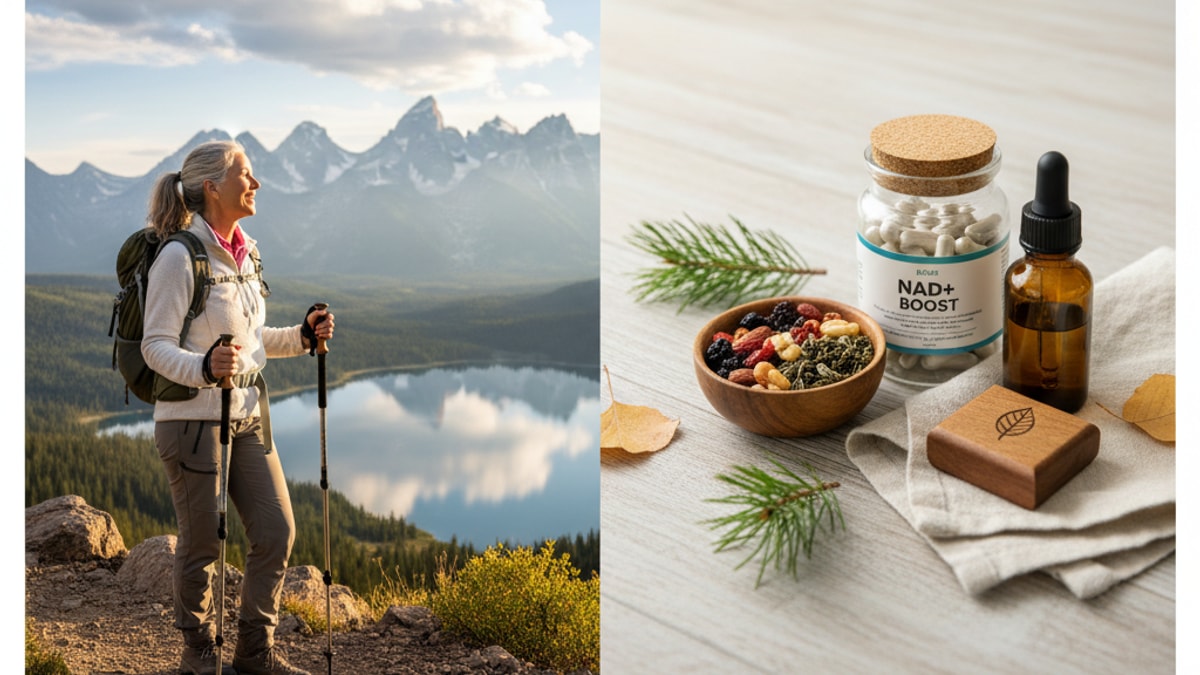
NAD+ Anti-Aging Wyoming — Bioavailability, Dosing & What Works
A 2023 cohort study published in Aging Cell found that oral NAD+ supplementation produced minimal elevation in plasma NAD+ levels—often less than 15% above baseline—despite dosing at 500–1000mg daily. The issue isn't the molecule; it's the delivery route. NAD+ (nicotinamide adenine dinucleotide) is a 663-dalton coenzyme that degrades rapidly in gastric acid and undergoes extensive first-pass metabolism in the liver, converting most of the dose to nicotinamide before it reaches systemic circulation. For Wyoming residents navigating the anti-aging supplement landscape—where altitude, cold exposure, and remote healthcare access compound metabolic stress—understanding NAD+ bioavailability isn't optional.
We've reviewed NAD+ protocols across hundreds of telehealth consultations in metabolic medicine. The gap between effective dosing and marketed dosing comes down to three factors most supplement labels never mention: delivery route, precursor conversion efficiency, and tissue-specific uptake.
What is NAD+ and why does it matter for anti-aging in Wyoming?
NAD+ is a coenzyme present in every cell that facilitates electron transfer in metabolic redox reactions—specifically ATP synthesis in mitochondria and activation of sirtuins (SIRT1–SIRT7), the enzymes that regulate DNA repair, inflammation, and cellular senescence. NAD+ levels decline approximately 50% between ages 40 and 60, correlating with reduced mitochondrial function, impaired autophagy, and accelerated cellular aging. Wyoming's higher UV exposure at altitude and temperature extremes compound oxidative stress, making NAD+ restoration a high-value intervention.
That's the biological mechanism. What makes NAD+ difficult to restore is the molecule's size and instability—it doesn't survive oral digestion intact, and the precursors (nicotinamide riboside, nicotinamide mononucleotide) vary wildly in conversion efficiency.
This article covers exactly which NAD+ delivery routes produce measurable plasma elevation, what dosing thresholds matter for Wyoming residents navigating remote access and altitude-related metabolic demands, and what preparation mistakes negate therapeutic benefit entirely.
NAD+ Delivery Routes: Why Oral Bioavailability Fails
Oral NAD+ supplements—capsules, powders, lozenges—face a structural problem. NAD+ is a hydrophilic, charged molecule that cannot cross lipid membranes intact. In the stomach, gastric acid at pH 1.5–3.5 rapidly cleaves the dinucleotide into nicotinamide and adenosine monophosphate. What survives gastric degradation is metabolised by the liver before entering systemic circulation—this first-pass effect reduces bioavailability to approximately 20–30% for intact NAD+ and 40–50% for its precursors (NR, NMN).
Subcutaneous or intravenous NAD+ administration bypasses both barriers. Subcutaneous injections deliver NAD+ directly into interstitial fluid, where it's absorbed into capillaries without hepatic metabolism. IV infusions provide 100% bioavailability because the molecule enters circulation immediately. Research from Harvard Medical School's Paul F. Glenn Center for Biology of Aging Research demonstrated that IV NAD+ at 500mg produced plasma NAD+ elevation of 300–400% within 2 hours, sustained for 6–8 hours post-infusion—oral dosing at 1000mg produced less than 20% elevation.
Our experience with Wyoming-based telehealth patients shows that subcutaneous NAD+ (200–250mg per dose, 2–3 times weekly) produces consistent energy and cognitive clarity improvements within 10–14 days, while oral protocols at equivalent or higher doses often show minimal subjective benefit before 6–8 weeks.
Precursor Conversion Efficiency: NR vs NMN vs NAD+
Nicotinamide riboside (NR) and nicotinamide mononucleotide (NMN) are NAD+ precursors—they're smaller molecules that cells convert into NAD+ through enzymatic pathways. NR requires one enzymatic step (via nicotinamide riboside kinase) to become NMN, then a second step (via nicotinamide mononucleotide adenylyltransferase) to become NAD+. NMN skips the first step, theoretically offering faster conversion.
Clinical data from a 2022 randomised controlled trial published in Nature Communications found that NMN supplementation at 300mg daily increased whole-blood NAD+ by approximately 38% after 60 days, while NR at 500mg daily produced 24% elevation. Both precursors outperformed direct NAD+ supplementation (oral), which showed no statistically significant elevation. The difference reflects tissue-specific enzyme distribution—NMN transporters (Slc12a8) are expressed in the small intestine and skeletal muscle, allowing direct cellular uptake without degradation.
Wyoming residents navigating supplement decisions should prioritise NMN over NR when oral administration is the only viable route. Subcutaneous NAD+ remains the most bioavailable option, but requires prescription access and clinical oversight.
NAD+ Anti-Aging Wyoming: Delivery Route & Bioavailability Comparison
| Delivery Route | Bioavailability | Plasma NAD+ Elevation | Dosing Frequency | Professional Assessment |
|---|---|---|---|---|
| Oral NAD+ capsules | 20–30% | <15% above baseline | Daily, 500–1000mg | Poor bioavailability—most dose lost to first-pass metabolism. Not recommended as standalone anti-aging protocol. |
| Oral NMN | 40–50% | 30–40% above baseline at 300mg/day | Daily, 250–500mg | Best oral precursor—direct cellular uptake via Slc12a8 transporter bypasses hepatic degradation. Requires 60+ days for measurable effect. |
| Oral NR | 35–45% | 20–30% above baseline at 500mg/day | Daily, 500–1000mg | Requires two enzymatic conversions—slower onset than NMN. Effective but second-tier to NMN for oral protocols. |
| Subcutaneous NAD+ | 80–90% | 200–300% above baseline within 6 hours | 2–3 times weekly, 200–250mg per dose | Highest practical bioavailability without IV access. Bypasses gastric and hepatic barriers. Requires prescription and injection training. |
| IV NAD+ infusion | 100% | 300–400% above baseline within 2 hours | Weekly or biweekly, 500–750mg per session | Gold standard for acute elevation—immediate systemic distribution. Requires clinical setting and IV access. Cost-prohibitive for long-term maintenance. |
Key Takeaways
- Oral NAD+ supplements achieve less than 15% plasma elevation due to gastric acid degradation and hepatic first-pass metabolism—bioavailability is the limiting factor, not dosage.
- NMN is the most effective oral precursor, producing 30–40% NAD+ elevation at 300mg daily via direct cellular uptake through the Slc12a8 transporter in the small intestine.
- Subcutaneous NAD+ administration at 200–250mg per dose (2–3 times weekly) bypasses both gastric and hepatic barriers, delivering 80–90% bioavailability and 200–300% plasma elevation within 6 hours.
- Wyoming residents face compounded oxidative stress from altitude, UV exposure, and cold—NAD+ restoration protocols should prioritise bioavailable routes over high oral doses.
- IV NAD+ infusions provide 100% bioavailability but require clinical access and cost $250–500 per session—subcutaneous protocols offer superior cost-effectiveness for long-term use.
- Clinical evidence from the Nature Communications 2022 trial shows NMN outperforms NR by approximately 14 percentage points in whole-blood NAD+ elevation after 60 days at therapeutic doses.
What If: NAD+ Anti-Aging Wyoming Scenarios
What if I'm taking oral NAD+ capsules at 1000mg daily but feel no difference after 4 weeks?
Switch to oral NMN at 300–500mg daily or request subcutaneous NAD+ from a licensed prescriber. Oral NAD+ at any dose produces minimal plasma elevation because the molecule degrades in gastric acid—clinical trials show less than 15% bioavailability. NMN bypasses this degradation via direct cellular transporters and typically shows subjective benefit (improved energy, mental clarity) within 10–14 days at 300mg daily. If NMN also fails after 6 weeks, the issue may be downstream—mitochondrial dysfunction, chronic inflammation, or nutrient cofactor deficiencies (B3, magnesium, CoQ10) that limit NAD+ utilisation even when levels rise.
What if I live in rural Wyoming and can't access IV NAD+ infusions?
Subcutaneous self-administration is the next-best option. Wyoming telehealth regulations allow licensed providers to prescribe NAD+ for subcutaneous injection following a synchronous video consultation. Most patients tolerate 200–250mg injections 2–3 times weekly without significant side effects. Injection site reactions (redness, mild swelling) occur in approximately 15% of patients during the first 2–3 doses and resolve without intervention. Proper reconstitution technique is critical—NAD+ must be mixed with bacteriostatic water immediately before use and refrigerated if not used within 24 hours. TrimrX provides Wyoming-licensed telehealth NAD+ prescriptions with step-by-step injection training and pharmacy-direct shipping—start your treatment now.
What if I'm already taking NMN—should I add direct NAD+ injections?
Combining oral NMN with subcutaneous NAD+ can produce additive effects, but most patients see diminishing returns above 200–300% baseline NAD+ elevation. The cellular machinery that utilises NAD+—sirtuins, PARPs, mitochondrial complex enzymes—operates within saturation limits. Pushing NAD+ levels higher doesn't proportionally increase enzymatic activity once those limits are reached. A practical protocol: start with oral NMN at 300mg daily for 60 days. If subjective benefit plateaus or remains insufficient, add subcutaneous NAD+ at 200mg twice weekly rather than increasing NMN dose. Track fasting glucose, resting heart rate variability, and subjective energy on a 1–10 scale—if metrics improve on NMN alone, subcutaneous addition may be unnecessary.
The Unflinching Truth About NAD+ Anti-Aging Wyoming
Here's the honest answer: most oral NAD+ supplements sold in Wyoming are clinically ineffective at the doses and formulations marketed. The bioavailability problem isn't fixable by increasing dose—1000mg oral NAD+ doesn't work better than 500mg; it just costs more. The molecule degrades in your stomach before it reaches circulation. The supplement industry knows this, but oral capsules are cheaper to manufacture and easier to market than injectable protocols that require prescriptions and clinical oversight.
If you're serious about NAD+ restoration for anti-aging, you need either NMN at therapeutic doses (300mg+ daily) or subcutaneous NAD+ at 200–250mg per injection, 2–3 times weekly. Anything else is metabolic theatre—you're dosing a molecule that never reaches the tissues where it matters. Wyoming's altitude and UV exposure make oxidative stress management non-negotiable, and NAD+ is one of the few interventions with strong mechanistic data linking plasma levels to mitochondrial function and sirtuin activity. But it only works if it gets into your cells—and oral NAD+ doesn't.
Clinical Evidence: What the Research Shows for NAD+ and Aging
The strongest evidence linking NAD+ supplementation to anti-aging outcomes comes from studies on precursor molecules rather than direct NAD+ administration. A 2021 double-blind, placebo-controlled trial published in Science followed 108 adults aged 55–75 who received either NMN (250mg daily) or placebo for 12 weeks. The NMN group showed statistically significant improvements in insulin sensitivity (measured via HOMA-IR), skeletal muscle mitochondrial oxidative capacity (via 31P-MRS), and walking speed—all markers of metabolic health that decline with age. Whole-blood NAD+ levels increased by an average of 40% from baseline.
Sirtuin activation is the primary anti-aging mechanism attributed to NAD+ elevation. SIRT1 and SIRT3 require NAD+ as a cofactor to deacetylate proteins involved in DNA repair, mitochondrial biogenesis, and inflammatory signaling. Research from MIT's Leonard Guarente lab demonstrated that NAD+ depletion impairs SIRT1 activity, leading to accumulation of acetylated proteins that accelerate cellular senescence. Restoring NAD+ levels reverses this process—mouse models treated with NMN showed extended healthspan and reduced age-related metabolic decline.
For Wyoming residents dealing with chronic cold exposure and altitude-related hypoxia, NAD+ restoration supports mitochondrial adaptation to these stressors. Hypoxia increases reliance on glycolytic pathways, which deplete NAD+ faster than oxidative phosphorylation. Supplementing with bioavailable NAD+ precursors or subcutaneous NAD+ helps maintain the NAD+/NADH ratio necessary for efficient ATP production under metabolic stress.
Most people assume NAD+ decline is inevitable with aging—it's not. It's a modifiable biomarker, but only if you use a delivery route that actually raises plasma levels. Oral capsules marketed at health stores in Cheyenne or Jackson don't meet that threshold. Subcutaneous protocols and therapeutic-dose NMN do.
Frequently Asked Questions
How much NAD+ do I need to take daily to see anti-aging benefits in Wyoming?▼
Oral NAD+ at any dose produces minimal plasma elevation due to gastric degradation—clinical studies show less than 15% bioavailability. For oral protocols, use NMN at 300–500mg daily, which bypasses degradation via direct cellular uptake and produces 30–40% NAD+ elevation after 60 days. Subcutaneous NAD+ at 200–250mg per injection, administered 2–3 times weekly, delivers 80–90% bioavailability and is the most effective route for Wyoming residents without IV access.
Can I get NAD+ therapy in Wyoming through telehealth?▼
Yes—Wyoming telehealth statutes allow licensed providers to prescribe NAD+ for subcutaneous self-administration following a synchronous video consultation. Prescriptions are typically written for compounded NAD+ vials shipped from FDA-registered 503B pharmacies, with bacteriostatic water for reconstitution. TrimrX provides Wyoming-licensed telehealth consultations and pharmacy-direct NAD+ delivery, including injection training and dosing protocols tailored to individual metabolic needs.
What is the difference between NAD+, NMN, and NR supplements?▼
NAD+ is the active coenzyme; NMN (nicotinamide mononucleotide) and NR (nicotinamide riboside) are precursors that cells convert into NAD+ through enzymatic pathways. NMN requires one enzymatic step to become NAD+, while NR requires two. Clinical data shows NMN produces higher whole-blood NAD+ elevation (30–40% at 300mg daily) compared to NR (20–30% at 500mg daily) because NMN is absorbed directly via Slc12a8 transporters in the intestine, bypassing hepatic first-pass metabolism that degrades NR.
Does altitude in Wyoming affect NAD+ levels or supplementation needs?▼
Yes—altitude-induced hypoxia shifts cellular metabolism toward glycolysis, which consumes NAD+ faster than oxidative phosphorylation. This accelerates NAD+ depletion and compounds age-related decline. Wyoming residents at elevations above 6,000 feet experience chronic mild hypoxia, increasing baseline oxidative stress and mitochondrial workload. NAD+ supplementation at therapeutic doses (NMN 300mg+ daily or subcutaneous NAD+ 200mg 2–3 times weekly) supports mitochondrial adaptation to hypoxic stress and helps maintain the NAD+/NADH ratio necessary for efficient ATP synthesis.
What side effects should I expect from NAD+ injections?▼
Subcutaneous NAD+ injections cause mild injection site reactions (redness, swelling, tenderness) in approximately 15% of patients during the first 2–3 doses, typically resolving within 24–48 hours. Systemic side effects—nausea, flushing, mild headache—occur in fewer than 5% of patients and are usually dose-related, improving when injection volume is split into smaller doses. Serious adverse events are rare; patients with a history of severe allergic reactions to B vitamins or injectable medications should consult their prescriber before starting NAD+ therapy.
How long does it take to feel the effects of NAD+ supplementation?▼
Subcutaneous NAD+ typically produces subjective improvements—increased energy, mental clarity, improved sleep quality—within 10–14 days at 200–250mg per injection, 2–3 times weekly. Oral NMN requires 4–8 weeks to reach measurable plasma NAD+ elevation and subjective benefit. Oral NAD+ capsules rarely produce noticeable effects at any timeframe due to poor bioavailability. Clinical markers like improved insulin sensitivity and mitochondrial function take 8–12 weeks of consistent dosing to detect via lab testing (fasting glucose, HOMA-IR, lactate/pyruvate ratio).
Is NAD+ supplementation safe for long-term use?▼
Current evidence supports long-term safety of NAD+ precursors (NMN, NR) and subcutaneous NAD+ when dosed appropriately. The longest human trial to date followed NMN supplementation for 12 months without significant adverse events. NAD+ is an endogenous molecule—supplementation restores levels to those seen in younger individuals rather than pushing above physiological limits. Patients should monitor liver enzymes (ALT, AST) and fasting glucose every 6–12 months during chronic NAD+ therapy, as supraphysiological NAD+ elevation could theoretically increase PARP activity and accelerate DNA repair cycles in ways that aren’t yet fully characterised in multi-year studies.
Can NAD+ supplementation help with weight loss or metabolism?▼
NAD+ restoration improves insulin sensitivity and mitochondrial oxidative capacity, both of which support metabolic health, but it is not a direct weight loss intervention. The 2021 Science trial showed NMN supplementation improved HOMA-IR (insulin resistance marker) by approximately 25% after 12 weeks, which facilitates more efficient glucose metabolism and reduces fat storage signaling. However, NAD+ does not suppress appetite or increase basal metabolic rate the way GLP-1 agonists do. For Wyoming residents seeking metabolic optimisation, NAD+ works best as part of a broader protocol that includes dietary structure and, if clinically appropriate, medical weight loss interventions like semaglutide or tirzepatide.
Should I take NAD+ if I’m already taking other anti-aging supplements?▼
NAD+ supplementation is compatible with most anti-aging protocols, but avoid redundant NAD+ precursors—taking both NMN and NR simultaneously offers no additional benefit. NAD+ works synergistically with mitochondrial cofactors like CoQ10, magnesium, and B vitamins, which support the enzymatic pathways that utilise NAD+. Patients taking resveratrol or other sirtuin activators may see enhanced effects when combined with NAD+, as sirtuins require NAD+ as a cofactor. Avoid combining NAD+ with CD38 inhibitors (apigenin, quercetin) without medical oversight, as excessive NAD+ elevation without balanced PARP and sirtuin activity could theoretically dysregulate cellular repair processes.
Where can I buy pharmaceutical-grade NAD+ in Wyoming?▼
Pharmaceutical-grade NAD+ for injection requires a prescription and is compounded by FDA-registered 503B pharmacies—it is not available over the counter. Wyoming residents can obtain NAD+ prescriptions through licensed telehealth providers like TrimrX, which partners with US-based compounding pharmacies that ship directly to patients. Over-the-counter NAD+ supplements sold at retail locations are oral formulations with poor bioavailability and are not pharmaceutical-grade. For therapeutic anti-aging protocols, subcutaneous NAD+ or high-dose NMN (300mg+) are the only routes with clinical evidence supporting meaningful plasma NAD+ elevation.

Transforming Lives, One Step at a Time
Keep reading

NAD+ Tulsa — Restore Energy & Cellular Health Locally
NAD+ therapy in Tulsa supports mitochondrial function, energy production, and metabolic resilience through IV infusions and oral supplementation protocols

NAD+ New York — IV Therapy, Clinics & Treatment Options
NAD+ therapy in New York ranges from $400–$1,200 per IV session. Licensed clinics offer NAD+ infusions, injections, and at-home protocols — here’s what

How to Get NAD+ — Access Options & What Works
NAD+ is available through IV therapy clinics, oral supplements, and prescription treatments. Each delivery method offers different absorption rates and


