Compounded Semaglutide vs Wegovy: Side-by-Side Comparison

Introduction
Wegovy® is Novo Nordisk’s FDA-approved semaglutide for chronic weight management, approved June 2021 at the 2.4 mg weekly dose. Compounded semaglutide is the same drug substance prepared by a licensed compounding pharmacy at custom doses. The peptide is identical. The product, the price, and the legal status are not.
Most people comparing Wegovy to compounded semaglutide aren’t researching molecules. They’re trying to decide whether saving $700 a month is worth the trade-offs. That’s a fair question. The trade-offs are real on both sides.
This comparison goes through dosing, the STEP 1 trial data, FDA status, pricing, supply, and how the February 2025 shortage decision changed the legal landscape for compounded versions.
At TrimRx, we believe that understanding your options is the first step toward a more manageable health journey. You can take the free assessment quiz if you’re ready to see whether a personalized program is a fit for you.
What’s the Molecular Difference Between Wegovy and Compounded Semaglutide?
There isn’t one, at the active ingredient level. Both products contain semaglutide, a glucagon-like peptide-1 receptor agonist with a 165-hour half-life. Wegovy uses semaglutide base in a phosphate buffer with phenol and propylene glycol. Compounded versions also use semaglutide, sourced from FDA-registered API suppliers, mixed with bacteriostatic water or sterile saline.
Quick Answer: Wegovy and compounded semaglutide both contain semaglutide; Wegovy is FDA-approved for weight loss at 2.4 mg weekly
The FDA has flagged that some compounded products historically used semaglutide salt forms (sodium or acetate salts) rather than semaglutide base, which is the form in Wegovy and Ozempic®. Salt form matters because pharmacokinetics can shift. Reputable 503A and 503B pharmacies in 2025 use semaglutide base to mirror the brand product.
If you’re injecting compounded semaglutide base from a licensed US pharmacy with third-party USP testing, the molecule going into your body is the same as Wegovy. What’s around it differs.
How Do the Dosing Schedules Compare?
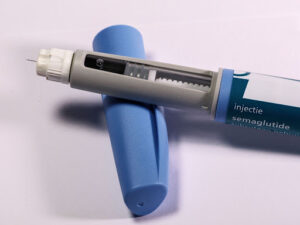
Wegovy uses a fixed five-step titration: 0.25 mg weeks 1-4, 0.5 mg weeks 5-8, 1.0 mg weeks 9-12, 1.7 mg weeks 13-16, then 2.4 mg as the maintenance dose. The pen comes pre-set for each step. You can’t dial between steps.
Compounded semaglutide lets your provider write any dose. Common protocols match the Wegovy titration but allow intermediate steps if side effects flare. A patient who can’t tolerate jumping from 1.0 to 1.7 mg might hold at 1.2 or 1.5 mg for an extra month. Some plans reach 2.4 mg, some stop at 1.7 mg, and some go above 2.4 mg in unusual cases (which Wegovy doesn’t offer).
The downside of vial-based dosing is user error. STEP 1 used a fixed escalation in trained patients with branded pens. Real-world compounded use depends on your ability to draw the right unit count from a U-100 syringe every week.
What Does the STEP 1 Trial Actually Show for Wegovy?
STEP 1 (Wilding et al. 2021 NEJM, 1,961 adults with BMI 30+ or 27+ with comorbidity) randomized patients to weekly semaglutide 2.4 mg or placebo plus lifestyle intervention. At 68 weeks, the semaglutide group lost an average 14.9% of body weight vs 2.4% on placebo. About 50.5% of the semaglutide group lost at least 15% of body weight. Treatment-emergent GI side effects were common (74% nausea, vomiting, or diarrhea) but mostly mild to moderate.
STEP 3, STEP 4, and STEP 5 confirmed the durability of weight loss out to two years on continuous treatment. STEP 4 showed regain after discontinuation, which matters when you’re weighing the long-term cost.
Compounded semaglutide has no STEP-equivalent trial. The clinical case for compounded outcomes leans entirely on the STEP data combined with the assumption that the pharmacy delivered the right molecule at the right dose.
How Does the Cost Actually Break Down?
Wegovy’s US list price in 2024-2025 is approximately $1,349 per month. With commercial insurance and the manufacturer savings card, eligible patients pay as little as $0 to $25 monthly. Cash patients without coverage pay close to list at most pharmacies, though Novo Nordisk launched a direct-to-consumer cash program in 2025 offering Wegovy at $499 for all dose strengths.
Compounded semaglutide through US telehealth runs $199 to $449 monthly across major platforms. Lower doses (early titration) often cost less; maintenance doses cost more. Annual cost difference: Wegovy at cash retail runs around $16,000 per year; compounded runs $2,400 to $5,400 per year.
If your insurance covers Wegovy with a low copay, brand wins on cost. If you’re paying cash, compounded is typically 60% to 85% cheaper than Wegovy’s list price and still 40% to 60% cheaper than Novo Nordisk’s direct-pay program.
Why Is Wegovy FDA-approved but Compounded Isn’t?
Wegovy went through the standard FDA approval pathway with BLA 215256 in June 2021 for chronic weight management. The agency reviewed manufacturing, the STEP trial program (1 through 5), and post-market safety. Novo Nordisk reports adverse events through MedWatch and runs ongoing safety monitoring.
Compounded drugs are legal under sections 503A and 503B of the FDCA but don’t carry FDA approval of the finished product. 503A covers patient-specific prescriptions; 503B covers larger outsourcing facilities. Neither requires the agency to evaluate efficacy or safety of the finished product.
This doesn’t make compounded illegal. It does mean you’re relying on pharmacy quality controls rather than FDA review.
Key Takeaway: Wegovy ships in fixed-dose prefilled pens; compounded comes in customizable vials
What Changed with the FDA’s 2025 Shortage Ruling?
The FDA declared semaglutide in shortage in May 2022. That declaration legally allowed 503B outsourcing facilities to compound copies of Wegovy and Ozempic. From 2022 to early 2025, compounded semaglutide telehealth grew into a multibillion-dollar market on the back of that ruling.
In October 2024, the FDA initially announced the shortage was resolved. A court order temporarily blocked enforcement. In February 2025, the agency finalized that semaglutide was no longer in shortage. 503B outsourcing facilities lost the legal basis to compound copies of Wegovy after a short wind-down period.
503A pharmacies can still compound semaglutide for individual patients with a valid prescription if the formula reflects genuine clinical need (different dose, different concentration, added ingredients for documented reasons). The compliance line is real and the FDA has signaled it will enforce against pharmacies that mass-produce thinly justified “personalized” copies.
Which One Is Safer Based on What We Know?
Wegovy carries the standard semaglutide risk profile: GI side effects, a boxed warning for thyroid C-cell tumors based on rodent data, pancreatitis risk, gallbladder events, and rare reports of medullary thyroid carcinoma. Long-term safety data comes from SUSTAIN, STEP, SELECT, and FLOW.
Compounded semaglutide inherits the molecule’s safety profile if the pharmacy produces an accurate, sterile, correctly-dosed product. The added risks are pharmacy-specific: dosing errors, sterility failures, salt form differences, added ingredients of unknown effect. The FDA’s adverse event database has logged thousands of reports involving compounded GLP-1s since 2022, including dosing errors and contamination incidents.
A 503B outsourcing facility with FDA inspection records is closer to brand safety than a small 503A pharmacy with no third-party testing.
Which Is Better for Someone Without Insurance Coverage?
For cash-pay patients, compounded semaglutide through a vetted 503A pharmacy is typically the most affordable legitimate option. Novo Nordisk’s $499 direct program for Wegovy closes some of the gap but still costs more than most compounded plans.
The key word is vetted. Asking the telehealth provider which pharmacy ships your drug, whether it’s a 503A or 503B, and whether they publish potency and sterility testing matters more than the price tag. A $199 monthly plan from an unverifiable pharmacy is more expensive than a $299 plan from a transparent one if the cheaper product is underdosed or contaminated.
TrimRx works with US-licensed compounding partners that publish testing data. A free assessment quiz on the site walks through whether compounded or branded fits your insurance and clinical profile.
Bottom line: Wegovy is now FDA-approved for cardiovascular risk reduction in adults with obesity and existing heart disease
FAQ
Is Compounded Semaglutide as Effective as Wegovy?
It can be, if the compounded product delivers the same dose of pure semaglutide. The clinical evidence base is Wegovy’s STEP trial program (14.9% weight loss at 68 weeks per STEP 1). Compounded outcomes depend on pharmacy quality.
Why Is Wegovy So Much More Expensive?
Wegovy’s $1,349 list price reflects R&D recovery, FDA approval costs, manufacturing scale, and PBM rebate structures. Novo Nordisk launched a $499 cash program in 2025 to compete with compounded pricing.
Can I Switch From Wegovy to Compounded Semaglutide?
Yes, with provider supervision. Most clinicians match your current Wegovy dose in mg per week (commonly 1.7 or 2.4 mg) in the compounded formula. Side effects shouldn’t change if the dose stays the same.
Is Compounded Semaglutide Legal After the 2025 Shortage Decision?
Yes, under 503A for individual patient prescriptions with genuine clinical need. The 503B mass-compounding lane closed when the FDA ended the shortage in February 2025.
Does Wegovy Cover Cardiovascular Benefits That Compounded Versions Don’t?
Wegovy is FDA-labeled for cardiovascular risk reduction in adults with obesity and established heart disease, based on the SELECT trial (Lincoff et al. 2023 NEJM, 20% MACE reduction). Compounded products can’t make that labeled claim, but if the molecule is the same, the biological effect should be similar.
What Dose of Compounded Semaglutide Matches Wegovy’s Max?
Wegovy’s maintenance dose is 2.4 mg weekly. Compounded protocols can match that exactly. Some compounded plans titrate more slowly with intermediate doses (1.2 mg, 1.5 mg) to improve tolerability.
How Do I Know My Compounded Semaglutide Is Real?
Ask the pharmacy three questions: are you 503A or 503B, do you publish potency testing on each batch, and do you use semaglutide base or a salt form. Reputable pharmacies answer all three without hesitation.
Disclaimer: This content is for informational purposes only and does not constitute medical advice. It is not intended to diagnose, treat, cure, or prevent any disease or condition. Individual results may vary. Always consult a qualified healthcare professional before starting any weight loss program or medication.
Related Articles

Transforming Lives, One Step at a Time
Keep reading
Semaglutide vs Tirzepatide: Comparing Weight Loss, Blood Sugar, and Side Effects
Semaglutide and Tirzepatide are one of the most common comparisons in medical weight loss. The two medications share a clear family resemblance. Both are…

How Much Weight Can You Lose on Semaglutide?
How much weight can you lose on semaglutide? The answer varies depending on your starting weight, dosage, treatment duration, and individual response to the…

Hair Shedding Months Into Semaglutide
It shows up in the shower drain first, then on the pillow, then in the brush. By the time most people search this, they…


