How Long Can GLP-1 Be Unrefrigerated? Storage Tips
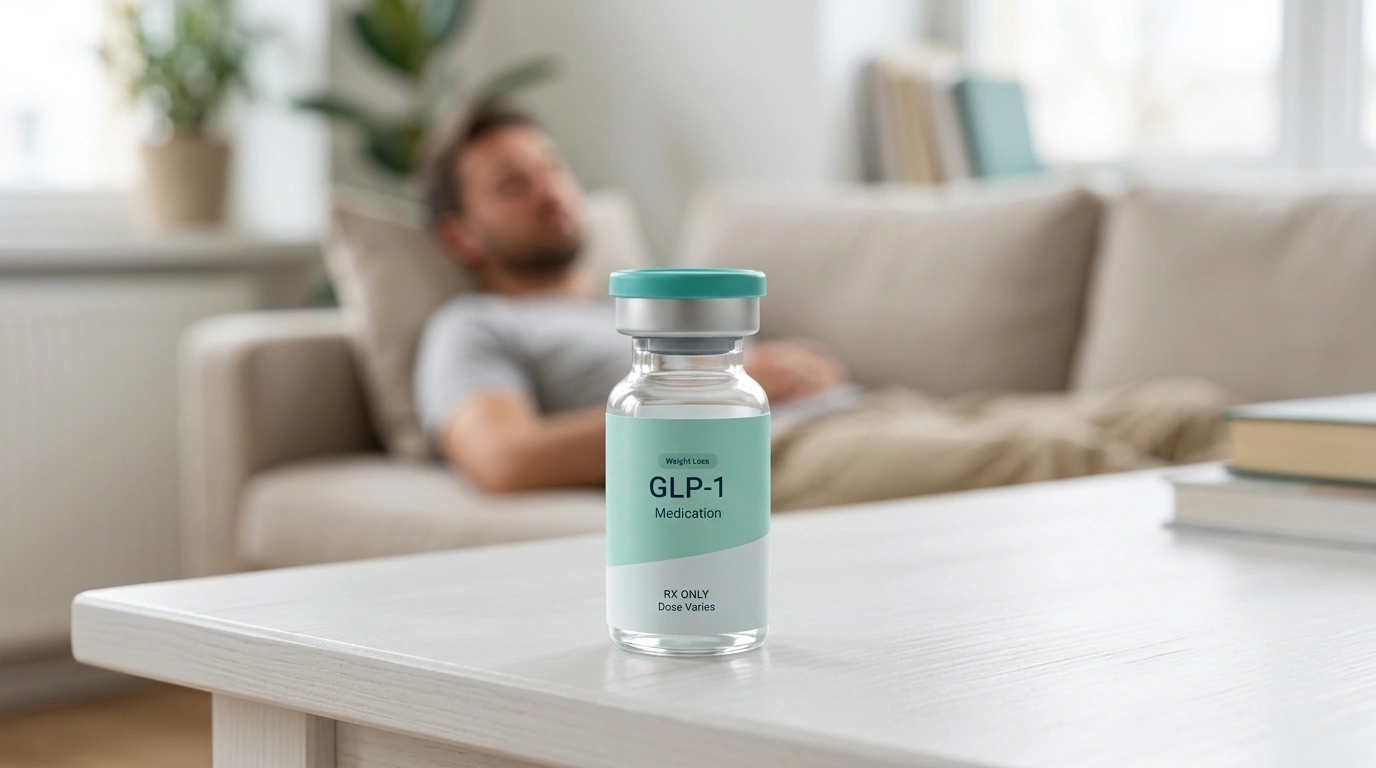
Table of Contents
- Introduction
- The Science of Cold Storage for GLP-1s
- Brand-Specific Room Temperature Limits
- What About Compounded GLP-1 Medications?
- What Happens if You Leave Your Pen Out Too Long?
- Traveling with GLP-1 Medications
- Best Practices for Storing Your Medication
- How TrimRx Supports Your Journey
- Conclusion
- FAQ
Introduction
It is a common moment of panic for many on a weight loss journey: you realize your medication pen has been sitting on the kitchen counter for hours—or perhaps even overnight. You might wonder if the medication is still safe to use or if you have accidentally ruined an expensive prescription. At TrimRx, we understand that managing these medications comes with a learning curve, and clear information is the best way to ease that anxiety.
Knowing how long your GLP-1 (glucagon-like peptide-1) receptor agonist can stay unrefrigerated is essential for maintaining its potency and ensuring your treatment stays on track. While most of these medications are designed to be kept cold, they almost all have a specific “room temperature window” that allows for flexibility during daily use and travel. This article covers the specific storage requirements for various brands, what to do during a power outage, and how to tell if your medication has lost its effectiveness. If you are considering whether a personalized prescription program is right for you, you can take the free assessment quiz.
Quick Answer: Most injectable GLP-1 medications can stay at room temperature (up to 86°F) for 21 to 56 days once opened or removed from the refrigerator, depending on the specific brand. Always check your specific medication’s label, as storage limits vary significantly between products.
The Science of Cold Storage for GLP-1s
To understand why refrigeration is so important, we have to look at what these medications actually are. GLP-1 medications like semaglutide and tirzepatide are made of peptides, which are essentially short chains of amino acids. You can think of them as delicate protein structures.
Proteins are highly sensitive to their environment. When they are exposed to high heat or extreme cold, they can undergo a process called denaturation. This means the protein structure physically changes shape. Once the shape of the peptide changes, it can no longer “fit” into the receptors in your body correctly. If the medication cannot bind to your receptors, it cannot perform its job of regulating appetite or blood sugar.
Potency vs. Safety It is important to note that using a GLP-1 that has been left out too long usually does not make the medication “toxic” or “poisonous.” Instead, the primary risk is a loss of potency. If the peptides have broken down, you may find that your “food noise” returns, your appetite increases, or your blood sugar levels become less stable. Essentially, you would be injecting a liquid that no longer has the strength to support your health goals. For more information, review this GLP-1 storage and potency guide.
Brand-Specific Room Temperature Limits
Not all GLP-1 medications are created equal when it comes to shelf life. Each manufacturer has conducted stability testing to determine exactly how long their specific formula can withstand room temperature before the peptides begin to degrade.
Ozempic® (Semaglutide)
Ozempic® is one of the more resilient medications in this category. Before your first use, the pens should be stored in the refrigerator. Once you have used the pen for the first time, it can be kept at room temperature (up to 86°F) for up to 56 days. Interestingly, you can also choose to put it back in the fridge after use, but it must still be discarded after that 56-day window.
Wegovy® (Semaglutide)
Although Wegovy® contains the same active ingredient as Ozempic®, its storage guidelines are slightly stricter because it is often packaged in single-dose pens. Unopened Wegovy® pens should stay in the refrigerator. However, if necessary, an unopened pen can stay at room temperature (between 46°F and 86°F) for up to 28 days. Once the cap is removed, the medication should be used immediately.
Mounjaro® and Zepbound® (Tirzepatide)
These medications are dual-acting agonists (targeting both GLP-1 and GIP receptors). Both Mounjaro® and Zepbound® can be kept at room temperature for up to 21 days. Like Wegovy®, these are typically provided in single-dose injectors, so the 21-day window applies to the time the pen spends out of the fridge before you trigger the injection.
Saxenda® and Victoza® (Liraglutide)
These daily injectables have a room temperature limit of 30 days. After the first use, you can store the pen at room temperature or in the refrigerator, but it must be used or discarded within that one-month timeframe.
Comparison of GLP-1 Storage Limits
| Medication Brand | Active Ingredient | Room Temp Limit (Up to 86°F) |
|---|---|---|
| Ozempic® | Semaglutide | 56 Days |
| Wegovy® | Semaglutide | 28 Days |
| Mounjaro® | Tirzepatide | 21 Days |
| Zepbound® | Tirzepatide | 21 Days |
| Saxenda® | Liraglutide | 30 Days |
| Victoza® | Liraglutide | 30 Days |
| Rybelsus® | Semaglutide (Oral) | Always Room Temp (68°F–77°F) |
Key Takeaway: The “room temperature” window begins the moment the medication exceeds 46°F. Even if you put it back in the fridge later, you must still follow the shorter room-temperature disposal timeline.
What About Compounded GLP-1 Medications?
Many people today access their treatment through telehealth platforms that utilize compounded medications. At TrimRx, we connect our community with licensed providers who may prescribe Compounded Semaglutide or Compounded Tirzepatide.
These medications are prepared by FDA-registered, inspected compounding pharmacies. Because they are often packaged in multi-dose glass vials rather than pre-filled plastic pens, their storage requirements can be different from branded products. For additional guidance, read this guide to compounded GLP-1 expiration and storage.
Check the Pharmacy Label Compounded medications may not contain the same preservatives as branded versions, or they may use different concentrations. Generally, compounded GLP-1s should be kept refrigerated at all times to maintain maximum shelf life and prevent bacterial growth in the vial.
If you accidentally leave a vial of compounded medication out, you should contact the specific pharmacy that dispensed it. They can provide guidance based on the specific “beyond-use date” (BUD) and the compounding process they used. Because these are personalized preparations, the rules for a branded pen might not apply to your vial. If you are considering a personalized program, you can complete a free eligibility assessment.
What Happens if You Leave Your Pen Out Too Long?
If your medication has exceeded the recommended time at room temperature, or if it has been exposed to extreme heat, it is time to inspect it closely.
The Visual Inspection Test Before every injection, you should look at the liquid inside the pen or vial.
- It should be: Clear, colorless, and look like water.
- It should NOT be: Cloudy, discolored (yellowish or brownish), or contain visible particles or “clumps.”
If the liquid looks cloudy or has particles floating in it, the proteins have likely denatured or the medication has become contaminated. In this case, do not use the medication. Using contaminated or degraded medication can lead to injection site reactions or simply fail to provide the metabolic support you need. This safe storage and spoilage guide provides additional handling tips.
The 86-Degree Rule Almost all GLP-1 manufacturers state that the medication must never exceed 86°F (30°C). This is a critical threshold. If you leave your medication in a hot car, on a sunny windowsill, or outdoors on a summer day, it may reach 90°F or 100°F very quickly. If the medication has been exposed to temperatures above 86°F, it should be discarded regardless of how long it was left out. Heat is much more damaging to peptides than cold.
Note: Never freeze your GLP-1 medication. If a pen or vial accidentally freezes in the back of the refrigerator, do not thaw it and use it. Freezing permanently breaks the peptide bonds, making the medication ineffective.
Traveling with GLP-1 Medications
Traveling does not have to disrupt your weight loss progress, but it does require some planning regarding temperature control. For more practical advice, review this guide to storing and traveling with GLP-1 medication.
Air Travel and TSA When flying, always keep your medication in your carry-on bag. The cargo hold of an airplane is not temperature-controlled and can reach extreme temperatures that will ruin the medication. According to the TSA, “unused syringes are allowed when accompanied by injectable medication.” You should inform the security officer that you are carrying medically necessary liquids.
Using Travel Cases If you are traveling to a warm climate or will be in transit for more than a few hours, consider an insulated medication travel bag.
- For short trips: If your trip is shorter than your medication’s room-temperature window (e.g., a 10-day trip with Ozempic®), you may not need a cooling pack at all, provided your destination is air-conditioned.
- For long trips: Use a cooling case with gel packs. Ensure the pen does not directly touch the ice pack, as this could cause the medication to freeze. Wrap the pen in a small hand towel before placing it near the cold source.
Road Trips Never leave your medication in a parked car. Even on a mild 75°F day, the interior of a car can reach 100°F within minutes. If you are driving, keep your medication in the passenger cabin with the air conditioning on.
Best Practices for Storing Your Medication
To avoid accidents and ensure you are getting the most out of your program, follow these simple organizational steps.
Step 1: Choose the Right Spot in the Fridge Do not store your pens or vials in the refrigerator door. The temperature in the door fluctuates every time you open it. Instead, place the medication on a middle shelf toward the center. Avoid the very back of the fridge, as that is often where items accidentally freeze.
Step 2: Keep the Original Packaging Keep your pens or vials in their original carton. This protects the medication from light. GLP-1 peptides are light-sensitive, and prolonged exposure to UV rays can contribute to their breakdown.
Step 3: Mark the Calendar The moment you take a pen out of the fridge for permanent room-temperature storage, or the moment you take your first dose, write the “discard date” on the box. For example, if you start an Ozempic® pen on June 1st, write “Discard July 27th” (56 days later) on the flap.
Step 4: Managing Power Outages If the power goes out, keep your refrigerator door closed as much as possible. A closed fridge will stay at a safe temperature for about 4 hours. If the power is out longer, you may need to move the medication to a cooler with ice (ensuring no direct contact) or treat it as “unrefrigerated” and start your 21 to 56-day countdown.
How TrimRx Supports Your Journey
Managing medications is just one part of a successful weight loss strategy. At TrimRx, we believe that sustainable results come from a combination of clinical support and lifestyle adjustments. Our platform provides 24/7 access to specialists who can answer questions about your treatment, including storage and administration.
For those looking to optimize their metabolic health further, we offer supportive options like GLP-1 Daily Support. This supplement is designed to work alongside your program to help manage common nutritional needs while you are on a GLP-1 medication. By focusing on the whole person—rather than just the injection—we help our community members build habits that last long after they reach their goal weight.
Conclusion
Understanding the storage limits of your GLP-1 medication is vital for your success. While these medications are delicate, they are also designed with modern life in mind, offering a window of room-temperature stability that makes daily use and travel manageable.
Bottom line: Keep your unopened pens in the fridge, never let them freeze, and if you leave a pen out, check the brand-specific timeline (21–56 days) and the temperature of the room.
If you have questions about which medication is right for your health profile or want to learn more about our personalized programs, the best next step is to take our free assessment quiz. This allows us to understand your medical history and goals so we can provide a tailored path forward.
FAQ
Can I use Ozempic® if it was left out overnight?
Yes, as long as the room temperature was below 86°F. Ozempic® is stable at room temperature for up to 56 days after first use or removal from the refrigerator. If the pen was unopened and left out, you should still aim to use it within that 56-day window rather than the original expiration date.
What should I do if my GLP-1 medication freezes?
If your medication has frozen, you must discard it. Freezing breaks down the chemical structure of the peptides, making them ineffective. Even if the liquid looks clear after thawing, the medication will likely not provide the blood sugar or appetite control you expect.
Why does the medication have to be clear?
The clarity of the liquid is a sign of its stability. If a GLP-1 medication becomes cloudy, changes color, or develops floating particles, it indicates that the proteins have clumped together or the solution has been compromised. For your safety and to ensure treatment efficacy, never inject medication that is not perfectly clear.
Does Rybelsus® need to be refrigerated?
No, Rybelsus®, which is the oral version of semaglutide, should be stored at room temperature (between 68°F and 77°F). It should be kept in its original blister pack until the moment you take it to protect the tablets from moisture and light.
If you are exploring whether prescription GLP-1 treatment may be appropriate for you, you can see if you qualify for a personalized program.
Disclaimer: This content is for informational purposes only and does not constitute medical advice. It is not intended to diagnose, treat, cure, or prevent any disease or condition. Individual results may vary. Always consult a qualified healthcare professional before starting any weight loss program or medication.

Transforming Lives, One Step at a Time
Keep reading
Weight Loss Progress Tracker
Track your weight loss over time, see progress clearly, and stay motivated with simple charts, summaries, and goal-based insights.
How to Create a Personalized Adherence Plan
Build a one-page GLP-1 adherence plan: record dose, pick a weekly time, set reminders, log side effects, and review monthly.

Weight Loss Medication Dosage Calculator
Estimate weight loss medication doses by weight and drug type, with starting guidance, dose progression info, and a clear medical disclaimer.


