Eating Less Than Ever on Ozempic but the Scale Won’t Move
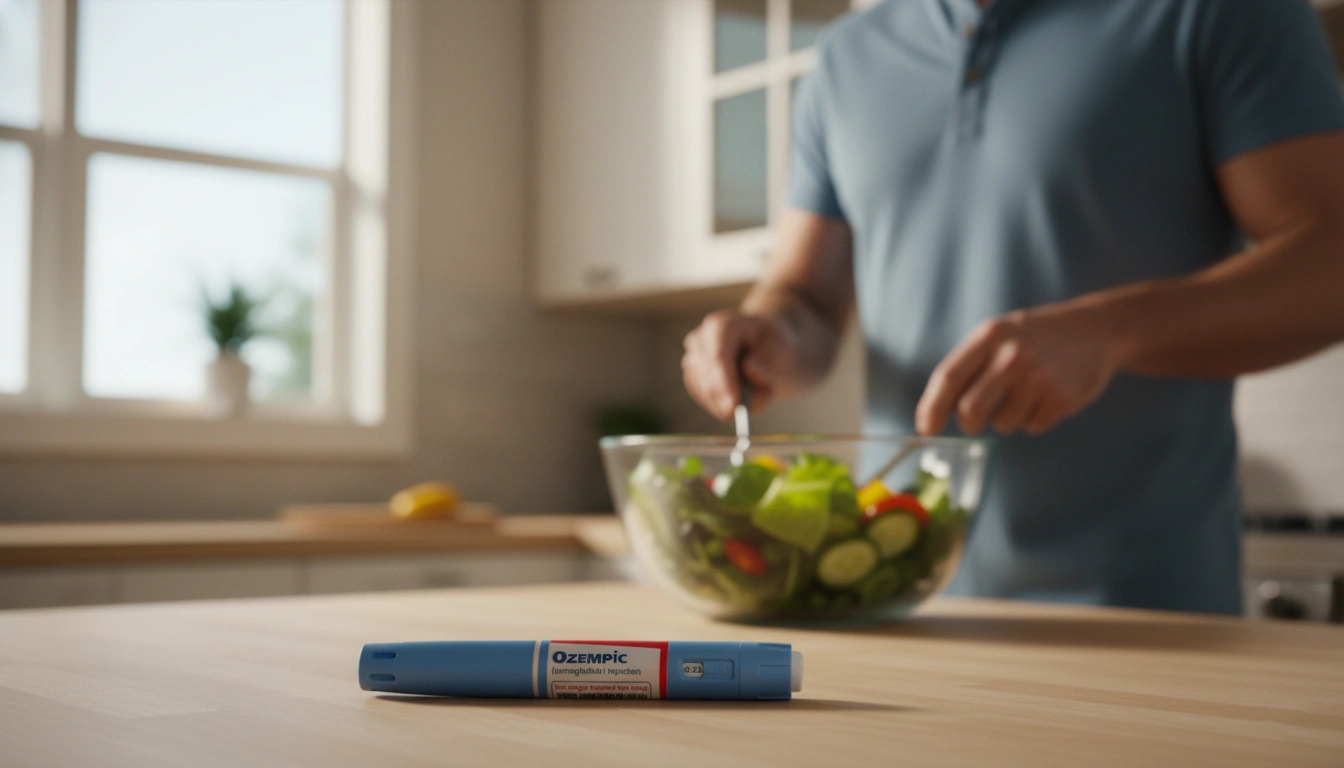
Whatever else is true here, the answer is not to eat less. That needs saying first, because it is the direction this situation pushes people and it is the one response that reliably makes things worse. If you are already eating less than you ever have and the scale has not responded, adding more restriction will not unlock anything, and it can create a set of problems that are harder to undo than a stalled month.
This is a frustrating place to be and it deserves a proper look rather than a platitude. There are several real explanations, and one of them is that your intake may already be too low rather than not low enough.
What can hold a scale still while things are happening
Constipation. Common on these medications, and it holds weight that has nothing to do with body composition. Gastrointestinal effects are the most frequently reported adverse events with semaglutide, and constipation is among them. A constipated stretch can flatten a scale for a week or two on its own, and it is worth ruling out before drawing any conclusion.
Fluid. Shifts with salt, heat, hormonal cycle, activity, and how much you have been on your feet. Several pounds of ordinary variation is normal.
Composition. If you have been keeping up resistance training, you may be losing fat and holding or adding muscle. The scale nets those against each other and reports nothing. Check whether clothes and measurements are moving, because they often are when the scale is not.
The possibility worth taking seriously
If your intake has dropped a long way, your body may be doing what bodies do when they are getting much less than they need: conserving.
Energy expenditure falls during a period of real deficit, and it falls somewhat more than the loss of body mass alone would predict. A systematic review of studies on this found the effect present in most of them, but also found that it was reduced or disappeared after a period of weight stabilization rather than continuing indefinitely. That detail matters. It means the response is largely tied to being in an active deficit rather than being a permanent change to your metabolism, and it argues against the idea that going lower will get you out of it.
There is also a simpler version of the same thing. When you are underfed, you move less without deciding to. Fidgeting, walking, standing, and general daily activity all quietly decline, and that can offset a good deal of a reduced intake without ever showing up as a decision you made.
The signs that intake has gone too low
This is the part to check honestly, because it changes what the next step should be. Look for a cluster rather than a single symptom:
- Persistent fatigue that sleep does not fix
- Feeling cold when other people are comfortable
- Hair shedding more than usual
- Dizziness or lightheadedness on standing
- Losing strength, or workouts getting harder rather than easier
- Difficulty concentrating
- Feeling low or irritable in a way that is new
- For those who menstruate, cycles becoming irregular or stopping
If several of those are present alongside a stalled scale, that combination is worth raising with your provider promptly, and it belongs at the top of the conversation rather than as an aside after the weight question.
Consider this scenario: a patient is eating very little, has not lost weight in seven weeks, is exhausted by mid-afternoon, and is cold all the time. They arrive at their appointment planning to ask about a dose increase. The dose is not the thing that needs attention in that picture, and the appointment goes much better when they lead with the fatigue instead.
On estimating intake
Intake is genuinely hard to judge, for everyone, in both directions. People underestimate and overestimate, and appetite suppression makes it harder still, because eating can feel like much less than it is when portions are small but frequent, or when softer and more processed foods have taken over because they are easier to manage.
That is worth knowing. It is not a reason to cut further. If there is a gap between what you think you are eating and what you are, the way to find it is a few days of honest recording shared with your provider, not a smaller plate.
What to bring to your provider
- Your weekly weights over the last eight to twelve weeks, as a trend
- What you are actually eating, ideally a few days written down as you go
- Whether any of the signs listed above are present, and for how long
- Whether you are constipated, and for how long
- Your current dose, and whether you ever completed escalation
- Measurements or how clothes fit, if you have been tracking them
What not to do
Do not eat less. Stated again because the pull is strong.
Do not add more exercise on top of a low intake. Widening the gap in the other direction has the same problems.
Do not increase your dose to force it. More appetite suppression on top of already low intake is the opposite of what this picture calls for.
Do not weigh daily and react. Noise will drive decisions that should not be made.
If the eating itself has become the difficult part
Sometimes what starts as following a plan turns into something that feels harder to control: rules that keep tightening, guilt about eating normally, or a lot of mental energy going into food and numbers.
If any of that is familiar, it is worth saying to someone. Your provider can help, and so can a therapist or dietitian who works with eating concerns. The National Alliance for Eating Disorders operates a helpline staffed by clinicians at 1-866-662-1235. Raising it early makes it much easier to address.
When to call
Contact your provider if several of the signs above are present, if you have been eating very little for weeks, if constipation has run several days with abdominal pain, if you feel faint on standing, or if you are considering cutting your food further because nothing else has worked.
The short version
A stalled scale alongside very low intake is not usually a sign you need to eat less. Check constipation and fluid first, look honestly at whether the signs of under-eating are present, and bring the fatigue and the cold hands to your appointment rather than only the number. Going lower is the one option that is not on the table.
If you want a provider who will look at how you are doing rather than only at what you weigh, TrimRx includes ongoing provider access alongside treatment, and our guide on getting the most out of your GLP-1 treatment covers the parts that support your results rather than undercut them. If nausea has been shaping what you can manage to eat, our guide on what to eat to minimize nausea may help.
This information is for educational purposes and is not medical advice. Consult with a healthcare provider before starting any medication. Individual results may vary.

Transforming Lives, One Step at a Time
Keep reading

Regained Weight After Stopping Ozempic? Don’t Restart at Your Old Dose
No. Whatever else you do, do not pick up where you left off. Tolerance to a GLP-1 is not assumed to persist through a…

Two Months on the Same Ozempic Dose With No Change: Is It Working?
Two months is long enough. Under four weeks is noise, four to eight weeks is a maybe, and eight weeks of a genuinely flat…

Is This Your Ozempic Maintenance Dose or Just a Stall?
Time is what separates them, and less of it than people think. A few weeks without movement is noise. Six to eight weeks of…


